Herald endorsement: Our recommendations on Miami’s four referendums | Opinion
READ MORE
Editorial Board’s General Election Endorsements
In advance of the upcoming general elections on Tuesday, Nov. 5, 2024, the Editorial Board interviewed and researched candidates to better understand their views on various issues and how their policies will affect their constituents. The goal is to give voters a better idea of who’s the best candidate for each race.
Expand All
Voters in Miami will decide on four referendums to amend the city’s charter in the November elections. Two of the referendums, Nos. 2 and 3, relate to the development of Watson Island. They were put on the ballot by the city commission.
The Herald Editorial Board’s recommendations:
Referendum 1
This ballot question seeks to add clarity to the city’s residency requirements for political candidates.
Miami’s charter already requires candidates to reside in the city or in the district they want to represent. The referendum would additionally require that commission candidates reside in their district — and mayoral candidates within the city — continuously for “one year immediately preceding qualifying.”
This ensures that people don’t move into the city or a district for political purposes and that they have ties to the areas they want to represent.
We recommend YES on Referendum 1.
Referendum 2
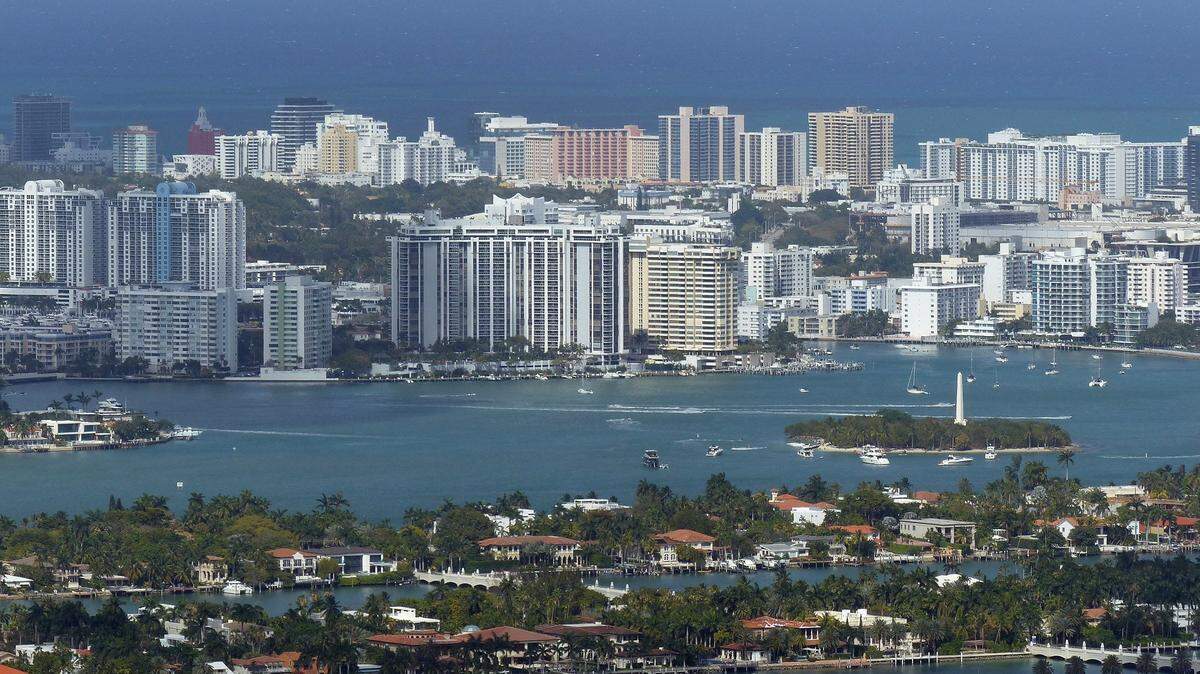
By far, the most critical referendums on the ballot for Miami voters are items 2 and 3, which could significantly transform a key part of Miami’s waterfront — Watson Island’s north and south sections and Jungle Island. Because city-owned property is involved, voter approval is required to proceed.
If we could go back in time, we would return to the days when development on Watson Island was prohibited, back when it was first deeded to the city in 1919, or even when the man-made island between Miami and Miami Beach was best known as the home of Chalk’s Airlines seaplanes and the Goodyear blimp.
But in 2001, the south side of Watson Island was approved for development by voters, but only a marina was built. On the north side, voters approved an eco-adventure park and hotel; plans for an amusement park died along the way. The original developers and others struggled financially for the next couple of decades. Jungle Island, built by different developers, opened in 2003.
Now Watson Island and its breathtaking vistas of Biscayne Bay are back in play, with developers proposing two projects connected by a bay walk under the causeway. All of this would wipe out a previous plan for timeshare units and replace them with a hotel, shopping, dining, and office space, along with a public promenade, a change that the developers say would reduce traffic.
On the Jungle Island side, developers want to build two, approximately 40-story, luxury high-rise residential buildings and would return 13.3 acres to the city to be used as a public park that the developer would build at no cost to the city.
The developers would also provide $2 million to the city a year for park maintenance. Jungle Island would go away under this plan, and the animals would be relocated to sanctuaries. The developers, ESJ Capital Partners, and Terra doing business as Ecoresiliency Miami, would buy 5.4 acres from the city for the towers for about $135 million and also donate $15 million to city commissioners for affordable housing and infrastructure.
That’s Referendum 2.
The Miami Herald Editorial Board recommends YES on Referendum 2.
REFERENDUM 3
On the non-Jungle Island side of the island, developers BH3 Management and Merrimac Ventures would build a condo-hotel and a condo, along with a mixed-use development called Watson Harbour.
They would buy 3.2 acres from the city, extend the current lease they have on the remainder of the land from 75 years to 99 years and donate $9 million to all the commissioners for affordable housing and infrastructure.
That’s Referendum 3.
We recommend YES on Referendum 3.
There seems to be little opposition to the projects.
“This is a good deal for the city of Miami,” said Commissioner Damian Pardo, who represents District 2, which includes Watson Island.
We do have some concerns:
Despite developers promising that traffic under the new plan will be less than under the old plan, we are still concerned about traffic flow on the MacArthur Causeway and on the two-lane roadway that serves as an off-ramp onto the island. The city should keep a strict eye on traffic.
We also hope the promised public park will be just that, and that it is easily accessible to visitors. Again, the city and commissioners must ensure this comes true, as it is being sold to Miami residents.
Also, we ask for close monitoring of the money being donated by the developers to city commissioners for affordable housing or infrastructure, which is slated to be split among the districts. It would be very easy for that money to become little more than a personal piggy bank for commissioners to dole out around election time.
Referendum 3 asks voters to “amend and revise “ the existing contract and sell 3.2 acres to the tenant for $25 million, extending the lease by 24 years, reducing development and including $9 million for affordable housing, office space, and an expanded public park and promenade along Biscayne Bay.
Referendum 4
This ballot item changes the date of commission and mayoral runoff elections from the third Tuesday after the first Monday in November to the second Tuesday in December. The change, requested by the Miami-Dade County Supervisor of Elections, is meant to give the elections office more time to prepare for those runoffs.
We recommend YES on Referendum 4.
BEHIND THE STORY
MOREWho decides the political endorsements?
In advance of local and state elections, Miami Herald Editorial Board members interview political candidates, as well as advocates and opponents of ballot measures. The Editorial Board is composed of experienced opinion journalists and is independent of the Herald’s newsroom. Members of the Miami Herald Editorial Board are: Amy Driscoll, editorial page editor; and editorial writers Isadora Rangel and Mary Anna Mancuso. Read more by clicking the arrow in the upper right.
What does the endorsement process look like?
The Miami Herald Editorial Board interviews political candidates to better understand their views on public policy and how their policies will affect their constituents. Board members do additional reporting and research to learn as much as possible about the candidates before making an endorsement. The Editorial Board then convenes to discuss the candidates in each race. Board members seek to reach a consensus on the endorsements, but not every decision is unanimous. Candidates who decline to be interviewed will not receive an endorsement.
Is the Editorial Board partisan?
No. In making endorsements, members of the Editorial Board consider which candidates are better prepared to represent their constituents — not whether they agree with our editorial stances or belong to a particular political party. We evaluate candidates’ relevant experience, readiness for office, depth of knowledge of key issues and understanding of public policy. We’re seeking candidates who are thoughtful and who offer more than just party-line talking points.
This story was originally published October 24, 2024 at 6:12 PM.
.png)

.png)


.png)