Herald endorsement: Our recommendation on Florida’s constitutional Amendment 3 | Opinion
READ MORE
Editorial Board’s General Election Endorsements
In advance of the upcoming general elections on Tuesday, Nov. 5, 2024, the Editorial Board interviewed and researched candidates to better understand their views on various issues and how their policies will affect their constituents. The goal is to give voters a better idea of who’s the best candidate for each race.
Expand All
For more than half a century, America has been fighting a war on drugs that most people agree has failed. It focused too often on street arrests of young people of color who spent years in prison for small amounts of marijuana while violent cartels bringing in opioids, cocaine and fentanyl — among the most dangerous drugs — continued doing business.
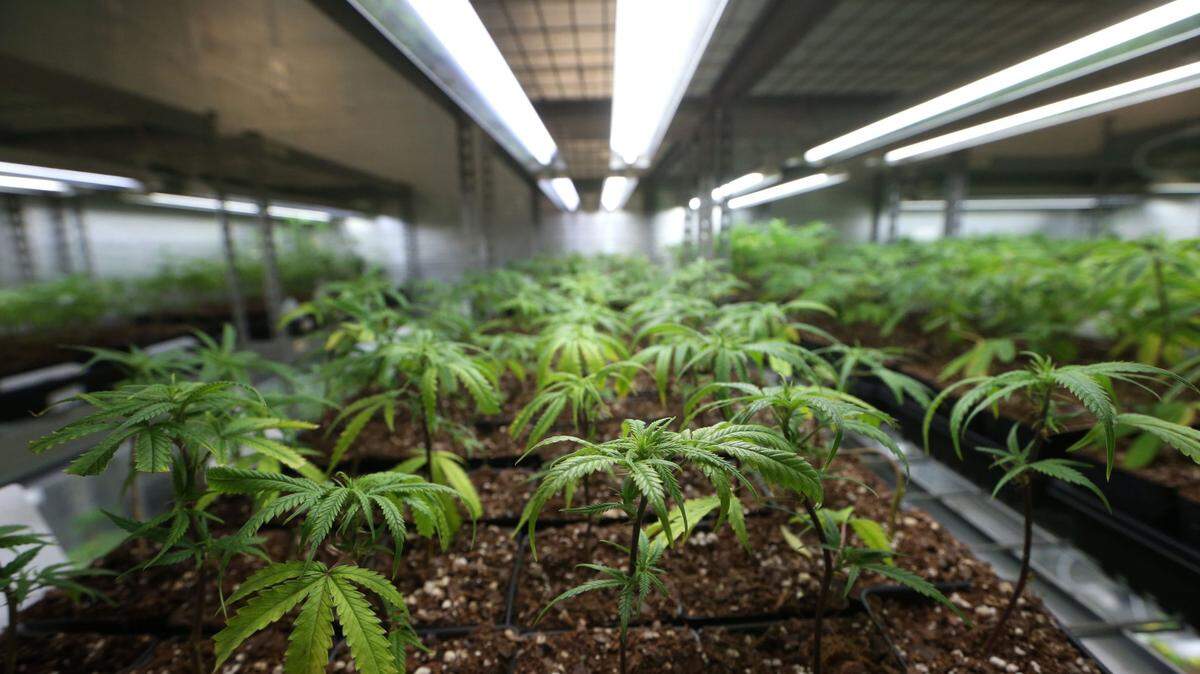
Now Floridians have a chance to help police direct their resources to where they will matter more — to combat killer drugs — and allow the legal use of marijuana products for adults 21 and older. This can be done with proper monitoring, just as the state oversees the sale of alcohol and tobacco products. Constitutional Amendment 3 proposes to expand Florida’s already legal use of medical marijuana (38 states allow it) to recreational use for adults.
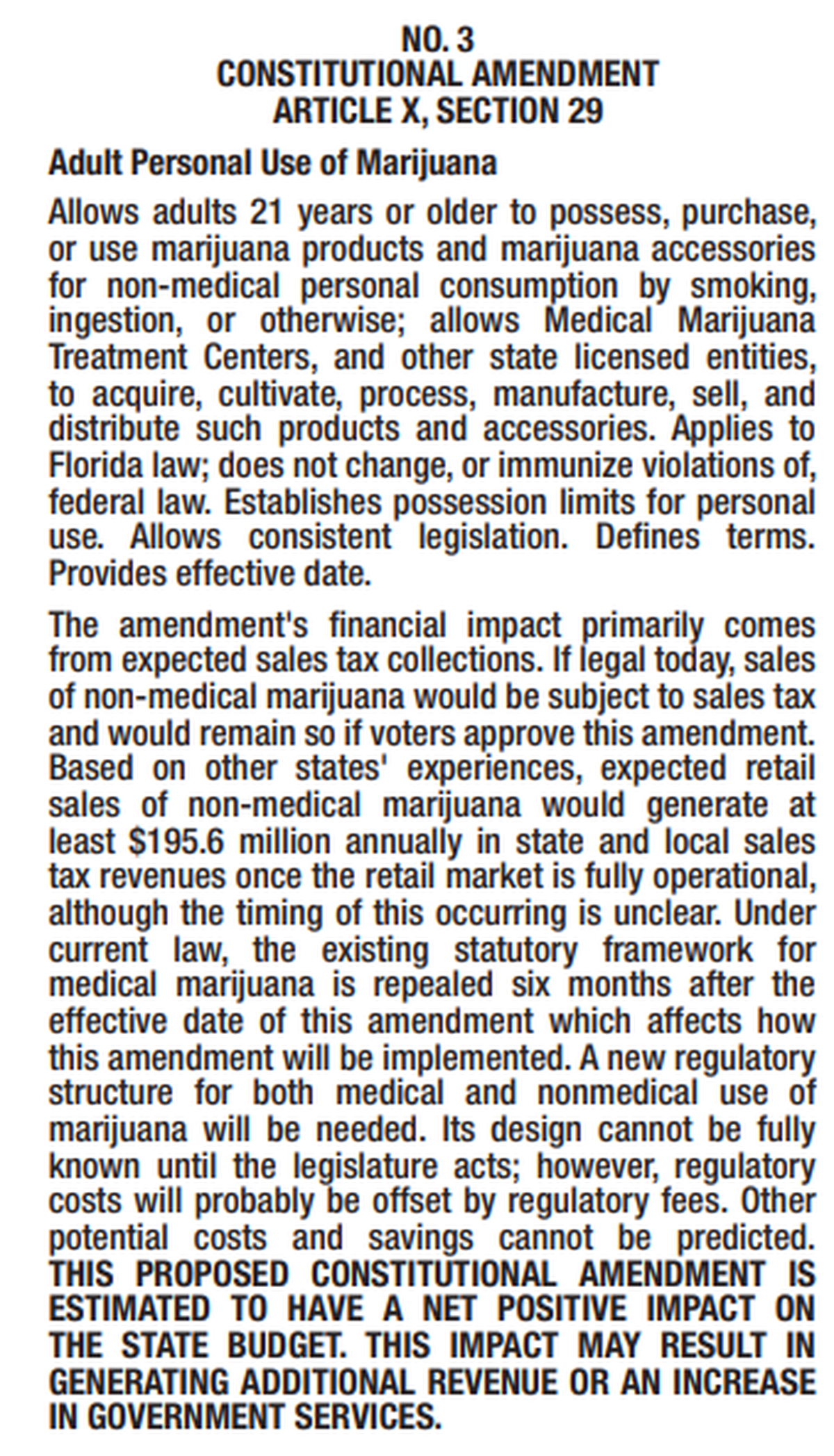
Sixty percent of Florida voters would have to approve the amendment for Florida to join 24 other states and Washington, D.C., that have legalized recreational marijuana.
The Florida Financial Impact Estimating Conference studied sales in six recreational marijuana states and concluded Florida could gain about $200 million in sales tax revenues in the first full year and as much as $431 million in the future.
That money could be used for whatever the Florida Legislature determines is appropriate. One priority, though, must be an education campaign to ensure that minors do not use marijuana.
The Legislature should also consider imposing excise taxes, now levied on distributors of alcoholic beverages and tobacco products, for recreational marijuana distributors.
We support Amendment 3, but there are issues raised by opponents that deserve scrutiny and swift action by the Legislature if voters approve the measure.
Bust the monopoly
The amendment allows existing Medical Marijuana Treatment Centers and “other state licensed entities to acquire, cultivate, process, manufacture, sell and distribute“ marijuana products. Opponents say this essentially gives control of the market to Trulieve, the biggest funder of Amendment 3, and 24 other companies already licensed for medical marijuana.
Opponents also say the amendment bars people from growing their own weed because the wording doesn’t mention “home grow.” But constitutional scholars counter that the Legislature can allow people to grow their own plants and the state can set limits.
The amendment’s proponents say Florida’s “single subject rule” for proposed amendments restricted the wording they could use; Florida Republican state Sen. Joe Gruters, of Sarasota, who is part of the “yes” campaign, says lawmakers will be able to file a bill to allow people to grow their own plants.
No immunity to lawsuits
Existing medical marijuana law protects doctors and dispensaries from civil or criminal lawsuits in most instances, as long as they comply with the state standards. Amendment 3 applies the same rationale to recreational use.
Amendment 3 opponents say that if a worker goes to work high, gets hurt and sues their employer, the courts could not consider that person’s consumption of marijuana as a mitigating factor.
Not so, say legal experts, who maintain that other state and federal laws still would apply. “It’s not a correct reading of the amendment,” Nova Southeastern University law professor Robert M. Jarvis told the editorial board. “It sounds ridiculous.”
No driving while stoned
Driving while under the influence of alcohol, marijuana or any other mind-altering drug is illegal. Police already arrest people who are high, even if they cannot test them as quickly as a breathalyzer test for alcohol.
If this amendment passes, there should be a concerted public awareness campaign. The Legislature can also increase penalties if this dangerous practice escalates.
Stop the stink
As of the end of June, there were 883,567 medical marijuana patients and 653 licensed dispensaries in Florida, according to the Florida Health Department’s Office of Medical Marijuana Use.
And state law already makes smoking medicinal marijuana in public illegal. But even though it’s illegal to smoke marijuana in public, no doubt you have smelled it while walking outside.
If this is approved, the Legislature must clarify that the smoking ban in public places that applies to medicinal marijuana also applies to recreational marijuana, and allow cities to enforce local laws with noncriminal citations that carry hefty fines.
The Miami Herald Editorial Board recommends voting YES on Amendment 3 for the safe and regulated use of recreational marijuana for adults.
BEHIND THE STORY
MOREWho decides the political endorsements?
In advance of local and state elections, Miami Herald Editorial Board members interview political candidates, as well as advocates and opponents of ballot measures. The Editorial Board is composed of experienced opinion journalists and is independent of the Herald’s newsroom. Members of the Miami Herald Editorial Board are: Amy Driscoll, editorial page editor; and editorial writers Isadora Rangel and Mary Anna Mancuso. Read more by clicking the arrow in the upper right.
What does the endorsement process look like?
The Miami Herald Editorial Board interviews political candidates to better understand their views on public policy and how their policies will affect their constituents. Board members do additional reporting and research to learn as much as possible about the candidates before making an endorsement. The Editorial Board then convenes to discuss the candidates in each race. Board members seek to reach a consensus on the endorsements, but not every decision is unanimous. Candidates who decline to be interviewed will not receive an endorsement.
Is the Editorial Board partisan?
No. In making endorsements, members of the Editorial Board consider which candidates are better prepared to represent their constituents — not whether they agree with our editorial stances or belong to a particular political party. We evaluate candidates’ relevant experience, readiness for office, depth of knowledge of key issues and understanding of public policy. We’re seeking candidates who are thoughtful and who offer more than just party-line talking points.
This story was originally published October 8, 2024 at 4:27 PM.
.png)
.png)




.png)