The Herald recommends: Miami Beach ballot questions make clear, the party’s coming to an end | Editorial
READ MORE
Editorial Board November 2022 Election Recommendations
In advance of local and state elections, the Editorial Board interviews political candidates to better understand their views on various issues and how their policies will affect their constituents. The goal is to give voters a better idea of who’s the best candidate for each race. Read our November 2022 recommendations below:
Expand All
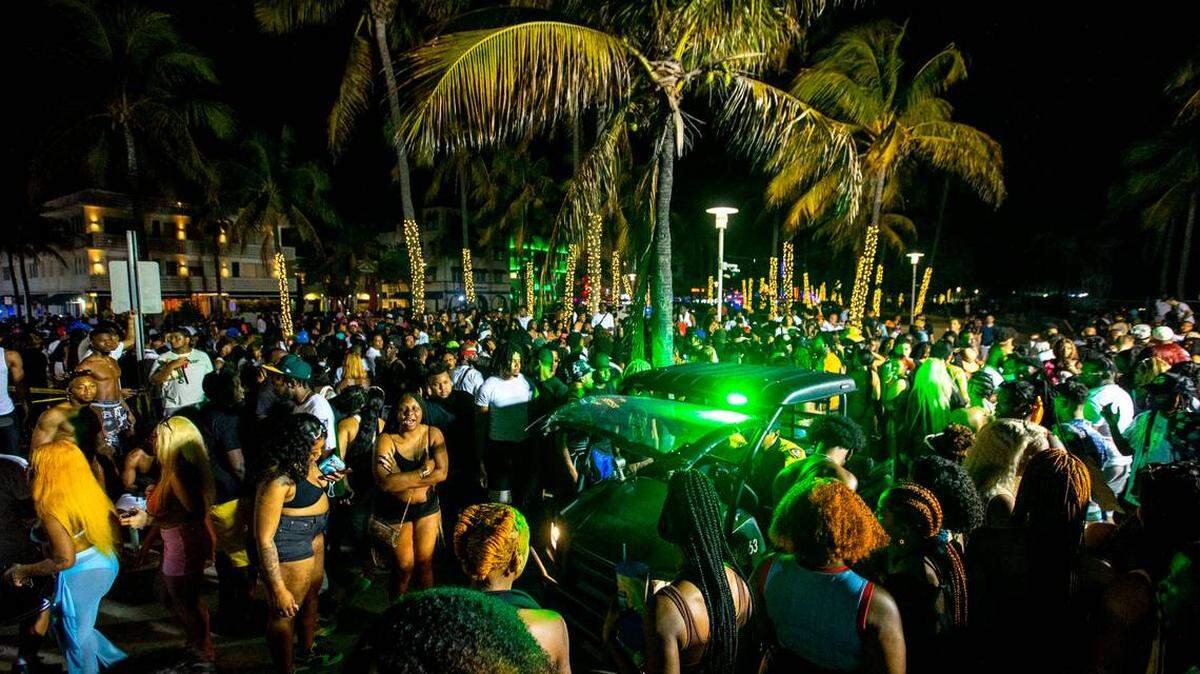
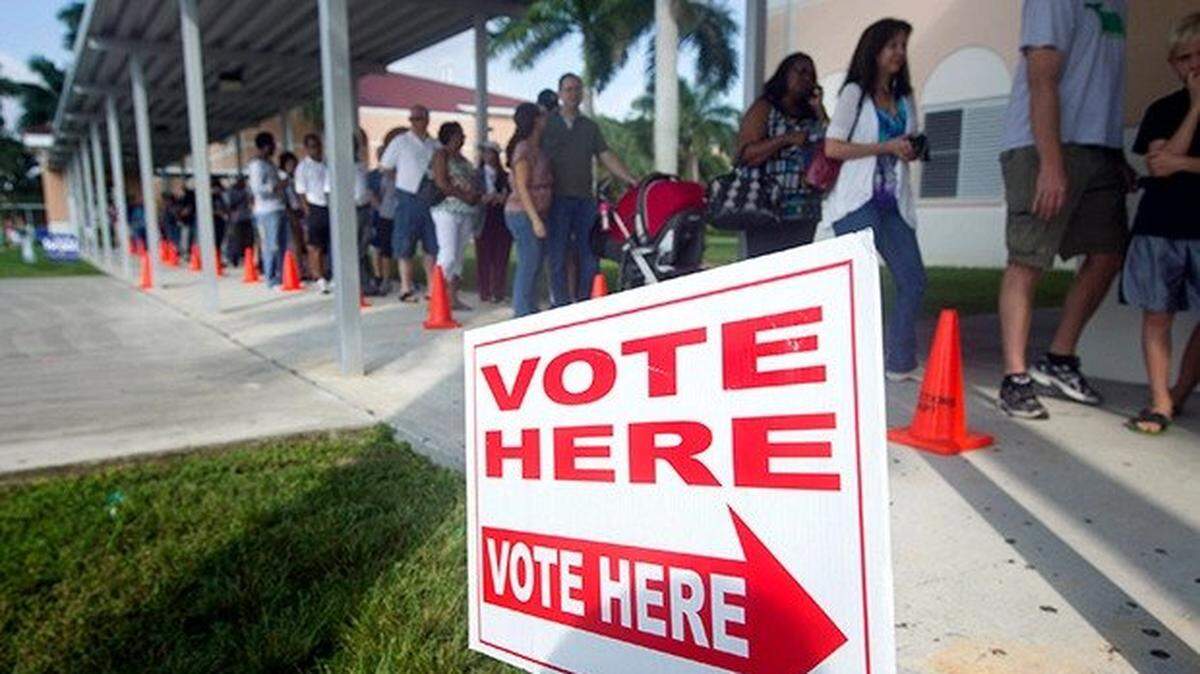
Miami Beach voters will find a whopping eight questions on their ballots. If they read between the lines, most are clearly are moving toward the city toward ratcheting down the party personality and moving it beyond its dependence on tourism.
Question 1
The history of the Deauville Beach Resort, unfortunately, went from storied to tortured over its more than six decades. That’s why it was shuttered in 2017. That’s why the hotel has been gutted and is scheduled to be demolished on Nov. 13.
And that’s why the Editorial Board recommends that Miami Beach voters approve Ballot Question 1:
Shall City increase FAR in Overlay (oceanfront properties from 6605-6757 Collins Avenue) from 2.25 to 3.0, where not already permitted, and provide FAR incentive from 3.0 to 4.5 for projects meeting following criteria:
▪ hotel with minimum 150 rooms,
▪ 150,000 square feet minimum lot size,
▪ 50% reduction from maximum density,
▪ owner provides public recreational facility and beach access?
Though no names are mentioned, we all know that the most immediate beneficiary could be Stephen Ross, developer and owner of the Miami Dolphins. He’s in line to buy the Deauville site at 67th Street and Collins Avenue — where in 1964, the Beatles made their historic visit — and seeks an increase in floor-area ratio, or FAR, that will let him to build a Frank Gehry-designed hotel of increased height and density over what currently is allowed.
The project’s two buildings would feature about 175 hotel rooms and 150 condo units. The change in FAR Ross seeks would increase the height of the project by 87%, from 200 feet to 375 feet tall, and give it 50% more interior square feet.
Yes, it will be tall. However, the project’s representative, attorney and former Beach mayor Neisen Kasdin, said that anything built on the site still will be shorter than two other buildings on either side of it.
The Board also thinks that the ultimate beneficiaries will be residents and businesses of North Beach, a multi-faceted section of the city that for years has languished in the glitzier shadow of its neighbor to the south, pushing for revitalization, but not for anything that smacks of South Beach.
First, the project is estimated to generate $6 million to $7 million annually to the North Beach Community Redevelopment Agency. It covers an area that runs from Indian Creek Drive east to the ocean and approximately from 66th to 71st streets, taking in the Deauville site. By the time the CRA expires, the Ross project stands to deliver $100 million to the agency. All of it is dedicated revenue for capital projects, including parks and street and other infrastructure improvements — with 10% to be spent on creating workforce and affordable housing.
Other benefits forecast are an estimate $3 million a year in resort taxes, which go directly into the city coffers. Ross has pledged to hand over $12 million for the city to build a recreational facility in North Beach; $1 million to go to an affordable-housing fund that the city might create — which it should; and a $500,000 grant to provide arts and cultural education in school citywide.
In addition, he has pledged public beach access through the property, an appealing element given that there’s not public access between 65th and 69th streets.
Because the site is privately owned, this ballot question shouldn’t be cast as a giveaway by the city. It will be up to the city, particularly its historic preservation and design review boards to come through with sound guidance as it considers architectural design. The site sits in the North Beach Historic District, and among the concerns of the project’s critics is that it will stick out like a sore thumb among the MiMo structures nearby.
“This is a historic district, with a lot of buildings that capture the moment in history,” Saul Gross, of Miami Beach United, which opposes this project, told the Editorial Board. “It’s not Boca.”
Mayor Dan Gelber said that if this question is approved, any design has to be vetted by the city’s Design Review Board. We would hope that board members, and a vocal public, ensure that it pays some architectural homage to the Deauville and its history — beyond a sculpture of the Beatles tucked away somewhere. (The original Deauville was built in the 1920s and at one point was called the McFadden. It, too was demolished, replaced by the 1957 iteration.)
Gross also decries the Deauville’s upcoming “demolition by neglect,” rewarding “bad behavior” on the part of the owners to profit from a potential sale to Ross.
The city itself went to great lengths to secure this property and save the Deauville from the disrepair into which the current owners let it fall. “We tried hard to keep it. We sued them. We liened the property. We tried to create a receivership,” Gelber told the Editorial Board.
“We were in litigation for years,” he said. “We lost at every single step.”
The history of Miami Beach is, if nothing else, one of change, of evolution, of regeneration. This project is one more part of that transformation. We believe that it can be a financial boon for North Beach and maintain ties to North Beach’s past, while creating a more vibrant future, as so many residents say they want.
The Miami Herald Editorial Board recommends YES to Question 1.
Question 2
If approved, this referendum will authorize the city to borrow up to $159 million by issuing bonds to upgrade its arts and cultural facilities. Some are in dire need of maintenance, such as The Fillmore and the Byron Carlyle Theater in North Beach, which closed in 2019.
The extra debt would result in an estimated tax increase of $138 per year for the city’s average home value of $664,566 during the 30 years that it takes to pay off the bonds. The estimated cost per $100,000 of taxable value would be $21 annually.
The money would be divided among 18 projects, including renovations at the Bass Museum of Art, the New World Symphony, the Botanical Garden and Miami New Drama at Collins Park Garage. It would help complete upgrades and expansions under way at the Wolfsonian and Holocaust Memorial. It would transform the Byron Carlyle into a multi-use cultural center with a black-box theater, a cinema and space for exhibits, Mayor Dan Gelber said. It would pay for renovations at the Miami City Ballet and for workforce housing for dancers and employees of cultural institutions, as well as others who qualify based on income.
Another goal is to improve the types of performances venue such as the Colony Theater and the Bandshell, in North Beach, can host. For example, the Colony would receive $7.4 million to upgrade its lighting and projection, stage, sound system, lobby and restrooms. The Bandshell is in desperate need of upgrades to its 50-year-old back-of-the-house area.
In 2018, Miami Beach voters approved a different bond referendum for public safety, infrastructure, beaches and parks. Asking voters for more may seem like a big ask, but Miami Beach’s property tax rates are in the middle of the pack among Miami-Dade’s 34 municipalities, Gelber told the Editorial Board. Miami Beach’s Bond Oversight Committee, made up by residents, has also evaluated the proposal and had input into which projects should receive funding.
If the city is serious about ditching its reputation as Party Central — as well as all the problems that come with raucous spring breakers — it needs to invest in higher-level tourism. Aging and outdated cultural facilities won’t do the trick. If Miami Beach is to become a higher-end cultural destination, we need the investment. Better museums and performing arts centers attract patrons willing to spend more money, helping surrounding businesses and bringing in more tourism tax revenue.
The Miami Herald Editorial Board recommends YES on Question 2.
Question 3
This ballot question would add a layer of scrutiny before the city gives up land to private developers.
It would require voter approval before the city sells or leases property for at least 10 years in an area from West 40th to 43rd streets between Pine Tree Drive and Alton Road. This area includes many city-owned surface parking lots that support nearby businesses.
Miami Beach’s charter already requires voter approval for the sale or lease of waterfront land, parks and other properties, including parking lots near Lincoln Road that are the subject of Questions 4, 5 and 6. Voters should give themselves more of a say on what the city plans to do there.
We recommend YES on Question 3.
Questions 4, 5 and 6
Voters should consider these three questions together, because they are related to the city’s plan to develop three publicly owned surface parking lots off Lincoln Road into mixed-use office, retail and residential buildings. The city charter requires voter approval of these 99-year leases to private developers.
Question 4 is the carrot. It would require that the rent payments from the developers go toward resiliency and sustainability, workforce housing and public safety. But the ballot language is somehow misleading. It mentions up to $355,793,085 would be allocated, but it doesn’t clarify that’s the amount projected over 99 years. The city would collect an average of $3.6 million per year.
Question 4 is a good idea, but it’s no guaranteed boon. Nothing stops the City Commission from simply using the rent proceeds to replace funding that’s currently allocated in the budget for those purposes. It’s impossible to tell what future commissions will do for the next 99 years.
Regardless, Question 4 is irrelevant without the approval of the more controversial Questions 5 and 6.
Question 5 would approve a lease contract for 664 Meridian Ave. At least half of the floor area in a six-story development would be designated as high-end office space. The rest would be about 43 market-rate apartments, ground-floor retail and a parking garage with about 290 spaces, including 151 to replace existing public parking spaces. That project is a joint venture that includes Don Peebles, his son Donahue Peebles, Scott Robins and former Miami Beach Mayor Philip Levine.
Question 6 deals with parking lots at 1688 Lenox Ave., and 1080 Lincoln Lane North. A different set of developers is proposing two buildings that would include office space, ground-floor retail and 425 parking spaces, 192 to replace existing public parking.
Is this use of public property a good financial deal for the city? It’s hard to tell.
It’s understandable that opponents think that, with a 99-year lease, we won’t be alive to reap the full benefits of this deal. Or that the average $3.6 million Miami Beach is expected to collect annually on 3.4 acres of prime real estate seems like a drop in the bucket for a city with a $800 million budget. In addition to rent, the city would continue to collect parking fees and a projected $1.2 million in property taxes.
It’s important to note that $3.6 million figure is an average of the payments over 99 years. What the developers would actually pay every year varies. They would each pay a lump sum at first then start paying a minimum rent or 5% of their revenue, whichever is greater. Minimum rents would start at $650,000 in year two for the projects related to Question 6 and climb to $690,000 in year five for the project related to Question 5. Rents would increase each year.
Is that enough? Levine and Don Peebles told the Herald Editorial Board that developers had to meet onerous requirements, such as the construction of “class A” office space for high-end tenants and public space. They also would build a new garage the city can use for free while keeping revenues from public parking fees. So calculating a fair rent isn’t as straightforward as it may seem.
The bigger question is whether more office space is the proper vision for Miami Beach. Gelber has pushed to diversify the local economy away from tourism and toward a “live, work and play” community. The idea is to tap into the influx of tech and financial companies moving to South Florida. Downtown Miami and Brickell shouldn’t be their only destination.
It’s no secret that the Lincoln Road area is in desperate need of revitalization. The pandemic made its slide even worse: empty storefronts and a lack of reasons for locals to go there. Change will only happen if the city is intentional about it.
Some may call these projects a giveaway to developers. But Miami Beach will not achieve its goals without a partnership between government and the private sector. We recommend voting YES on Questions 5 and 6. While voters are at it, they might as well say YES to Question 4.
Questions 7 and 8
Miami Beach’s charter requires voter approval before increasing a property’s floor-area ratio, which is the method the city uses to regulate the overall size of a building.
The intent of questions 7 and 8 is to promote the construction of more housing and office space and curb the growth of vacation rentals, which can be a nuisance in residential areas. All of these are important for a city that’s trying to reinvent itself.
Question 7 allows Miami Beach to increase the maximum floor-area ratio from 2.0 to 2.75 in the RPS4 District, located in the South of Fifth neighborhood. This is an incentive for property owners to convert existing hotels — like the Marriott Stanton at 161 Ocean Dr. — to residential uses and reduce the impact of tourism in the area. To qualify for the increase, they would have to prohibit short-term rentals.
Question 8 offers an incentive for the creation of more office space. It would grant a floor-area-ratio increase from 1.0 to 2.0 on the east side of Washington Avenue between First and Second streets. An additional increase to 2.7 would apply to redevelopments that include residential or office uses and prohibit hotels and short-term rentals.
We recommend YES on questions 7 and 8.
CORRECTION
The recommendation for Miami Beach Ballot Question 1, on developing the site of the Deauville hotel, has been updated to say that one of the requirements is a 150,000 square foot minimum lot size.
BEHIND THE STORY
MOREWho decides the political endorsements?
In advance of local and state elections, Miami Herald Editorial Board members interview political candidates, as well as advocates and opponents of ballot measures. The Editorial Board is composed of experienced opinion journalists and is independent of the Herald’s newsroom. Members of the Miami Herald Editorial Board are: Amy Driscoll, editorial page editor; and editorial writers Isadora Rangel and Mary Anna Mancuso. Read more by clicking the arrow in the upper right.
What does the endorsement process look like?
The Miami Herald Editorial Board interviews political candidates to better understand their views on public policy and how their policies will affect their constituents. Board members do additional reporting and research to learn as much as possible about the candidates before making an endorsement. The Editorial Board then convenes to discuss the candidates in each race. Board members seek to reach a consensus on the endorsements, but not every decision is unanimous. Candidates who decline to be interviewed will not receive an endorsement.
Is the Editorial Board partisan?
No. In making endorsements, members of the Editorial Board consider which candidates are better prepared to represent their constituents — not whether they agree with our editorial stances or belong to a particular political party. We evaluate candidates’ relevant experience, readiness for office, depth of knowledge of key issues and understanding of public policy. We’re seeking candidates who are thoughtful and who offer more than just party-line talking points.
This story was originally published October 30, 2022 at 9:29 AM.
.png)
.png)

.png)
.png)
.png)
.png)
.png)
.png)
.png)
.png)
.png)
.png)
.png)
.png)
.png)
.png)