Herald recommends: Miami’s competitive U.S. House District 27 needs voice for democracy | Editorial
.png "U.S. Rep. Maria Elvira Salazar (right) faces Sen. Annette Taddeo in the election for U.S. House District 27.")
READ MORE
Editorial Board November 2022 Election Recommendations
In advance of local and state elections, the Editorial Board interviews political candidates to better understand their views on various issues and how their policies will affect their constituents. The goal is to give voters a better idea of who’s the best candidate for each race. Read our November 2022 recommendations below:
Expand All
The Editorial Board takes the threats to this nation’s fragile democracy seriously. It’s a concern that has informed our choices for the U.S. House of Representatives. Here is the Board’s recommendation in Florida’s Congressional District 27.
The election for U.S. House District 27 is one of the most watched in the nation, one that might help decide which party controls Congress.
Incumbent U.S. Rep. Maria Elvira Salazar, a former Spanish-language TV journalist, won her first election in 2020, ousting Democrat Donna Shalala in a district that voted for President Biden by three points.
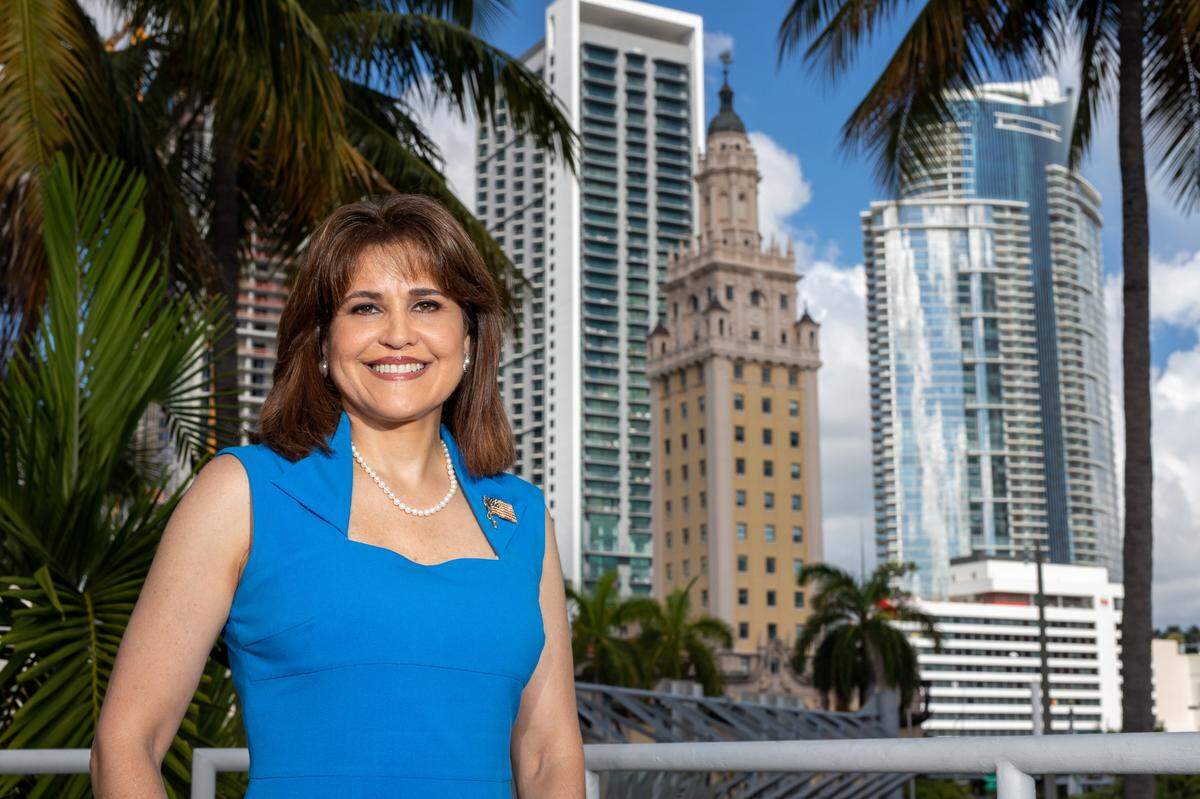
The district was redrawn during the Florida Legislature’s redistricting process this year to become more GOP friendly. It now covers an area mostly south of the Dolphin Expressway and Interstate 395, including downtown Miami and Brickell, to Cutler Bay and west to Florida’s Turnpike.
Salazar, 60, the daughter of Cuban immigrants who fled the Fidel Castro regime, was born in Little Havana and has made her opposition to socialism a hallmark of her short political career.
Her Democratic opponent, state Sen. Annette Taddeo, 55, is the founder of LanguageSpeak, a translation business. Her family fled Colombia for the United States when she was a teenager after her father was kidnapped by a communist guerrilla. Like Salazar, she has a history of winning tough elections, flipping a GOP-held seat in 2017 to become the first Latina Democrat elected to the Florida Senate.
The Herald Editorial Board recommends Taddeo.
She’s has had experience being in the minority party in Tallahassee — a dynamic she could face again in D.C. if the GOP retakes the U.S. House — and has found ways to be effective. She said she worked behind the scenes, for example, to derail a Republican “union-busting bill” to prohibit unions from deducting monthly dues from members’ paychecks. At the same time, she’s not afraid to criticize her own party, as she did when she blasted the Biden administration earlier this year for removing Colombia’s FARC guerrillas from the U.S. terrorist list.
District 27 needs a representative able to tread the middle and balk at her own party if needed. Taddeo told the Editorial Board the most important issue this election cycle is protecting democracy from lies about the 2020 elections, along with housing affordability and abortion rights. She said reproductive rights is one of the reasons she’s running and has slammed Salazar for voting against abortion right protections. Taddeo fiercely advocated, albeit unsuccessfully, to stop Florida’s 15-week abortion ban.
Our recommendation hinges not only on Taddeo’s background, because, for all of Salazar’s bluster against totalitarian regimes, she hasn’t defended democracy at home.
Salazar missed the vote to certify the 2020 Electoral College results (she was recovering from COVID-19). Therefore, she wasn’t among the Republicans who voted against the certification of results of some states — and to disenfranchise millions of voters. But, days later, the Herald reported that, during an appearance on Spanish-language radio, she repeated a false narrative about the integrity of the vote in Pennsylvania.
“How is it possible that in Pennsylvania, there are 200,000 more votes on Election Day than there were [voters] in the electoral rolls? That’s not possible,” she told Radio Mambi on Jan. 11, 2021.
She appeared to be citing a repeatedly debunked conspiracy theory based on incomplete data. Many counties were still uploading their vote histories to the state system when that claim began circulating, according to the Pennsylvania Department of State. State and federal judges, even some appointed by Donald Trump, have looked at allegations of election fraud in more than 50 cases and found no evidence of it.
“If you’re going to want to defend democracy 90 miles away, or in Nicaragua, Venezuela and now, apparently, Colombia, you need to defend democracy right here,” Taddeo told the Editorial Board in July.
We agree. So does the former chair of the Florida Republican Party, Al Cardenas, a Trump critic who recently endorsed Taddeo, saying, “She puts her country and her state above herself.”
Salazar initially supported the creation of a committee to investigate the Jan. 6 Capitol attacks. But she voted against the committee in its final form when it passed in June 2021 along a mostly party-line vote. She called it a “partisan show.” She also voted against impeaching Trump for his role in inciting the deadly attack on the Capitol.
Given the overwhelming evidence and under-oath witness testimony the Jan. 6 committee has collected indicating Trump knew he lost the election but still incited his supporters, does Salazar regret her decision? We invited her for an interview ahead of the August primary and the Nov. 8 general election. Her campaign spokeswoman originally said she would be available after the primary, but then stopped replying to our requests made via email, phone and text messaging.
It’s a shame Salazar won’t explain her record.
She does get credit for trying to push the GOP toward a more compassionate stance on immigration and proposing reforms that would offer a pathway to legal status to some immigrants in the country illegally. She was the only Florida Republican House member to vote in favor of the historic bipartisan gun-control bill in the wake of the Uvalde school shooting. But she voted against the bipartisan infrastructure bill that made $550 billion in new federal spending available for roads, bridges, ports and public transit — dollars Miami desperately needs.
We understand no member of Congress has a voting record that will satisfy everyone. However, it is Salazar’s willingness to spread misinformation about the 2020 election that defined her worst moment. The truth should prevail over partisanship. We believe Taddeo, based on her political career, is better suited to live up to that standard.
The Miami Herald Editorial Board recommends ANNETTE TADDEO for U.S. House District 27.
BEHIND THE STORY
MOREWho decides the political endorsements?
In advance of local and state elections, Miami Herald Editorial Board members interview political candidates, as well as advocates and opponents of ballot measures. The Editorial Board is composed of experienced opinion journalists and is independent of the Herald’s newsroom. Members of the Miami Herald Editorial Board are: Amy Driscoll, editorial page editor; and editorial writers Isadora Rangel and Mary Anna Mancuso. Read more by clicking the arrow in the upper right.
What does the endorsement process look like?
The Miami Herald Editorial Board interviews political candidates to better understand their views on public policy and how their policies will affect their constituents. Board members do additional reporting and research to learn as much as possible about the candidates before making an endorsement. The Editorial Board then convenes to discuss the candidates in each race. Board members seek to reach a consensus on the endorsements, but not every decision is unanimous. Candidates who decline to be interviewed will not receive an endorsement.
Is the Editorial Board partisan?
No. In making endorsements, members of the Editorial Board consider which candidates are better prepared to represent their constituents — not whether they agree with our editorial stances or belong to a particular political party. We evaluate candidates’ relevant experience, readiness for office, depth of knowledge of key issues and understanding of public policy. We’re seeking candidates who are thoughtful and who offer more than just party-line talking points.
This story was originally published October 18, 2022 at 8:52 AM.
.png)
.png)



.png)
.png)
.png)
.png)
.png)
.png)
.png)
.png)
.png)
.png)
.png)
.png)
.png)