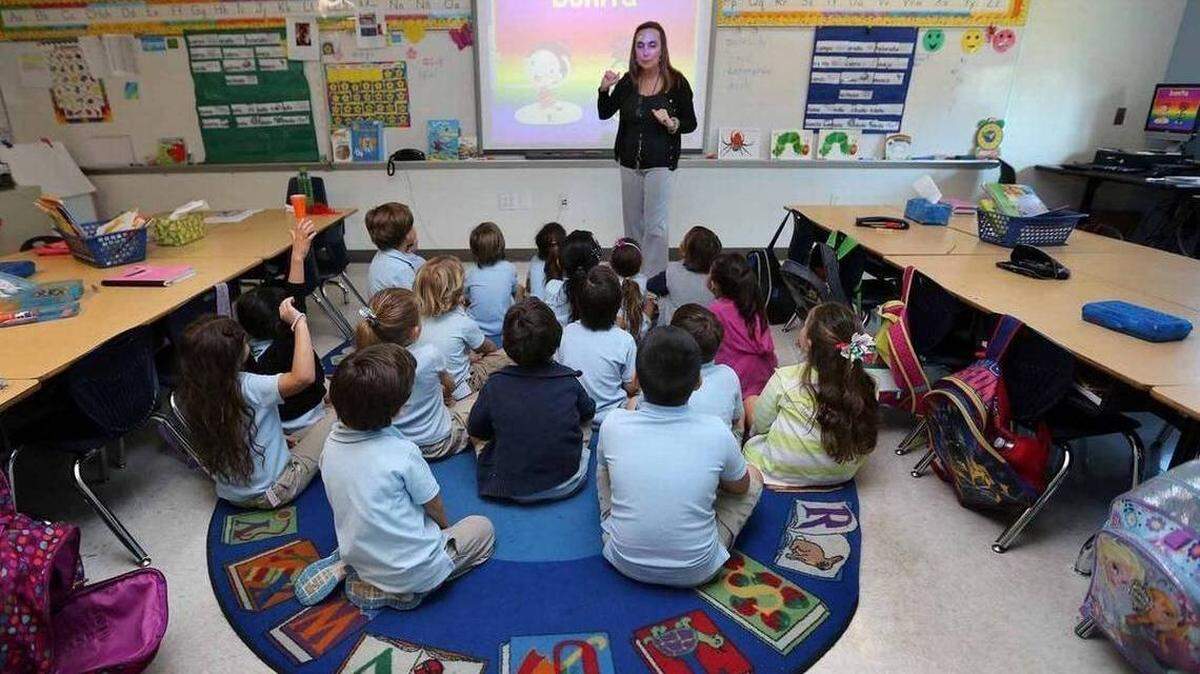
Lawmaker chose party over democracy. In U.S. House District 26, we do not recommend | Editorial
.png "In Congressional District 26, longtime incumbent Republican Mario Diaz-Balart is being challenged by Christine Alexandria Olivo, a teacher who ran unopposed in the Democratic primary.")
READ MORE
Editorial Board November 2022 Election Recommendations
In advance of local and state elections, the Editorial Board interviews political candidates to better understand their views on various issues and how their policies will affect their constituents. The goal is to give voters a better idea of who’s the best candidate for each race. Read our November 2022 recommendations below:
Expand All
The Editorial Board takes the threats to this nation’s fragile democracy seriously. It’s a concern that has informed our choices for the U.S. House of Representatives. Here is the Board’s recommendation in Florida’s Congressional District 26.
In Congressional District 26, longtime incumbent Republican Mario Diaz-Balart is being challenged by Christine Alexandria Olivo, a teacher who ran unopposed in the Democratic primary.
The newly reconfigured district spans the state, running from Wynwood, Overtown, Hialeah and Doral to Collier County, including parts of Immokalee, Everglades City and Naples.
Olivo is an appealing grassroots candidate focused on ground-level issues such as evictions, a living wage, immigration, climate gentrification and registering voters. She’s a first-generation Haitian American who ran for Congress once before, in 2020, losing in the Democratic primary for District 24 to incumbent Congresswoman Frederica Wilson. Confusingly, Olivo ran as an independent, though she says she has always remained a Democrat and has been a Democratic committeewoman.
Diaz-Balart has been in Congress for 20 years. He’s well known to voters as the member of a prominent, Cuban-American political family, South Florida’s most senior member of Congress and standard bearer for the Cuban-exile community. He served in the Florida House and Senate before he was elected to the U.S. House in 2002.
He told the Miami Herald in a statement that he wants to work on “restoring public safety and ensuring that parents have control of their children’s education” if reelected. He also said he’d focus on fighting inflation, energy costs and upholding the rule of law. Diaz-Balart’s record includes working on immigration reform for more than a decade. Recently, he also worked on legislation that helped secure $136 million for school hardening and $800 million for Everglades restoration. There’s no doubt South Florida has benefited from his long experience in Congress.
The Board recommended him in the 2018 election, in part for his ability to work across the aisle. He said then that, “I listen. I’m not hyper-partisan and I get things done.”
Those word ring hollow now. Hyper-partisan is exactly what he has become — and far worse.
Diaz-Balart voted to back ex-President Donald Trump and fuel the Big Lie, even when it was apparent that there was no credible evidence to do so. Over and over, he has stood with Trump on unfounded and divisive claims that the 2020 election was stolen, his actions helping enable those who would overturn a legal election.
Miami-Dade voters may well put Diaz-Balart back in office but they — and we — cannot let him off the hook.
Diaz-Balart’s priorities became clear on Jan. 6. Hours after mobs of Trump supporters tried to take over the U.S. Capitol — threatening to hang Mike Pence as members of Congress fled in fear of their lives — Diaz-Balart nonetheless returned to the trashed and sullied symbol of our democracy and voted in favor of challenging Arizona and Pennsylvania’s Electoral College votes.
In an op-ed in July 2021 rebutting a Herald editorial, Diaz-Balart wrote: “I maintain that actions in Pennsylvania were in clear violation of the United States Constitution, and several constitutional scholars agree.”
He added later: “In Pennsylvania, the secretary of State and the state’s judiciary changed election regulations in the days leading up to the election.”
A week after the attack, while the world was still reeling from the sickening images of the Capitol being overrun, Diaz-Balart again showed where his loyalties lay. He voted not to impeach the president for fomenting the insurrection. He issued a statement preaching a focus on “healing” and said impeaching the president a week before his term ended was “unnecessarily divisive and unwise.”
Time has shown us how wrong Diaz-Balart was. Trump has continued to be a corrosive force within this country and may run again. He should have been impeached and opposed at every turn, in the courts and by Congress. Instead, we could find ourselves returning to the Trump nightmare, thanks to the likes of Diaz-Balart.
And, finally, in May 2021 — still less than six months after the attack — Diaz-Balart voted against bipartisan legislation allowing creation of the Jan. 6 commission to investigate what happened on that deadly day.
He was wrong. It was important for the whole country to learn the stomach-turning details of that day, as we now have — that Trump knew the crowd was armed when he told them to march on the Capitol, that the mob came within 40 feet of the vice president and that Trump did nothing to stop the attack for 187 minutes, watching it unfold on the TV in his dining room, refusing pleas to call off the attackers as they rampaged through the building at the heart of American democracy. The commission has done the important work of laying down a marker, creating a historical record for generations to come.
And yet in a recent Local 10 interview on “This Week in South Florida,” Diaz-Balart called the Jan. 6 Commission a “totally false, illegitimate, circus committee.” And yet some 20 million Americans tuned in to the first meeting alone.
Diaz-Balart put party over country in all of these important votes. More than that, he chose party over democracy.
We wanted to ask him about those votes — as well as the rest of his long record — but Diaz-Balart turned down our requests to speak with him during the primary and in the general election. In mid-October — less than a month before Election Day — his reelection website still said, incorrectly, that he was running in District 25, his current district, rather than the District 26 seat he is now seeks, after redistricting. Entitlement? Carelessness? Either way, it should make any voter wonder how much he really wants the job.
Olivo is a middle-school educator who teaches math and science. She also runs a small business and was a church youth director. She is “100% for a woman’s right to choose” and said she would push for a “human rights” bill in Congress, if elected, to protect bodily autonomy for all people, including women and transgender people. Though we believe she isn’t ready for Congress — she seemed at sea on Everglades restoration, for one thing — her values and drive to serve could be put to good use in a legislative or local commission seat where she can gain experience in the workings of government.
As for Diaz-Balart, he didn’t hold Trump accountable. But we will hold Diaz-Balart accountable. Despite his long record, we cannot recommend that he keep his seat in Congress. Nor can we recommend Olivo, who is not ready for the job.
The Miami Herald Editorial Board makes NO RECOMMENDATION in U.S. House District 26.
BEHIND THE STORY
MOREWho decides the political endorsements?
In advance of local and state elections, Miami Herald Editorial Board members interview political candidates, as well as advocates and opponents of ballot measures. The Editorial Board is composed of experienced opinion journalists and is independent of the Herald’s newsroom. Members of the Miami Herald Editorial Board are: Amy Driscoll, editorial page editor; and editorial writers Isadora Rangel and Mary Anna Mancuso. Read more by clicking the arrow in the upper right.
What does the endorsement process look like?
The Miami Herald Editorial Board interviews political candidates to better understand their views on public policy and how their policies will affect their constituents. Board members do additional reporting and research to learn as much as possible about the candidates before making an endorsement. The Editorial Board then convenes to discuss the candidates in each race. Board members seek to reach a consensus on the endorsements, but not every decision is unanimous. Candidates who decline to be interviewed will not receive an endorsement.
Is the Editorial Board partisan?
No. In making endorsements, members of the Editorial Board consider which candidates are better prepared to represent their constituents — not whether they agree with our editorial stances or belong to a particular political party. We evaluate candidates’ relevant experience, readiness for office, depth of knowledge of key issues and understanding of public policy. We’re seeking candidates who are thoughtful and who offer more than just party-line talking points.
This story was originally published October 18, 2022 at 8:19 AM.
.png)
.png)



.png)
.png)
.png)
.png)
.png)
.png)
.png)
.png)
.png)
.png)
.png)
.png)
.png)