Ordinary moments turned extraordinary in the final hours before Surfside condo collapse
At 5:15 a.m. on June 23, a baby girl was born.
Her grandmother rejoiced while watching the sun rise over the ocean from her 11th-floor balcony at Champlain Towers South in Surfside. She could hardly contain her anticipation for a ceremony to be held the following day, when the newborn would be named Ita Ainsworth in her honor.
Ainsworth, 66, was to meet the baby at the hospital on that muggy Wednesday, but she was given incorrect visiting hours and missed her chance. So her son, Dovy Ainsworth, connected grandmother and granddaughter on a FaceTime call.
“I tickled the baby, and my mom talked to her, and they had quite a moment,” Dovy said.
Ingrid Ainsworth, who went by her Hebrew name Ita and her nickname “Itty,” laughed and cried at the sight of her 25th grandchild.
“Hi, beautiful. I’m your Bubbe! I’m your grandmother!” she exclaimed. “Your Bubbe can’t wait to see you tomorrow.”
But Ainsworth never got to hold her namesake. Little Ita will only know her grandmother through stories and photographs.
Ainsworth and her husband, Tzvi Ainsworth, 68, were killed when their beachfront condominium building smashed to the ground at 1:22 a.m. on Thursday, June 24.
All told, 98 people died in the collapse of Champlain Towers South, the deadliest catastrophic failure of an occupied residential building in modern U.S. history. In videos of the sudden implosion, the condo looks like it was hit by an earthquake or detonated by dynamite as its 13 floors pancake on top of one another.
Dozens fled from the section of the building that remained standing, but only seven people caught in the wing that collapsed got out alive.
The victims had little chance of survival in the tower that was a ticking time bomb for 40 years, since it was built during Miami’s early 1980s building boom with critical design and construction flaws. Salty air and spray seeped into spindly, cracked support columns, accelerating corrosion and “concrete cancer.”
Why the building fell — what triggered the cascade of calamity that began as the swimming pool deck slab cratered into the underground parking garage, followed seven minutes later by the collapse of 84 units in the central and eastern sections — is the subject of an investigation by forensic engineers reassembling chunks of rubble at a Doral site referred to as “the boneyard.”
Why those 98 people, ranging in age from 1 to 92 years old, were killed in a 25-million-pound avalanche of steel, furniture, appliances, sinks, ceilings, computers, shoes and heirlooms is eternally unanswerable. Tragedy doesn’t explain itself.
What can be reconstructed is how victims and survivors came to be in Champlain South on that night, most asleep inside their piece of paradise, whether placed there by routine, delivered by fate, carried by sorrow or drawn by love.
“What hurts the most is that these people died in their home, in what is supposed to be their safe space,” said Sergio Lozano, 55, whose parents died in the collapse. “They were betrayed by their own home. We recognize the warning signs now, but they never saw it coming.”
A stark pad of gray concrete and a sludge-filled pool soon to be sold at auction are all that remains after the intact part of the tower was demolished on July 4 for fear that it would be blown over by Tropical Storm Elsa. It’s a hole in the soul of Surfside, population 5,651, which had preserved its small-town, retro character by resisting the sky-high zoning choices of neighboring Miami Beach.
Known as the “tower of the abuelas” for the predominance of Cuban Jewish grandmothers and their Shabbat feasts, it had diversified as more families with children moved in. The haven for a multilingual mix of retirees, snowbirds and New Yorkers seeking sunshine was also a second-home investment for South Americans.
But harmony frayed as owners confronted the building’s 40-year safety recertification. Poor maintenance had long been a source of friction. A 2018 engineering report citing “major structural damage” and “abundant cracking” and inadequate drainage fueled more distrust of the condo association board, more complaints about high fees and assessments, more delays of repairs.
Ugly disputes were put aside with new leadership and the decision to finally go forward with a $16.2 million renovation. On that Wednesday, owners received a financial update. Special assessments of $80,000 to $336,000 for each of the 136 units were due starting June 30, according to emails from the board.
Optimism about the upgrade pervaded the aging tower at 8777 Collins Ave. Neighbors greeted each other as they walked on the beach or took a dip in the ocean. Relatives who flew into Miami for a visit shared cafe con leche on balconies. Grandparents made plans with grandchildren. Caressed by the sea air, they never imagined that it was taking its last licks at Champlain South, their beloved Surfside sandcastle.
FOR AN INTERACTIVE LOOK AT THE LIVES OF THE 98 PEOPLE WHO DIED IN THE CONDO COLLAPSE, CLICK HERE
Could see his parents from his place
Antonio Lozano had a follow-up appointment for emergency hernia surgery on Wednesday. Lozano, 82, who lived in unit 903 with wife Gladys, 80, went to Dr. Henry Wodnicki’s office with son Sergio, who adored his parents and had become their caretaker. He’d even moved into Champlain South to be closer to them, but moved last year to Champlain East because he got two dogs, and only service dogs were allowed at South.
Still, Sergio could keep an eye on his parents’ condo from his own. In fact, they waved to each other from their balconies.
“It gave me great comfort to see my mom cooking in her kitchen and my dad sitting in his recliner,” Sergio said. “It was so endearing to see them together.”
Dr. Wodnicki told Antonio Lozano he could resume his normal activities, including happy hour drinks of Chivas.
They talked about ongoing roof work at Champlain South. Dr. Wodnicki lived there, too, and his wife, Jean, was the new board president who sent owners a letter in April summarizing the necessity of extensive renovations: “We have discussed, debated and argued for years now...” Observable damage had “gotten significantly worse,” she wrote. “A lot of this work could have been done or planned for in years gone by. But this is where we are now,”
“There was a lot a bickering between the owners who wanted to bring the building up to date and some older people on fixed incomes who bought when it was cheap and only wanted to do the minimum,” Sergio said. His parents were paying a $100,000 assessment. “There was constant turnover on the board. A previous one wanted to do cosmetic work on the hallways and I wrote a letter saying, ‘That’s like putting lipstick on a pig. We’ve got to do concrete restoration.’
“But I’ve seen spalling 10 times worse in many other buildings, in the Keys, on the beach. Yes, there were leaks and cracks. That doesn’t explain how this building absolutely imploded.”
Dr. Wodnicki expressed hope that the building would be as good as new and the Lozanos left with a buoyant feeling.
Sergio joined his parents that evening for a “Scotch-o-clock” toast to his father’s health. They watched a Marlins game on TV. His mother made pork tenderloin for dinner and his favorite dessert, a custard dish lined with ladyfingers.
Sergio walked home at 10 p.m.
He was awakened at about 1:22 a.m. by what he thought was the roar of a tornado. What he heard was the collapse of the central section of the L-shaped tower, followed six seconds later by the collapse of the easternmost section. He hustled out to the balcony to drag patio furniture inside. He instinctively looked toward his parents’ place and could not believe his eyes. A void. A cloud of dust. A pile of rubble.
“The building isn’t there!” he yelled to his wife. “My parents’ apartment is gone!”
He ran along Collins Avenue to Champlain South, a scene of chaos. Surfside police, first to respond, hurried to the back of the building where body-camera footage shows they heard shrieking and moaning and shone their flashlights over a wall on what they could barely see or comprehend.
“Is there a fire?” one officer asked.
“No, dude, the building is collapsed,” another one responded. Screams of “Help me!” and “Over here!” can be heard.
“Captain,” an officer said into his radio at 1:29 a.m. “Hey, the Champlain Towers, the building, it collapsed. We don’t know. They heard a loud noise and it just came down. Fire rescue is on the way.
“This is huge. I mean, humongous.”
A breathless man ran up to police as thick dust floated through the air. It looked like it was snowing in Miami. He’d rushed down from the 12th floor.
“I hear something fall, I hear like a jet go right through the front of my balcony. I was thinking, ‘Was that a plane?’ Because planes fly by here,” he said. “Bro, the building is gone. You need to figure out the collapse zone. The whole f------ thing came down.”
At 1:34 a.m., two police officers met on Collins Avenue as the sound of sirens grew louder.
“That side is gone,” one said.
“What the f---?” the other said.
“Do you guys even know the layout of the building?”
“No.”
“Half the building collapsed. It’s on that side. So there’s people stuck up there calling for help.”
Sergio took one look at the rear of the building and feared the worst.
“You see 13 stories condensed to 40 feet, there’s no survival,” he said. “I could see that two-thirds of the 04 units were sheared off, furniture dangling, the bedrooms gone. My parents were one unit over in the 03 line that was missing.
“I called my brother and said, ‘Get to the beach. Mom and Dad are dead.’ ”
Antonio and Gladys Lozano’s bodies were found within the first two days of the search-and-rescue operation and identified using DNA from Sergio’s mouth swab. They were found together. In their bed. Sergio hoped they died in their sleep.
“They were intact, thankfully,” he said. “My mom had some damage to her shoulders and a piece of my dad’s skull came out but they did a great job applying makeup and we were able to have open caskets at the funeral.”
Despite paralyzing grief, one of Sergio’s immediate tasks was to buy clothes for his parents and earrings for his mother. All their belongings were lost in the collapse.
The Lozanos were inseparable in life and in death. Their story, like so many at Champlain South, was one of family devotion.
They’d been best friends since she was 12 and he was 14 in Havana. Antonio fled Fidel Castro’s government in 1960 and saved enough money to bring Gladys to Miami in 1962. On the plane, she wore the dress she’d wear in her wedding.
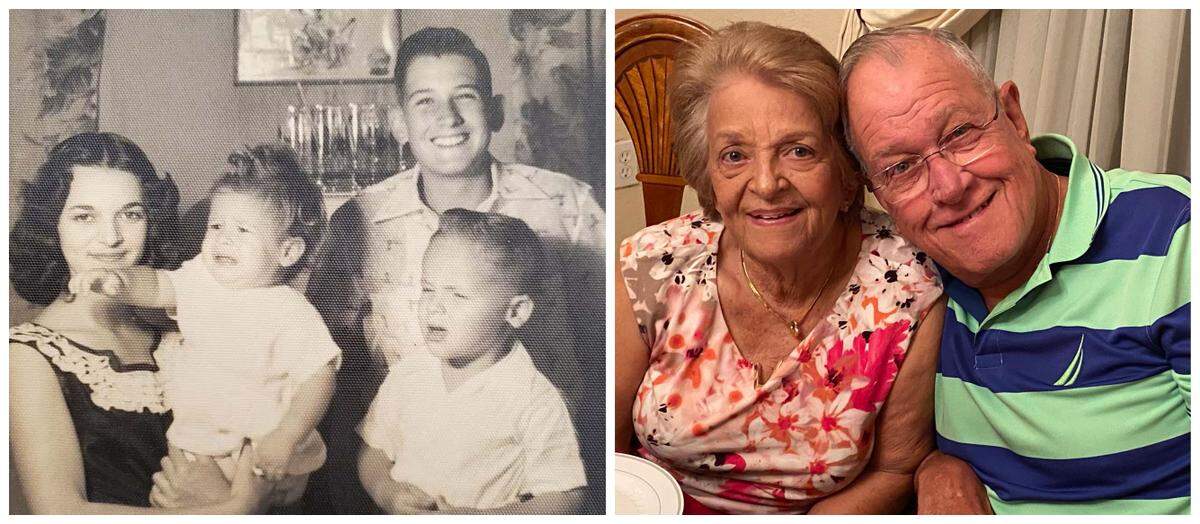
As they remade their lives, they had two boys and worked jobs at all hours seven days a week — loading trucks, washing dishes, waiting tables, developing pictures at a photo lab. They shared a small house with their four parents. Once Antonio got a job as a bank clerk, he doggedly worked his way up to vice president. He never retired because he became chief financial officer for Sergio’s customs brokerage.
When they moved into Champlain 25 years ago, they achieved their dream of living on the beach. It reminded them of Cuba.
“They joked about it, but they actually dreaded being the one who would outlive the other,” Sergio said. “My dad would say, ‘Son, I’ve got to go first because I can’t live without your mother. I wouldn’t know how to live without her.’ And Mom would say the same thing. They were yin and yang.
“I’m grateful and I know they are grateful they went together. It’s a true love story.”
A special moment that did not happen
Pablo Rodriguez talked to his mother every day. Their last conversation will haunt him forever.
On Wednesday evening, they discussed the schedule for Thursday, when Rodriguez’s mother, Elena Blasser, and her mother, Elena Chavez, would drive to Rodriguez’s house in Kendall. They’d take 6-year-old John Paul, Rodriguez’s son and their grandson and great-grandson, to pick out a new bicycle for his birthday.
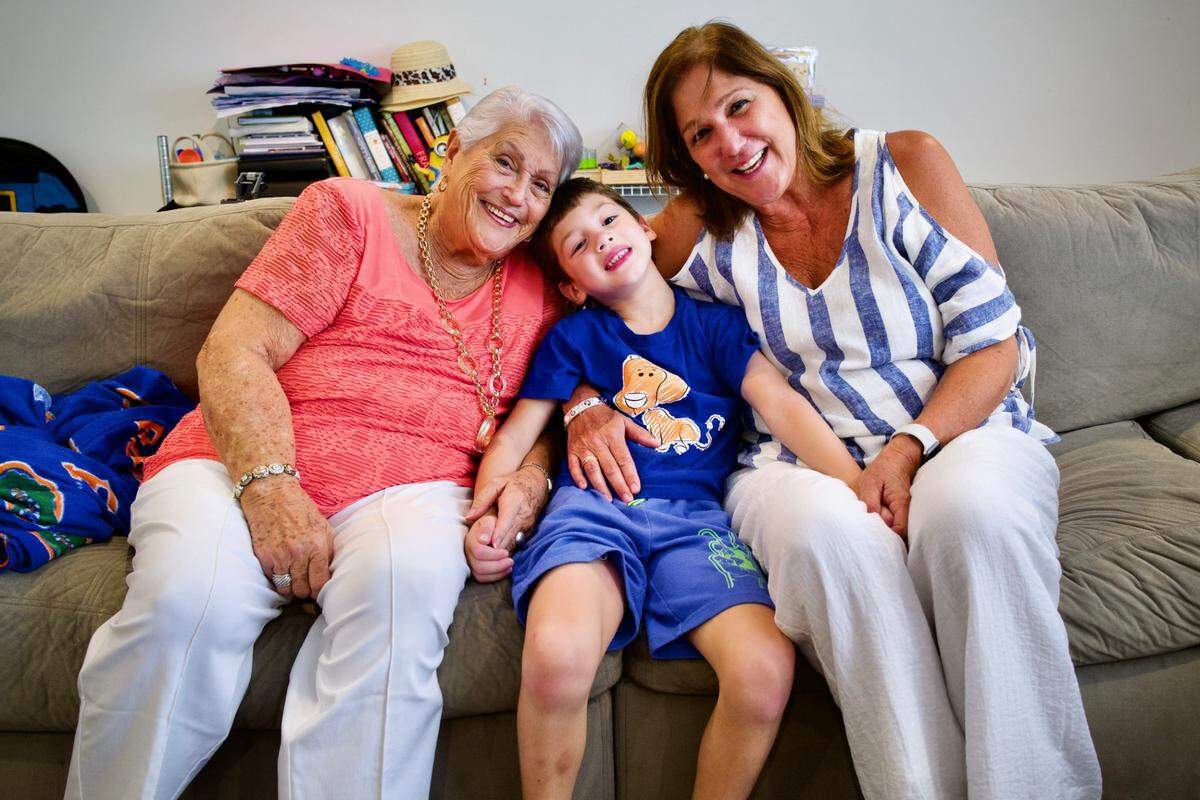
Ama and Yeyi, as J.P. called his ageless abuela and bisabuela, doted on the boy, buying him treats and gifts, going to movies, museums, the Everglades, Disney World. Summer vacation was prime time.
Among their favorite places — the beach and pool at Champlain South, where Blasser, 64, a retired elementary school teacher and vice principal, lived in 1211. Chavez, 87, a former teacher with a second career as a travel agent, lived in Westchester but was staying with her daughter that week.
Blasser seemed more excited about the bike than J.P. She was excited about an upcoming trip to Turkey with her mother. She was excited about cooking lasagna — and Chavez would make her famous frijoles negros — over the weekend.
She was resigned to paying her $120,000 assessment and was among the first owners to pay. Then she mentioned how she was awakened by eerie creaking noises the night before, and couldn’t get back to sleep. It was as if the building was sighing from a weariness deep in its bones.
“I took it in stride, said it was nothing to worry about,” Rodriguez said. “My mom and her neighbors had been complaining for years about maintenance problems, leaking in the garage, cracks around the pool deck, spalling in the balconies, water dripping from the ceiling into her kitchen cabinets. There was a period some years ago when they paid extra fees and had no idea where the money went. There was the so-called Hallway Project to improve aesthetics that never got done.
“A major reason for postponement of renovations was because owners had old suspicions about mismanagement, misappropriation of funds. They had no faith in the condo association or the engineer they hired. And when the city inspector said the building was in ‘good shape’ that only added more questions.
“I remember being annoyed when we’d visit and she got caught up talking to her neighbors for 20-30 minutes about the latest issue. I wish I had listened more closely. I wish we had acted on their concerns.
“I wake up in the middle of the night. I wonder if they ran, if they were scared, if they suffered.”
J.P. grieves. After school on Aug. 31, which would have been Blasser’s 65th birthday, he showed souvenir photos from their trip to Gatorland. Blasser is holding a baby alligator in her outstretched arms, grinning like a little kid.
A chance to restart their lives
The Surfside condo represented salvation or serendipity for many who lived there.
Harry Rosenberg was rebuilding his shattered life at Champlain South, oceanfront corner unit 212.
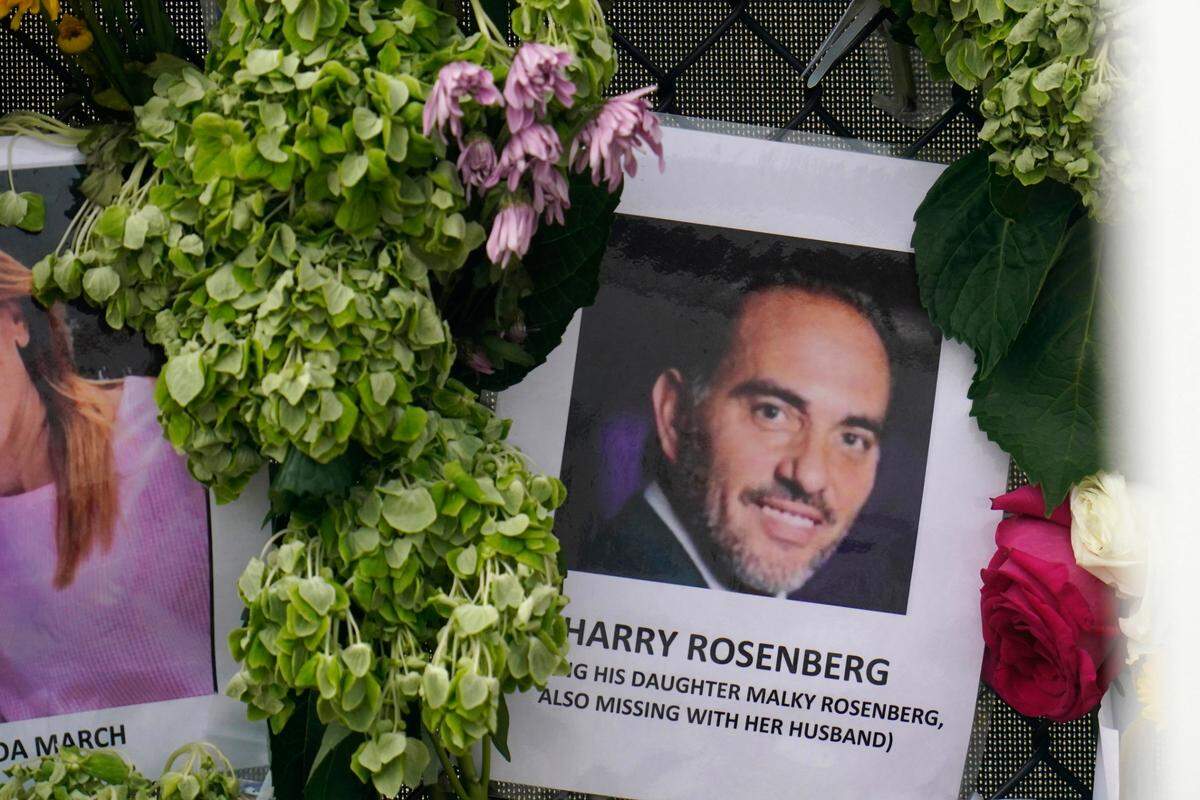
In the summer of 2020, his wife died of brain cancer. In January, his parents, who were Holocaust survivors, died of COVID-19.
Rosenberg, 52, an asset manager, left New York City to start anew in a condo that was within walking distance of The Shul of Bal Harbour, where he had dedicated himself to his Jewish faith, Rabbi Sholom Lipskar said. In honor of his late wife, he raised funds to open Mercaz Shalom, a mental health healing center at a hospital in Israel.
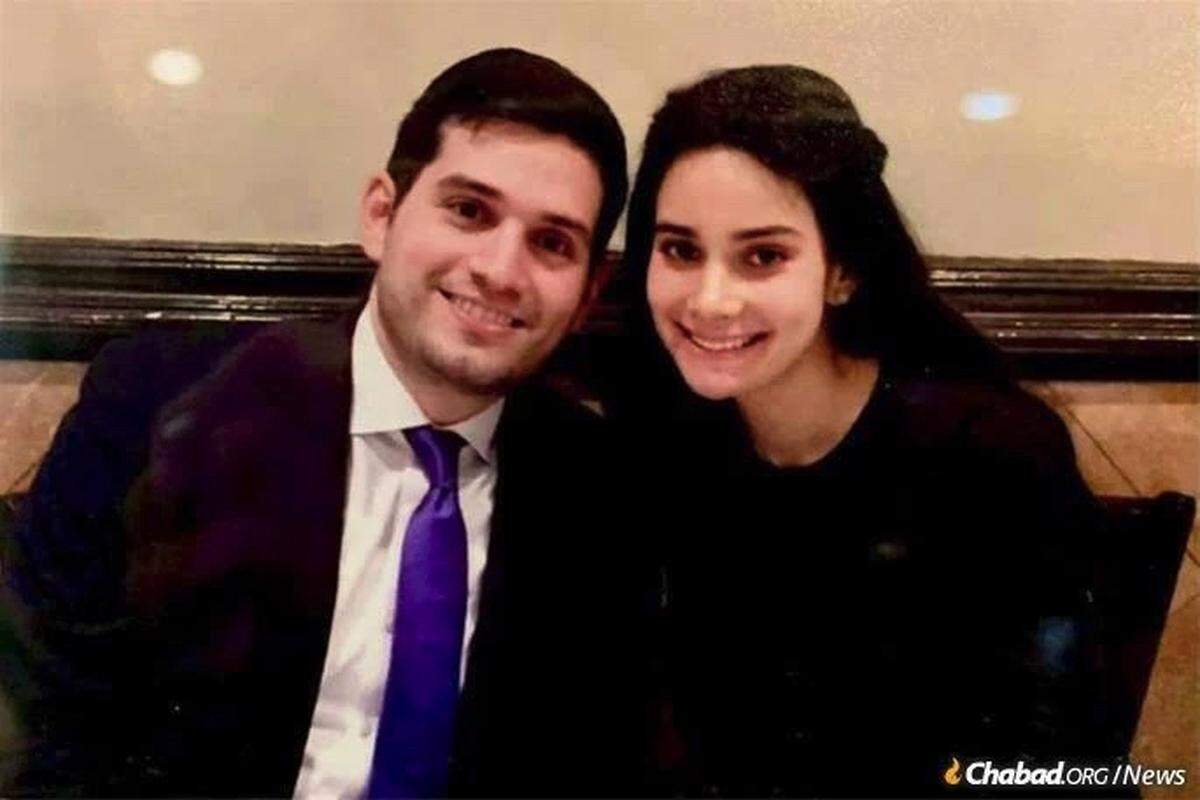
He spent Wednesday in a state of pride and joy, first attending a naming ceremony in New York for his second grandchild, then flying home that evening to host his daughter and son-in-law, who were flying to Miami around the same time from where they lived and worked in New Jersey. Rosenberg looked forward to spending long weekends and celebrating the Sabbath with his four children and their spouses at his new place. Lisa “Malky” Weisz, 27, and Benny Weisz, 31, were the first to visit.
Their bodies were recovered on three successive days, July 7, 8 and 9.
Linda March left New York City behind after a decade of loss: Her sister and mother died of cancer, her father passed away, her marriage ended in divorce. March, 58, was also recovering from a bout of long COVID.
In Surfside, the ocean breeze cleared her mind. She rode her pink cruiser bike every day. Described as a gregarious person with a Joan Rivers-style sense of humor, she had made friends with seemingly everyone in the building. An attorney, March was renting furnished unit 1204 and using the second bedroom as a home office.
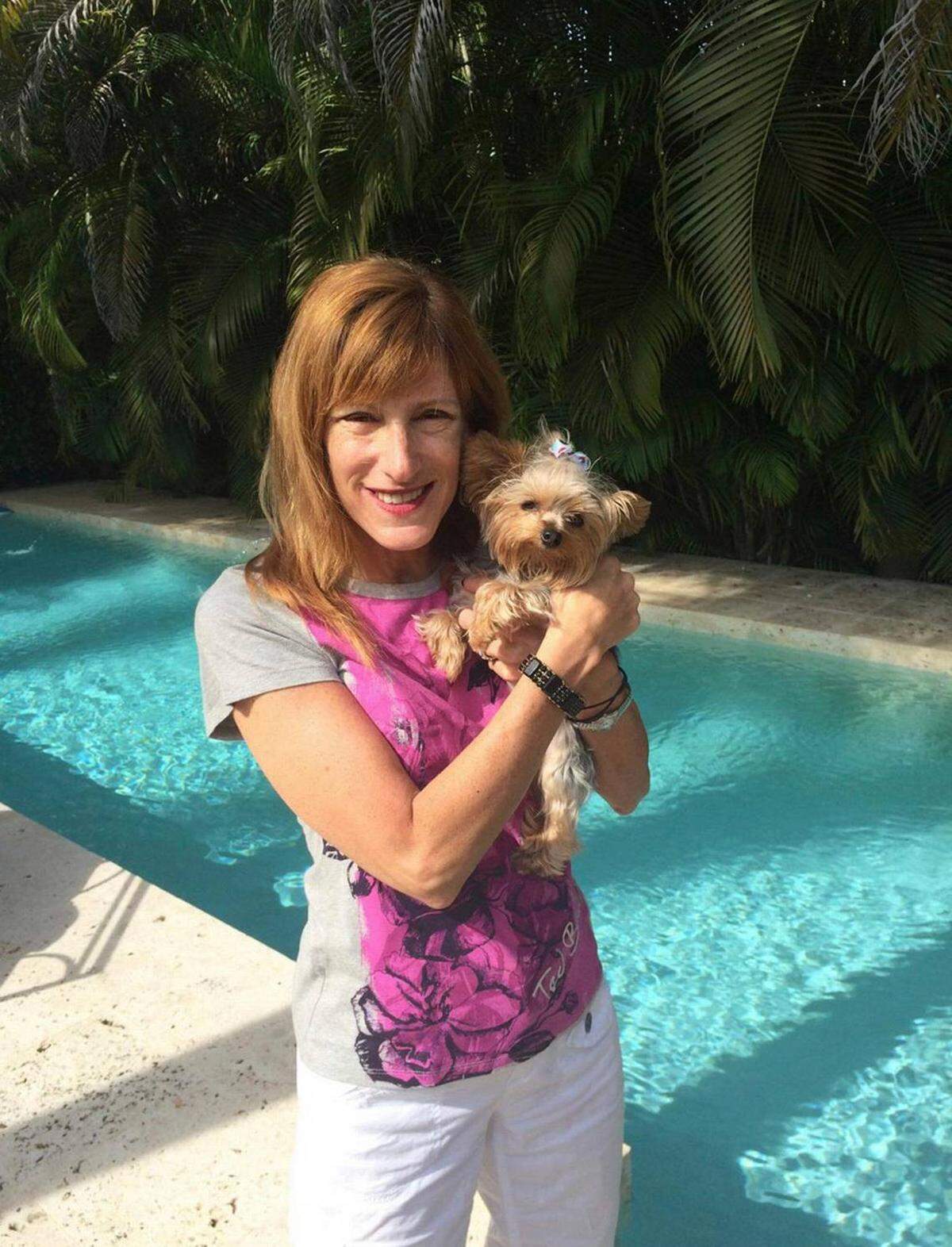
But constant roof repair noise grated on March’s nerves and she was looking for another apartment. Two hours before the collapse, she talked on the phone with a friend about politics and her decision to break her lease after seven months.
The next day, when photos of the ruin of Champlain South circulated worldwide, March’s friends recognized her unit, its interior exposed like a dollhouse, with a white bunk bed and black office chair sitting precariously close to the edge of the severed bedroom.
“I joked, ‘I’m going to take the top bunk when I visit,’ ” said friend Rochelle Laufer.
The master bedroom was gone. March’s body was recovered July 5 but was one of the last to be identified, on July 21.
.JPG "MIA_100BUILDINGCOLLAPSEDS (1).JPG")
March’s neighbors in 1210 happened to be home Wednesday night between trips. Richard Augustine, 77, soon to retire from the air freight business, flew home from a visit with his son in Los Angeles on Wednesday to repack and catch an early Thursday morning flight to Chicago to visit his daughter.
Augustine shared the condo with his late wife’s best friend, Elaine Sabino, 70. She was a JetBlue flight attendant, home temporarily after traveling from San Francisco. Sabino, a Gatorette baton twirler when she was a University of Florida student, was a baton coach and judge at competitions. She stayed fit by belly dancing. She made sure Augustine packed his diabetes medication.
“The main thing people know about Elaine is she’s always there to give you a hand in everything you’re doing,” Sabino’s friend Shelly Angle said. “She was the ultimate hostess, on the airplane, everywhere.”
The bodies of Augustine and Sabino were found July 6.
Two sets of newlyweds were starting their lives together. Dr. Ruslan Manashirov, 36, and Nicole Doran-Manashirov, 43, a physician assistant, picked the condo because it was near her job. Nicole “Nicky” Langesfeld, 26, and Luis Sadovnic, 28, were living in Sadovnic’s grandfather’s unit 804. He proposed to her on the Champlain beach.

Oresme “Gil” and Beatriz “Betty” Guerra were moving out of 910. They spent Wednesday transporting furniture to their new place and painting a room in it. What if they had moved the week before? Would they still be alive?
Their neighbors in 901, David Epstein, 58, and his wife Bonnie, 56, were supposed to be back in New Jersey for the summer, but had delayed their return because their dog was sick and David was in physical therapy sessions all week as he recovered from a kite-surfing shoulder injury. What if he’d ridden his Jet Ski instead of his board? Would they still be alive?
The ‘miracle’ that saved her son
Manuel “Manny” LaFont and his godson, Andreas Giannitsopoulos, planned to go fishing Thursday with LaFont’s two children, Mia, 13, and Santi, 10.
Giannitsopoulos, 21, a Vanderbilt University student, was visiting from Houston and scheduled to fly home Thursday evening.
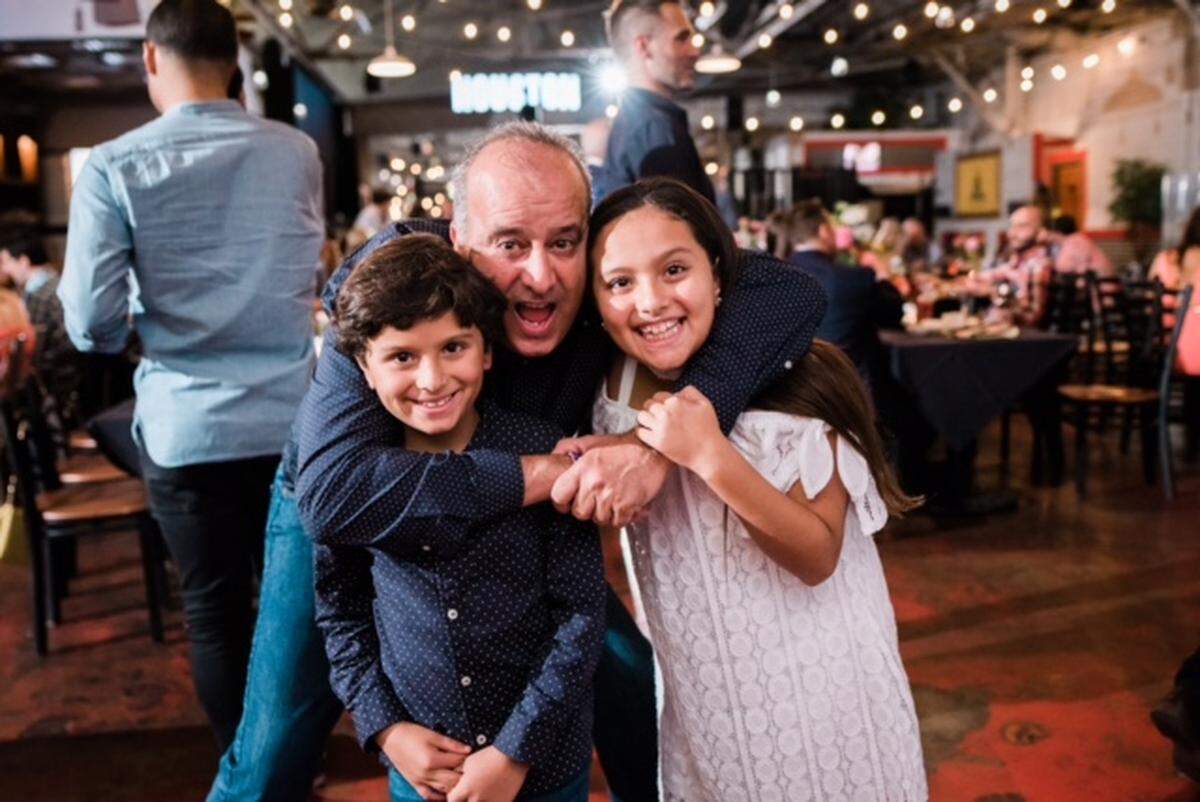
LaFont, 54, had lived in 801 for more than a decade, previously with his kids and wife, Adriana, before they divorced and she moved to Aventura. They shared custody of the kids.
As Wednesday unfolded, Mia and Santi skipped day camp at the Surfside Community Center. Mia went shopping at Aventura Mall with her mother and Santi went to baseball practice with his father. LaFont coached his son’s team, the Astros. But it rained, and practice was canceled.
LaFont called Adriana to ask if Santi could sleep over since everyone was getting up early Thursday to go fishing. They were watching a soccer game on TV, Brazil vs. Colombia.
“But I just had this feeling I wanted to be with Santi that night,” Adriana said. “Manny got upset. So he passed the phone to Santi. I asked, ‘Mi amor, do you want to stay with Papi tonight?’ Santi was quiet, and to me that silence meant he wanted to come home. And Manny drove Santi home around 10 p.m., when normally he would want me to pick him up, and I’d be too tired, and Santi would stay at Champlain.
“I still get butterflies remembering that moment, because that was our miracle that saved Santi.”
Adriana was to drive the kids back to LaFont’s condo at 7 a.m., but at 3 a.m. she was awakened by a call from Giannitsopoulos’ sister, who lives in California and was watching a TV news report about a building collapse in Surfside. She begged Adriana to go to Champlain.
“I drive there. I see 100, 200 emergency vehicles and flashing lights and I think, ‘Jesus Christ, this is a disaster,’ ” said Adriana, who was directed to the community center. There she saw her Champlain friends, including Raysa Rodriguez, who lived in 907, a unit on the front side of the building facing Collins Avenue that was still standing.
“Manny didn’t make it,” Rodriguez told Adriana. “He’s 801. It’s impossible.”
Another friend showed her a cellphone photo and said, “I’m so sorry. It’s bad. Manny’s part of the building doesn’t exist anymore.”
But Adriana refused to believe it. She ran to the beach and walked south as fast as she could.
“I used to jog on that beach and play with my kids on that beach. I lived there, my kids were born there, so I know the landscape and the buildings very well,” she said. But it was dark and she was in a panic. “I look at a building, I count eight floors up to Manny’s unit and I see the lights on. I call Manny’s sister and I tell her, ‘Thank God, Manny’s light is on!’
“But then I turn and realize I’m looking at the wrong building. I’m looking at Champlain East. I walk farther and I see a black space where my eyes are trying to see walls. I see the walls are on the ground. I see the smoke, the broken balconies, the bunk bed on the top floor. It’s Champlain South. Manny’s unit is gone.
“I screamed and my knees gave out and I fell to the sand.”
Adriana phoned LaFont’s sister: Take the first flight to Miami. She began praying. She called out to her ex-husband: “Manny, if you’re alive, keep breathing for the kids!
“His love for his children was so big, that if he had a chance, that love would have kept him alive,” she said.
One day later, on June 25, LaFont’s body was found.
“That was our second miracle. He was complete. He had all 10 fingers. Nothing penetrated his body,” Adriana said.
Giannitsopoulos’ body wasn’t found until June 30, not near LaFont. His girlfriend told Adriana he texted her around 1:15 a.m.: “I feel thunder. I feel the building shaking.” And she texted back: “Don’t worry. I’ll see you tomorrow.”
“Maybe Andreas ran down the hall and down the stairs because they found him with the second floor and the damage was terrible,” Adriana said.
LaFont’s funeral was the first funeral daughter Mia had ever attended. She asked to give a eulogy for her father. He used to say “Sleep with the angels” when he tucked her into bed.
“So she told him it was his turn,” Adriana said. “ ’Papi,’ she said. ‘Sleep with the angels.’ ”
Fateful visits of friends, family
Of the 98 dead, 27 were visitors to Champlain South. Why were they there that night, of all nights? Bad timing? Cruel misfortune? Why? It’s a question that reverberates through the empty days and weeks, as awful as the sound of the buckling building.
A joyous spur-of-the-moment decision took three lives. Late Wednesday afternoon, six friends attended the Vincent Van Gogh immersive art exhibit in downtown Miami. Three went home afterward. But two accepted Margarita “Maggie” Vasquez Bello’s invitation to an improvised pajama party at her place, 411 Champlain Towers South. Vasquez Bello, 68, Francis Plasencia, 67, and Rosa Saez, 70, died during their sleepover.
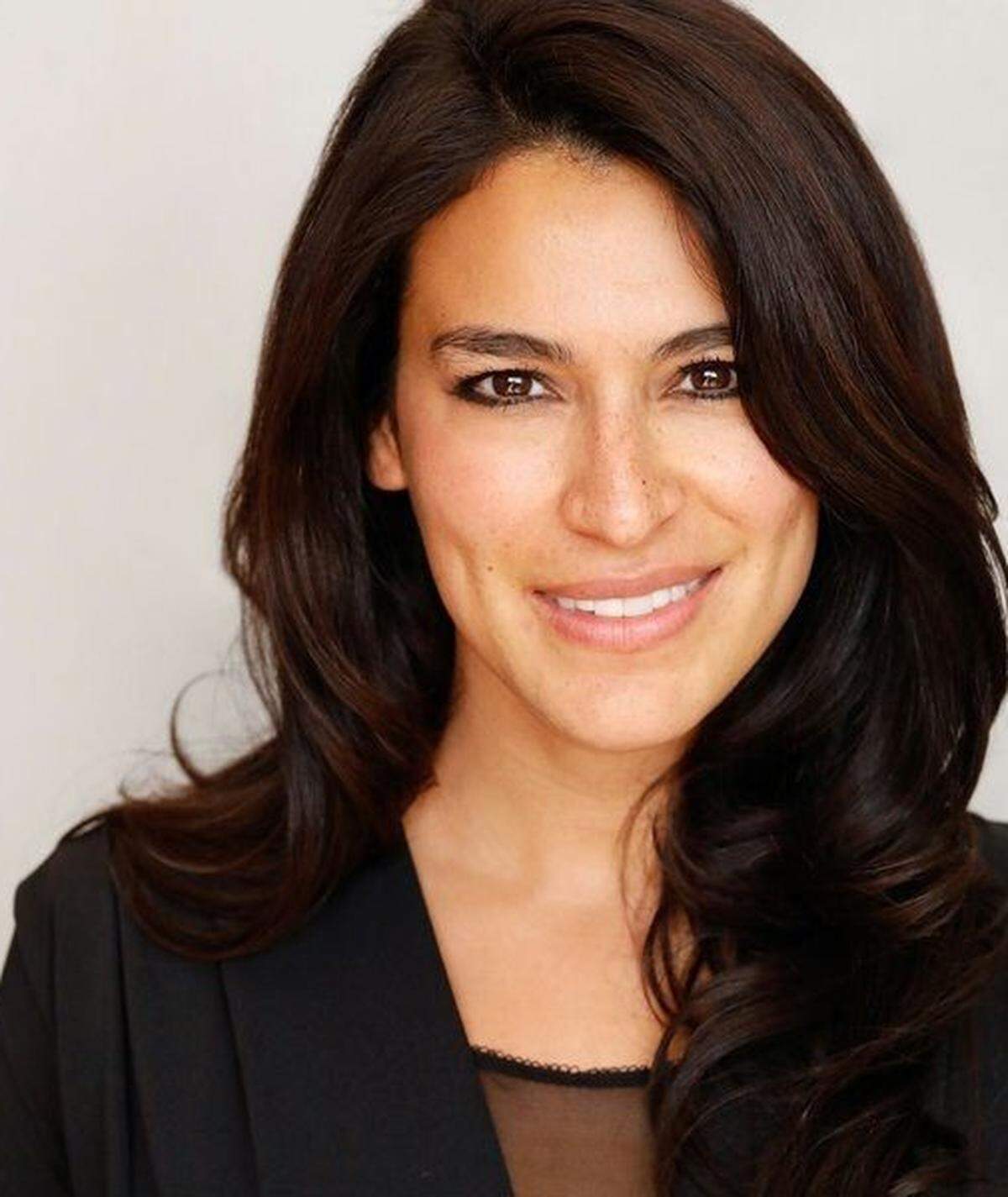
Theresa Velasquez, 36, had just arrived from LAX on Wednesday evening to visit her parents Julio Velasquez, 67, and wife Angela, 60, at the condo where they’d lived for 10 years, unit 304. Theresa was a Live Nation entertainment executive who loved to come home to where she’d started her career as a Miami Beach DJ. She was named one of Billboard’s 40 Industry-Shaping Pride List LGBTQ Executives in 2020.
Gary Cohen, 58, a psychiatrist from Birmingham, Alabama, also arrived Wednesday and was staying with brother Brad Cohen, 51, an Aventura orthopedist, in 1110 while he visited their ailing father in Boynton Beach. Brad Cohen’s wife and 12-year-old daughter were staying at a different condo in Miami Beach that night and his teenage son was at a summer kibbutz program in Israel.
Jay Kleiman, 52, had flown in from Puerto Rico and was staying with his mother, Nancy Kress Levin, 76, in 712 and down the hall from his brother, Frank “Frankie” Kleiman, 55, who lived in 702 with his wife, Ana Ortiz, 46, and stepson Luis Bermúdez, 26. Jay was to attend the Thursday morning funeral of a close friend from their Miami high school who had died of COVID-19.
Deborah Berezdivin, 21, a cousin of the Kleimans and like them a member of the close-knit Cuban-Puerto Rican Jewish community, had also traveled from San Juan for the funeral. Berezdivin, a George Washington University student, was staying at her family’s condo, 812, with her boyfriend, Ilan Naibryf, 21, a University of Chicago physics major.
Nancy prepared one of her popular Cuban, Puerto Rican, kosher combo meals Wednesday night. All seven people who gathered to share it perished in the collapse.
.png "image (8).png")
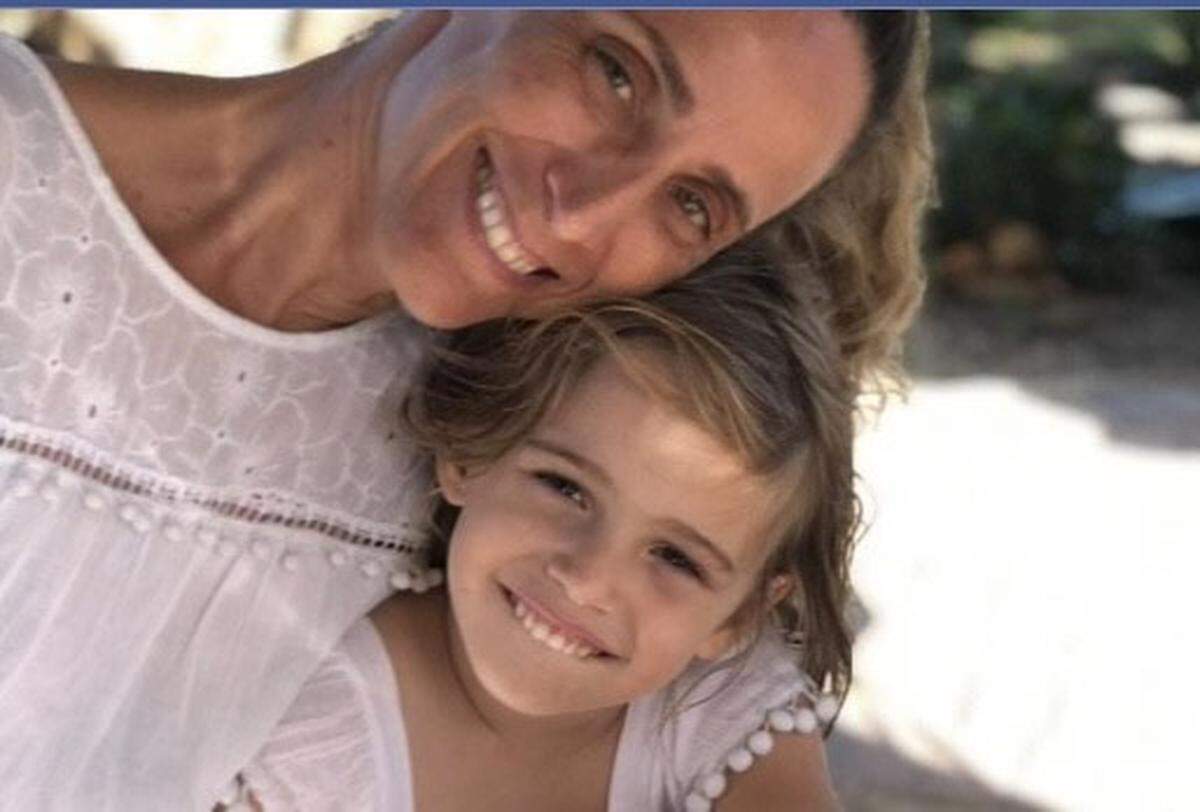
Three generations of the Cattarossi family were killed: Gino Cattarossi, 89, and his wife, Graciela Ponce de León, 86, their daughter Graciela Cattarossi, 48, and her daughter, Stella, 7, and their older daughter Andrea Cattarossi, 56, a mother of three who was visiting from Argentina while her father underwent heart surgery.
The younger Graciela liked to play tennis on the court across the street that became a memorial site. She was a photographer, and just hours before the collapse had been texting with a friend about the friend’s pregnancy and her ideas for taking pictures to document it.
Three Argentines staying in 803 died. Andrés Galfrascoli, 44, plastic surgeon to the stars in Buenos Aires, his partner, Fabián Núñez, 57, a theater director, and their 5-year-old daughter, Sofía, were staying with a friend in Hollywood to wait out the coronavirus surge in their country and get the vaccine, which had become scarce in Latin America. They were also known as advocates for the rights of gay families. They were staying at the friend’s Champlain condo for just 24 hours, so Sofía could play on the beach.
Three members of the Barth family from Colombia — Luis Fernando, 51, his wife, Catalina Gómez, 46, and their daughter, Valeria, 14 — were also COVID-19 refugees, in town to get their shots.
Anastasia Gromova, 24, of Montreal was visiting former McGill University classmate Michelle Pazos, 23, in 412 before moving to Japan to teach English.
Juan Mora Jr., 32, a Belen Jesuit Preparatory School graduate working in Chicago, was visiting parents Juan Sr., 80, a Bay of Pigs veteran, and Ana, 70, assistant to the Belen principal who organized church mission trips to the Dominican Republic.
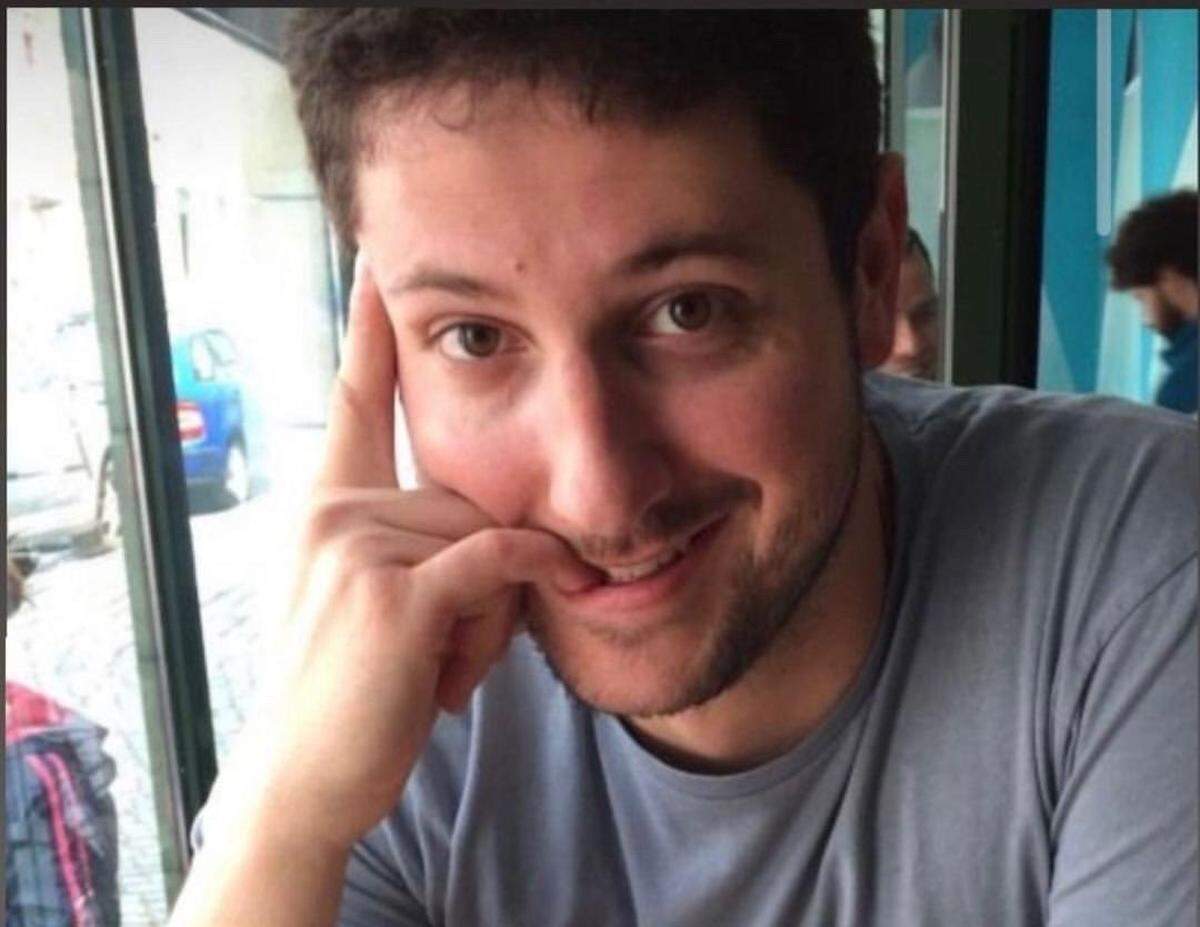
Leidy Vanessa Luna Villalba, 23, sent a message Wednesday to her mother back home in their farming village in Paraguay, assuring her she had landed safely in Miami and saying how excited she was to explore the beautiful beach. It was her first journey outside her native country. Villalba worked as a nanny for the sister of the first lady of Paraguay. She was earning money for her parents and for nursing school.
The family — Sophia López Moreira, 36, her cattle rancher husband, Luis Pettengill, 36, and their three children, Luis III, 3, Anna, 6, and Alexia, 9 — was staying in 1010. They celebrated father Luis’ birthday on Wednesday.
Their bodies were recovered July 7 and 8.
Mike and Cassondra “Cassie” Stratton lived in Denver, but were spending time at their Surfside condo during the pandemic. Mike, 66, a Democratic political strategist, was on business in Washington. His wife, Cassie, 40, a fashion model, actress and Pilates instructor, was often in New York but happened to be at the condo and was writing in her blog Wednesday night.
She called him at about 1:20 a.m. from their balcony, frantic, as the building shuddered and she described what she thought was a sinkhole gaping open on the pool deck below their 410 unit. She had witnessed the first stage of the progressive collapse, when the pool deck and surface parking area caved into the basement parking garage.
Then the line went dead.
Plucked from balconies
There were those who escaped as the tower groaned and toppled. They were the luckiest, if one believes in luck. They survived miraculously, if one believes in miracles. They were in the right place at the right time — in some cases by a matter of seconds and a matter of inches.
Raysa Rodriguez, in 907, in the section that did not fall, thought an earthquake had hit at 1:22 a.m. The building was “swaying like a piece of paper,” she said.
“Yadi! You got him?” she called out to her neighbor Yadira, who had grabbed her 10-year-old son, Kai, and their Maltese puppy. Rodriguez had just phoned her brother, Fred. He didn’t answer but she forgot to hang up, so her reactions were captured on a voicemail recording that was released by her attorney.
“Let’s leave! Let’s try the stairs. But wait, I heard voices. I got to check on these guys,” Rodriguez said, proceeding to knock on several doors. She noticed a concrete column had crashed through the ceiling. The elevator shaft was exposed. “Let me check the stairs.”
When she opened the exit doors to the outside stairwell, she “saw the devastation and heard pleas of ‘Please help me! Don’t leave me here!’ ” she said.
“Oh, my God! What the hell! Yadi! The whole entire building is gone. Anybody over there? Hello? Who’s there?” Rodriguez yelled on the voicemail recording. Screams and whooping alarms can be heard in the background.
She led her friend, the boy and a neighbor in her 80s with a walker down the crumbling stairs, but when they reached the ground floor, the exit was blocked and they could hear water flooding the garage. “I knew being electrocuted was a possibility,” Rodriguez said.
They climbed back up to the second floor, where they saw the door to 209 was open. They stumbled inside, struggled to push open the sliding doors, stepped onto the balcony and waved to firefighters below, who maneuvered a rescue basket to the railing and plucked the group to safety.
Rodriguez trembled in fear and anger. An owner since 2003, she had been one of the most vocal about maintenance problems, documenting leaking pipes, rusted rebar and falling chunks of concrete in the garage with video and photos she sent to the condo association board in 2018. She thought about the financial report she’d received Wednesday as she watched other neighbors being rescued from balconies. She later accused the association of “reckless and negligent conduct” in a lawsuit.
Barry and Ofi Cohen — who said the building “looked like it had been hit by a missile” — made their way down from their third-floor unit in the intact section to mayhem in the garage, helping an elderly couple along the way. But they feared they would drown and returned to their balcony, where they were rescued by firefighters with a ladder.
The Cohens are plagued by nightmares, said Ofi’s brother, Isaac Osin.
“They’re going through survivors’ guilt,” he said. “I’m a Vietnam combat veteran. I still go to a weekly group meeting where we don’t talk about war — we talk about how to get through each day, because what you have in your head might put you right back in Vietnam.
“All the people who got out in Surfside will have to deal with those PTSD triggers for the rest of their lives, or they will find themselves right back in that building.”
Rescued from the rubble
On the opposite, ocean side of the building, the horror was of another dimension.
Only seven of the 105 people who were inside the section of the building that fell survived the destruction.
Nicholas Balboa was walking his dog when the building went down. Balboa, a visitor from Phoenix who was staying at his father’s place nearby, rushed to the back of the tower. His clothes were turning white as he stared through falling dust at the heap of rubble. He heard a voice.
“I could hear somebody yelling in the debris,” Balboa told the media. “What he was actually saying was, ‘Can you see my hand?’ And I could see a little hand sticking up, waving, moving his fingers, trying to get our attention.”
Balboa and another onlooker clambered up the mound and discovered a boy, Jonah Handler, 15, caught underneath his bed frame and mattress.
“He said, ‘Please don’t leave me,’ ” Balboa said. “We wouldn’t leave him. He looked fairly all right, like very lucky. He had a guardian angel for sure.”
Jonah asked about his mother, but Balboa neither saw nor heard other signs of life. Balboa alerted firefighters with his cellphone flashlight and a rescue crew dug Jonah out using air jacks. A firefighter hoisted him onto his shoulder and strapped him onto a stretcher.
Jonah’s mother, Stacie Fang, 54, was found nearby and taken by ambulance to Aventura Hospital and Medical Center, where she was pronounced dead of blunt force trauma, the first named victim of the Champlain collapse.
Fang, a retail consultant, and Jonah, a baseball player at Monsignor Edward Pace High in Miami Gardens, had been sitting together in his bedroom in unit 1002 when “they free fell to what they thought was certain death,” according to a lawsuit against the condo association filed by Jonah’s father, Neil Handler, and Fang’s brother Kevin Fang.
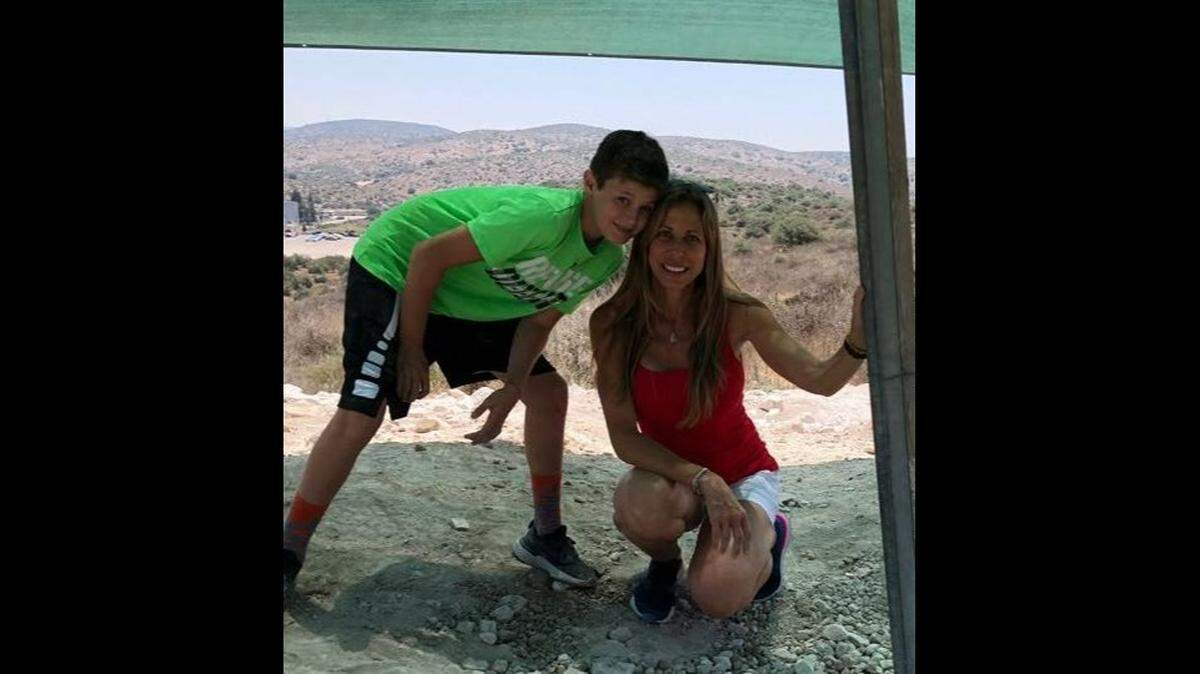
On a GoFundMe page for Jonah, his family refers to him as “our beloved miracle boy” and how they are “completely humbled by God’s amazing grace sparing Jonah’s life in what has been an unfathomable and unprecedented tragedy.”
Like Jonah, Angela and Deven Gonzalez were swept downward about 50 feet in a landslide of concrete, steel and glass. Somehow they came to rest atop the pile.
Angela’s husband and Deven’s father, Edgar Gonzalez, 44, found in a different spot after 15 agonizing days of dwindling hope, did not survive.
The family spent part of Wednesday preparing for a trip to Orlando for a volleyball tournament. Deven, 16, played on a club team and at Miami High. They took their dog Daisy for a walk. That night, they were all in the same bed in 904 watching a horror movie when they thought an earthquake struck.
“I just screamed, ‘Run!’ ” Angela told the “Today” show. “We made it a couple steps out of our bedroom and the floor started to cave.”
Their unit broke off and plunged them off a cliff. When they landed, Angela clawed her way to Deven and dragged her daughter by the arm clear of the debris before she blacked out. Deven, bleeding profusely, screamed for help.
Rescuers took them to Jackson Memorial’s Ryder Trauma Center, where Deven kept insisting to nurses and doctors she couldn’t miss the tournament. Deven’s left leg was crushed, her femur fractured. Angela, who was in an induced coma on a ventilator for five days, suffered a broken pelvis, broken ribs and a lacerated liver.
“She is my ninja,” Angela’s friend Joslyn Varona said in a Facebook update, praising Angela’s “mama bear” instincts and Deven as a “rock star” in rehab after multiple surgeries. “After watching video and seeing what happened, you have no choice but to believe in miracles. They have a reason for being here!”
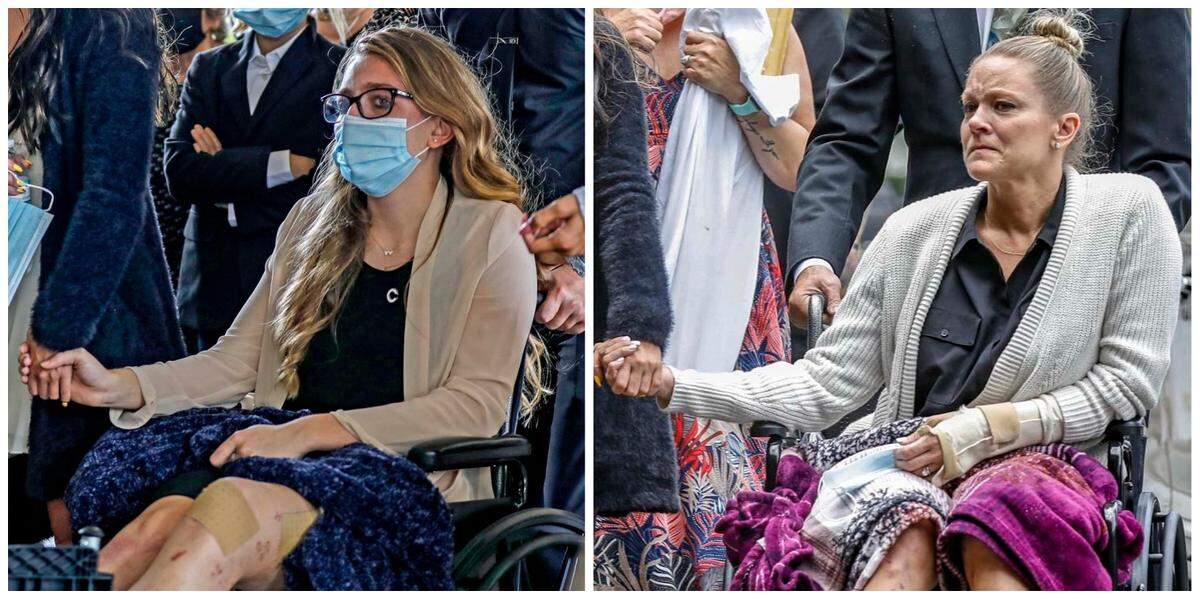
They attended Edgar’s funeral in wheelchairs. Angela, 41, who is a child psychologist specializing in trauma cases, is relearning how to walk, as seen on a Facebook post by her daughter Tayler Scheinhaus. Loved ones applaud as she gingerly, then triumphantly rises from her wheelchair to a standing position.
Deven, seen in the post walking on a treadmill, her left leg covered with scars, won’t be able to play volleyball this season, Miami High coach Nick Baumgarten said in an email, “but remains dedicated to the sport and her team.”
Edgar’s wedding ring was recovered from the debris. Angela, Deven and Tayler made it into a necklace and take turns wearing it, they said in the “Today” interview.
They also recovered one of their three pets. Binx, a burly black cat with emerald eyes, was seen roaming around the rubble pile, meowing loudly, as if searching for his owners. Two weeks after the collapse, he was reunited with Tayler at an animal shelter. They lost Daisy, and their other cat, Hippo. But Binx, the cat with nine lives, is back with his family.
‘It’s an earthquake’
Sara Nir was at her synagogue Wednesday evening for a spiritual celebration marking the day on the Chabad calendar when a notable rabbi was freed from a Soviet prison. Her son Gabe was at the gym. Her daughter Chani was babysitting.
They were night owls, Nir said in her description of the experience to the Miami Herald. Natives of Israel who had moved to Surfside from Atlanta in January, they were renting unit 111 on the ground floor, right above the basement parking garage. Their sliding doors opened out onto the tiled pool deck.
They had considered renting 1204, the unit Linda March wound up renting, but preferred the kitchen in 111 and easy access to the pool.
Once they returned home late Wednesday night, Nir checked emails. Gabe baked a salmon filet. Chani took a shower.
They heard knocking sounds. Nir thought a neighbor was hanging pictures on the wall. But the sounds got louder by 12:45 a.m. Knock, knock, knock. Was the neighbor doing renovation work at that hour? Nir was irritated. At 1:10 a.m., they heard bashing noises, as if someone was taking a sledgehammer to the wall. Chani noticed white particles chipping off the ceiling.
Enough. Nir walked down the hall to the lobby and complained to security guard Shamoka Furman, who was working the graveyard shift. As they discussed the noise, which Furman thought was coming from the elevator, the floor rippled like an ocean wave beneath their feet. They heard a sharp whirring sound, like a drill. The deck was sagging, giving way, giving up after 40 years, its tired, corroded, poorly designed, too-narrow, non-code-compliant support columns poking through the slab, a Miami Herald analysis found — a failure called “punching shear.”
At about 1:15 a.m. Nir dashed toward the lobby windows, looked south toward the surface parking and pool area and saw that the deck outside 111, by the concrete planters that enclosed her patio, had caved into the underground parking garage. Cars were swallowed up, smashing like toys into the vehicles below, jutting into the air at odd angles.
“Call the police! Turn on the alarms!” Nir told Furman. “It’s an earthquake!”
She ran down the hall and saw Gabe, 25, and Chani, 15, wearing a bathrobe and a towel wrapped around her head, standing in the doorway.
“I told my kids, ‘Run as fast as you can!’ ” Nir told CNN. “My daughter was saying, ‘But I’m with my bathrobe,’ and I said ‘I don’t care, run!’ ”
They ran to the lobby where Nir again told Furman to call the police. “What’s the address here?” Furman blurted, momentarily confused. She made two calls to 911, at 1:16 a.m. and 1:17 a.m., reporting a “big explosion” an “earthquake” and “something underground — everything exploded down.”
Furman stayed at her post and dialed residents, ordering them to get out. Some thought the roof had caved in. A lightning strike. A gas explosion. No one imagined that the entire east wing was on the verge of collapsing. It would crumple in two stages, in a span of six seconds.
At the same time, Nico Vazquez and his wife, Gimena Accardi, stepped out of the elevator from the parking garage and into the lobby. They were staying on the third floor.
They were actors from Argentina, known for their roles in “Almost Angels” and “Separated,” who came to Surfside to wait out the coronavirus surge while filming shut down in their country. They had been out for a late dinner with a friend, Argentine comedian Martin Bossi, they’d met on the beach earlier that day.
“At the elevator we felt a tremor, we got to the lobby, we saw dust and smoke, people running and screaming, we heard a roar,” Vazquez wrote in a WhatsApp post to his fans. “We didn’t understand what was happening. We didn’t know if it was a tornado — or an attack. It was the closest thing to a movie. We started running together with three or four other people who were obviously overwhelmed by nerves. Part of the parking lot had fallen with many sunken cars, alarms sounding.”
Vazquez and Accardi ran out the front of the building.
“Between 2-3 more minutes go by not understanding what we were experiencing,” Vazquez wrote. “Then you hear a noise that is impossible to relate because we had never heard it before in our lives.”
Accardi looked back and ran head-first into a palm tree. Surfside police bodycam footage showed Vazquez seeking medical help for her at 1:33 a.m. when he flagged down a police car. “Don’t hit my car!” the officer said while Vazquez asked for help in Spanish. “I don’t speak Spanish,” the officer said and drove on.
The Nirs sprinted across Collins Avenue.
“God watched us, God was waiting for us to leave the building,” Nir told COLlive, an Orthodox Jewish news service. Gabe called 911 at 1:19 a.m. to report an earthquake. They kept running and Nir warned her kids not to look back. “I heard a huge noise behind me but I didn’t want to turn around. I thought the end of the world had come.”
Gabe turned in time to see the building collapse at 1:22 a.m. in a cloud of smoke and dust that expanded until it seemed to be chasing them down the street. Gabe said it looked like a sandstorm. They were choking.
They ran for three or four blocks. Nir knocked on the doors of houses to alert people to what she still thought was an earthquake.
“ ‘Mommy, it’s already late,’ my kids are saying. ‘No one will answer the door,’ ” Nir told the Herald. “I say, ‘It’s an earthquake; we have to tell people to get out of here.’ ”
They made their way to the community center and called Nir’s husband and their father, Eyal, in Atlanta, sobbing and coughing and sweating. They told him they’d left everything in the apartment.
“I believe in miracles and Hashem has shown me signs. Baruch Hashem, I was able to escape from the destruction,” Nir said, thanking God in Hebrew.
A mistake saved her life
Iliana Monteagudo believes in miracles, too, and hers is perhaps the most remarkable. She thanks the Virgin of Guadalupe for guiding her to the wrong staircase, which turned out to be the right staircase. Monteagudo is the only person who escaped from one of the annihilated upper floor units.
For years, Monteagudo, 64, had her eye on Champlain South, a serene place by the seashore that reminded her of Varadero beach in her native Cuba. She used her savings and the money from her divorce settlement to buy unit 611 for $600,000 in December. The condo board told her nothing about an impending special assessment.
June 23 was a hot, regular day. Monteagudo, an elegant, effusive grandmother of three, received the condo board’s financial report and heard that Surfside building official James McGuinness was on the roof, inspecting progress. She went to work, as manager of a small adult living facility. She went to the hairdresser. Back home, she talked on the phone with one of her three sons and listened to Frank Sinatra and Etta James.
Before bedtime, she prepared for a doctor’s appointment, placing pills, wallet and her gold Virgin of Guadalupe necklace by her purse on the dining room table, next to the Guadalupe candle she had lit earlier.
“I light it every day,” she said. “Maria de Guadalupe — the mother of Jesus. I trust Lupita. I have to visit her as soon as I can.”
At about 1:15 a.m., Monteagudo was awakened by “a supernatural force.”
She did not know it, but the clock was ticking on her life and that of 104 others. In about seven minutes, their wing of the tower would fall.
“I opened my eyes and felt something strange,” Monteagudo said. “I thought I left open the sliding door to the balcony. I got up and saw that it was open. I tried to close it. But the building was starting to move and I couldn’t close it.”
She heard a crackling noise, like wood burning in a campfire. She saw a 2-inch wide black fissure snaking down her living room wall.
“A voice in my head said, ‘Iliana, you have to run,’ ” she said. “I ran to the bedroom. I changed from my nightgown into a dress. I forgot to put on a bra! I put on sandals. I ran to the dining room table and threw my things into my purse — pum, pum, pum.
“I blew out the candle of Guadalupe.”
She exited, dashed across the hall and pounded on the door of Hilda Noriega, 92, one of her favorite neighbors. But Noriega was nearly deaf. Anyone who walked down that hall on any given day could hear Univision blaring at high volume from Noriega’s unit, 602. No response.
That’s when Monteagudo was pushed by “the force, the grace of Lupita” toward the stairwell at the opposite end of the hall instead of the one 6 feet from her door. The stairwell she chose, by the elevator, was protected by a shear wall, too few of which were included in the design of the building.
“If I had gone the other way, I’d be dead,” Monteagudo said. “I made a mistake and it saved my life.”
She raced down the stairs, from the sixth floor to the fifth to the fourth.
“When God destroyed Sodom and Gomorrah, he said run and don’t look back. I was running fast.”
It was 1:22 a.m. when the stairway rocked and rolled and she almost lost her footing.
“I heard a bomb go off,” she said. “I don’t want to remember that sound. I was praying out loud, ‘Oh, God, please help me. I want to see my sons. I want to see my grandsons.’ I thought I would be crushed.”
Monteagudo got down the final four flights and shoved open a door into the dark and smoky lobby. She turned on her cellphone flashlight. She heard water gushing and people wailing for help.
Furman, the security guard, had tried to open the front entrance doors, but the power was out, so she crawled through the valet parking window to try to pry them open from the outside. When she saw Monteagudo, she squeezed back through the window.
“She asked, ‘Is it an earthquake?’ ” Monteagudo said. “She took my arm and said, ‘We have to go, mama, follow me.’ ”
Furman led Monteagudo through the wreckage of the garage. It was an obstacle course of concrete shards, fallen beams, twisted rebar, squashed cars, broken pipes, filling with knee-deep water.
“I didn’t know where I was. I had to climb over a 3-foot wall. Shamoka held me up,” Monteagudo said, gasping at the recollection. “I had to jump over a gap, over the water full of cables where I was afraid of getting electrocuted. I can’t do it. I can’t do it. But she encouraged me. ‘Come on, mama.’ I found a column in the hole to step on. She held out her hand. I put my left foot on it and jumped.”
Furman took Monteagudo out to the street, then went back in to help others, including a family of four. Monteagudo had lost her phone and as she bent over to look, she almost got hit by a speeding police car.
At 1:29 a.m., police bodycam footage shows Furman limping up to officers, her uniform and hair frosted in dust.
“I’m security. They got to get out of there!” she said, trying to explain the floor plan of the building to officers who had not yet gone in. “All I heard was throom. Everything went black, the garage, the pool. If they don’t get out...”
What happened, the cops asked.
“I don’t know! I heard boom, boom, boom,” Furman said. “I didn’t think we had earthquakes here. I see live wires sparking in the air. I don’t even know how I made it out.”
Monteagudo and Furman hugged two days later at the Seaview Hotel, where evacuees were housed. Furman was on crutches. They haven’t seen each other since, and are struggling to resume their lives.
“I’m still traumatized,” Furman said softly at her apartment near Miami Gardens, kept dark in the middle of the day by drawn shades. She is one of the forgotten heroes of the ordeal. “My leg is messed up. My car was crushed. I can’t really work. I can’t sleep. I have flashbacks.
“I almost died in that building.”
Monteagudo recently moved into an apartment in Miami Beach, which she can’t really afford on her income. She rents on the 16th floor and is “terrified” of the elevator and the stairs, she said.
“When I came from Cuba, I had one suitcase. Now I have one purse,” she said. “I’m starting over again like I did 50 years ago. I have nothing. None of my pictures. None of my parents’ mementos. I have no past. My past was buried under the rubble.
“I loved Champlain. You should have seen all the decorations in the lobby during the holidays. That was my place in the world.
“My life is a miracle, but I have a horrible depression. I cry a lot.”
She can’t stop thinking about Hilda Noriega. She couldn’t save her. And Noriega had just shown the condo to prospective buyers. After 20 years at the “tower of the abuelas,” she was moving in with relatives.
Monteagudo heard how Noriega’s grandson Michael and son Carlos — who is the North Bay Village police chief — arrived on the scene at 2:30 a.m., desperate to find pockets of life in the debris pile. Carlos stepped on something, looked down and found a birthday card poking out from under his shoe — a 92nd birthday card for his mother, decorated with butterflies, from her prayer group friends.
Noriega’s body was identified June 30.
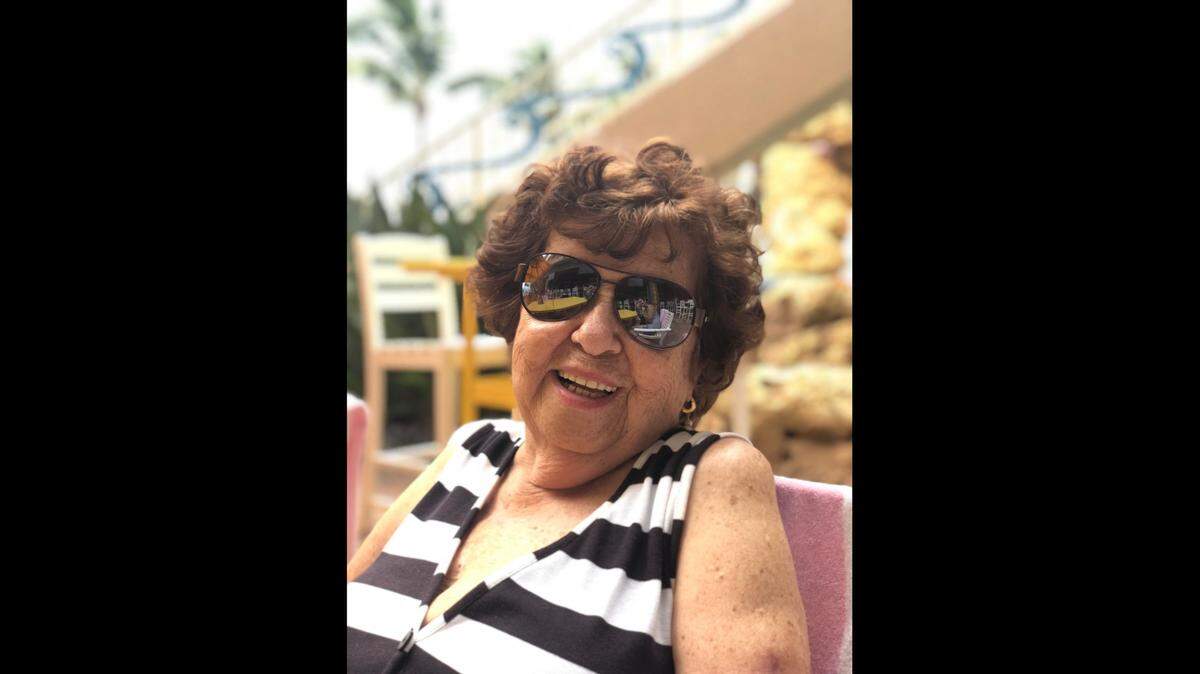
‘Every tragedy has within it something extraordinary’
Dovy Ainsworth’s parents died 20 hours after his first daughter was born.
On that same day, one of his brothers from Brooklyn had signed a lease to move into Champlain South. The family was converging on Surfside, where Itty, a native of Montreal, and Tzvi, an ordained rabbi and former owner of a mining business in Australia, had retired in order to be surrounded by their grandchildren.
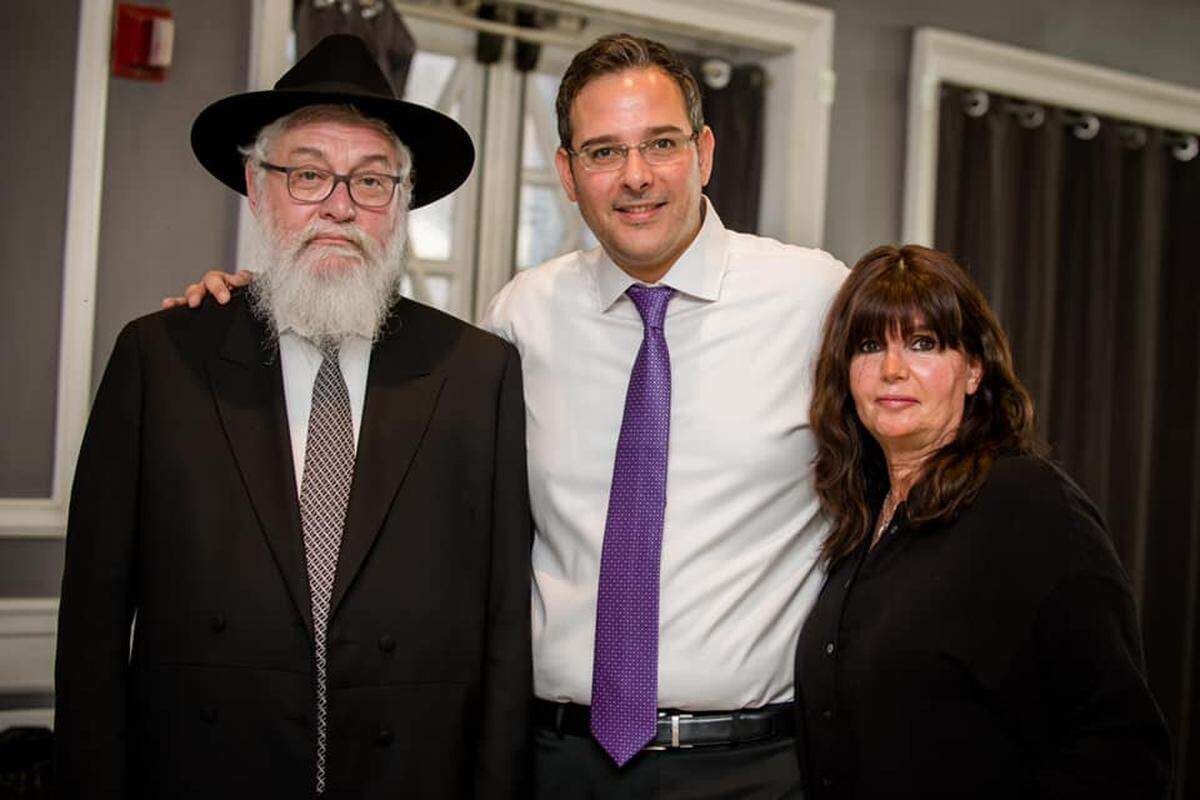
When Dovy’s wife, Sheva, awoke for a 4 a.m. feeding of baby Ita on June 24, she saw a burst of missed calls on her phone. What could they be about? The naming ceremony wasn’t until 9:30 a.m.
They got the news from siblings and from Itty’s brother-in-law, Rabbi Raphael Tennenhaus of the Chabad of South Broward, and from Rabbi Zalman Lipskar at The Shul.
“It was like a Jewish 9/11,” Dovy said.
The Ainsworths were found July 5 by the Israel Defense Forces National Rescue Unit that specializes in urban search-and-rescue missions around the world. Col. Golan Vach “told us he knew right away it was my father because he recognized his big white beard,” Dovy said. “My parents were whole and they were together.”
Vach, wearing his khaki uniform, visited the shiva of the family to reassure them Itty and Tzvi had died on impact and had been handled in accordance with Jewish customs, and he was invited to participate in the Torah reading and naming ceremony for the baby that had been postponed for two weeks.
Tennenhaus shared a message from a classic text capturing the conflicting emotions of that day.
“ ‘Weeping is lodged in one side of my heart, and joy is lodged in the other side of my heart,’ ” he said.
The Ainsworths deserved a miracle but were denied. Faith enables their family to accept the inexplicable, Dovy said.
“If you didn’t believe in God, you wouldn’t be angry at Him, you wouldn’t be praying to Him and you wouldn’t be asking Him why,” said Dovy, who, following Jewish Orthodox tradition, won’t cut his hair or beard during an 11-month mourning period.
Dovy’s sister Chana Wasserman wrote about her mother’s contagious passion for life in an Instagram post:
“My mother’s sense of wonder was the same as that of a 4-year-old,” she wrote. “ ’Doesn’t this tree look magnificent?’ ‘Aren’t you happy we have a 9-hour drive so we can talk for 9 hours straight?’ ‘Doesn’t the air smell amazing?’ ‘Did you see how yellow the sun is today?’ ‘This coffee is delicious; I feel so energized!’ “
At least his mother died knowing a new Ita had been born, Dovy said.
“The soul, spirit and character of a person is brought back into the world and carried on in their namesake,” he said. “I see my mom manifested in my child already. She’s an angel with the same big, expressive eyes. She likes to be held. She’s highly social.
“When I look at her, I understand that every tragedy has within it something extraordinary.”
In the end, it was warmth — of the sun, of one another — that lured those people to Champlain South on that night. So all was not lost in the rubble. The doomed building did not entomb memories. The tumbling tower did not destroy the legacies of the personalities trapped inside. Every single body, every set of remains, was recovered and identified. The names live on.
This story was originally published September 19, 2021 at 6:00 AM with the headline "Ordinary moments turned extraordinary in the final hours before Surfside condo collapse."