Feds’ video shows ‘astronomical’ corrosion, crowded rebar in Champlain Towers debris
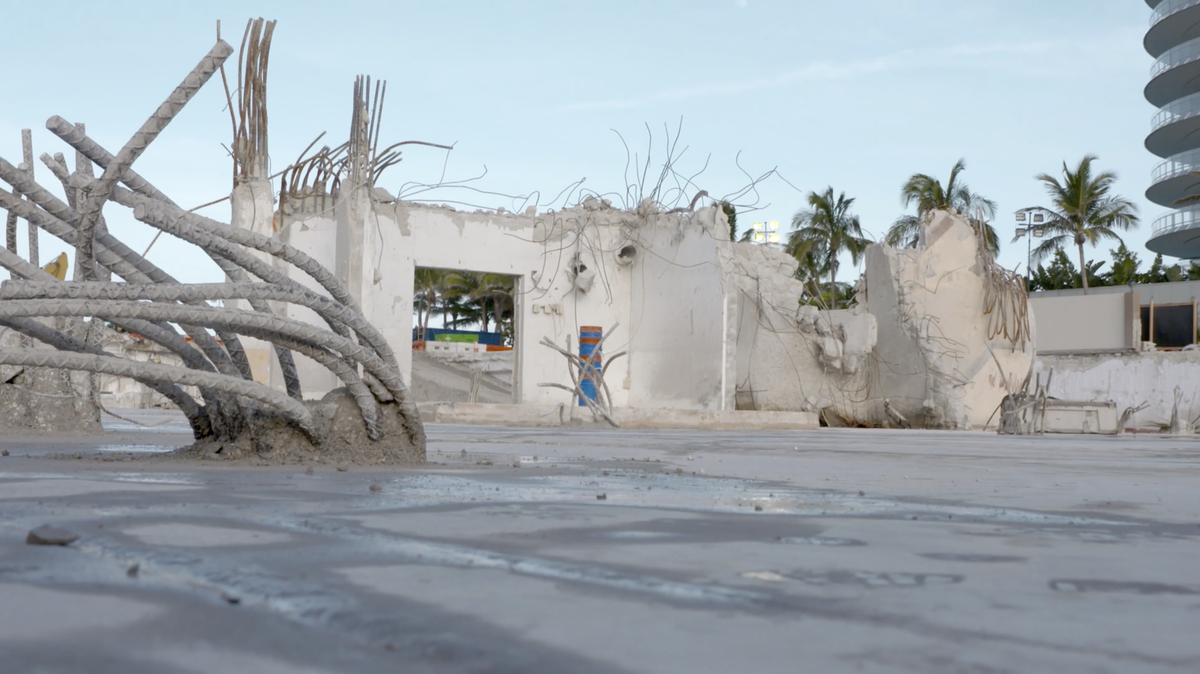
New footage released by a team of federal investigators on Wednesday offered more evidence of overcrowded concrete reinforcement and extensive corrosion in Champlain Towers South — issues first raised by engineers as part of a Miami Herald investigation into the structural integrity and design of the building, which collapsed in June, killing 98.
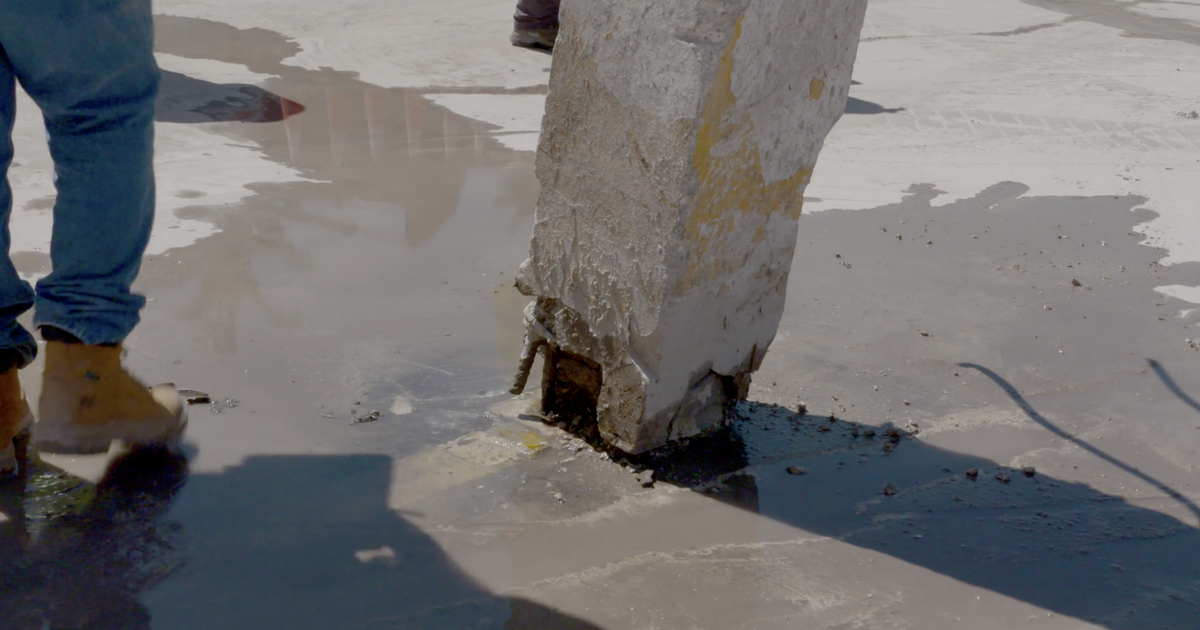
The footage was released by the National Institute of Standards and Technology on the same day it announced the team that will conduct its five-pronged investigation of the disaster, which will be led by Judith Mitrani-Reiser, a Cuban-born engineer who grew up in Miami. Still frames of debris pictured in the video reveal densely packed steel reinforcement in various elements of the building, as well as extensive corrosion where one column met the building’s foundation.
“The corrosion on the bottom of that column is astronomical,” said the Herald’s consulting engineer, Dawn Lehman, professor of structural engineering at the University of Washington. Lehman said the amount of corrosion should have been obvious and documented as part of the 40-year inspection that was underway when the building collapsed on June 24.
“If there’s that amount of corrosion, this should have been fixed,” she said.
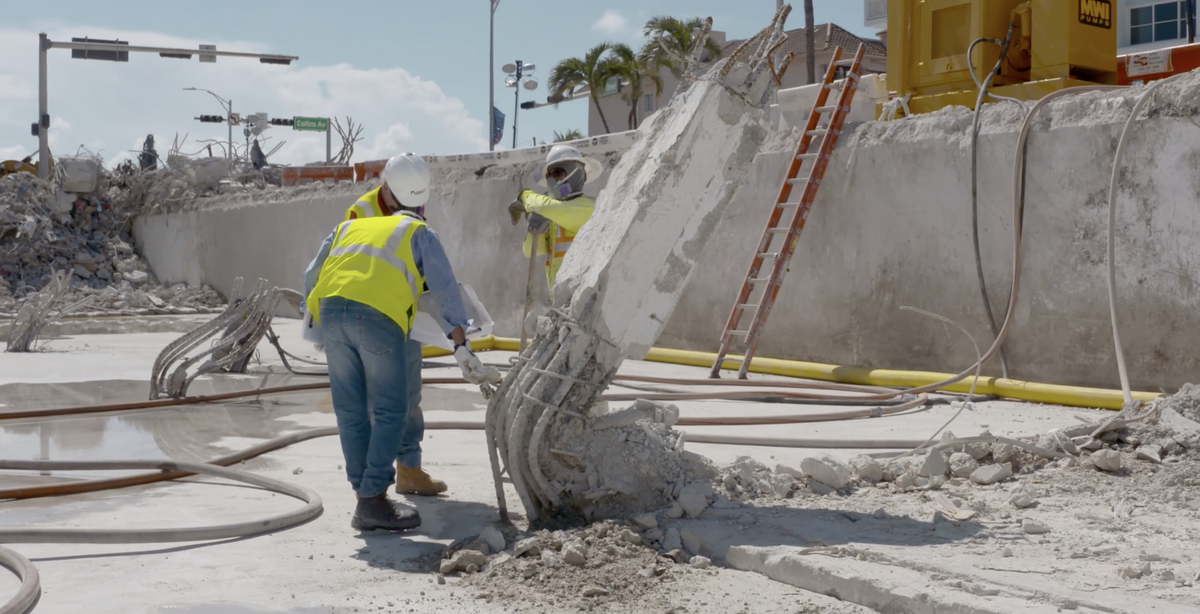
Images in the video show various structural elements of the building — beams, walls and columns — that appear to be overcrowded with steel reinforcement, suggesting potential weaknesses in those elements, Lehman said.
“There is no reason there should be that kind of bar congestion,” Lehman said. The biggest problem with bundling wide-diameter rebar, Lehman said, is that it weakens the bond to the concrete.
The risk posed by “congested” vertical rebar in columns would have been exacerbated at locations where the rebar overlapped, known as “lap splice” regions indicated in the structural drawings, said Abieyuwa Aghayere, a Drexel University engineering researcher who reviewed the NIST video.
“It’s already congested as it is,” Aghayere said. At the splice regions, it would have been “even further congested,” he said.
Concrete can be difficult to pour when rebar is placed too closely together, causing air pockets and weakening its bond to the rebar. The American Concrete Institute sets a minimum and maximum ratio of steel to concrete in columns. But at Champlain Towers South, most column designs did not meet the requirement — sometimes nearly doubling the maximum limit in areas where the largest steel bars were overlapped in the condo’s lower floors, the Herald analysis found. The columns that were too narrow to accommodate the designated rebar were located under the section of the tower that catastrophically collapsed.
The Washington Post and Wall Street Journal both later published stories in which other engineers came to similar conclusions about the narrow column designs.
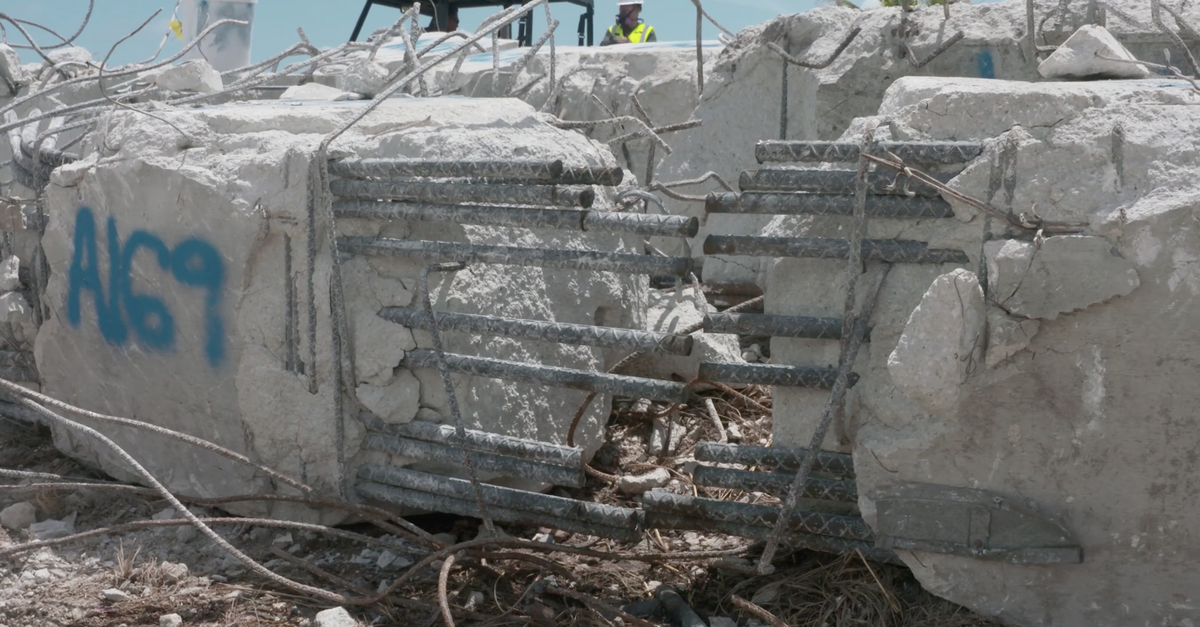
Aghayere said he was also struck by how “powdery” and white the concrete in columns appears to be in the newly released NIST footage.
Typically, stone-like aggregates used to strengthen concrete during construction remain visible over time. But that’s not the case in images from the Champlain Towers collapse site.
“The white color just stuns me,” Aghayere said. Instead of seeing aggregate material mixed into the concrete, “it’s just homogenous,” he said, a likely indication of saltwater damage.
Aghayere said it’s impossible to tell from the images alone whether the concrete used in original construction was weaker than what designs called for, or whether the apparent weakness was the sole result of damage over time.
Either way, he said, he’s awaiting the results of NIST’s testing of the concrete strength. That strength isn’t clear from available condo board records or other documents released by the town of Surfside.
“It doesn’t look like normal concrete to me. What’s going on?” Aghayere said.
When specialists from Controlled Demolition Inc. drilled holes into the concrete of the still standing structure in order to place explosives used in the controlled demolition, they told the company owner that the Champlain Towers concrete was “soft, really soft,” according to an interview in the Wall Street Journal.
This story was originally published August 25, 2021 at 8:01 PM.