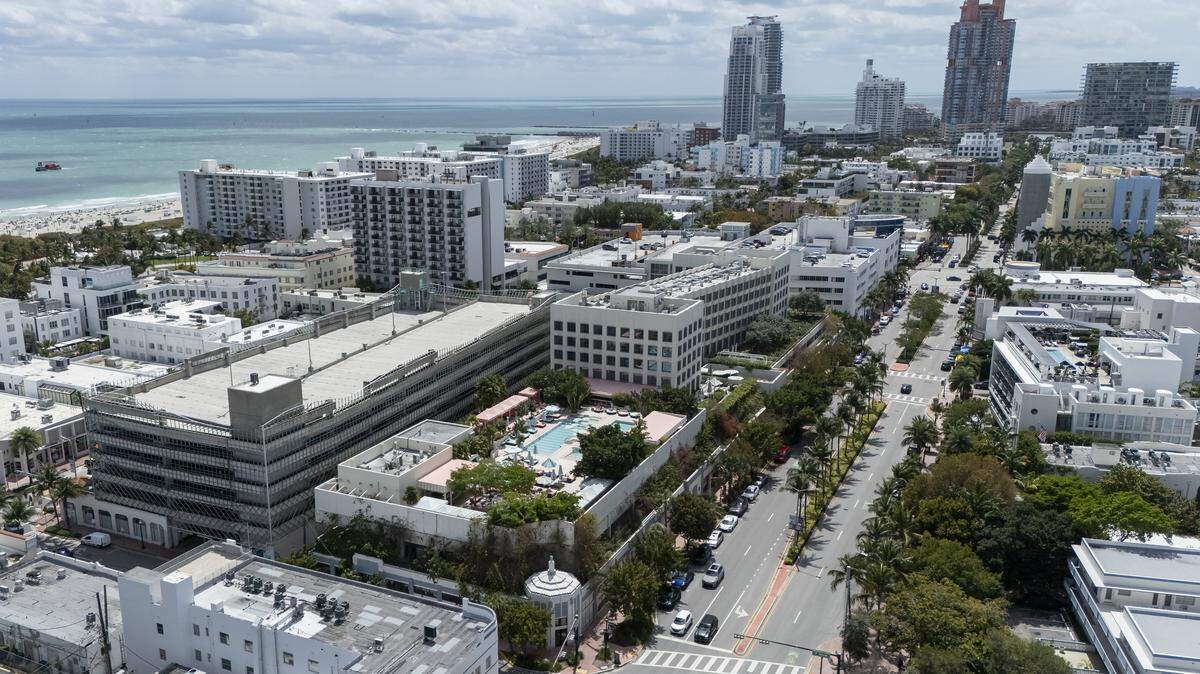
They expected stability but cost of living squeezes Florida seniors like no other group | Opinion
READ MORE
Shrinking Middle
The Shrinking Middle is a series by the Miami Herald Editorial Board that explores how South Florida’s housing crisis has impacted the middle class, as well as solutions to our housing shortage.
Expand All
Home ownership in South Florida does not represent the financial stability that it used to — thanks to inflation and, especially, the high cost of property insurance. This hurts the people who need stability the most: seniors on fixed incomes.
Even those with a good safety net are feeling the pain — people like George Lipp, 72, who’s lived in Cooper City for 41 years. His house is paid off, he receives Social Security benefits and three retirement pensions from different employers. The retired computer programmer loves living in his Broward County suburb with his wife, but he worries about his expenses. “The only thing that’s affecting me is going to Publix and insurance,” he told the Herald Editorial Board.
“I’m just breaking even every month.”
Seniors are the often hidden face of the Shrinking Middle — the name of the Herald Editorial Board’s series highlighting the difficulty of affording a middle-class life given South Florida’s rising cost of living. These are Floridians ages 65 and up who worked their entire lives, saved up, many own their homes, but rising costs are robbing them of the joy and security they envisioned in the later part of their lives.
And if South Florida’s affordability crisis is hurting Lipp, imagine what it’s like for seniors who don’t have the same safety net. Think of those for whom $100 in food stamps, which Congress is looking to cut, is what’s keeping food on their table every month. Or the older people you may see bagging your groceries and taking up other jobs in their retirement.
Owning a home is a symbol of middle-class life. But paying for property insurance is turning that dream into a financial risk that people shouldn’t have to deal with in their older age.
Renting isn’t an answer, either. The median rent in South Florida is $2,440, among the highest in the nation, according to real estate company Redfin.
Lipp was recently notified that the total cost for his car and property insurance was expected to go from $12,000 annually to $14,000.
Florida’s population of people ages 65 and older has been growing, especially since the pandemic, Melissa Nelson, CEO of United Way of Florida, told the Editorial Board. With most of them living on a fixed income, this population is especially vulnerable to housing and healthcare cost changes.
“If a senior is on a fixed income and they don’t have housing [costs] that are on a fixed level, that is going to throw their budget out of whack,” Nelson said. “But even if they do, insurance costs have risen, and that has been really detrimental.”
In Miami-Dade County, the annual “survival budget” — the minimum needed for basic needs like rent and Medicare with out-of-pocket costs — for a senior living alone is $47,200 and $69,750 for two people, according to a new United Way report.
The report highlights a growing financial problem for seniors. In 2023 in Miami-Dade, 42% of senior households were what United Way considers ALICE — Asset Limited, Income Constrained, Employed. These are people who live above the poverty line and typically earn too much to qualify for most welfare programs, but don’t make enough to cover the basics included in the survival budget. Statewide, seniors had the most substantial increase in Floridians below the ALICE threshold between 2010 and 2023.
Another 23% of senior households lived in poverty, meaning that the majority of Miami-Dade’s seniors are barely getting by or not getting by at all.
That’s unacceptable in a state like Florida, a retirement haven that is now increasingly becoming a place only the rich can afford. (Miami’s millionaire population has nearly doubled in the past decade, the Herald reported.)
The state’s lack of income taxes is no longer enough to make it affordable for retirees.
“Florida has not been the most affordable state to live for a while,” Nelson said. “People are moving to North Carolina for that and other states where there’s a combination of what we have: good weather but also lower costs of living.”
Florida seniors are being forced to make tough decisions that can put their long-term stability at risk.
“I’ve seen seniors drop their flood insurance and then have a hurricane come up,” Nelson said.
In Lipp’s case, he considered foregoing insurance but changed his mind. Instead, he increased his deductibles to keep his premium about the same.
Fortunately, he still has choices — a hallmark of what it means to be middle-class. But other seniors are being left behind, their only choice to get by.
Click here to send the letter.
BEHIND THE STORY
MOREWhat's an editorial?
Editorials are opinion pieces that reflect the views of the Miami Herald Editorial Board, a group of opinion journalists that operates separately from the Miami Herald newsroom. Miami Herald Editorial Board members are: opinion editor Amy Driscoll and editorial writers Isadora Rangel and Mary Anna Mancuso. Read more by clicking the arrow in the upper right.
What's the difference between an op-ed and a column?
How does the Miami Herald Editorial Board decide what to write about?
The Editorial Board, made up of experienced opinion journalists, primarily addresses local and state issues that affect South Florida residents. Each board member has an area of focus, such as education, COVID or local government policy. Board members meet daily and bring up an array of topics for discussion. Once a topic is fully discussed, board members will further report the issue, interviewing stakeholders and others involved and affected, so that the board can present the most informed opinion possible. We strive to provide our community with thought leadership that advocates for policies and priorities that strengthen our communities. Our editorials promote social justice, fairness in economic, educational and social opportunities and an end to systemic racism and inequality. The Editorial Board is separate from the reporters and editors of the Miami Herald newsroom.
How can I contribute to the Miami Herald Opinion section?
The Editorial Board accepts op-ed submissions of 650-700 words from community members who want to argue a specific viewpoint or idea that is relevant to our area. You can email an op-ed submission to oped@miamiherald.com. We also accept 150-word letters to the editor from readers who want to offer their points of view on current issues. For more information on how to submit a letter, go here.
This story was originally published June 24, 2025 at 6:00 AM.
.jpg)
.JPG)