Nearly half of Floridians are living paycheck to paycheck, report finds
They’re your child’s middle school teacher. They’re the seniors bagging your groceries at Publix. They’re the bank teller, the nurse, the neighbors. They might even be you. They’re nearly half of all Floridians, and they’re struggling to make ends meet, a new study finds.
They’re what United Way calls ALICE — Asset Limited, Income Constrained, Employed. Per a recent report from the organization, most of those 4 million Florida households have a steady income, and they typically earn too much to qualify for state benefits like food or childcare assistance. But they’re living paycheck to paycheck.
Only three states — Louisiana, Mississippi and New York — have higher percentages of residents under such financial pressure, United Way found.
Florida’s affordability crisis is the major driver. A surge of transplants during and after the pandemic, rising costs, especially for housing and child care, and insufficient wages have pushed more Florida households to the financial brink.
And if those pains aren’t addressed, warns Florida Chamber of Commerce CEO Mark Wilson, many might be forced to leave the state, potentially undermining the local economies and communities they help sustain.
Why are people having a hard time affording life in Florida?
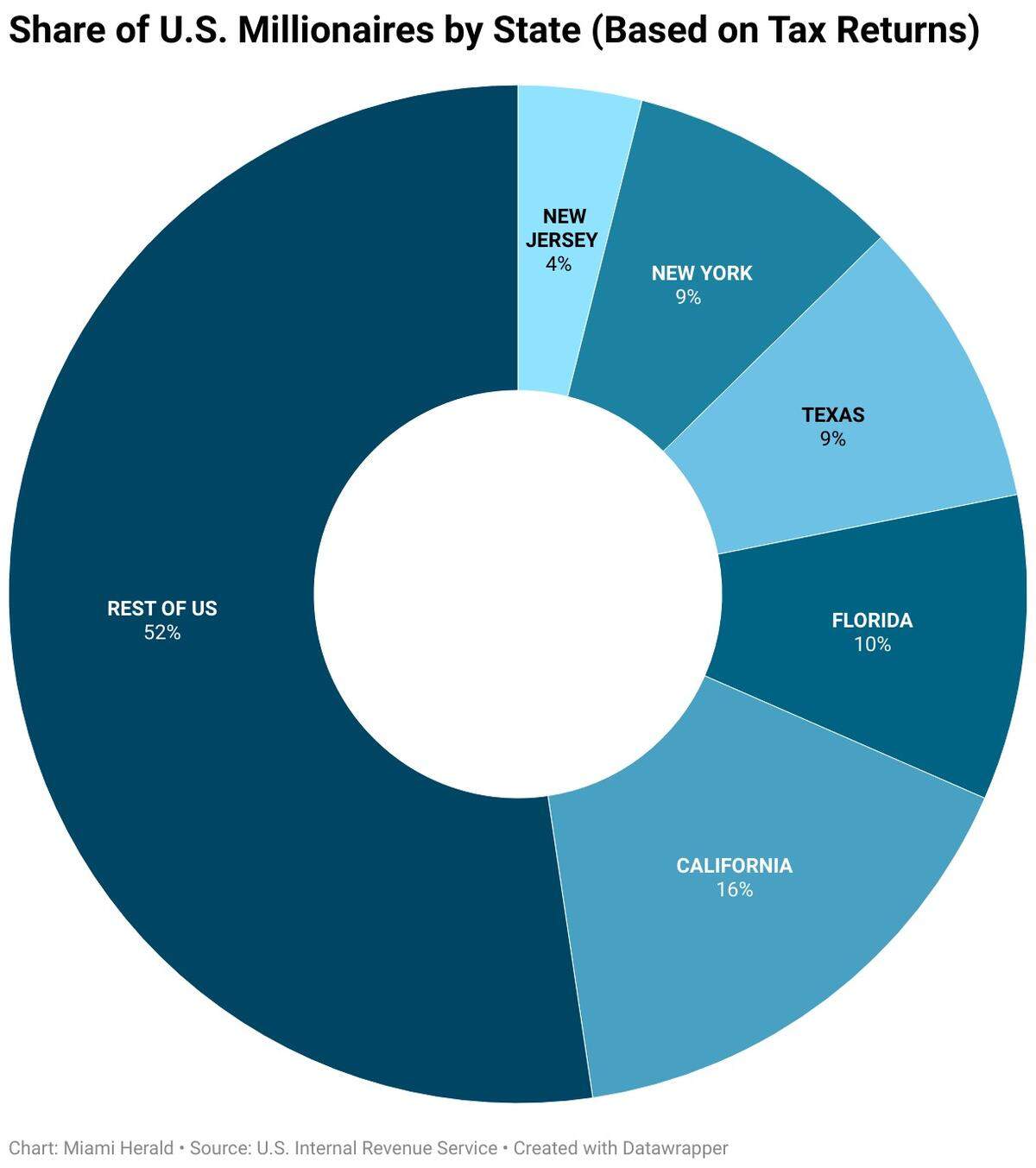
Florida has long drawn out-of-staters. But COVID-19 supercharged things. During and after the pandemic, the state — and South Florida in particular — saw a massive influx of people and wealth. Miami’s millionaire population nearly doubled. High earners from around the country were drawn to Florida’s warm weather, favorable tax policies, relatively cheap real estate and laissez-faire attitude toward pandemic restrictions.
Inflation drove up the cost of living nationwide. In Florida, price increases were amplified by a booming housing market that strained many locals. Housing costs, especially for renters, have pushed Florida families into financial precariousness more than any other household expense, said United Way of Florida CEO Melissa Nelson.
More than half of the state’s renters are cost-burdened, spending at least 30% of their income on housing. Nearly three in 10 are severely cost-burdened — housing eats up more than half of their monthly paychecks.
Price surges in other major line items, including child care and food, have outpaced wage growth, further pressuring Florida households.
“People were working so hard — a job, a side hustle, thinking they were getting ahead,” said Stephanie Hoopes, national director of United Way’s United For ALICE initiative and the index’s creator. “And then they go to the grocery store,” where U.S. Department of Agriculture data shows prices have risen 30% since 2020, she added.
It’s that wheel-spinning dynamic and the anxiety it produces that are the “clear and present danger of ALICE,” remarked Wilson, the Florida Chamber of Commerce president. “If we don’t make living in Florida more affordable,” he said, many people in the workforce, particularly parents aged 20 to 45, could leave “Florida, and they’ll take their kids with them.” In doing so, they’d deal a blow to the state’s labor pool.
That’s not hypothetical. It’s a reality that’s already playing out.
According to the FIU Metropolitan Center, Miami-Dade County alone lost more than 130,000 residents to migration between 2020 and 2023. More than a quarter of them were in their 20s, a demographically important pillar of the future workforce, the center reported.
Twenty-somethings are Florida’s most financially strapped age demographic. According to United Way, nearly seven in 10 households led by someone under the age of 25 have trouble making ends meet.
Their senior counterparts, those over the age of 65, are doing only slightly better — 55% of senior Florida households are economically strained, one of the highest rates in the country, Hoopes noted.
“Social Security gets older households above the poverty level,” she said, “but not to the ‘survival budget’” — United Way’s measure of a household’s basic monthly expenses.
Per its calculation, the average two-adult, two-child household in Florida needs $74,000 a year to make ends meet. But costs of living vary widely across the state. To get by in Miami-Dade, where the cost of living is higher and 53% of households are under acute financial pressure, that same family needs nearly $90,000.
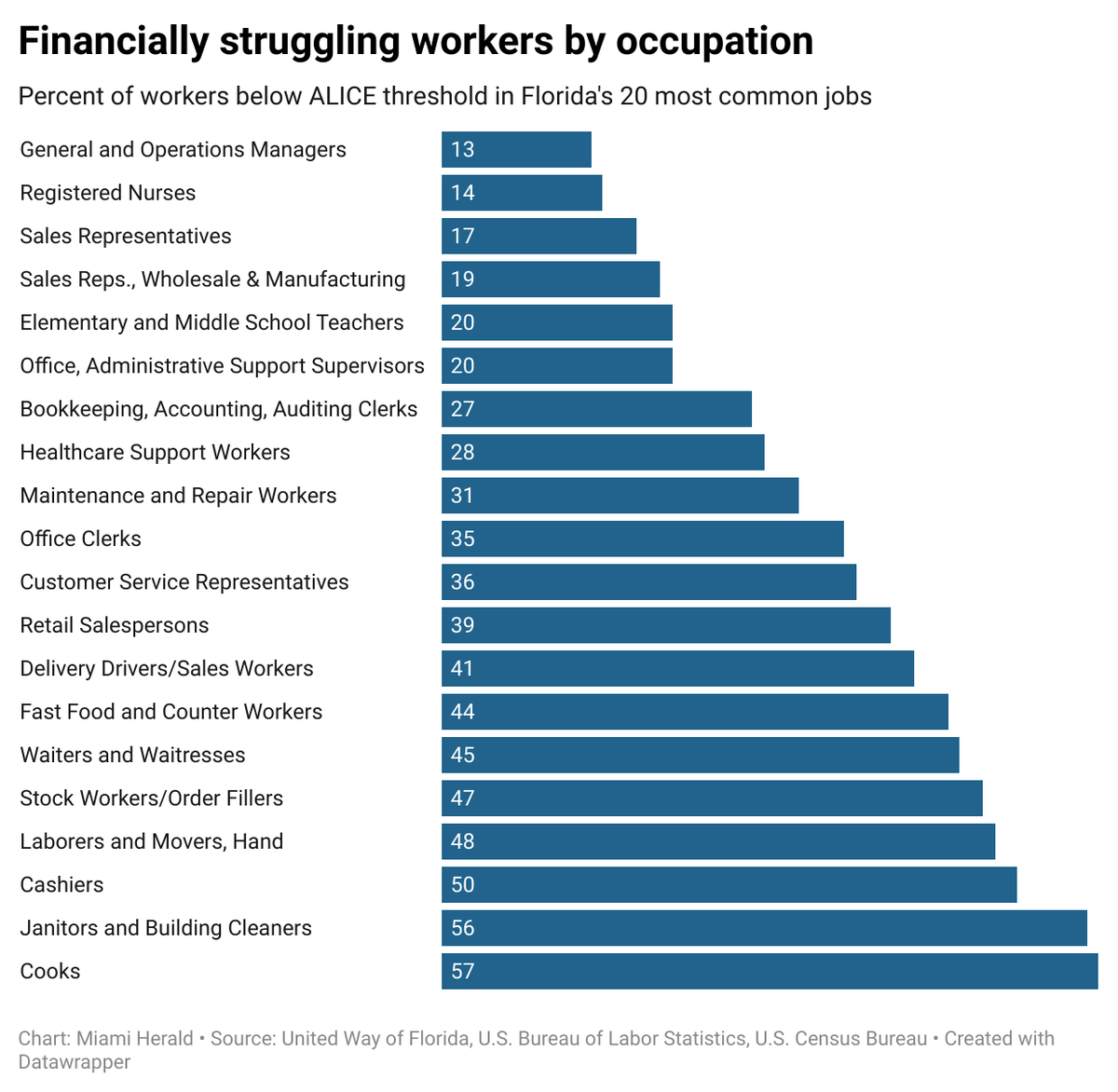
But the wages paid by many of Florida’s most common jobs aren’t cutting it. Nearly 15% of registered nurses, 20% of elementary and middle school teachers, 40% of retail salespeople and 60% of cooks don’t make enough to get by. On average, almost 40% of workers in the state’s 20 most prevalent jobs are in dire financial straits.
Florida’s upcoming $15 minimum wage could, paradoxically, spell more problems
The horizon isn’t exactly rosy for many Florida workers. Many of those job holders earn minimum wage, which will hit $15 by 2026. And while earning more might seem like a positive, it could mean many of those families actually end up with less, noted Norie del Valle, chief impact officer at United Way’s Miami branch.
Because income thresholds for many government assistance programs are based on national averages, they often fall below what even some of Florida’s poorest households earn. A small income bump could push a family over the earning limit, potentially costing them thousands in child care, medical and/or food benefits, putting them in even greater financial distress — a phenomenon known as the “benefits cliff.”
Compounding matters are the cuts proposed by House Republicans and the Trump administration to social assistance programs like food stamps and Medicaid that benefit Florida’s more financially vulnerable households.
What’s being done?
Despite those headwinds, Nelson, the United Way of Florida president, said her organization is lobbying to make affordable housing more available throughout the state. But whether astatewide affordable housing initiative, Live Local — which United Way of Florida supported — has any meaningful impact on struggling renters remains to be seen. Per the state’s calculations, that law could have someone earning $87,000 in Miami-Dade paying $2,170 for a studio apartment.
Government aside, it’s employers who Nelson said could have the biggest impact helping struggling households, especially those with children.
“We’re seeking better child care solutions, and flexibility is a big part of how we can get there,” she said. Maybe employers offer child care on site. Maybe they offer flexible work hours to allow parents school pickup or drop-off leniency. Maybe they consider how a pay raise might impact their employees from a benefits perspective and, instead, work to help workers reduce costs — like day care or transportation.
Ultimately, giving struggling households greater financial breathing room broadens the tax base and promotes consumer spending, United Way of Florida concluded in its report.
That, it noted, would have a “positive economic impact” on local communities.
This story was produced with financial support from supporters including The Green Family Foundation Trust and Ken O’Keefe, in partnership with Journalism Funding Partners. The Miami Herald maintains full editorial control of this work.
This story was originally published June 11, 2025 at 11:24 AM.
CORRECTION: A previous version of this story contained an incorrect calculation. Under the Live Local Act, someone earning $87,000 in Miami-Dade would pay $2,170 for a studio apartment.