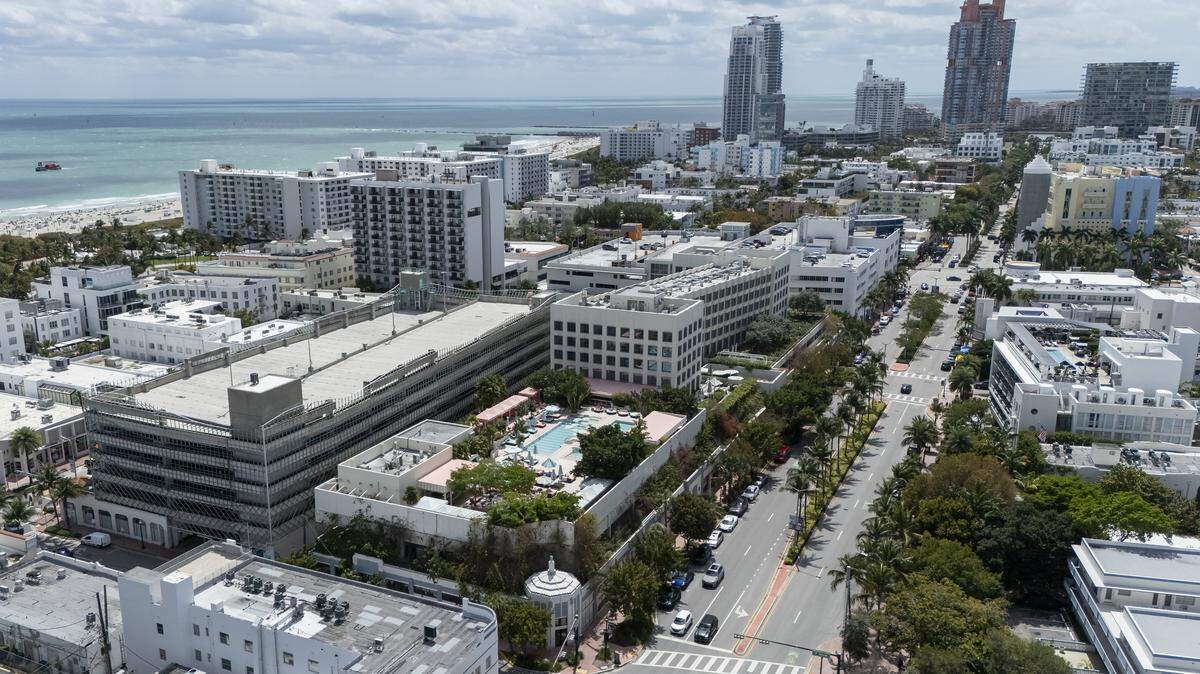
Shrinking Middle:To be affordable, Miami-Dade must move on from single-family suburbia | Opinion
READ MORE
Shrinking Middle
The Shrinking Middle is a series by the Miami Herald Editorial Board that explores how South Florida’s housing crisis has impacted the middle class, as well as solutions to our housing shortage.
Expand All
Miami-Dade County is coming to the realization that to remain a middle- and working-class community, we will have to reinvent a piece of the American Dream.
To alleviate a housing crisis in an area where building space is squeezed by the ocean and the Everglades, Miamians must reckon with the reality that not everyone will be able to live in a single-family home on a big lot. In fact, single-family-only zoning is often blamed for the shortage of homes the entire country is experiencing.
South Florida feels like ground zero for that phenomenon. Single-family zoning, which prohibits multi-family housing such as apartments, accounts for 87% of residential space in Miami-Dade, the Herald reported. The influx of wealthy people into the area, combined with low inventory of homes for sale, has made South Florida one of the most expensive areas to live in the U.S.
One of the solutions is more development density, long a controversial topic in Miami.
As the Herald reported last week, a zoning rule from 2016 that is only now gaining attention allows developers to use single-family lots to build townhomes, duplexes and multiple-house projects — how many units could be built depends on lot size. The rule applies only to unincorporated parts of the county, such as Kendall, the Dadeland area and parts of West and North Dade, and not cities like Miami, Miami Beach and others.
If used properly, the change might help alleviate the housing shortage in large swaths of the county but its long-term impacts are unclear. Few developers have used the zoning break, though applications have been rising each year, reaching 73 in 2023.
Some residents who live next door to one of the projects in Schenley Park, the century-old neighborhood surrounding Nicklaus Children’s Hospital, are understandably concerned the new rules could change the face of their communities. There, a developer is planning to build four new luxury duplex homes where there used be a single house.
The county requires the projects to be compatible with the rest of the neighborhood but, as the Herald story points out, there has been little awareness about this zoning change. Officials should educate residents who want to keep the character of their communities on why this is needed instead of surprising them when a new project is built.
This is not just a zoning matter; it’s a cultural transformation.
Suburban life — with its gated communities and large manicured lawns — is a hallmark of Florida, so it’s predictable that changes will face pushback. For example, many municipalities have opposed the county commission’s move to increase housing density along transit corridors like the Metrorail.
These zoning changes reflect the fact that Miami-Dade County is running out of available land to build large houses.
The County Commission has been under pressure from developers in recent years to expand the Urban Development Boundary, which creates a buffer between development and the Everglades, farms and other natural lands.
Moving the UDB should be a last resort, but that doesn’t mean Miami-Dade needs to be anti-growth. That would probably only accelerate Miami-Dade’s transformation from a mostly working- and middle-class community into one only the rich can afford.
South Florida must grow in a smart way. Apartments, townhomes and duplexes must be part of the plan.
But that should happen only if the growth helps to put housing within the reach of the average Miamian. Those Schenley Park duplexes are selling for $1.5 million each, more than twice the county’s median home value of $650,000, which is already a record high.
To qualify for the county’s new single-family zoning breaks, developers must build projects that are affordable to families making between 60% and 120% of the county’s median household income, which is $75,000, the Herald reported. But developers can circumvent that requirement by paying a sum, based on project size, into the county’s affordable housing fund, which is what the Schenley Park developer will be doing.
That’s better than nothing but it further delays the construction of homes for the middle-class.
South Florida has enough luxury towers. If Miami-Dade is going to loosen its zoning restrictions, it had better yield results for all Miamians, not just a few.

Click here to send the letter.
BEHIND THE STORY
MOREWhat's an editorial?
Editorials are opinion pieces that reflect the views of the Miami Herald Editorial Board, a group of opinion journalists that operates separately from the Miami Herald newsroom. Miami Herald Editorial Board members are: opinion editor Amy Driscoll and editorial writers Isadora Rangel and Mary Anna Mancuso. Read more by clicking the arrow in the upper right.
What's the difference between an op-ed and a column?
How does the Miami Herald Editorial Board decide what to write about?
The Editorial Board, made up of experienced opinion journalists, primarily addresses local and state issues that affect South Florida residents. Each board member has an area of focus, such as education, COVID or local government policy. Board members meet daily and bring up an array of topics for discussion. Once a topic is fully discussed, board members will further report the issue, interviewing stakeholders and others involved and affected, so that the board can present the most informed opinion possible. We strive to provide our community with thought leadership that advocates for policies and priorities that strengthen our communities. Our editorials promote social justice, fairness in economic, educational and social opportunities and an end to systemic racism and inequality. The Editorial Board is separate from the reporters and editors of the Miami Herald newsroom.
How can I contribute to the Miami Herald Opinion section?
The Editorial Board accepts op-ed submissions of 650-700 words from community members who want to argue a specific viewpoint or idea that is relevant to our area. You can email an op-ed submission to oped@miamiherald.com. We also accept 150-word letters to the editor from readers who want to offer their points of view on current issues. For more information on how to submit a letter, go here.
This story was originally published April 2, 2024 at 10:46 AM.
.jpg)
.JPG)