Miami Mayor Francis Suarez’s reelection bid framed by national hype and local gripes
READ MORE
Campaign kickoff
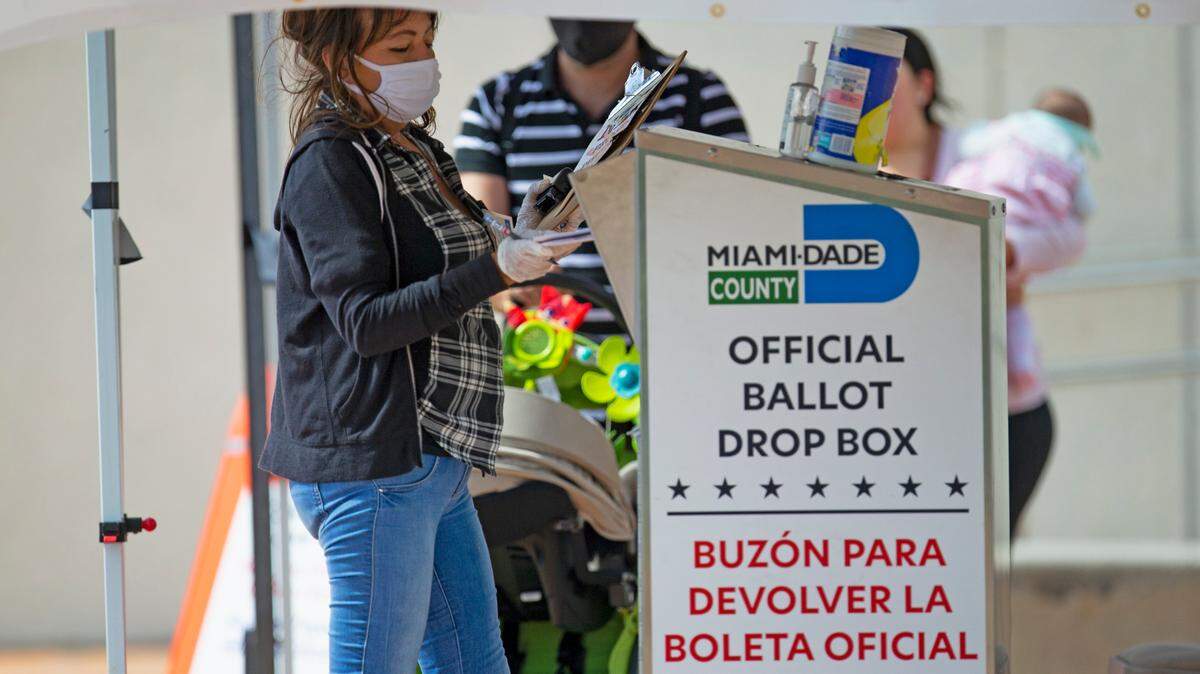
Municipal election season is underway, with Miami Mayor Francis Suarez seeking a second term and other key races taking place in Miami-Dade County on Oct. 5 and Nov. 2. Here’s what you need to know before you vote.
Expand All
His flight to Washington, D.C., delayed by hours, Miami’s mayor taps at his iPad keyboard from a Miami International Airport terminal bench, finishing a speech he intends to give the next morning to a right-leaning think tank before a scheduled appearance in the afternoon at Georgetown Law.
Francis Suarez is playing catch-up. He says he doesn’t like to do things last minute, but his schedule is packed: He’s running for reelection, trying to build consensus among five district commissioners and constantly promoting Miami as the U.S.’s next tech and cryptocurrency capital. He also has two rarely mentioned private sector jobs as an attorney and equity fund executive.
After putting the finishing touches on his remarks, Suarez, a Crossfit enthusiast, seeks out a Wendy’s to buy a chocolate Frosty, a white baseball cap with the city seal and a black T-shirt with his surname on the back announcing the mayor’s presence to everyone behind him.
“This is me incognito,” he’d joked a few hours earlier — right before a Virginia businessman recognized the mayor and said the country needs someone like him in the White House.
After nearly four years on the job, Suarez, a figurehead with limited legislative power, has become a walking, talking billboard for Miami. He’s the marketer-in-chief, looking to sell the world a glimmering narrative about sunshine, low taxes and tech-hungry entrepreneurship in a metropolis perhaps better known for rising seas, opulence, and a dependence on real estate and tourism.
Despite the sales pitch, there are issues. The wealth disparity and unaffordable housing, with the looming threats of climate change, remain serious challenges. Some of Suarez’s biggest priorities, like the $1 billion soccer stadium and commercial complex he wants built on a city golf course, remain unrealized.
His handpicked police chief — Art Acevedo, whom Suarez once described as the Michael Jordan of cops — is in hot water after a series of controversies. While commissioners tore into Acevedo at a spectacle of a meeting at City Hall on Monday, Suarez stayed in his second-floor suite and refused to discuss where he stands on the chief but found time to give an interview about Bitcoin on a YouTube show where the host hyped up the mayor’s potential for a presidential run in 2024.
The contrasting scenes show Suarez’s preference to avoid parochial political fights and focus on a more cosmopolitan agenda as he runs for reelection. A politician who is seen by some as a future leader in the Republican party chose not to face the Miami City Commission on a tough day for his protege.
But if buzz and campaign cash are a measure of success, then Suarez — and, he would argue, Miami — has been on a roll all year. His Twitter feed reads like a running list of announcements about tech companies moving south. He’s regularly asked if he’ll run for president. And he’s raised more than $5.5 million since December — a record-breaking total that could fund Miami’s human resources department for an entire year.
Facing scant opposition from five opponents in Miami’s Nov. 2 election — Anthony Melvin Dutrow, Marie Frantz Exantus, Mayra Joli, Maxwell Manuel Martinez and Francisco “Frank” Pichel — there’s more mystery around Suarez’s political aspirations outside Miami these days than whether he’ll win another four years as mayor.
But Suarez’s tech push, and the attendant public relations blitz, leaves some wondering who will benefit most from Suarez’s reimagined Miami if he’s reelected — the city’s nearly 500,000 residents, the mayor’s backers and out-of-state tech companies, or Suarez himself?
The mayor says his vision for Miami is grounded by equity in tech, arguing that he’s reconstructing a hospitality-based economy in a way that is driving up wages. He recently secured $500,000 for the Center for Black Innovation, a resource center fostering Black entrepreneurship. He wants to lift up women launching tech firms, particularly women of color. He talks about creating city-chartered schools where Miami kids can get an education that prepares them for a tech economy.
Suarez said the buzz, along with investment from the Downtown Development Authority, has brought in thousands of jobs with six-figure average salaries. He frames his tech focus as one way government can encourage economic growth. He also acknowledges there’s another side to that story, but argues that City Hall should promote economic growth, even if it changes the makeup of the city.
“If I were a skeptic, if I were being devil’s advocate, I would say ‘Well, you’re gentrifying the city,’” he said. “I think for me, first there has has to be a humility in understanding I’m not omniscient. This government is not omniscient. It can’t do everything. We can do what we can do. We can control what we can control.”
Divided attention
Suarez, who has always been something of a tech enthusiast, is betting Miami’s ride as the city of cryptocurrency won’t be as volatile as Bitcoin’s fluctuating value. And he can point to metrics to support his case that he is building a better Miami.
According to LinkedIn data, between March 2020 and Feb. 2021, Miami had seen a 15% year-over-year increase in the amount of workers new to Miami who are in the software and IT industry — the most in the nation. Pitchbook data confirms South Florida is on pace to have some 188 venture deals in 2021 — a record year for the Miami metro area. A litany of firms have made or announced moves to Miami, from BlackRock to Founders Fund to Microsoft.
“We seeded the moment for 10 years,” said Suarez, who’s become a regular on cable news programs since contracting COVID-19 during the early days of the pandemic. “We bootstrapped this city for 10 years in tech, and once this moment happened, we had an ecosystem that was ready to grow.”
Yet, some who credit Suarez for saying the right things are concerned that in his wide-eyed tech boosterism, he might lose sight of ground-level problems, such as a housing market that is difficult for home buyers and renters forced into bidding wars for apartments.
The city’s homeownership rate of 30% is the lowest among large cities in the U.S., according to the research by Florida International University’s Metropolitan Center. The center’s 2020 affordable housing master plan, commissioned by the city, found that nearly one third of Miami’s renter households spend more than half of their incomes on housing, creating a severe cost burden. In terms of financial equity, the region often ranks among the most unequal in the U.S.
Annie Lord, executive director of Miami Homes For All, an organization advocating for legislation that creates and preserves affordable housing, complimented Suarez for making local activists feel heard from time to time and even steering funding toward worthy projects. But when it comes to major reforms to the city’s policies on using public land, she said it’s been crickets lately.
A month ago, a coalition of groups led by Miami Homes for All submitted several recommendations for how the city should use community outreach to plan development of public land. Suarez has yet to offer any kind of detailed response.
“I would love to see him get boring about his platform,” Lord told the Miami Herald.
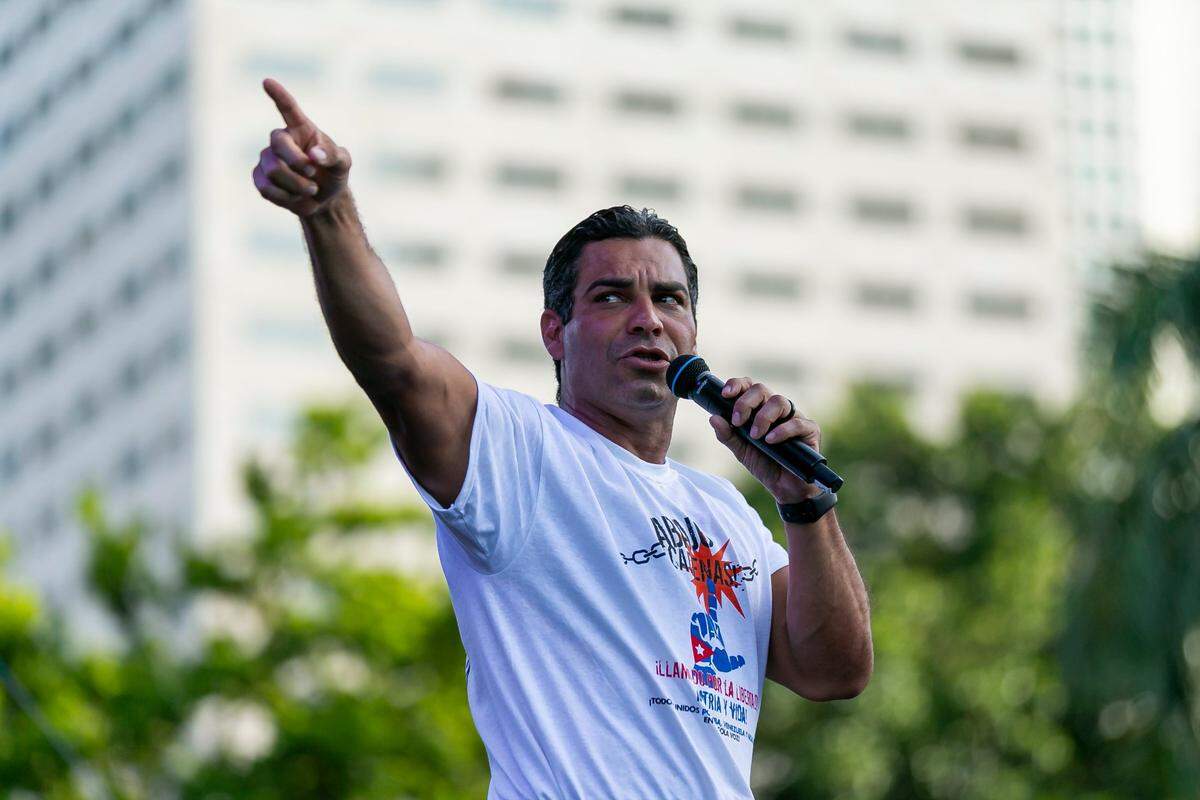
Suarez, who was elected mayor in 2017 with 85% of the vote during an election in which voters also agreed to tax themselves to fund sea-rise and housing initiatives, has also been pushed to do more to address climate change.
Caroline Lewis, founder and senior adviser at climate education nonprofit The CLEO Institute, said she and others had to call the mayor out for being absent in a series of monthly meetings that he had initiated a year ago after advocates criticized his administration for consolidating positions on the city’s resilience staff. After outcry from advocates, the city beefed up its resilience budget to make new hires before approving a final budget Sept. 23. While the victory showed activism works, Lewis said, she’d like to see the mayor be more proactive.
Suarez declared a climate emergency in 2019 months before setting an ambitious goal to drastically reduce the city’s carbon emission by 2050. The final draft of that plan has yet to be released.
His bullish approach to cryptocurrency, meanwhile, draws jeers from climate activists because of the energy consumption necessary for computers to do the math calculations required to generate cryptocurrency.
“I get tired of elected officials pacifying us with little wins,” said Lewis. “I really want Francis to see himself as a leader for climate action with Miami as his platform. I’m not sure he wants to be that leader but that’s why we’re pushing him.”
Tomás Regalado, Suarez’s predecessor, questions whether Suarez is spending too much time focused on issues unrelated to Miami. He said Suarez should be more present at commission meetings and on local radio to speak directly to constituents.
“I think the mayor should be the mayor of Miami, not on CNN and Fox News, but on Miami’s stations, at City Hall with the people, talking with the people, listening to what the people have to say,” Regalado, 74, said.
Suarez, though, appears in the community regularly. When thousands of Cubans protested the communist government in July, Suarez was at demonstrations and rallies and appeared in the media to demand action from Washington — even going so far as to suggest that the U.S. should consider military intervention. His calendar is full of appearances around town every week, sometimes so many that he runs late.
“I often work 14-hour days,” Suarez said.
In Miami’s homegrown tech world, Suarez’s leadership is largely lauded and seen as a welcome catalyst for growth. Still, amid the hype about workers moving to Florida from Palo Alto, there’s a concern that the mayor and other government leaders don’t ignore the problems facing longtime Miamians.
“We have to be really conscientious about how we grow our tech community,” said Rebekah Monson, a Miami-based co-founder and chief operating officer of media company WhereBy.Us who says she’s optimistic about Suarez’s tech enthusiasm.
Rebound from failed referendum
It wasn’t so long ago that Suarez’s agenda revolved entirely around the minutia of City Hall and local governance. In 2018, he spent millions on a failed referendum to make Miami’s mayor the city’s top administrative official — a change that would have handed him control over the levers that run the city’s 4,000 employees and $1 billion government.
The referendum’s failure was foreshadowed late one night in 2018, as Suarez lay in bed thinking about his “strong mayor” campaign and his wife of 14 years, Gloria, turned to him.
“Why are you doing this?” she asked. “I don’t understand why you’re doing this.”
Sitting in the mayor’s office at Dinner Key for an interview with the Herald, Suarez reflected on the candid moment.
“I remember thinking to myself, right there at that moment, if she doesn’t understand why I’m doing this, then nobody else is going to understand why I’m doing this,” he said, laughing.
But rather than crush his political aspirations, the defeat largely untethered Suarez to the city’s day-to-day operations and at-times petty politics, and reminded him of the importance of marketing and branding.
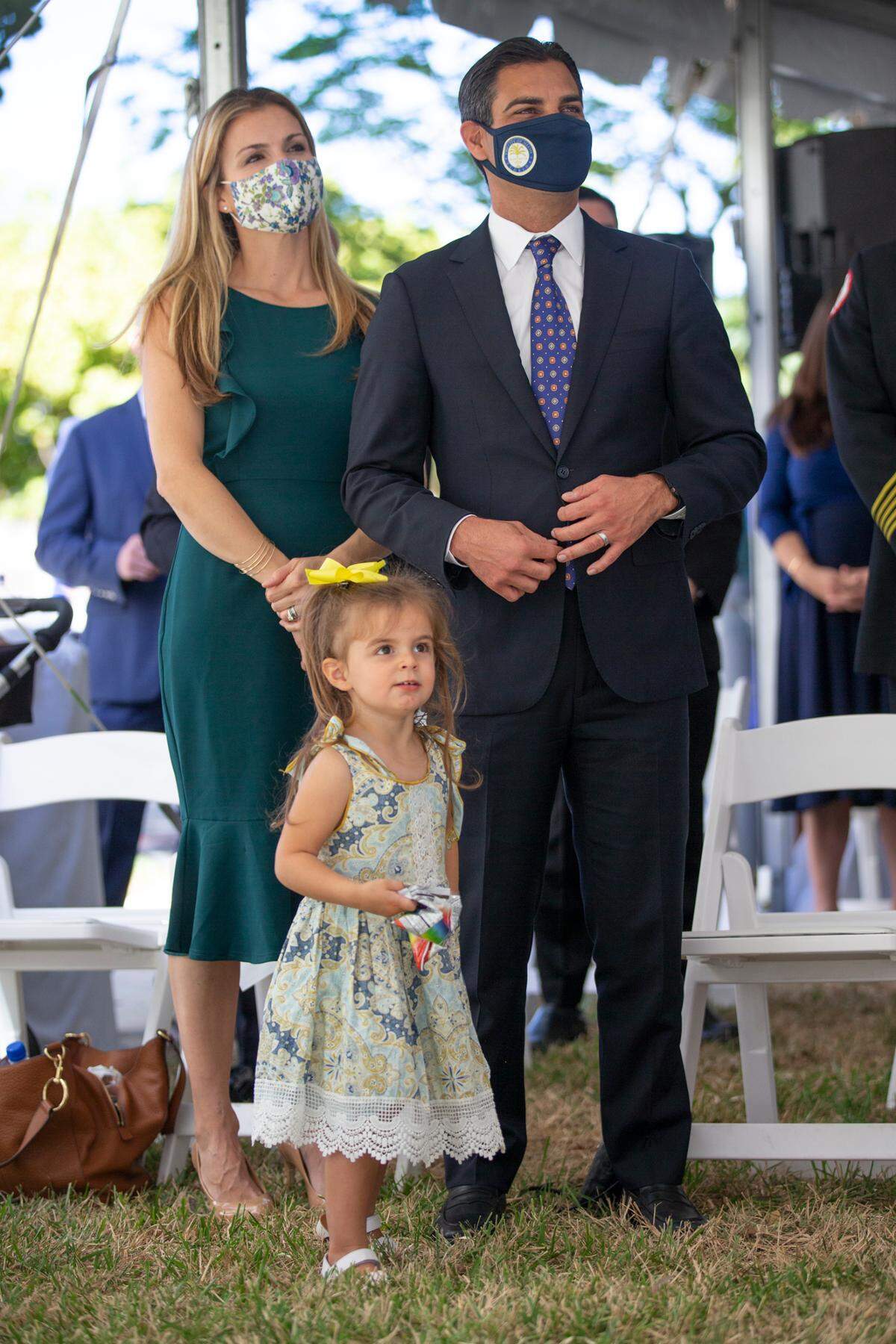
At a recent press conference, former Miami mayor and current Commissioner Joe Carollo called Suarez “Miami’s best salesman” after the mayor sponsored a move to accept proceeds from a cryptocurrency called “MiamiCoin,” a move that has generated about $4 million for the city so far. Carollo once feuded constantly with Suarez. Now, he regularly compliments his leadership, and Suarez is raising campaign cash for Carollo’s reelection.
Suarez points to relatively low crime and a steady stream of new tech jobs as tangible wins for his administration, along with the creation of a child savings account for young schoolchildren and a rental assistance program for elders facing rent hikes — two legislative victories he notched at a time when he would occasionally get chewed out by commissioners.
Suarez, who long ago ended his practice of sitting through commission meetings in which he has no vote, has a tendency to walk fast, several steps ahead of his entourage, when he’s heading to the next appointment on his schedule. He’s admitted that sometimes he walks a little too fast in politics, and he’s had to figure out how to slow down to bring Miami’s commissioners with him. He said he’s empowered his staff to connect with commissioners to build better relationships.
“It’s not only about my priorities,” Suarez said. “If we get things done, it will be our priorities.”
He also acknowledges that some items have not progressed fast enough, such as the $400 million Miami Forever bond initiative to fund sea-rise projects and housing that voters passed in the same 2017 election that made him mayor.
“We have not progressed as fast as we would like on some of the Forever bond money,” he said. “I think there’s still too much of it unspent. I hope that changes significantly.”
Suarez says he doesn’t like the word “power” because he feels it has a negative connotation. The soft power of influence he has in City Hall has helped him lately in dividing up millions in federal pandemic aid among five district commissioners with different needs. But that power can erode fast, and it’s unclear where Acevedo’s controversy will affect the mayor’s relationship with the commission.
Building a brand
Former staffers note that the famously congenial Suarez has learned to roll with punches and rarely sulk. From aides who were with him when he was first elected as a commissioner in 2009 to his initial mayoral team, they see the same optimistic, mile-a-minute politician, perhaps with a bit more exposure. Several told the Herald “no one can outwork Francis Suarez.”
“He’s always been the “How can I help mayor,” even before the tweet,” said Giovanni Castro, a former deputy chief of staff.
The exposure has amplified his public persona while he’s benefited from having multiple jobs on top of his role as mayor, which affords him a $130,600 compensation package. He listed his net worth at about $628,000 on his most recent financial disclosure.
Suarez has disclosed little about his outside work as a lawyer. He’s currently of counsel at Quinn Emanuel. He’s repeatedly declined to share his client list, citing confidentiality and insisting if he had a conflict of interest at any point, he would disclose it. The public got a rare glimpse into the mayor’s private sector life in 2019 when the Herald reported that Fisher Island residents hired him to represent them in matters dealing with Miami-Dade County’s government.
He’s also got another gig as senior operating partner for investment firm DaGrosa Capital Partners. Principal Joseph DaGrosa — who Suarez said was a former client of his — gave his employee’s political committee $150,000 in May, the single largest contribution made during this election cycle through August.
Suarez says he juggles it all by jamming meetings and phone calls between city obligations, and by waking up early.
“The mayor of Miami Beach is a practicing lawyer. The mayor of Doral is a practicing lawyer,” Suarez said. He’s previously said the Herald is the only news outlet that questions him on how he divides his time.
The mayor can still get prickly. He once called a reporter on a weekend to ask why the paper wouldn’t write about how Fortune Magazine ranked him #20 on a list of the World’s 50 Greatest Leaders. In a May video interview, he pointedly challenged the Herald’s editorial board to state the city’s homicide rate when asked about efforts to address crime in the city.
Ever conscious of his image, he’ll shave a barely visible scruff off his chin right before a press conference. On a September afternoon at City Hall, he changed outfits twice to match the occasion. Blue jeans and a tucked-in polo were fine for a morning staff meeting, but the presser called for suit and tie. Then, as he sat for the filming of one of his Cafecito Talk interviews, he decided he’d throw on the “How can I help?” shirt with jeans and sneakers.
The image he presents in media and on social networks, curated by a team of young staffers with iPhones and laptops, has underscored the “rising star” narrative well. He had a row of lights installed in the ceiling of his second-floor City Hall office, so he can be well-lit and camera-ready with the flick of a switch. The windows behind his desk are tinted, so viewers can see a tropical vista of Biscayne Bay behind him.
The cafecito talks, filmed in a meeting room down the hall, operate like a cable news segment. His staff writes up a quick summary of the guests that they book. He reads it and comes up with a few questions before the cameras roll. Oftentimes, especially when they film in the afternoon, the cafecito cups on the table in those videos are empty.
He’s hosted a range of personalities on the show, from Latin pop star Marc Anthony to tech investor Keith Rabois. Former South Carolina Governor Nikki Haley, a potential 2024 Republican presidential candidate, sat with him, as did House Republican Leader Kevin McCarthy, feeding speculation about Suarez’s future ambitions.
The ”what’s-next-for-you?” questions are routine now, and they’re coming from conservative circles outside Miami’s Republican bubble, where some locals wonder whether a Republican who has knocked Trump and voted Democratic in the 2018 Florida gubernatorial could win a partisan statewide race. Some outside conservative voices have talked about the potential of a “Mayor Francis” ascending national Republican politics.
“There are a lot of people out there — I think you’re aware of this because you’re on Twitter — who are saying, ‘Man, look at that mayor of Miami. Why does nobody in Washington act like that guy?’” said Weston Wamp, founder of the Millennial Debt Foundation, during a recent interview with Suarez.
Wamp, a Tennessee Republican who hosted a panel at a Coral Gables hotel Sept. 8, waited a few hours for Suarez to show up. Even though the mayor got there quite late, his presence was felt hours before during the scheduled event, when speakers sang his praises. Suarez’s calendar could get busier if he’s reelected, since he’s slated to be the next president of the U.S. Conference of Mayors.
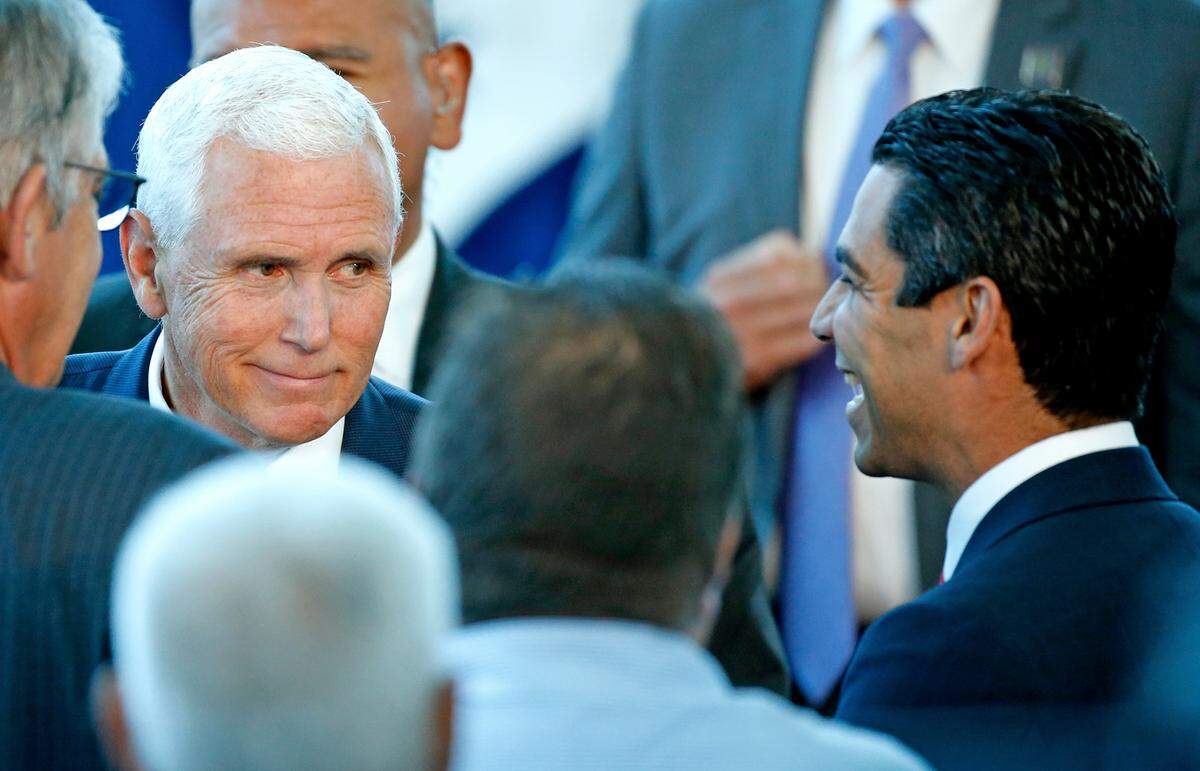
Future ambition?
Back at Miami International Airport, it’s almost midnight, and he’s starting to think he might not make it to a morning speech before the American Enterprise Institute in Washington. He also can’t find M&M’s.
Suarez and his entourage have been waiting out a six-hour delay. They’ve already boarded and disembarked one plane. Closer to 1 a.m., the weary passengers board another aircraft for only about 15 minutes before another unexpected delay forces them to get off and return to the gate. Suarez’s wife has already decided to go home and skip the one-day trip, and she’s being blunt while she’s on speakerphone.
“Just give it up,” she tells her husband. She’s back at home with their two young children. She doesn’t think it’s worth waiting for the other aircraft American Airlines may or may not provide.
“At this point, I’m just being stubborn,” he says in a hushed tone, looking down at his phone.
The mayor eventually relents and heads home for the night. His staff arranges for him to appear remotely.
In an interview a week earlier, Suarez told the Herald that his reelection was his main focus, despite the talk of what he might do when he’s done being mayor.
“The campaign is about governing. It’s about accomplishing things that are going to make life better for our residents,” he said. “I’m hopeful that if I’m able to articulate that vision over the next 45 days, that I can be reelected to have another four years to actually accomplish that vision.”
Hours after the missed flight, a caffeinated Suarez logs on to talk with Marc Thiessen, a conservative Washington Post columnist and the interviewer for the American Enterprise Institute event. Thiessen ends the interview with the now-common question.
“Are you thinking of running though?” Thiessen asks.
“I don’t think there’s any person on this planet that wouldn’t like to be president of the United States,” he said.
This story was originally published September 29, 2021 at 6:00 AM.