‘Not a small town anymore’: Homestead mayor’s race hinges on future of burgeoning city
READ MORE
Campaign kickoff
Municipal election season is underway, with Miami Mayor Francis Suarez seeking a second term and other key races taking place in Miami-Dade County on Oct. 5 and Nov. 2. Here’s what you need to know before you vote.
Expand All
The Homestead where Steven Losner has been mayor the last two years bears little resemblance to the Homestead where he grew up, and is a world away from the community where his family planted their flag nearly 100 years ago.
The South Dade farm fields of Losner’s youth are giving way to commercial warehouses and industrial parks. Newly constructed charter schools dot a landscape mostly flattened nearly 30 years ago by a Category 5 hurricane. And residential developments that filled quickly only to be partially abandoned during the real estate rush and collapse of the 2000s are once again occupied by families, making Homestead once again the fastest growing city in Miami-Dade County.
“We’re not a small town anymore,” Losner, seeking reelection next week, said recently while knocking on doors in an upscale neighborhood that abuts Greenleaf Nursery, one of America’s largest wholesale nursery growers. “You know, it’s not as if we don’t have the amenities and the population here to attract big business and industry. Now, granted 15 or 20 years ago, probably not so much.”
As Losner campaigns for a second two-year term, he is promising to harness the booms and busts and turn Homestead from a last resort stop where the Florida Turnpike ends into a city that stands on its own two legs as a Miami-Dade County destination.
And with the Oct. 5 election swiftly approaching, the debate around whether he should win another term has at times centered around Homestead’s rapid expansion, and whether to capitalize on that growth or reject it. Three council seats are up for grabs, too.
Losner faces challenges from former Councilman Elvis Maldonado and former Mayor Jeffrey Porter in the three-man race. Porter, despite his acrimonious relationship with Losner, generally shares the mayor’s views on taking advantage of opportunities for growth. But Maldonado, who has been more active than Porter on the campaign trail, wants voters to get off a three-decade economic roller-coaster.
“I don’t want us to become a Kendall or a Gables or Miami ... to me, Homestead is a small town,” Maldonado said in an interview.
Booms and Busts
Losner, Porter and Maldonado all grew up in Homestead. The city of their boyhoods was known as a tight-knit community centered around the Air Reserve Base in the heart of Miami-Dade County’s agricultural region. In the years since it was wrecked by Hurricane Andrew in 1992, the city has become, as real estate experts see it, the “last mile” for new development.
The new Homestead is a place where farmers harvest potatoes on plots adjacent to swaths of land where billboards boast soon-to-come “affordable luxury townhouses and workforce housing.” It’s near farmland on the verge of being converted into a 9 million-square-foot industrial park near Homestead. And perhaps most importantly, it’s a destination for potential home buyers and commercial operators who seek space to build or buy without facing sky-high Miami prices.

With the latest boom well underway, Homestead’s next mayor will inherit a city that at roughly 70,000 residents is 33% more populous than it was 10 years ago, and more than twice as populous as it was in 2000. In the last decade, 20,225 people moved to the city, per 2020 census data, as rising home prices pushed more and more people south.
The city, which lays claim to one of the poorest ZIP codes in the county, has changed a lot, even since Losner was first elected mayor in 2019. Losner, 60, previously served on the City Council from 2001 to 2007. He ran unsuccessfully for mayor in 2011 before he ran in 2019 and won.
The median sale price for single-family homes in Homestead is $370,000, according to July 2021 data from the Miami Association of Realtors. In 2016, that number was $220,000. In recent years, the city’s downtown got a $120 million facelift to make it resemble its more metropolitan neighbors to the north, emphasizing outdoor dining, pedestrian-friendly pathways and a brand-new gleaming, 75-foot-tall City Hall.
Meanwhile, a cluster of warehouse facilities is growing inside the existing area zoned for urban development as the county considers sidestepping environmental concerns and expanding the Urban Development Boundary to allow for a proposed 800-acre industrial park, a couple of miles from the Homestead Air Reserve Base outside the city boundary.
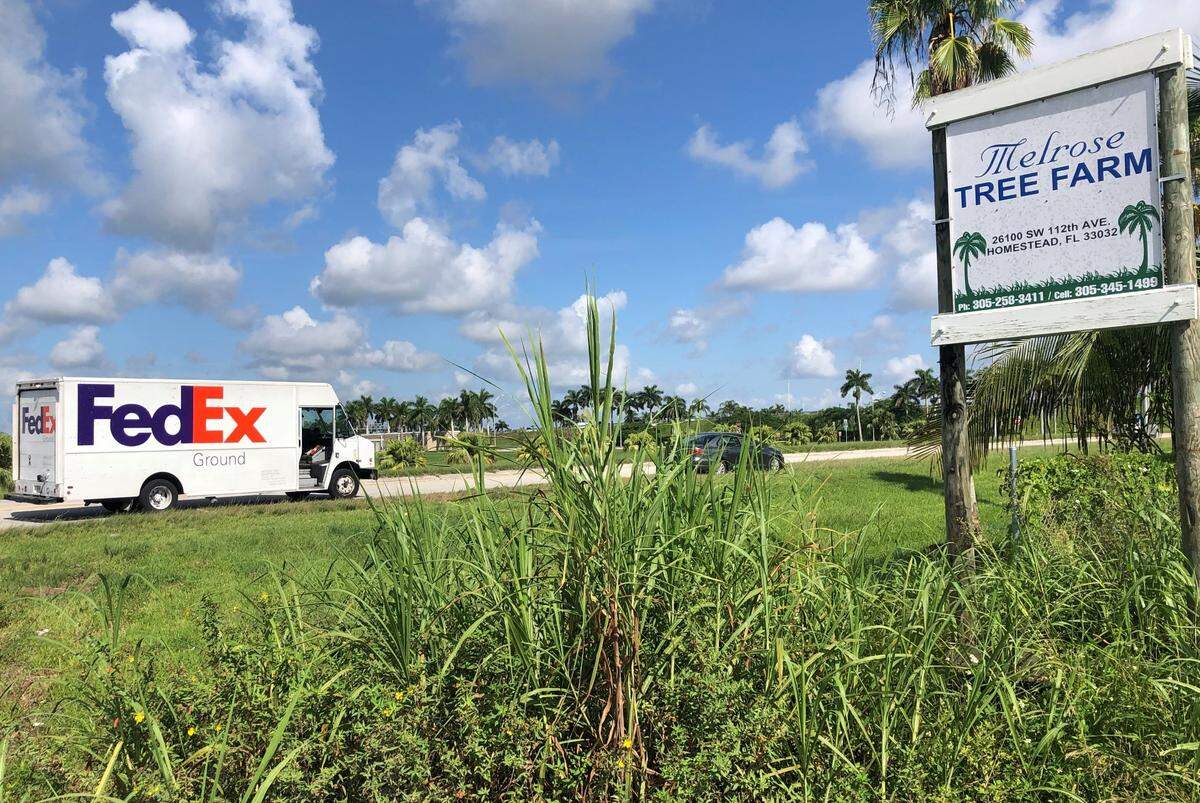
The project’s economist says about 12,000 people will work there once the complex is fully constructed. Opponents say the number is inflated, but backers say they would welcome employment opportunities that don’t require the often long northbound commute many workers are forced to take.
Developers say they have lined up a “Fortune 50” company as a major tenant — the team is privately identifying Amazon as ready to rent space there — on the condition that construction start by January.
In January, the city’s Homestead-Miami Speedway sold several dozen acres near its racetrack for a new Amazon delivery station, a move Losner called “a shot in the arm” for the city’s tax base.
A three-way race
All of the candidates have made growth or development central to their messaging, be it on campaign sites or in Homestead voters’ mailboxes. If no one wins a majority of the vote on Oct. 5, the top two vote-getters will face off on Nov. 2.
Losner, whose family founded the 1st National Bank of Homestead nearly 100 years ago, promises to bring balance to development, with an emphasis on redeveloping older neighborhoods with single-family homes to “balance out” the higher density housing that has popped up in the eastern part of the city. Facebook ads for his campaign make promises of “combating overdevelopment.”
“For me, it’s about laying that foundation to leave Homestead a lot better than it was when I found it when I came back as mayor,” he said, noting that his first run for mayor was largely characterized by his focus on code enforcement and “how neighborhoods look and feel.”
He said that “almost by default,” Homestead and the surrounding area is also the “last frontier for heavy commercial development or industrial development.”
Losner said under his leadership he believes Homestead could be on its way to competing with Miami, Doral or Coral Gables when it comes to growth of population and the tax base.
“I think I’ve got this perspective of looking forward,” he said.
Porter, who touts the revitalization of the Seminole Theater and the new police station that opened in 2017 as two of his top mayoral accomplishments, says he also has ideas of continuing growth in the city by taking advantage of available property.
He is a Homestead native who spent part of his childhood in Mississippi before returning to attend Miami Dade College. He has lived in Homestead since, and works in sales.
Porter, who said he believes name recognition from three years ago is enough to sweep him into office, has not raised any money.
“All it boils down to is productivity,” said Porter, 62, who was first elected as mayor in 2013 and resigned in 2018 to run unsuccessfully as a Democrat for Florida agriculture commissioner.
“People are looking for less expensive, easier-to-operate property,” he said. “I want us to make sure we continue to take advantage of that and not stop growth completely or say we are not ready or willing to listen.”
Porter also served as a councilman from 1997 to 2007. He ran for mayor again in 2019 against Losner, coming out ahead in the primary election but ultimately losing in the runoff. There is still bad blood from two years ago, which has played out in mail advertisements and interviews, with both candidates accusing one another of being bullies.
Maldonado, 48, says Homestead is not about “being a fast-growing city or the next utopia.” He fondly remembers his days playing baseball with his neighbors and knowing everyone who lived in his community. The area he represented on the city council was converted from potato fields to housing in the early 2000s, which was a shift he said signaled the future growth of the rest of the region.
“I knew that was coming at some point,” said Maldonado, who was a city commissioner for a decade before he resigned to run for county commission last year. Born in Connecticut to Colombian parents, Maldonado moved to Homestead as a young child and stayed.
Last month, while Maldonado canvassed in a working-class neighborhood of small, older homes on the eastern edge of Homestead near where he grew up, children descended from a school bus at the end of a street and waved hello to their neighbors as they ran home. The son of one voter recognized Maldonado from his last city council election.
“This is why I got involved, to control the growth and make sure we kept Homestead Homestead,” he said.
‘This is where we are’
Experts and local leaders in the community are wary of the growth in South Miami-Dade, warning that the next mayor will have to take many factors into consideration, including a temperamental real estate market, job creation, a lag in transportation and a will of the community to balance rural traditions with commercial growth.
While revenues are strong now, “every boom is followed by a bust,” said Peter Zalewski, principal of Miami-based Condo Vultures. He pointed toward inflection points like Hurricane Andrew and the COVID-19 pandemic. Several years after Hurricane Andrew essentially leveled the city, developers built back many single-family homes and townhouses. When the real estate market crashed, the loss of wealth turned Homestead back into a place of last resort. Now, it’s building back to become something different, Zalewski said.
State Rep. Kevin Chambliss, who lives in Homestead and represents a swath of South Miami-Dade County, says the mayor — whoever he is — can’t “be pushed by developers,” but also must work to strike a balance between those who are supportive of a changing region and those who are against it.
County Commissioner Kionne McGhee said the same.
“I think all of those can coexist, but it’s going to take a leader who understands the area and also understands that time brings growth,” said McGhee, who ran against Maldonado in last year’s election for his commission seat.
“We are not making any more land, and this is where we are,” he said. “We are never going to see the South Dade I grew up in.”
This story was originally published September 27, 2021 at 10:14 AM.