More than 2 million people are licensed to sell insurance in the U.S., according to the NAIC.
But how do you become one of them?
The answer is not as simple as taking one test. Insurance licensing works differently in every state, and the license you need depends on what you plan to sell. That can make the process feel way more confusing than it really is.
This guide covers producer licenses for selling insurance, not claims adjuster licenses. I’ll explain what the process involves, what changes by state, and what you need to know before spending money. By the end, you’ll know exactly where to begin. Let’s dive in.
Key Takeaways
- Match Your License to Your Goals: Your license must cover the insurance you want to sell.
- Your State Sets the Rules: Every state creates its own licensing requirements.
- Check Before You Enroll: Prelicensing classes are not required everywhere.
- Passing Isn’t the Final Step: Passing the exam does not activate your license.
- Keep Your License Current: You must renew your license to keep selling insurance.
Start Here: What Kind of Insurance Will You Sell?
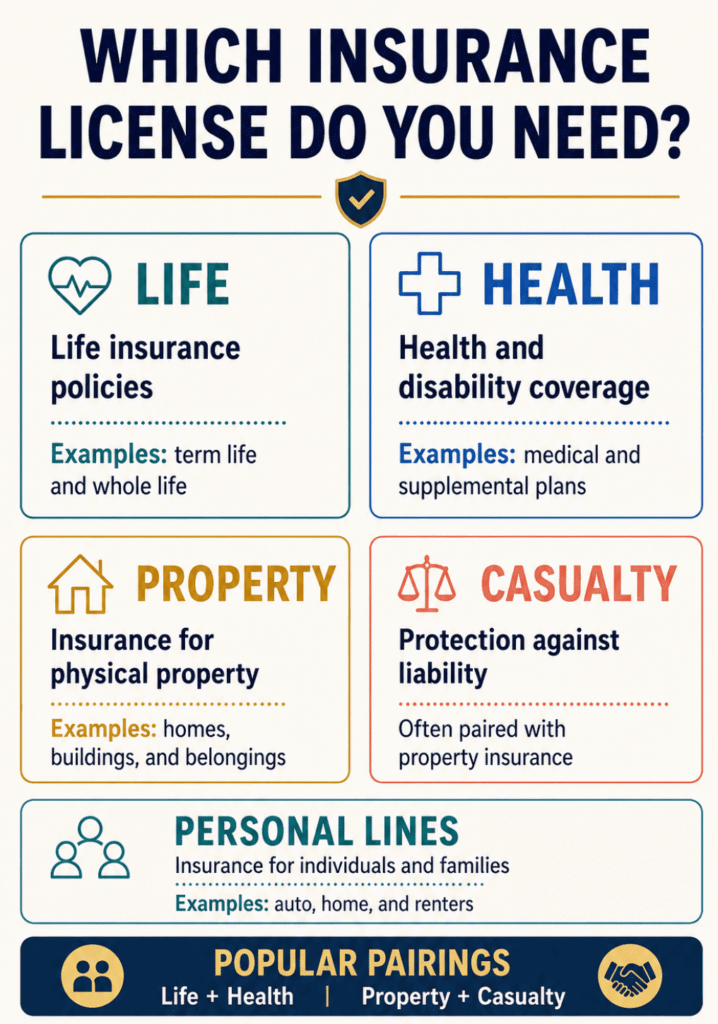
Before buying a course, decide what you actually want to sell. Insurance licenses are divided into lines of authority.
Here are the main options:
- Life: Term life, whole life, and other life insurance
- Health: Medical, disability, and supplemental insurance
- Property: Coverage for homes, buildings, and belongings
- Casualty: Liability coverage that protects against legal responsibility
- Personal lines: Personal auto, homeowners, renters, and similar coverage
Life and health are commonly paired. Property and casualty are another popular pair.
Do not automatically choose both just because a course company bundles them. More lines may mean more material, a longer exam, or extra fees.
If life products are the plan, the life insurance license exam guide explains what that single-line test covers and how it differs from a combined life and health exam.
If claims work is the path you want instead of selling policies, see how to become a claims adjuster.
One Important Exception: Variable Products
Variable life insurance and variable annuities are also securities. An insurance license alone is not enough to sell them.
You generally need the correct state insurance authority plus securities registration. For example, FINRA requires both the SIE and Series 6 exams for its variable contracts registration. The Series 6 also requires sponsorship from an eligible firm.
Your State Makes the Rules
Insurance producers must be licensed in every state where they sell, according to the National Insurance Producer Registry.
Go to that page or your state insurance department’s website. Find the rules for a resident individual producer license and your chosen line.
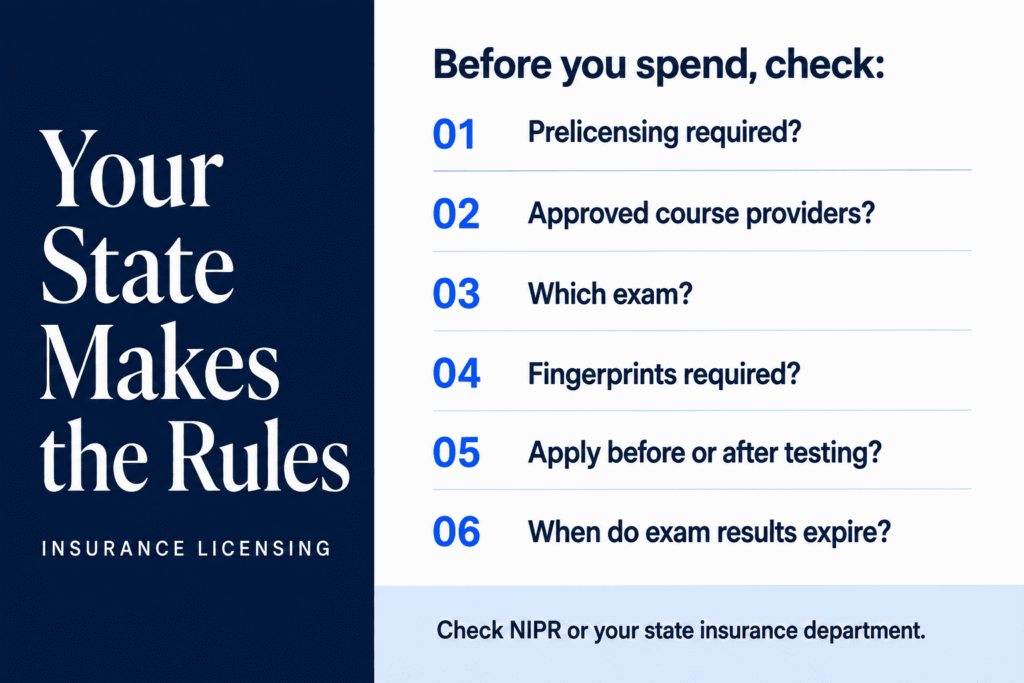
Before spending money, check:
- Is prelicensing education required?
- Which course providers are approved?
- Which exam do I need?
- Are fingerprints required?
- Should I apply before or after testing?
- How long are my exam results valid?
Most applicants must be at least 18, but do not treat that as the only requirement. Your state may also review your criminal, financial, or regulatory history.
A past offense does not always mean an automatic denial. Answer every question honestly and send any court records or explanations the application requests.
Classes & the Exam: What Actually Happens
Some states require you to finish an approved prelicensing course before testing. Others let you study on your own and go straight to the exam.
There is no reliable national course-hour number. Your required hours depend on your state and license type.
Courses usually cover:
- Policy types and coverage
- Insurance terms
- Contracts and underwriting
- State laws
- Ethics and producer duties
Choose a course approved for your state and exact line of authority. A general insurance class may leave out state laws that appear on your exam.
A good course should include current lessons, realistic practice questions, answer explanations, and timed exams. Compare the best insurance pre-licensing courses before enrolling.
Your Exam Will Be State-Specific
Question counts, time limits, passing scores, test vendors, and retake rules all vary.
Download your state’s current candidate handbook. It tells you what is tested, what identification to bring, and what happens if you fail.
Do not only memorize practice questions. Learn what terms such as premium, beneficiary indemnity, and insurable interest actually mean.
Once you can pass fresh practice tests without notes, schedule the real one.
Application Day: Passing Is Not the Final Step
Passing the exam does not instantly give you permission to sell insurance.
You still need to submit your license application. Depending on the state, you may apply through its insurance department, NIPR, or Sircon.
Your state might request:
- Exam and education records
- Fingerprints or a background check
- Personal and contact information
- Details about any legal disclosures
- Application fees
Use the exact same name and personal information on your course, exam, fingerprint, and license records. Small mismatches can delay processing.
Wait until the state shows your license as active before selling, discussing, or negotiating coverage.
After Approval: You May Still Need an Appointment
A license proves that the state approved you. An appointment connects you to an insurance company and gives you authority to sell its products.
Appointment rules vary. Some states require one before you can act for an insurer, while others handle the timing differently. Your employer or insurance carrier will normally help with this part.
Selling in Other States
Start with a resident license in your home state. After that, you may apply for nonresident licenses in other states.
Reciprocity can remove some repeat education or exam requirements, but it does not create automatic nationwide approval. You still need to apply and pay each state’s required fees.
Keeping Your License Active
The NAIC explains that state regulators also set continuing education and renewal rules.
Track your:
- License expiration date
- Required continuing education
- Renewal application
- Carrier appointments
- Address or name changes
Missing a deadline could stop you from legally working until the license is fixed.
My Final Thoughts
Getting an insurance license is not one giant national process. It is a short list of state-specific tasks.
Pick what you want to sell first. Then check your state’s rules before paying for anything. That one move can save you from choosing the wrong course or exam.
Once you pass, remember that you still need state approval and possibly an insurance company appointment. Handle those pieces in order, and the process feels far less confusing.
For a realistic look at the test itself, read how hard the insurance license exam is.
FAQs
How long does it take to get an insurance license?
Most people can finish the process within a few weeks, but the timeline depends on the state. Required classes, available exam dates, fingerprint processing, and application reviews can all affect how long it takes.
Do you need a degree to get an insurance license?
No. States generally do not require a college degree for a basic producer license. Most applicants can qualify by meeting the age, education, testing, and background requirements set by their state.
How hard is the insurance licensing exam?
The exam is manageable, but the insurance terms and state laws can feel unfamiliar at first. A state-approved course, practice questions, and regular review should prepare you better than trying to cram everything in one weekend.
Can you take the insurance licensing exam online?
It depends on your state and testing provider. Some states allow remote testing, while others require you to visit an approved testing center. Check the current candidate handbook before scheduling.
Can you sell insurance immediately after passing the exam?
No. Passing only completes the testing requirement. You must submit your application and wait for the state to issue an active license, and you may also need an appointment with an insurance company.
Can you use one insurance license in every state?
No. Your resident license does not automatically let you sell insurance nationwide. You can apply for nonresident licenses in other states, and reciprocity may allow you to skip another exam or additional education.

![Bluehost Promo Codes and Discounts [Verified Coupons]](https://www.miamiherald.com/careers-education/wp-content/uploads/sites/2/2026/10/bluehost-promo-code-mh-1024x768.jpg)
![Incogni Promo Codes [Verified Discounts]](https://www.miamiherald.com/careers-education/wp-content/uploads/sites/2/2026/10/incogni-promo-code-mh-1024x768.jpg)
![Shopify Promo Codes [Verified Discounts]](https://www.miamiherald.com/careers-education/wp-content/uploads/sites/2/2026/10/shopify-promo-code-mh-1024x768.jpg)