Passing the insurance licensing exam isn’t just about studying. It’s about studying the right way from the start.
Most people don’t think much about their pre-licensing course. They just pick one, get through the hours, and hope it’s enough.
Sometimes it is. Sometimes? It’s not. So… which courses actually prepare you, and which ones just check the box?
I tested these insurance pre-licensing courses myself by going through lessons, study tools, and practice exams to see what actually aligns with the real test. In this guide, I break down what works, what doesn’t, and which courses make the whole process a lot easier.
Which Insurance Pre-Licensing Course Is Best for You?
Answer 8 quick questions about your insurance license, study style, schedule, and biggest exam challenges. We’ll match you with the pre-licensing course that fits you best.
No email required.
Best Online Insurance Pre-Licensing Courses at a Glance
- XCEL Insurance Training: Best Overall
- Kaplan: Best For Lots of Study Material
- Aceable Agent: Best For Easy To Stick With
- ExamFX: Best For Practice-Focused Prep
| Best Insurance Pre-Licensing Courses | ||
 |
| LEARN MORE |
 |
| LEARN MORE |
 |
| LEARN MORE |
 |
| LEARN MORE |
1. XCEL Insurance Training: Best Overall Course
Before choosing a prep course, it helps to know which type of insurance license you’re working toward.
Most candidates fall into one of three categories: Life and Health, Property and Casualty, or Personal Lines. Each exam focuses on different types of coverage and requires a slightly different study approach.
The good news is that most of the courses in this guide are designed around these specific exam types, so you can choose a program that matches exactly what you need.
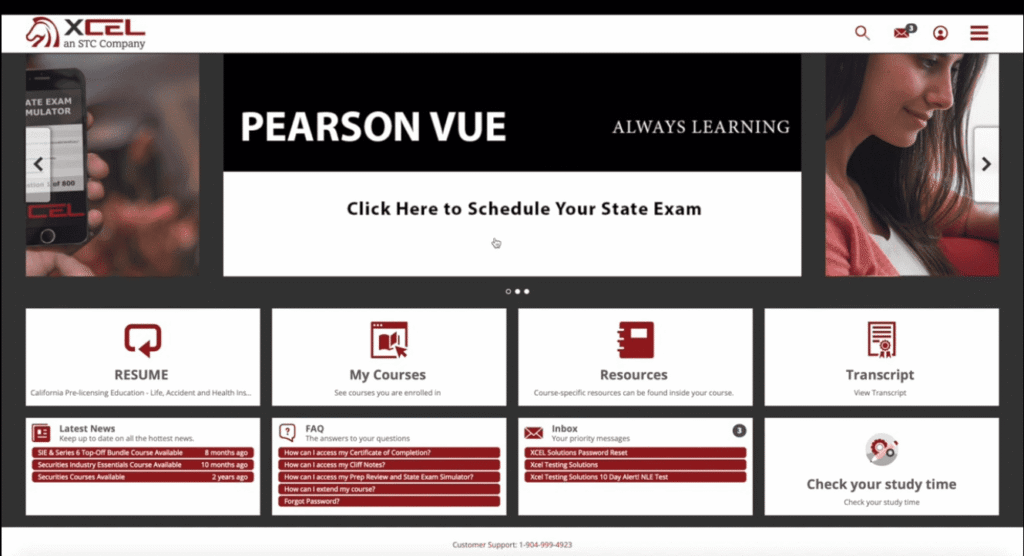
One of the first things I noticed with XCEL is that it gets you into the actual course right away instead of making you click around trying to figure things out. Once I started the first lesson, everything was broken into small, manageable pieces—a short video, a few key terms, and then a quick quiz to reinforce it.
I never felt overwhelmed, which made it easy to keep moving.
At one point, I noticed a concept being repeated a few different ways. At first, it felt a little repetitive, but later on, I realized it actually helped it stick without much effort.
As I moved into the second phase, the course became even more practical. It shifted away from general information and focused more on what actually shows up on the exam. That’s where it really started to click for me. The exam simulators stood out, too. I retook one twice, and the difficulty stayed consistent, which made it feel like a reliable way to gauge progress.
The pacing is definitely structured, especially with the 30-day + 30-day access split. It encourages you to stay consistent rather than dragging things out. Once I settled into that rhythm, it actually helped me stay on track and keep momentum.
Package Options
- Premier Package: Full course, flash cards, recorded review, pass guarantee
→ Best for students who want extra support - Standard Package: Core course with full 3-part system
→ Best for students who want essential prep only
Package Perks
- Pre-licensing course
- Prep review course
- 3 exam simulators
- 800+ practice questions
- Flashcards
- Recorded review class
- Pass guarantee
- Progress tracking
Pros
✅ Tells You Exactly What To Do Next: I never had to guess what to study next.
✅ Second Phase Feels More Real: The review part actually matched what I saw in practice exams.
✅ Repetition Actually Works: Even when it felt annoying, I remembered it later.
✅ Simulators Stay Consistent: Retakes didn’t feel easier or random.
✅ Keeps You Moving: Hard to procrastinate with how it’s set up.
Cons
❌ Some Sections Drag: A few topics felt repeated more than needed.
Bottom Line: Should You Choose XCEL?
This ended up being one of the most structured and guided experiences I’ve tried, and that’s a big part of why it works so well. It keeps you moving forward without having to constantly figure out what to study next, and the review phase does a good job of narrowing your focus before the exam.
The biggest strength is how clearly everything is laid out. You always know what to do and where you stand, which takes a lot of the guesswork out of studying.
The pacing is more structured, especially with the time-based access, so it works best if you’re ready to stay consistent and follow a plan. But if that’s what you’re looking for, it can actually help you stay on track and build momentum.
XCEL Insurance Training
2. Kaplan: Best For Lots of Study Material

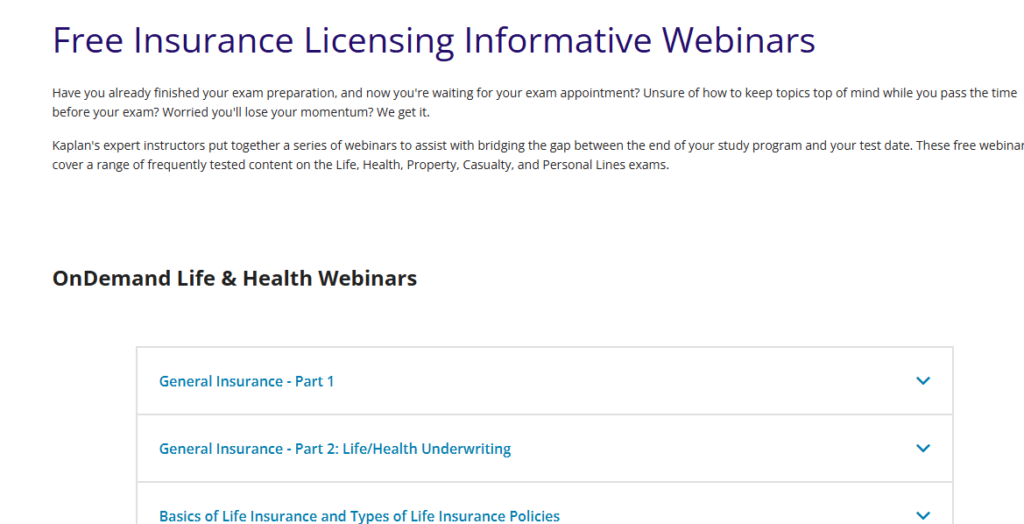
One thing I really liked about Kaplan is how much free material they offer. Before even committing, I was able to check out things like their on-demand webinars, daily question practice, quick quizzes, and downloadable study sheets. It’s a good way to get familiar with the content and question style without jumping all the way in.
Even while using the course, those extras felt useful. The webinars cover commonly tested topics, and the daily questions are an easy way to stay consistent without sitting down for a full study session. It made the platform feel more supportive overall, especially if you like having multiple ways to review.
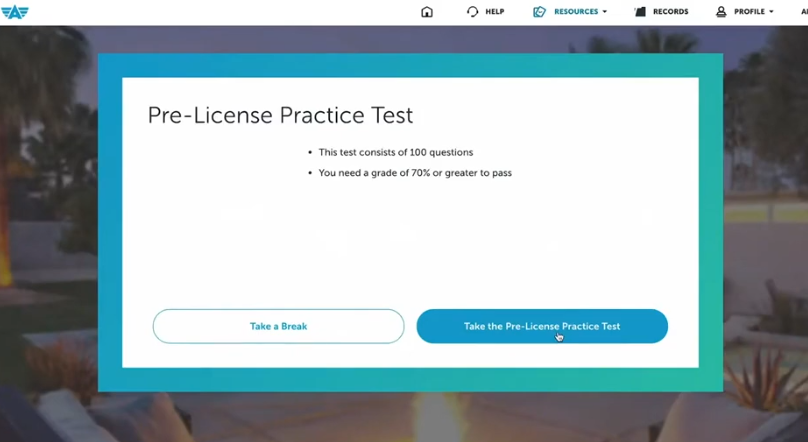
There are different types of exams, too. When testing, I did a smaller checkpoint quiz first, then later a bigger exam that felt closer to the real thing. The Mastery Exam felt more like a final check instead of just another practice test, which I liked. It builds up instead of throwing everything at you at once.
At the same time, it can feel like a lot. There were points where I wasn’t sure which tool I should even be using, so I ignored some features to keep things simple. Overall, however, Kaplan is an excellent option for insurance pre-licensing exam prep.
Package Options
- Career Launcher: Full prep plus career training
→ Best for students who want career prep too - EssentialPlus: Course with live review class
→ Best for students who want guided support - Essential: Full course with study tools
→ Best for students who want balance - Basic: Core course with QBank
→Best if you just want the main material and practice questions
Package Perks
- 60-day access
- QBank questions
- Checkpoint exams
- Mastery exam
- Certification exam
- Video lessons
- Study plan
- Performance tracker
Pros
✅ Study Plan Keeps You Moving: I didn’t have to think about what to do next.
✅ QBank Helps Target Weak Spots Fast: I could focus on specific topics easily.
✅ Gradual Exam Build-Up: It didn’t throw a full test at me immediately.
✅ Everything Connects Once You Get It: Tools work well together after a bit.
✅ Performance Tracking: I could monitor my progress and see how far I had to go.
Cons
❌ Feels Like Too Much At First: May feel more than you actually need.
❌ Easy To Overstudy: I spent time on things that didn’t really matter.
Bottom Line: Should You Choose Kaplan?
This felt like a more flexible setup compared to the ones above it. I liked having multiple ways to practice, especially the QBank and different exam types. The extra free resources also stood out, like the webinars, daily questions, and quick study tools. It adds more ways to stay consistent without always doing full study sessions.
The biggest strength is how everything starts to connect once you get used to it. The downside is that it can feel like a lot at first, and it takes some effort to figure out what actually matters.
I’d choose Kaplan if you want flexibility with some structure and access to a wide range of study tools, not something overly guided or overly basic. It’s a solid sweet spot for a wide variety of students.
Kaplan
3. Aceable Agent: Best For Easy To Stick With Prep

This one felt the most different right away. I started on my phone, and it actually felt like it was built for that instead of just being “mobile-friendly.” The lessons were short, interactive, and broken up with quick questions and checkpoints, so I wasn’t just reading or watching for long stretches.
I remember going through a section where I was answering something every few minutes instead of waiting until the end, which kept me way more engaged than usual. It felt more like being part of the lesson instead of just sitting through it.
There’s a lot of content packed in—thousands of practice questions, quizzes, flashcards—but it never felt overwhelming because everything is broken into smaller pieces. I could stop and pick back up easily without losing my place, which made it much easier to stay consistent.
Compared to something like WebCE, this felt more interactive and less repetitive. It’s clearly designed to help you retain information, not just push you through questions. You can tell they’ve put a lot of thought into how people actually learn, especially with the mix of videos, pop-up questions, and study tools across devices.
The trade-off is depth. Some topics felt a little simplified, and I noticed I had to revisit certain areas more than once before I felt fully confident. It’s easier to get through, but not always as detailed as some of the more traditional courses.
Package Options
- Basic Package: Core course with standard study tools
→ Best for students who want simple mobile prep - Deluxe Package: Expanded content with more questions and resources
→ Best for students who want more practice - All-in-One Package: Covers multiple license types in one course
→ Best for students who want full coverage in one program
Package Perks
- Mobile app access
- Practice questions
- Flashcards
- Video lessons
- Interactive checkpoints
- Study tools
- Pass guarantee
- Progress tracking
Pros
✅ Actually Built For Phone Use: I enjoyed using the mobile app over the website.
✅ Short Sections Keep You Focused: I didn’t zone out like with longer lessons.
✅ Large Question Pool: Plenty of repetition without running out.
✅ Engaging Lessons: The videos were designed to hold attention and boost retention.
Cons
❌ Not As Detailed As Others: Missing some depth in explanations.
❌ Limited Availability: Not offered in every state.
Bottom Line: Should You Choose Aceable?
This felt like the easiest one to actually stick with day to day. I didn’t dread opening it, and the shorter, interactive format made it easier to stay consistent. The biggest strength is how approachable it feels, especially if you prefer using your phone instead of sitting at a desk. The downside is it’s not as detailed, so I had to go back over certain topics to feel fully prepared. I’d choose this if you want something engaging and flexible, especially if you learn quickly and want something more efficient for your learning style.
Aceable Agent
4. ExamFX: Best For Practice-Focused Prep
This one felt much more flexible compared to other prep courses. Instead of being walked through a set path, I was able to jump straight into a full practice exam right away, which is exactly what I wanted to test first.
The question style stood out pretty quickly. Some were straightforward, but others had that slightly tricky wording you’ll see on the real exam, which forced me to slow down and think things through.
One feature that adds a bit of pressure—in a good way—is the Readiness Exam. You need to score at least 80%, and it only counts if you take it within three days of your actual exam. That made it feel more like a true checkpoint rather than just another practice test.
I found myself moving back and forth between practice exams and reviewing weaker areas as I went. It’s a more self-directed approach, which works well if you know how you like to study. But there were a few moments where I caught myself repeating tests instead of really focusing on improving specific gaps.
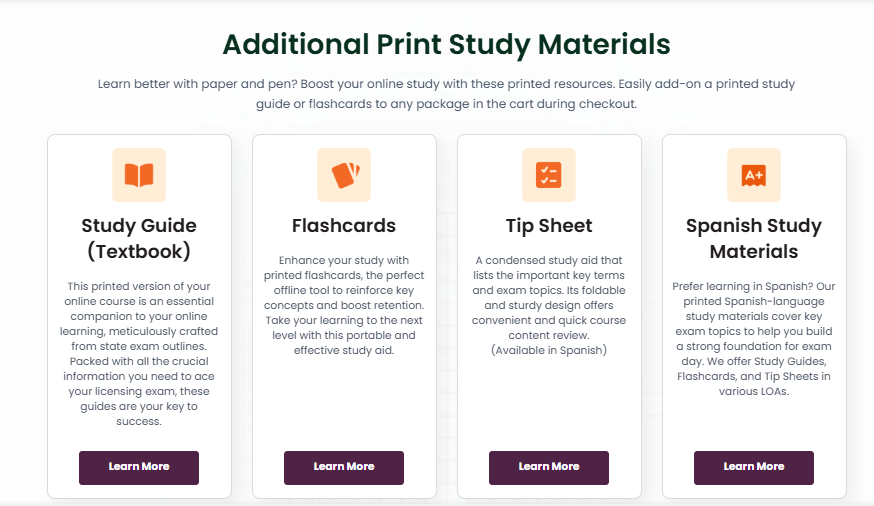
I also noticed they offer optional print materials, which is a nice add-on if you don’t love studying on a screen the whole time. There are printed study guides, flashcards, and quick tip sheets that break down key concepts in a more condensed way.
I didn’t personally rely on these much, but I can see the appeal. If you’re someone who remembers things better by writing them out or flipping through physical flashcards, this could be a helpful supplement to the online material. It’s not necessary, but it’s a nice option to have, depending on how you like to study.
Package Options
- Live Online Package: Live classes with full tools
→ Best for students who want instructor support - Video Study Package: Video lessons with exam tools
→ Best for students who want visual learning - Self-Study Package: Core materials and practice exams
→ Best for independent students who want less guidance
Package Perks
- 60-day access
- Practice exams
- Readiness exam
- Instructor support
- Video lessons
- Flashcards
- Live classes
- Exam simulations
Pros
✅ Questions Match Real Exam Style: I had to slow down and think, not just memorize.
✅ Clear Score Target: The 80% requirement gave me something specific to hit.
✅ Jump Around Freely: I could switch between topics anytime.
✅ Easy to Start Practicing Fast: Didn’t need to go through lessons first.
Cons
❌ No Direction Built In: I had to decide what to focus on every time.
❌ Can Feel Repetitive: A lot of similar question cycles.
❌ Extras Can Feel Distracting: Without added guidance, the extras can steal attention.
Bottom Line: Should You Choose ExamFX?
This felt more like true exam practice than step-by-step learning, which is where it really stands out. I liked how quickly I could get into realistic questions and gauge where I actually stood. The Readiness Exam also adds a clear benchmark, which helps you know when you’re ready instead of guessing.
It’s more self-directed than some other courses, so it works best if you’re comfortable managing your own study flow. But if you stay consistent, it’s a strong option for building confidence and sharpening your test-taking skills before exam day.
ExamFX
[Honorable Mention] WebCE: Simple Prep

This one felt very straightforward compared to the others. I didn’t spend much time watching lessons or going through long explanations. Most of what I did was answer questions, check the answers, and move on. The flashcards were there too, but I used them more as a quick review than a main study tool.
The platform itself is easy to navigate, which I appreciated. I didn’t have to dig around to find what I needed, and the setup felt simple from the start. It’s clear they’ve been doing this for a while, and that experience shows in how everything is laid out.
That said, the experience is pretty stripped down. There isn’t much of a guided path or layered progression. It felt more like a set of tools than a full course, so I had to stay on top of what I was missing and go back to fill in gaps on my own.
I can see why this works for a lot of people, especially with how affordable it is and the focus on helping you meet state requirements. If you’re comfortable learning by doing and want something simple to move through quickly, it does the job. But if you prefer more structure or in-depth explanations, it may feel a little limited.
Package Options
- Exam Prep Plus Package: Full tool access with expanded practice
→ Best for students who want more practice control - Exam Prep Package: Core tools with fewer extras
→ Best for students who want the basics without extra features
Pros
✅ Custom Quiz Builder Saves Time: I could isolate weak topics instead of redoing everything.
✅ Works Well For Short Sessions: I used it in quick 15–20 minute blocks.
✅ Clean Layout With No Distractions: Everything is right in front of you.
Cons
❌ Not Much Teaching Built In: I had to figure out concepts outside the platform sometimes.
❌ No Study Path: Nothing tells you what to do next.
❌ Limited Depth On Some Topics: Certain areas felt surface-level.
Bottom Line: Should You Choose WebCE?
This felt like the easiest one to just pick up and use without thinking. I liked being able to jump straight into quizzes and focus on what I was missing, especially when I didn’t have a lot of time. The biggest strength is how simple and fast it is to use. The downside is it doesn’t really teach you much—it expects you to learn through practice. I’d choose this if you already have some understanding and just want affordable, straightforward prep, not something that walks you through everything.
Other Pre-Licensing Options That Didn’t Make the Cut
These didn’t make my main list, but they still have some solid features depending on what you’re looking for.
Course Matchups: A Close Comparison
XCEL vs. Kaplan
These two sit at the top, but they come at prep from different angles. XCEL follows a fixed 3-step path where each phase unlocks the next, so there’s a clear order to follow with built-in review and exam simulators along the way. I liked that it kept the process moving without much second-guessing. Kaplan gives you more to work with overall, including a QBank, structured study plan, and multiple exam types, so it feels more like a full toolkit. One keeps you on a more guided track from start to finish. The other gives you more study material and more ways to work through it.
→ Choose XCEL if you want a more guided step-by-step path
→ Pick Kaplan if you want more study material and options
Aceable Agent vs. ExamFX
These two are both solid, but the experience feels pretty different once you get into the course. Aceable Agent breaks everything into shorter, interactive sections with questions built in throughout, which made it easier for me to stay engaged and keep going in smaller chunks. ExamFX is more centered around practice, with open access to exams and its Readiness Exam acting as the big checkpoint before test day. One is easier to stick with because it feels lighter and more approachable day to day. The other leans harder into testing and repetition once you’re ready to measure what you know.
→ Choose Aceable Agent if you want something easier to stay consistent with
→ Pick ExamFX if you want a more practice-heavy prep style
WebCE vs. XCEL
This one really comes down to speed versus structure. WebCE is more stripped down, with quick-access practice and custom quizzes that make it easy to jump in and start reviewing without much setup. XCEL is more built out, using its 3-part progression, review phases, and exam simulators to walk you through a more complete process. I found WebCE easier to use when I just wanted to get right into practice, while XCEL felt more like a full plan from start to finish. One is better for quick repetition and fast review. The other is better if you want a more guided overall system.
→ Choose WebCE if you want quick practice and a simpler setup
→ Pick XCEL if you want a more structured, all-around prep plan
How I Tested and Ranked These Courses
To really test these courses, I logged into each and worked through it like I actually had to pass the exam. I went through lessons, took practice exams, and paid attention to how the questions were written and how close they felt to a real test. I also tracked how much guidance each course gave versus how much I had to figure out myself.
From there, I compared what each course offered against what a typical student actually needs to pass, like enough practice, clear explanations, and realistic exams. I weighed those factors together to rank them based on how useful they felt overall.
Ranking Criteria Table
| Feature | Weight | What This Tests |
|---|---|---|
| Practice Tools | 22% | How well the practice matches the actual exam and builds real test readiness |
| Simulated Exams | 15% | How closely the courses’ full-length exams reflect the real licensing exam experience |
| Instruction | 15% | How clearly the course teaches the key concepts needed to pass |
| Technology | 12% | How easy it is to track progress, review mistakes, and stay consistent |
| Ease of Use | 8% | How simple it is to move through the course without wasting time |
| Study Resources | 8% | The quality of study tools like flashcards, videos, and extra materials |
| Student Support | 7% | How quickly and clearly help is available when you get stuck |
| Overall Value | 8% | How much value you’re getting based on the course’s quality, features, and effectiveness, not just the price |
| Guarantees | 5% | How realistic and useful the pass guarantee or refund policy is |
Higher-ranked courses had better structure, more consistent practice, and exams that felt closer to the real test, while lower-ranked ones either lacked depth, guidance, or realistic practice.
Final Verdict
The best insurance pre-licensing courses really come down to how you want to prepare for the state licensing exam. XCEL stood out for its step-by-step structure and clear path through the material. Kaplan felt more balanced with a mix of study tools and a flexible study plan. Aceable was easier to stick with, but wasn’t as detailed. Finally, ExamFX leaned more on practice and gave more control, but required more discipline.
Each course approaches exam prep differently, so your learning style matters more than anything. At the end of the day, consistent prep and using the right study tools will matter more than the course itself.
FAQs
A pre-licensing insurance course prepares you for the state licensing exam and helps you earn your insurance license. CE courses are taken after you’re licensed to maintain your license and meet state requirements.
The best insurance pre-licensing courses depend on your learning style. Some offer structured study plans and guided lessons, while others focus more on practice and flexible exam prep with different study tools.
A good pre-licensing course should include a high volume of practice questions, full-length exams, and review tools like online flashcards. Strong practice helps you prepare for how questions are asked on the licensing exam.
No, insurance exam prep courses vary a lot in structure, depth, and study tools. Some are more focused on teaching key concepts, while others are built around repeated practice and test simulation.
After completing a pre-licensing course, you can schedule your state licensing exam. Once you pass the exam, you can apply for your insurance license and start working as an insurance agent.



![Bluehost Promo Codes and Discounts [Verified Coupons]](https://www.miamiherald.com/careers-education/wp-content/uploads/sites/2/2026/10/bluehost-promo-code-mh-1024x768.jpg)
![Incogni Promo Codes [Verified Discounts]](https://www.miamiherald.com/careers-education/wp-content/uploads/sites/2/2026/10/incogni-promo-code-mh-1024x768.jpg)
![Shopify Promo Codes [Verified Discounts]](https://www.miamiherald.com/careers-education/wp-content/uploads/sites/2/2026/10/shopify-promo-code-mh-1024x768.jpg)