Trouble from start: How Venezuela’s Maduro rose to power, and what happened next
READ MORE
Strike on Venezuela
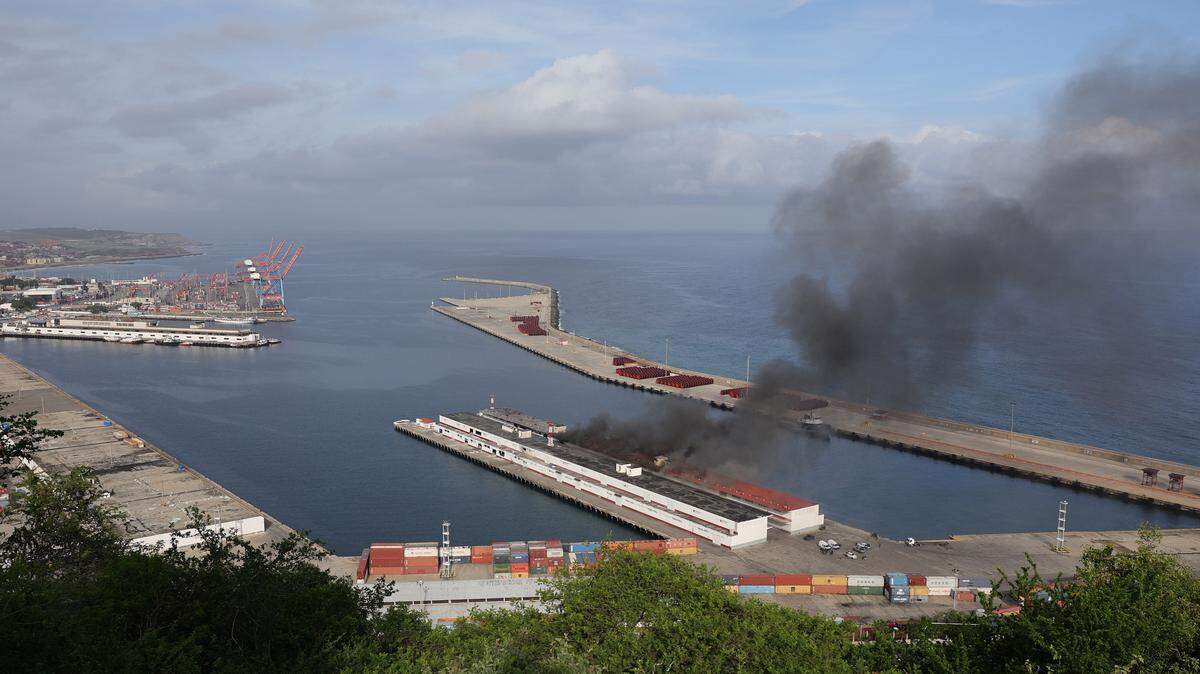
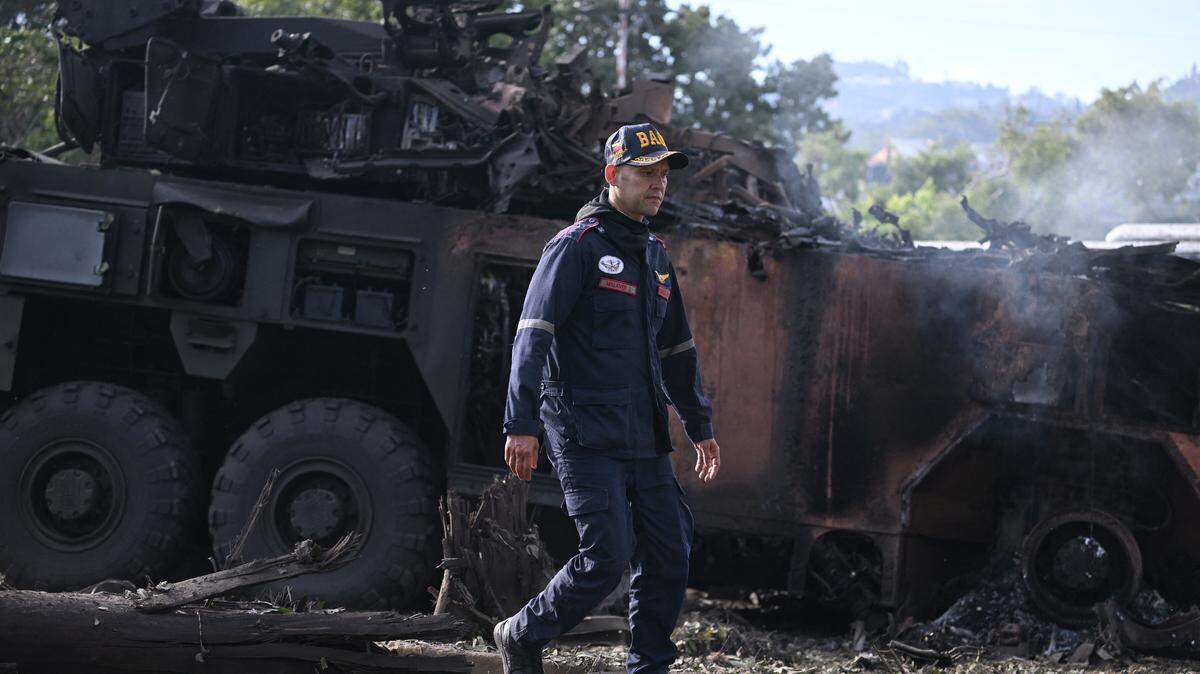
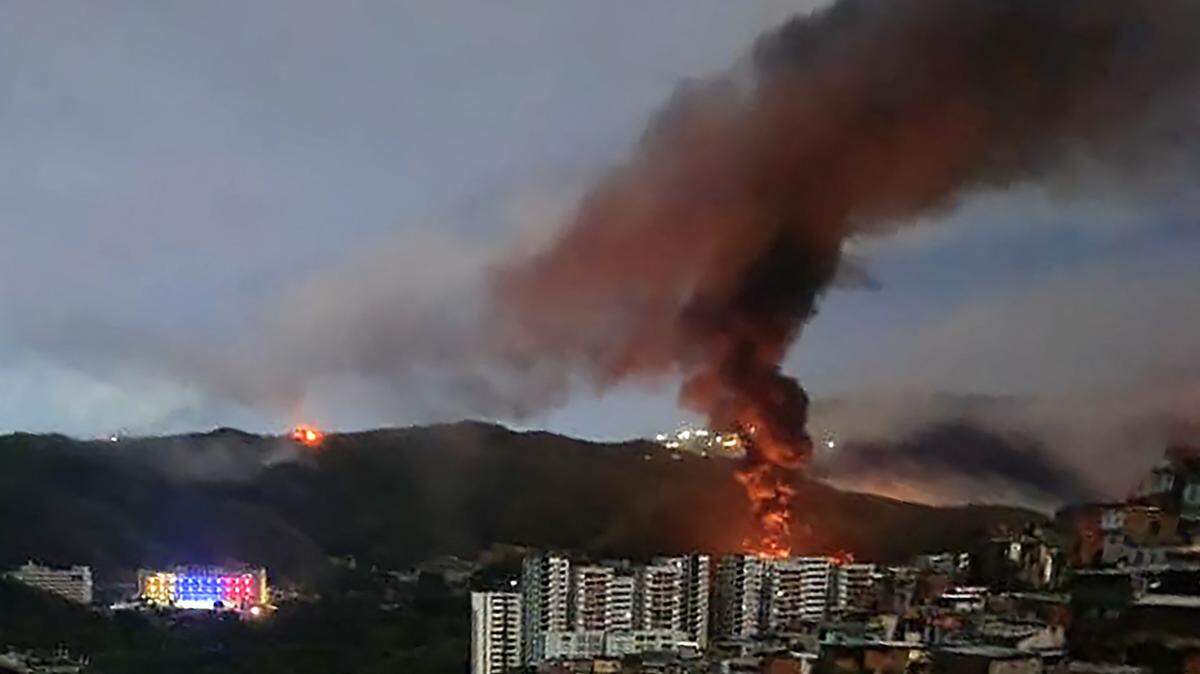
What to know about the U.S. military action in Venezuela and the removal of leader Nicolas Maduro.
Expand All
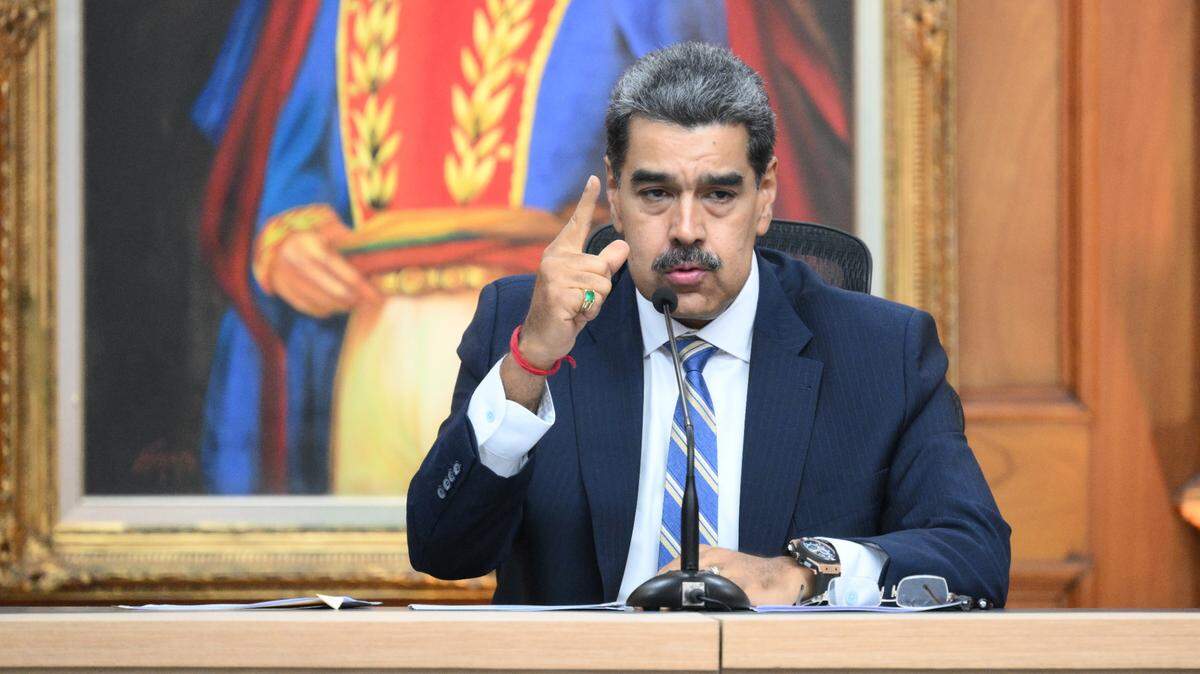
Nicolas Maduro became Venezuela’s president on April 19, 2013, and faced troubles from the start.
Here is a look back at coverage at the time from the Miami Herald archives:
MORE: Trump says Maduro captured, flown out of Venezuela after U.S. strikes shake Caracas
Maduro’s first year in power
Published April 18, 2014
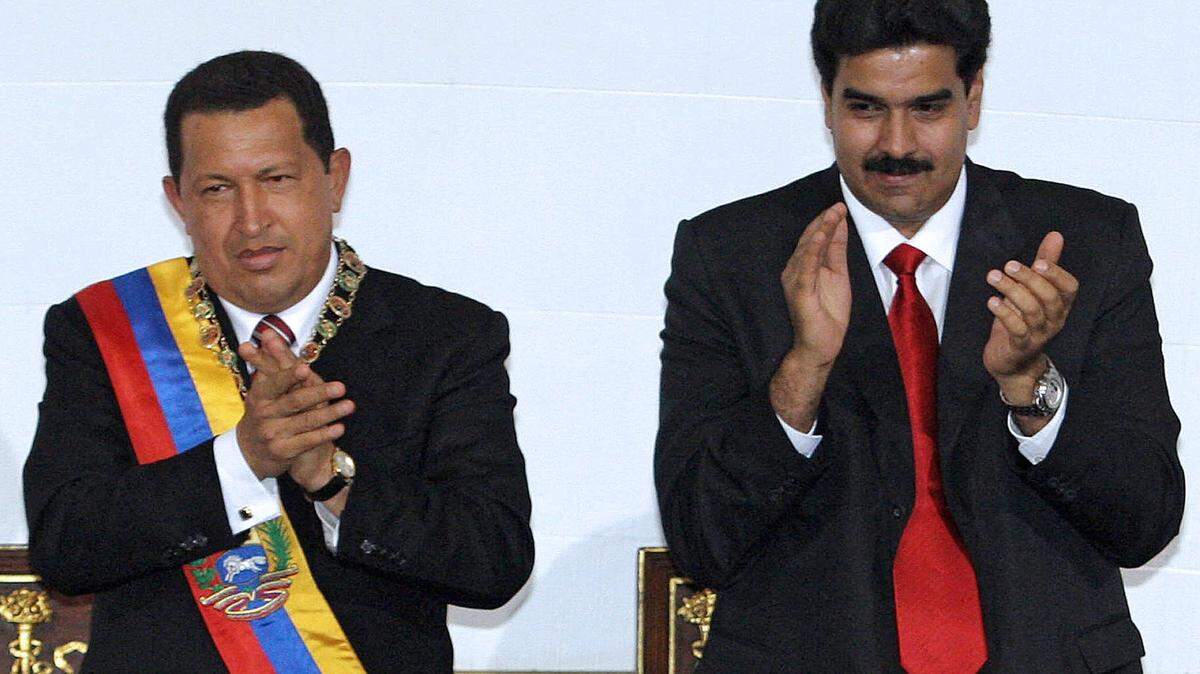
Venezuelan President Nicolás Maduro often says he never wanted the country’s top job. Instead, the 51-year-old former union organizer and transportation worker says he is simply following the orders of the late President Hugo Chávez, who asked him to carry on the Bolivarian Revolution.
The past 12 months prove how tall El Comandante’s order was.
Since taking office April 19, 2013, Maduro has faced a tanking economy, soaring crime, food shortages, deadly protests and questions about the contested election that brought him to power. His embattled administration also says it is the victim of Middle Eastern terrorists, Chinese mercenaries and shadowy conspiracies launched from the United States, Panama and Colombia.
What is clear is that Maduro’s tenure has been troubled from the start. Chávez’s death from an undisclosed form of cancer March 5, 2013, triggered a snap election that pushed his hand-picked successor and longtime foreign minister into an intense campaign.
Maduro won with just a 1.5 percent margin in a race that the opposition contends was rigged. The ensuing protests left at least 11 dead and drove speculation that Maduro — who never graduated from college and is often derided as the bus driver he once was — didn’t have the mettle to hold the reins of Latin America’s fifth-largest economy. And that was all before he put on the presidential sash.
“Maduro never enjoyed a honeymoon period because his legitimacy and the legitimacy of his victory have always been in question,” said Edgar Gutiérrez, a Caracas-based political consultant. Most leaders, even those who win tight races, enjoy a post-victory bump in the polls that gives them leeway to roll out reforms, he said.
Instead, Maduro has been on “precarious political ground” from day one, Gutiérrez said.
But even as Maduro inherited Chávez’s problems — including the second-highest murder rate in the world after Honduras, and the region’s highest annual inflation rate at 57 percent — he has remained Chávez’s most loyal ally.
He often works from the hillside crypt where his former boss is buried, and he says he relies on El Comandante’s guidance from beyond the grave to navigate the nation’s troubled waters.
His first months in office had all of Chávez’s hallmarks: He doubled down on the populist social policies, or “missions,” that were Chávez’s trademark, and savaged his rivals as “coup mongers” and “fascists.
“Instead of trying to reconcile with the part of the country that didn’t vote for him to expand his political base, he started governing for the 25 to 30 percent that were his most ardent followers,” said Carmen Beatriz Fernández, a political analyst with DataStrategia in Caracas. “It was rule by an extremist for extremists and that has led to national polarization.
Maduro claims it is the opposition that is on the fringe. Since taking office, his administration has denounced what it says are more than a dozen assassination attempts and hundreds of acts of sabotage.
During the protests that have roiled the nation since February, officials said they captured a Chinese “mercenary” and a “Middle Eastern terrorist” who were working for the opposition and plotting mayhem. Former U.S. diplomats have been accused of planning Maduro’s murder. The government rarely provides proof of the allegations.
Maduro also blames the “oligarchy” and business elite for “economic warfare” that he says is driving inflation and resulting in shortages of everything from flour and chicken to toilet paper even though Venezuela boasts the world’s largest oil reserves.
“In a single year, they used all their formulas for coups and sabotage that they used on Commander Chávez for 14 years,” Maduro said recently. “But we’re still here.
During his time in power, Chávez had the charisma and political savvy to credibly pin the country’s problems on his foes, said Agustín Blanco Muñoz, a historian at Caracas’ Central University who interviewed Chávez on several occasions before his death. But Maduro simply doesn’t have the chops to play that role, he said.
“This is a Chávez government without the liveliness and clarity of Chávez,” Blanco said. “And the continuation of Chávez without Chávez isn’t producing the best results for the country.
But Maduro has confounded those who underestimate him. In the run-up to a key municipal election last December, he essentially declared a national fire sale, forcing retailers to slash prices and capping company profits at 30 percent. The “fair prices” law spurred a shopping frenzy as Venezuelans lunged for televisions and stereos at steep discounts.
When it was time to hit the polls a few weeks later, voters seemed grateful. Despite predictions of a government rout, the ruling PSUV party and its allies won 76 percent of the mayoral races
The economic move “was like a sugar rush that helped Maduro win” the race, said Gutiérrez, the political analyst. “But after the rush comes the crash. And that’s led us to where we are today.”
The Venezuela of “today” has been mired in street demonstrations since February that have left at least 41 dead on both sides of the political divide and more than than 500 injured. The opposition says it is simply exercising its right to peacefully protest the government’s failing policies. Maduro claims the demonstrations are a thinly veiled coup attempt backed from abroad. He has ousted U.S. and Panamanian diplomats in response.
The government has also seized on the protests to isolate some of its most strident critics. Over the past two months, the administration has jailed Leopoldo López, head of the Voluntad Popular party, and two opposition mayors. The government also stripped opposition Deputy María Corina Machado of her seat. That has left more-moderate members of the opposition in “peace talks” with the administration, beginning last week. The negotiators have vowed to free their jailed and exiled comrades, but it is not clear that the government will give ground.
Blanco, the historian, says Chávez, and now Maduro, have been effective in dividing and weakening the opposition.
“Yes, there are problems, but this administration will continue in power because, fundamentally, there’s not an opposition that can defeat them,” he said.
“Maduro has military support, the power of petroleum and the support of the ‘social army,’ ” Blanco said, referring to the millions who benefit from government programs like free housing, healthcare and education. “And, of course, he has Cuba’s political support — and advisors there have a proven track record of being able to hold onto power during the worst of times.”
Others are not convinced that Maduro is invulnerable.
“The main variable affecting Maduro’s longevity will be the government’s ability to improve the economy, since the catalyst for any future transition will not be the opposition but rather discontent spilling over into chavismo’s base,” Risa Grais-Targow, with the New York-based analytical firm Eurasia Group, wrote in a letter to clients.
Although Maduro says new economic reforms are coming as soon as next week, it is unclear how effective they will be at squelching inflation and reviving productivity. “As a result, the economic outlook will likely remain challenging, which implies that the potential for discontent to rise will remain high,” Grais-Targow wrote. Some in the opposition believe they can stop Maduro’s ascent during the 2015 legislative elections or, perhaps, during a 2016 recall attempt.
But Maduro has proved his critics wrong in the past.
“This year has been a powerful demonstration that [the opposition] can’t defeat us through protests, violence, elections or an economic war,” Maduro recently told a crowd. “They will not come back.”
After two years of Maduro in Venezuela
Published April 20, 2015
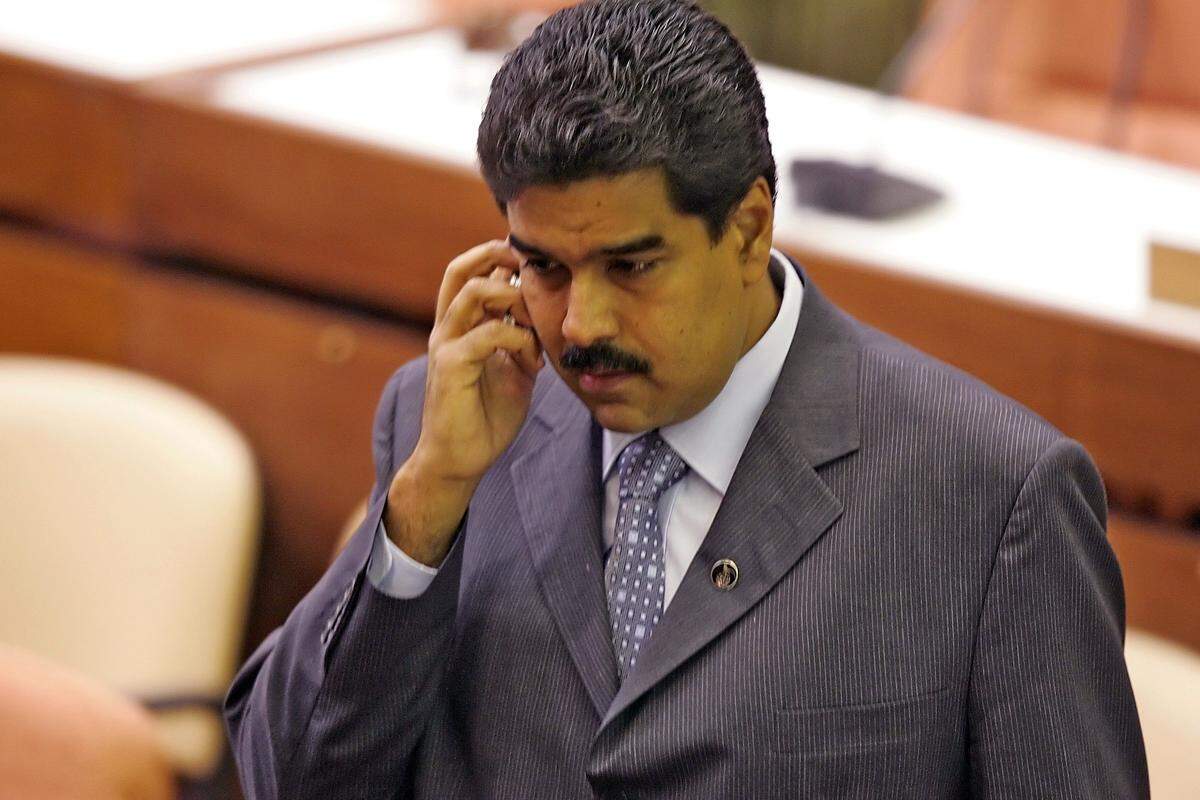
Say what you will about Venezuelan President Nicolás Maduro, but one thing is certain: the man was denied a honeymoon. During his first two years atop Latin America’s fifth-largest economy, Maduro seemed to face a lifetime of troubles: widespread social protests, tanking oil prices, rampant crime, and (according to him) dozens of coup and assassination attempts.
On Sunday, Maduro began his third year in power, but his troubles are far from behind him. In fact, the next years could be even more turbulent and decisive for the man who narrowly won a contested election in 2013 to replace his late boss and mentor Hugo Chávez.
The most obvious hurdle will be National Assembly elections this year that will test party discipline and Maduro’s popularity. The results — and how both sides accept victory and defeat — will be a preamble for an even higher-stakes battle starting in 2016, when the opposition will be able to legally call for a referendum to revoke the president.
The backdrop for the struggle is an economy in shambles. Venezuela already has the region’s highest inflation and poorest performing economy, which has generated shortages of basic goods and headline-grabbing food lines. But analysts say the pain might just be getting started, as the full brunt of falling oil prices ripples through the economy.
Some Venezuelans have been counting the days since Maduro took office, said Agustín Blanco Muñoz, a political science professor at Venezuela’s Central University. But the administration has skillfully undermined the opposition and shored up its flanks by funneling more power to the military, he said. “In that sense, there really is no opposition,” Blanco said. “The maximum enemy that Maduro has had in these last two years is the economy.” Oil: When Maduro became president on April 19, 2013, Venezuelan crude was selling for $102 a barrel and the socialist administration was pumping millions into housing and education projects that are crucial to its popularity. Now, oil is limping along at $48 a barrel, robbing the government of the hard currency it needs to finance imports, pay its foreign debts and invest in its crowd-pleasing social programs.
A sign of just how tight the times have gotten came last week when the administration slashed the amount of cash travelers can acquire at preferential rates. In the past, visitors going to Europe could purchase up to $3,000 for a trip at 12 bolivares to the dollar (or the Sicad 1 rate). Now, that’s been cut to $2,000. Those traveling to the United States are being hit even harder. Before, a traveler could buy up to $2,500 in greenbacks to visit Florida, for example. Now they only have access to $700 — not even enough to cover a three-day pass to Disneyland for a family of four.
The move is hallmark Maduro: it slams the middle class while leaving his political base unscathed, said Risa Grais-Targow, an analyst with the New York-based Eurasia Group.
“It’s strategic in that it’s more targeted in terms of who’s paying the costs,” she said.
Politics: Restricting access to dollars ensures the government keeps more of them to pay debts and import critical goods, but it also further sours the national mood. And by sending more people to the free market for dollars it drives up inflation, which already hit 69 percent in 2014. Bank of America predicts inflation could reach a whopping 174 percent this year.
Yet, the administration seems determined to stick to its byzantine four-tier exchange rate system that, depending who you are and what you do, either makes a dollar worth 6.3 bolivares or 250. “Venezuela’s problems are to a large extent self-inflicted,” Bank of America wrote in a recent research report. “This could well become the first government in history to actually choose hyperinflation over devaluation.” Politics: This is all bad news for Maduro and the ruling United Socialist Party of Venezuela, PSUV, as the country heads into elections.
First up is the vote for the country’s congress, which is expected before year’s end. Despite repeated calls from the region, the administration has refused to fix a date for the vote — as if it’s waiting for favorable electoral winds to call a snap election.
The administration’s reluctance may be merited. A February survey by Datíncorp found that 48 percent of those polled said they would vote for any opposition candidate, versus 24 percent that would vote for any ruling party candidate.
In addition, the opposition, which has been slammed in the last three elections, is in the middle of primaries in hopes of entering the race with a unified list of candidates. But Blanco said he doesn’t put much stock in the election. Maduro and the ruling party control all branches of government, including the electoral council, he said. And while polls paint a picture of an anxious country ready for change, most of that anxiety is concentrated in the middle class, he contends.
“The popular masses are not that worried about the direction of the country,” he said. “And the administration has figured out how to keep their stomachs filled despite the misery.”
Maduro also has another factor in his favor: U.S. sanctions imposed on Venezuela in March. The measure is actually quite mild (freezing assets and denying visas to seven Venezuelan officials accused of human rights violations and corruption). But they’ve been a godsend to Maduro, who has seized on language in the enacting presidential decree that declares the Andean nation an “unusual and extraordinary threat.” Alleging the language is a precursor to U.S. aggression, he’s mobilized the armed forces, bucked up his political flanks and has the
opposition on the defensive — painting opposition leaders as traitors for failing to condemn the sanctions. “This has been a hammer blow to the opposition and has helped rally sectors of Chavismo that had been drifting away,” said José Rafael Mendoza, a Caracas-based political analyst. “In that sense it was a very dumb move by the United States.”
Post election: The big question now is what happens to Maduro after the congressional elections. Economic analysts say he will have to make some painful reforms, including devaluing the currency or raising domestic gasoline prices, which are the cheapest in the world at 5 cents a gallon.
While Maduro has said he’d study measures to fight the “economic war” he’s always stopped short of making significant adjustments. The reasons may be two-fold: The measures would erode his political support among the poorest, and there are entrenched interests in the administration who are getting rich off the policies.
The multiple exchange rates mean that the connected and privileged few who have access to preferential dollars are sitting atop a money-making machine. (One dollar purchased at the official rate of 6.3 bolivares in the morning could fetch 250 bolivares on the open market in the afternoon.)
On the flip-side, the longer the administration keeps from making economic changes, the more likelihood there is for social unrest, as people weary of long lines and shortages amid the impression that a corrupt are benefiting from the system.
Even so, Maduro has tried to pin the problems on shadowy forces and the opposition. As the social malaise has grown, he’s cracked down on protests and jailed prominent political leaders. With few economic tools at its disposal, “the government strategy seems to be to radicalize, provoke the opposition and demonize the private sector, the United States and whoever else they can find,” Grais-Targow said. Most recently, Maduro has accused the Spanish government of trying to undermine him.
“At some point something has got to give in terms of social dynamics,” Grais-Targow added. “I do think that Maduro is going to be looking at the risk of a serious political crisis in the next year or so…Whether he makes it to year three or four is an open question.”
Maduro can run for reelection indefinitely when his term ends in 2019 and Blanco, the professor, says he wouldn’t be surprised if the president remains in power for “decades.” He calls the administration a “military-civil-police dictatorship” and he says it has the resources and the means to win elections and cling to power.
“When people say the administration is in intensive care it just doesn’t match reality,” he said. “In many ways, I think this regime is just getting started.”
Taking power
Published April 15, 2013
Hugo Chávez proved his power from beyond the grave Sunday, as his handpicked successor narrowly won office in a vote that many saw as a tribute to the fallen socialist firebrand.
Nicolás Maduro, 50, a longtime ally of the late president, narrowly edged out rival Henrique Capriles in a race that is likely to be contested.
Maduro won 50.6 percent of the vote versus Capriles’ 49.1 percent, the National Electoral Council said. Vicente Díaz, the only opposition member of the CNE, asked his colleagues to approve a recount of 100 percent of the ballots. Although Venezuela’s voting is electronic, the system generates a paper trail that can be used in an audit.
In his victory speech, Maduro said he had talked to Capriles.
“If the CNE has said the other candidate had won even by a single vote, I would be handing over power,” Maduro said as fireworks burst over the sky. “But I won by almost 300,000 votes. It’s the decision of the people.”
The National Election council said Maduro won 7.505 million votes to Capriles’ 7.270 million Maduro, 50, entered the race leading the polls on the wave of sympathy generated by Chávez’s March 5 death. But Capriles, 40, who lost to Chávez in October, hoped the enthusiasm he saw on the campaign trail would translate into an upset.
Polls were scheduled to close at 6:30 p.m. EST, but some voting stations remained open two hours later. In a Twitter message, Capriles called on authorities to shut the polls. “We’re alerting Venezuela and the world that they’re trying to change the will of the people,” he tweeted.
The Capriles campaign asked supporters to stay at voting centers until all the ballots were audited.
Despite scattered problems, authorities said there were no major incidents and no widespread irregularities during the vote. But as the evening wore on, social networks reported acts of violence and intimidation.
Venezuela does not allow electoral observers, but it does invite “accompaniers.”
On Sunday, a delegation with the Inter-American Union of Electoral Organizations was having photos taken in front of a sidewalk shrine where people left flowers, letters and cups of coffee in honor of Chávez.
The delegation’s president, Roberto Rosario, said his group had not seen any blatant campaign violations.
“What we’re seeing is people voting calmly. There’s no sense of confrontation,” he said.
Asked about pro-government propaganda in Sunday’s newspapers and on public television, Rosario said it was largely a consequence of the compressed 10-day campaign. The opposition also had thinly-veiled ads in some papers, he said.
“There are issues on both sides,” he said. “But when the issues are equal we cannot talk about one side having an advantage.”
Diego Sueiras, the mission chief for Redlad, a network of observer organizations that was not given the right to observe the race, said the election was deeply flawed because of the uneven playing field leading up to the vote.
“We’re in a system where democracy doesn’t seem to matter before or during the election,” he said. “All that seems to matter is that they can count the votes.”
After leading the nation for 14 years, Chávez died last month after an 18-month battle with cancer. His death triggered snap elections and a brief but bitter race. The opposition has accused the ruling Unified Socialist Party of Venezuela, or PSUV, of hijacking government resources to favor Maduro.
On Sunday, the Capriles campaign said pro-government supporters were rallying around some voting stations and that PSUV activists were accompanying voters to the ballot box, violating their right to a secret vote. The election watchdog Sumate said it had received more than 1,000 complaints, but most of them had to do with campaigning near polling stations.
Rosa María Camargo, a 42-year-old accountant, said she had heard reports of pro-Maduro crowds intimidating voters. As she held her 2-year-old son, she broke down in tears.
“I want to have a real country for my son, not this disorder,” she said. “If Maduro wins, it’s going to be because of these abuses.”
Police in riot gear huddled on street corners as tensions ran high in anticipation of the results.
In the pro-government neighborhood of 23 de Enero, locals said they were confident that Maduro would win. Mirella Godoy, 54, said Chávez was the only president who had worked for the poor, and she said her vote was a tribute to him.
“Everyone in this neighborhood voted for Maduro,” she said, “because that’s what Chávez told us to do.”
But optimism was also high in opposition neighborhoods. In the middleclass neighborhood of Chaco, Jose Luis Lopez, 77, said Maduro lacks Chávez’s charisma and leadership qualities, and that made him vulnerable. Even if Chávez did name Maduro his successor, it did not mean the burly former foreign minister would get the votes, he said.
“Just because he has Superman’s cape doesn’t mean he can fly,” Lopez said.
The day began with fireworks and trumpets in the predawn hours as the government began rallying its supporters.
It ended a campaign that took place amid the specter of violence. The government repeatedly said that foreign mercenaries had infiltrated the country and were bent on disrupting the elections and assassinating the candidates.
After casting his vote, Maduro said the government would release new evidence Monday about U.S. meddling in Venezuelan affairs.
Both candidates have said they will honor the results, but both have also said they fear the other side will not.
“Let’s end the intolerance and the hatred,” Maduro said. “I’m asking for peace for this country.”
This story was originally published January 3, 2026 at 7:09 AM.