Loving pretty rooms is one thing…
Turning an empty space into something safe, useful, and beautiful is what a real interior design career is built on.
Interior designers do much more than pick paint colors and pillows. They study floor plans, manage budgets, meet clients, use design software, and solve problems that can get expensive fast.
The field is staying busy, too. The BLS estimates that around 7,800 interior designer openings will be available each year over the next decade.
Below, I’ll walk you through the real interior design career, from daily work and pay to education, job options, and the skills you need. Here is what you should know.
Key Takeaways
- Design Must Work: A room needs to be useful and beautiful.
- Tech Skills Matter: Designers use CAD and 3D software.
- Education Helps: A bachelor’s degree is the typical starting point.
- Jobs Are Steady: Around 7,800 openings are expected each year.
- Several Paths Exist: Designers can join a firm or work independently.
Interior Design Is More Than Making a Room Pretty
A client may show you a Pinterest board and say, “I want this vibe.”
Now you have to turn that vibe into a real room.
Will the furniture fit? Can people move around it? Is the lighting bright enough? Does everything stay within budget? Are the materials safe for the space?
Interior designers answer those questions before anything is ordered or installed. They measure rooms, create floor plans, build digital models, choose materials, estimate costs, and coordinate with contractors.
The fun part is creating the look. The real job is making sure that look actually works.
Designer or Decorator? Here Is the Real Difference
Both careers create spaces that look complete and fit the client’s style. They simply handle different parts of the project.
Interior Decorator → Works with an existing room and shapes its finished look. Decorators select paint, furniture, rugs, curtains, artwork, and accessories. They build the color palette and bring the client’s style together.
Interior Designer → Plans how a space looks, functions, and supports the people using it. Designers take measurements, calculate clearances, read blueprints, create floor plans, and consider building codes, accessibility, and safety. They may also plan lighting and fixture locations while coordinating with architects, engineers, and contractors.
Decorators mainly style existing spaces. Interior designers combine appearance with technical planning. Both contribute valuable work to a finished space.
8 Types of Interior Design Careers
Interior designers can specialize based on the spaces, clients, or project needs they enjoy most.
1. Residential Interior Design → Homes, apartments, renovations, and individual rooms. The work focuses on comfort, storage, movement, daily routines, and the client’s personal style.
2. Commercial Interior Design → Stores, restaurants, offices, and other public spaces. These projects usually involve strict budgets, building codes, accessibility rules, and larger teams.
3. Corporate Interior Design → Offices and professional workplaces. Designers plan workstations, meeting rooms, break areas, lighting, walking paths, and spaces that fit the company’s brand.
4. Hospitality Interior Design → Hotels, resorts, bars, restaurants, and entertainment spaces. The design must create a memorable guest experience while handling heavy use and frequent cleaning.
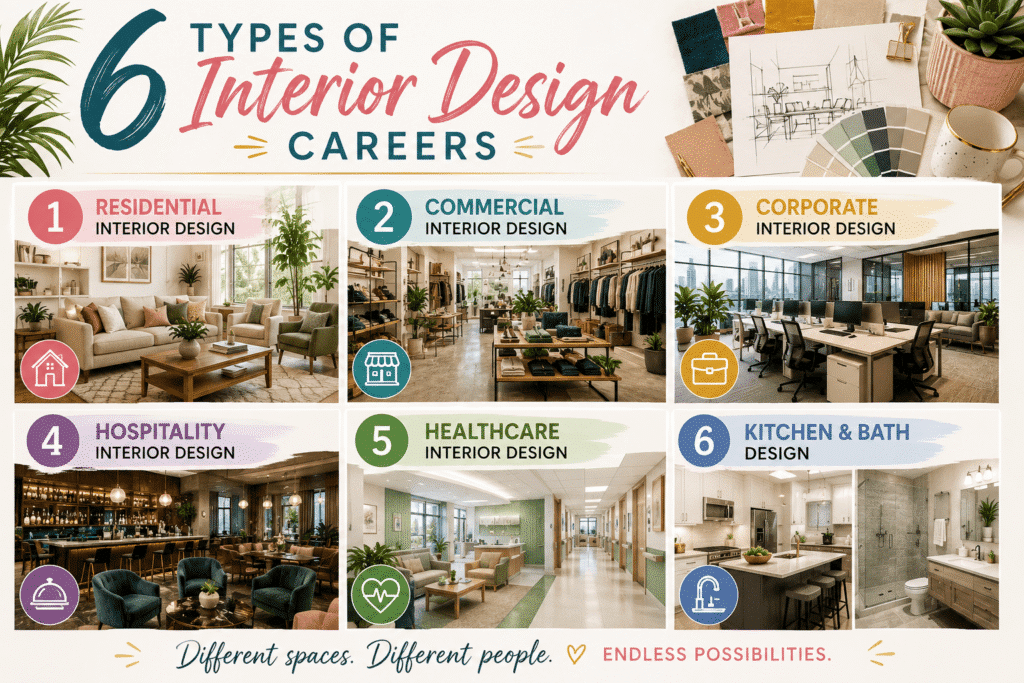
5. Healthcare Interior Design → Hospitals, clinics, care homes, and medical offices. This specialty considers patient comfort, privacy, sanitation, staff movement, accessibility, and medical equipment.
6. Kitchen and Bath Design → Kitchens, bathrooms, and other spaces involving cabinets, plumbing, appliances, ventilation, and electrical needs. Exact measurements are especially important.
There are two other types of design careers you may consider if the ones above don’t call to you. These are:
7. Universal Interior Design → Spaces that people of different ages, abilities, and physical needs can use. Common features include wider paths, safer bathrooms, step-free entrances, and reachable storage.
8. Sustainable Interior Design → Projects that focus on waste, energy use, indoor air quality, and responsible materials. Designers consider how products are made, used, maintained, and replaced.
Some designers stay in one specialty for most of their careers. Others combine areas, such as residential and kitchen design or commercial and hospitality design.
Your Road Into Interior Design
There is no single path into interior design.
Some designers complete a two-year associate degree or certificate. Others compare interior design courses and earn a four-year bachelor’s degree, which is the typical education for many professional interior design jobs. A master’s degree is also available but is not usually required to begin.
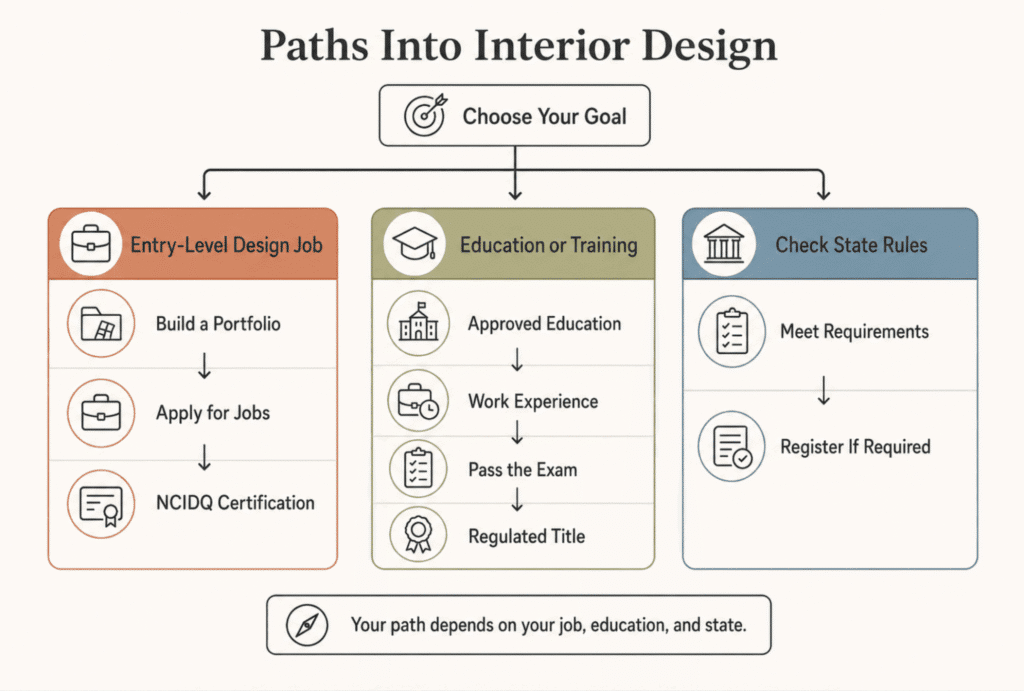
The next steps depend on your goal:
- Want an entry-level design job? Build a portfolio and check what local employers require.
- Want to earn the NCIDQ credential? You need an approved mix of interior design education and work experience.
- Want to use a regulated title? Check your state’s education, exam, and registration rules.
The path may be short or take several years. It depends on the education you choose, the work you want to perform, and the rules where you plan to practice.
Let’s Talk Money & Demand
According to the U.S. Bureau of Labor Statistics, here is the current career snapshot:
| Career Detail | Current Data |
|---|---|
| Median annual pay | $63,490 |
| Pay data year | May 2024 |
| Projected job growth | 3% |
| Growth period | 2024–2034 |
| Expected openings | 7,800 per year |
Actual income can change based on location, experience, specialty, employer, and whether you work for yourself. Demand may also come from renovations and the need for spaces that follow building codes and accessibility rules.
The field is not exploding overnight, but it is not disappearing either. Its projected growth is about as fast as the average for all careers.
Could You Actually See Yourself Doing This?
You may enjoy an interior design career if you notice how rooms flow, enjoy solving layout problems, and do not mind learning technical skills.
It also helps if you can accept feedback without taking every change personally. The space belongs to the client, even when your original idea was cooler.
Think carefully about the full job if you only enjoy choosing colors and decorations. Professional interior design also includes measurements, software, building rules, budgets, emails, and project delays.
✨ Quick Gut Check: Would you still enjoy designing a room if you had to measure it, price it, explain it, revise it, and solve three problems before installation?
If the answer is yes, this career may fit you better than you think.
My Final Thoughts
An interior design career combines creative ideas with real-world problem-solving.
You get to shape how spaces look, but you also think about safety, movement, cost, and construction. That mix is what separates professional interior design from simply decorating a room.
You can also explore residential, commercial, healthcare, sustainable, or self-employed work. Your options may grow as you gain experience and build a portfolio.
If you enjoy design but also love planning and solving problems, interior design could be a career worth exploring.
Ready to explore the field further? Our interior design career overview breaks down specialties, education paths, and what the job looks like day to day.
FAQs
Do interior designers need a degree?
Not always. Education requirements depend on the employer, type of work, and state. However, the Bureau of Labor Statistics lists a bachelor’s degree as the typical entry-level education. Associate, bachelor’s, and master’s programs are available.
Is interior design the same as decorating?
No. Decorators focus on the finished look of an existing space through furniture, color, artwork, and accessories. Interior designers combine appearance with technical planning, including floor plans, measurements, building codes, accessibility, safety, and construction documents.
Can interior designers work from home?
Some planning, drawing, ordering, and meetings can happen at home. Designers still visit project sites to measure rooms and check installations.
Do interior designers need to know how to draw?
Basic sketching can help, but designers also use computer software to create plans and show their ideas.
Is interior design hard to learn?
It can be challenging because it mixes creativity with measurements, software, budgets, and building rules. Practice makes those skills easier to manage.

![At Your Pace Online Coupon Code [Verified Discounts]](https://www.miamiherald.com/careers-education/wp-content/uploads/sites/2/2026/10/aypo-promo-code-mh-1024x768.jpg)