‘Don’t Say Gay’ bill sponsor is baffled by LGBTQ ‘trend’ among kids? Oh, please | Editorial
READ MORE
‘Don’t say gay’ bill passes
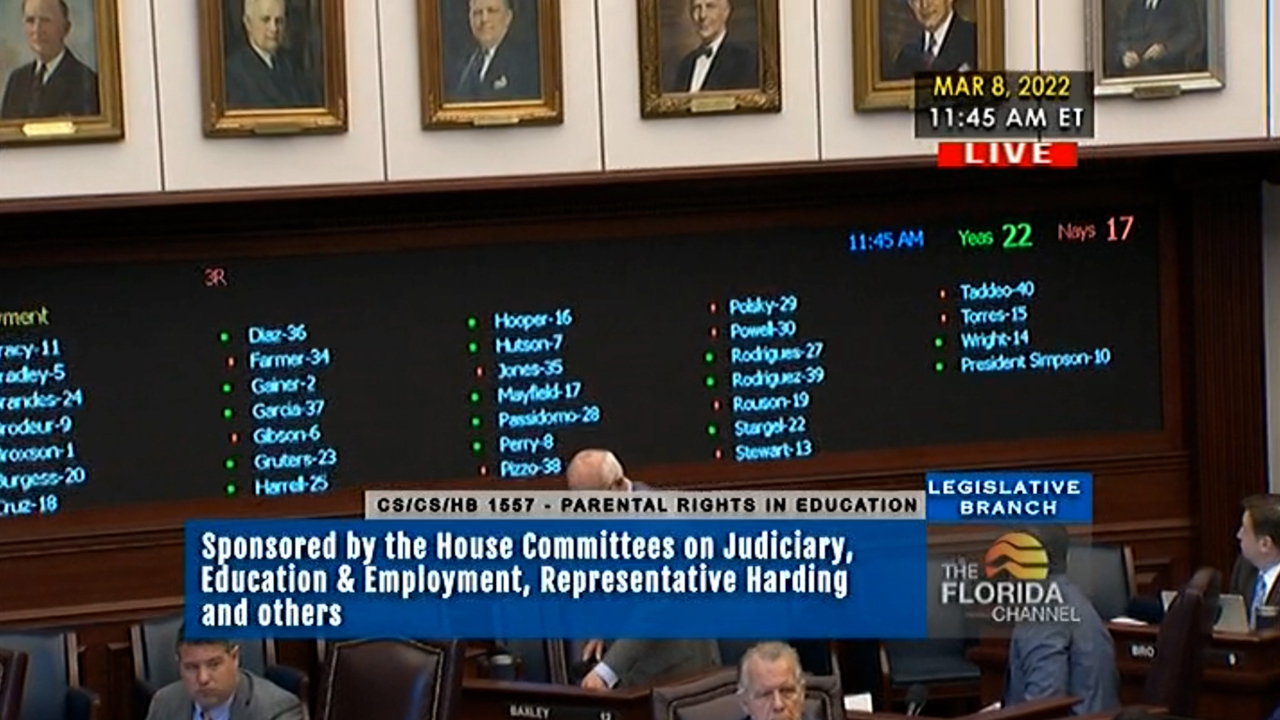
On Tuesday, March 8, The Florida Senate voted 22 to 17 to pass the measure dubbed the “don’t say gay” bill by opponents and the “parental rights in education” bill by Republican backers.
Expand All
Just listen to the rhetorical gymnastics Republicans in the Florida Legislature have employed to defend what opponents call the “Don’t say Gay” bill.
We have nothing against LGBTQ kids, they argued.
We’re just protecting parental rights, they said, trying — and failing — to defend themselves against charges that they are homophobic.
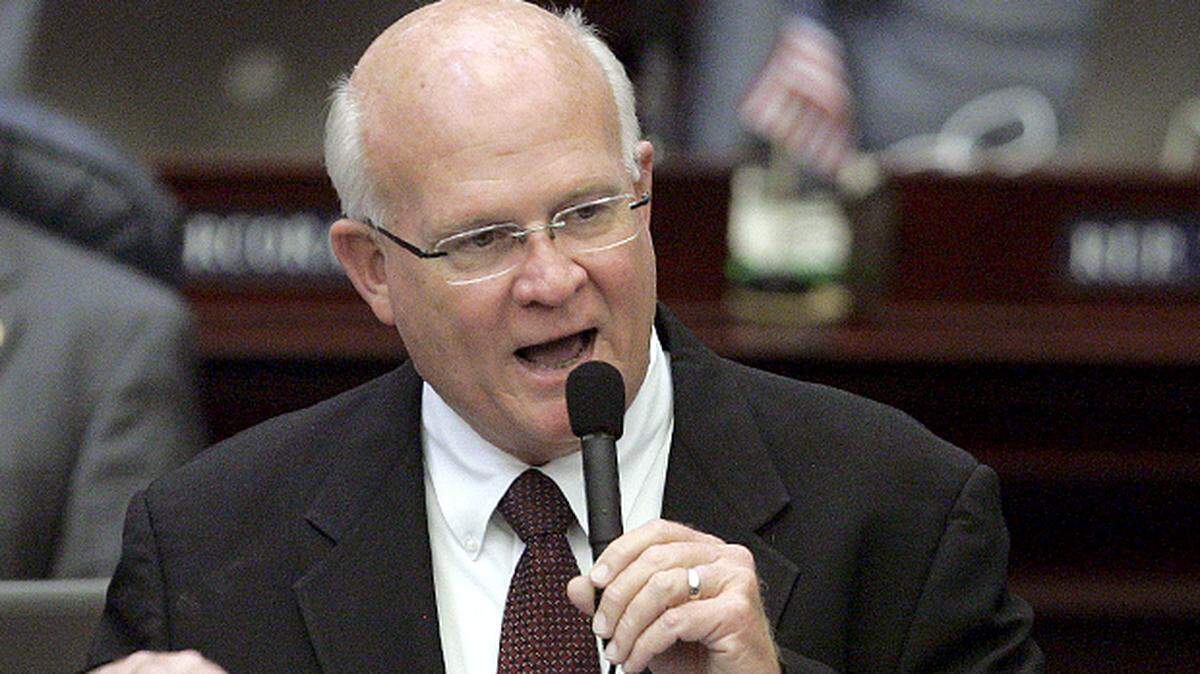
But it took a debate on the Florida Senate floor on Monday for the true views of at least one of the politicians behind House Bill 1557 to emerge: There are just too many gay kids nowadays.
That, apparently, is why bill sponsor Sen. Dennis Baxley, a Republican from Ocala, thought it was appropriate to legislate against his discomfort with what he called a “real trend change” in society.
“My son’s a psychiatrist and I said, ‘Why is everybody now all about coming out when you’re in school?’” Baxley told his fellow senators. “And there really is a dynamic of concern of how much of this are genuine-type of experiences and how many of them are just kids trying on different kinds of things.”
“So my question is, simply, are we encouraging this or eliminating it by putting emphasis on it?” Baxley said.
If kids are too comfortable experimenting with their sexuality, it must be because they know too much, the thinking seems to be. Blame those deviant teachers for turning our kids gay through what Baxley called “social engineering.”
HB 1557 seeks, among other things, to ban “classroom instructions” about sexuality and gender identity from kindergarten to third grade, “or in a manner that is not age-appropriate or developmentally appropriate for students in accordance with state standards.” The Legislature passed it Tuesday and Gov. Ron DeSantis has said he supports it.
(Note: if you don’t want your children to learn sexuality or gender identity, consider banning the internet from your home.)
Because when you don’t talk about it, people don’t turn out to be gay.
Suicide risk, not celebrity
Baxley believes that when kids come out, “overnight, they’re a celebrity.” That doesn’t jibe with statistics that show LGBTQ youth are more likely to commit suicide.
“LGBTQ youth are not inherently prone to suicide risk because of their sexual orientation or gender identity but rather placed at higher risk because of how they are mistreated and stigmatized in society,” the Trevor Project says, on its widely accessible homepage.
A simple Google search would have educated Baxley and other supporters of HB 1557 on that point, but it seems they would rather rely on a static notion of sexuality — even as they legislate what is said in classrooms.
Baxley called his public musings “the reminiscing of a father, a grandfather trying to figure out what makes sense and that is part of why I’m attracted to this bill.”
The reminiscing “of a father, a grandfather” should be relegated to the Thanksgiving table. Somehow, in Florida, they somehow become a legislative priority.
BEHIND THE STORY
MOREWhat's an editorial?
Editorials are opinion pieces that reflect the views of the Miami Herald Editorial Board, a group of opinion journalists that operates separately from the Miami Herald newsroom. Miami Herald Editorial Board members are: opinion editor Amy Driscoll and editorial writers Isadora Rangel and Mary Anna Mancuso. Read more by clicking the arrow in the upper right.
What's the difference between an op-ed and a column?
How does the Miami Herald Editorial Board decide what to write about?
The Editorial Board, made up of experienced opinion journalists, primarily addresses local and state issues that affect South Florida residents. Each board member has an area of focus, such as education, COVID or local government policy. Board members meet daily and bring up an array of topics for discussion. Once a topic is fully discussed, board members will further report the issue, interviewing stakeholders and others involved and affected, so that the board can present the most informed opinion possible. We strive to provide our community with thought leadership that advocates for policies and priorities that strengthen our communities. Our editorials promote social justice, fairness in economic, educational and social opportunities and an end to systemic racism and inequality. The Editorial Board is separate from the reporters and editors of the Miami Herald newsroom.
How can I contribute to the Miami Herald Opinion section?
The Editorial Board accepts op-ed submissions of 650-700 words from community members who want to argue a specific viewpoint or idea that is relevant to our area. You can email an op-ed submission to oped@miamiherald.com. We also accept 150-word letters to the editor from readers who want to offer their points of view on current issues. For more information on how to submit a letter, go here.
This story was originally published March 8, 2022 at 12:48 PM.
.JPG)