‘We will not be quiet’: Miami students protest ‘Don’t Say Gay’ bill at Capitol before vote
READ MORE
‘Don’t say gay’ bill passes
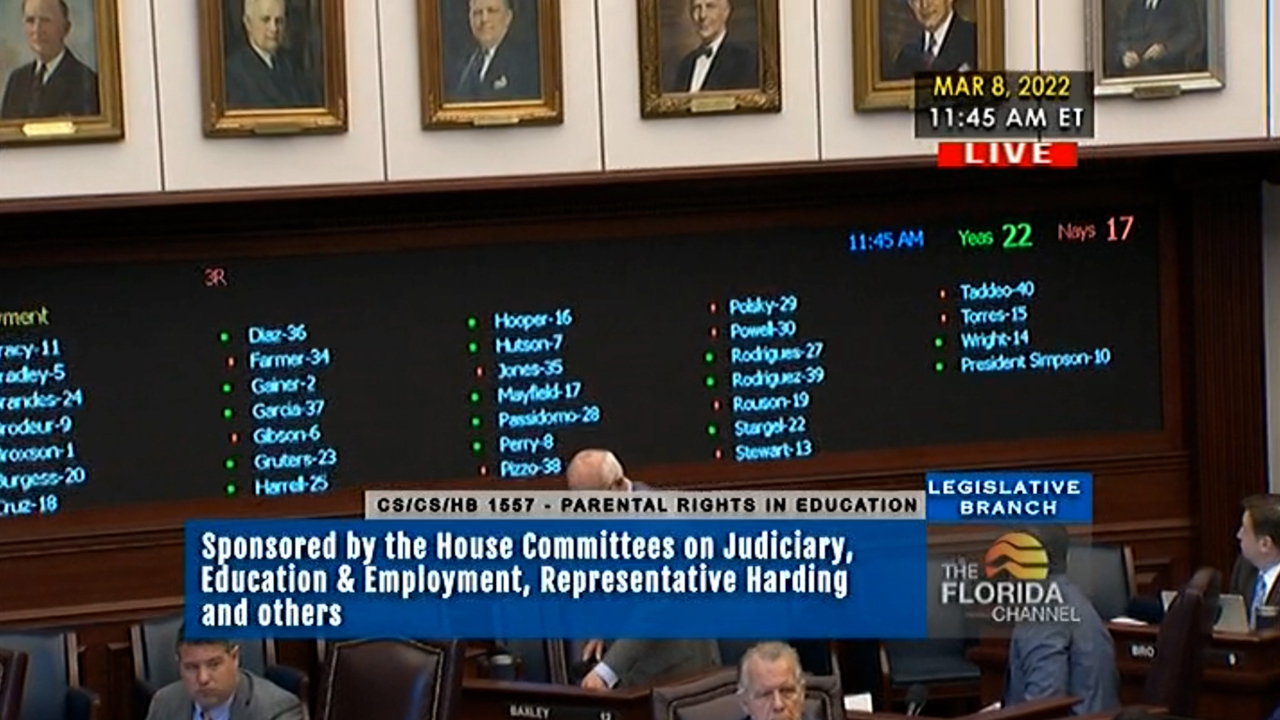
On Tuesday, March 8, The Florida Senate voted 22 to 17 to pass the measure dubbed the “don’t say gay” bill by opponents and the “parental rights in education” bill by Republican backers.
Expand All
When Javier Gomez testified in front of Florida’s lawmakers in Tallahassee last month, he said he was on the verge of a “panic attack.”
But it was important lawmakers heard about the impact of SB 1834, a “Parental Rights in Education” bill in the Florida Senate that critics have labeled the ‘Don’t Say Gay’ bill, from the perspective of students who could be affected most, he said.
“I looked everyone in the eyes and I told them my story,” said Gomez, 17, president of the Gay-Straight Alliance chapter at Miami’s iPrep Academy.
In his speech, he explained that at age 5 he knew he wasn’t like his peers. He knew he liked boys, but didn’t know the words to use. He was bullied extensively “for characteristics I couldn’t control until I lost my voice.”
But in the fifth grade, he learned to accept himself with the help of his teacher, school counselors, a GSA sponsor and countless other teachers who supported him. Without them, Gomez told lawmakers, he wouldn’t have been standing before them.
“[I] persevered because that’s what our community does,” he said, explaining how he overcame his fears to testify. “We persevere.”
Gomez’s experience advocating for his rights and those of his peers highlights the dual reality many LGBTQ+ young people are experiencing this legislative session: unmatched resilience in the face of discrimination and a heightened sense of fear about being their full selves at school.
As this year’s session comes to an end, Florida lawmakers are poised to bar classroom instruction on sexual orientation and gender identity from kindergarten to third grade. The proposed legislation could be sent to Gov. Ron DeSantis’ desk as early as Tuesday, when the Republican-led Senate is scheduled to vote on the measure.
Lawmakers in the House on Feb. 28 moved the accompanying bill, HB 1557, to the Senate for discussion.
Students protest in Tallahassee
On Sunday, dozens of students, LGBTQ+ advocacy organizations and elected officials, including Mayor Daniella Levine Cava, gathered at the Torch of Friendship monument in downtown Miami before boarding a bus to drive overnight to Tallahassee.
There, as they prepared for the drive, some of Miami’s LGBTQ+ young people grappled with their desire to speak out with the need to do so in the first place.
“This space is very empowering, but it’s sad,” said Nathalie Saladrigas, 19, president of Miami Dade College Queer Collective. “I’m so grateful for such a great group of teens, but it’s sad we still have to do this, that we still have to voice our right to live peacefully.”
Moreover, she said, it’s tiring to have to “put away” her sexuality — her identity — because lawmakers “aren’t used to hearing it or are not accepting of it. It’s exhausting to keep explaining that I love who I love. There shouldn’t be someone else making decisions for me about that.”
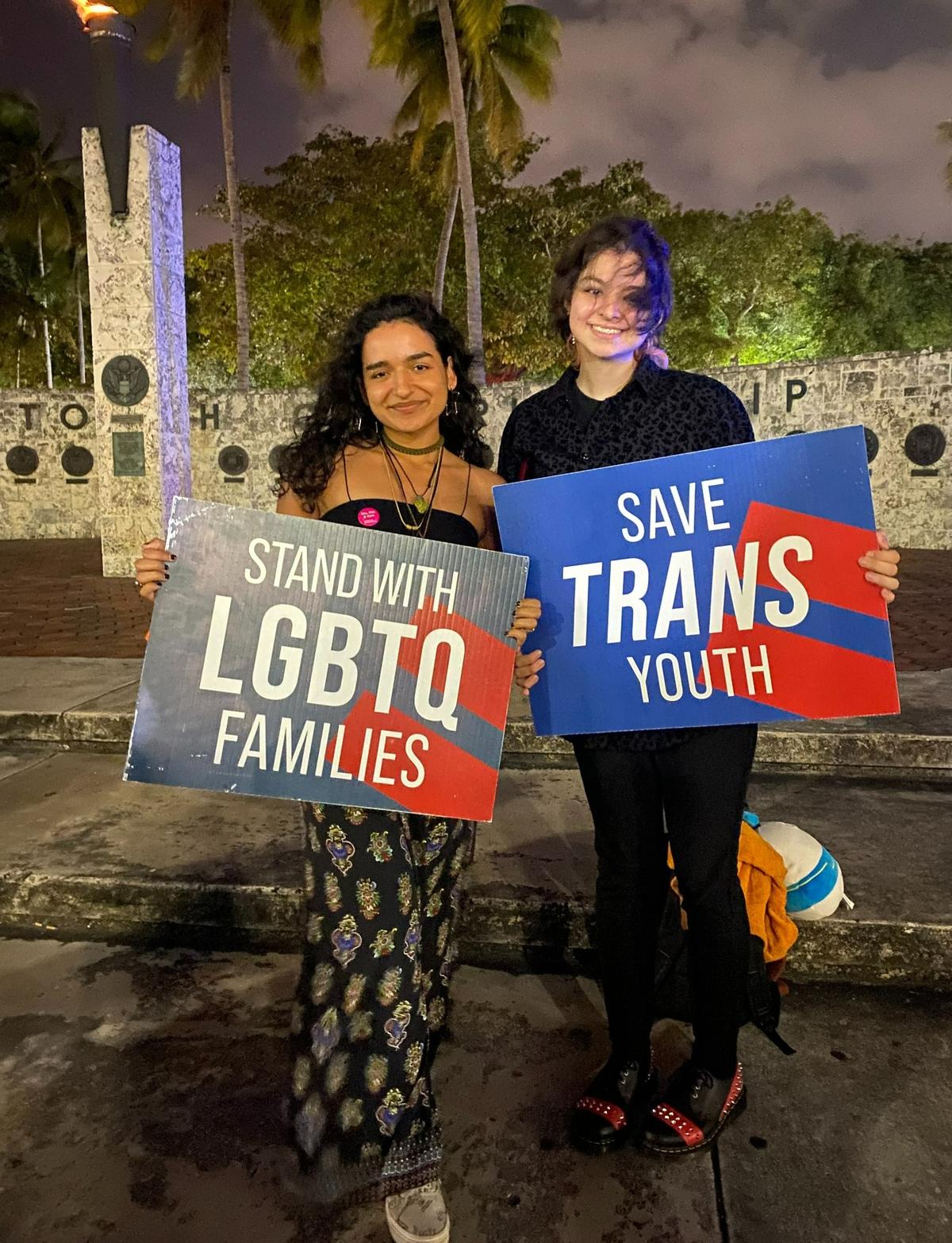
For Felix Francis, a queer, trans person of color, skipping the trip to Tallahassee wasn’t an option. While traveling as a person who has a disability is high risk, he said, staying home and letting the bill negatively impact youth members and educators “is even more high risk.”
“The erasure young people would face, as well as educators, would be horrific,” said Francis, 23.
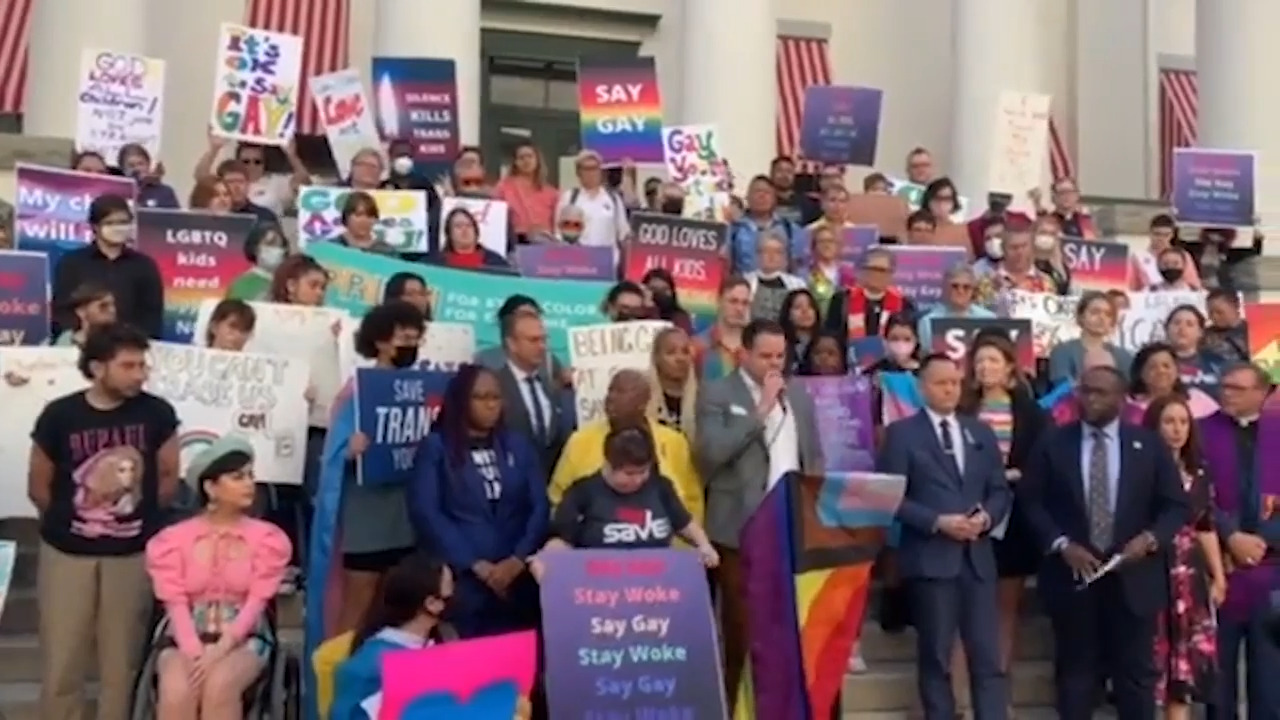
By Monday morning, their bus arrived in Tallahassee and the group joined dozens of others — including lawmakers, faith leaders and students from around the state — to protest in front of the Capitol.
They chanted “We Say Gay!” and sang the word “gay” to the tune of Deep Purple’s “Smoke on the Water.” Many came bearing signs such as “Let’s get one thing straight. I’m not.”
Difficult moments at the Capitol
During his trip to Tallahassee last month, Maxx Fenning, 19, experienced both the positive and negative aspects of speaking to state lawmakers.
The president and founder of PRISM FL, a nonprofit organization based in South Florida that provides resources such as inclusive education and sexual health information to LGBTQ+ youth, had prepared his speech well before his scheduled appearance Feb 28.
He was — and remains — invested in the bill because of its impact on the work he does and the person that he is, he said. Yet, there were difficult moments to witness while sitting in the audience.
“We had someone just mere minutes before we spoke say, ‘Do we [tell] children to pick a gender, any gender, and [they’ll] be happy? Do we tell our children to lie, cheat, steal and kill, and [they’ll] be happy?’’ Fenning recalled.
The comments, he said, “directly compared the experience of being trans, non-binary or gender non-conforming to lying, cheating, stealing and killing so directly and blatantly. It was hard.”
Christian (CJ) Walden, 17, vice president of PRISM FL and a South Florida student, shared similar sentiments.
While he was glad to have his voice heard and to represent the students who may not yet feel comfortable speaking out, it also felt that he and his peers were “blatantly ignored” by lawmakers, he said.
“[Lawmakers] sat there and they had side conversations,” he said. “They did not care.”
Increased activism, lingering fear
Over the past couple of days, Pauline Green, executive director for the Alliance for GLBTQ Youth, an organization that provides mental health services to LGBTQ+ youth in Miami-Dade, has noticed a shift among young people.
While the fear surrounding the bill’s effects exists, “there’s been a growing righteous anger and community connection that has built up the power in young people to feel connected with each other, the larger LGBTQ+ community and advocates locally and nationally,” she said.
Nevertheless, Green and other advocates have also heard about the fear many young people are experiencing, she said.
“Some [young people] are noting that they are determined to not engage with social media and the news in order to avoid exposure to hatred and to take care of themselves and their mental health,” she said.
Others, she said, have heard friends discuss a “return to the closet” and have expressed concern about maintaining their school’s GSA programs and the services they provide should the bill pass.
‘We will not be quiet’
This year’s effort to quiet conversations about gender and sexual identity is the latest piece of legislation that has targeted LGBTQ people.
“We’re still fighting for our place to be seen in the world [and] to live authentically and peacefully,” said Gomez, the iPrep student who overcame his fears to testify. “But what is most motivating and what has galvanized me to be this activist and leader that represents my community is that through all those hardships, we’re still expanding our horizons.”
Even if the bill passes, he said, LGBTQ+ young people will continue to fight for future generations.
Walden doubled down on Gomez’s assertion. Being gay is not a choice, nor is it a liberal agenda, and LGBTQ+ students and people will continue to press forward, he said.
“We will not be quiet. We will always exist. Even if the law goes into effect, we will apply for an appeal,” Walden said. “We will continue to be gay, loud and prideful.”
Ana Ceballos of the Miami Herald and Kirby Wilson of the Tampa Bay Times contributed to this story.
This story was originally published March 7, 2022 at 9:28 PM.

.JPG)