How a trailblazing 100-year-old Miami congregation has survived changes, and what’s next
READ MORE
Celebrating Holy Week, Passover and Ramadan
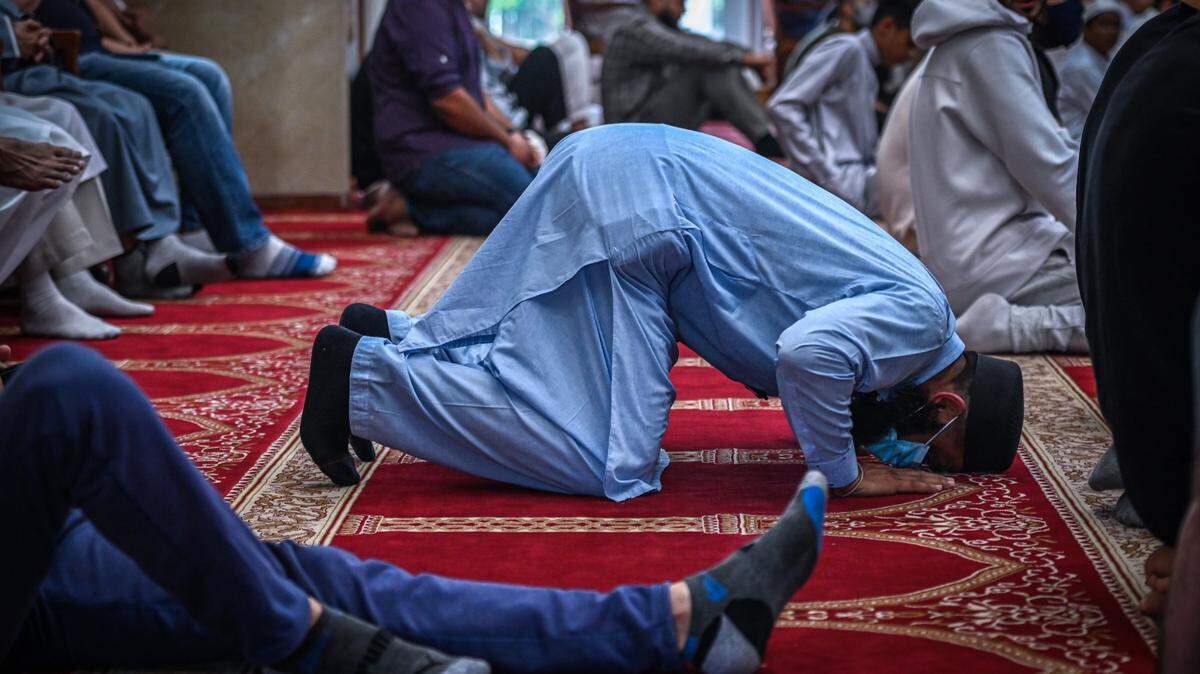
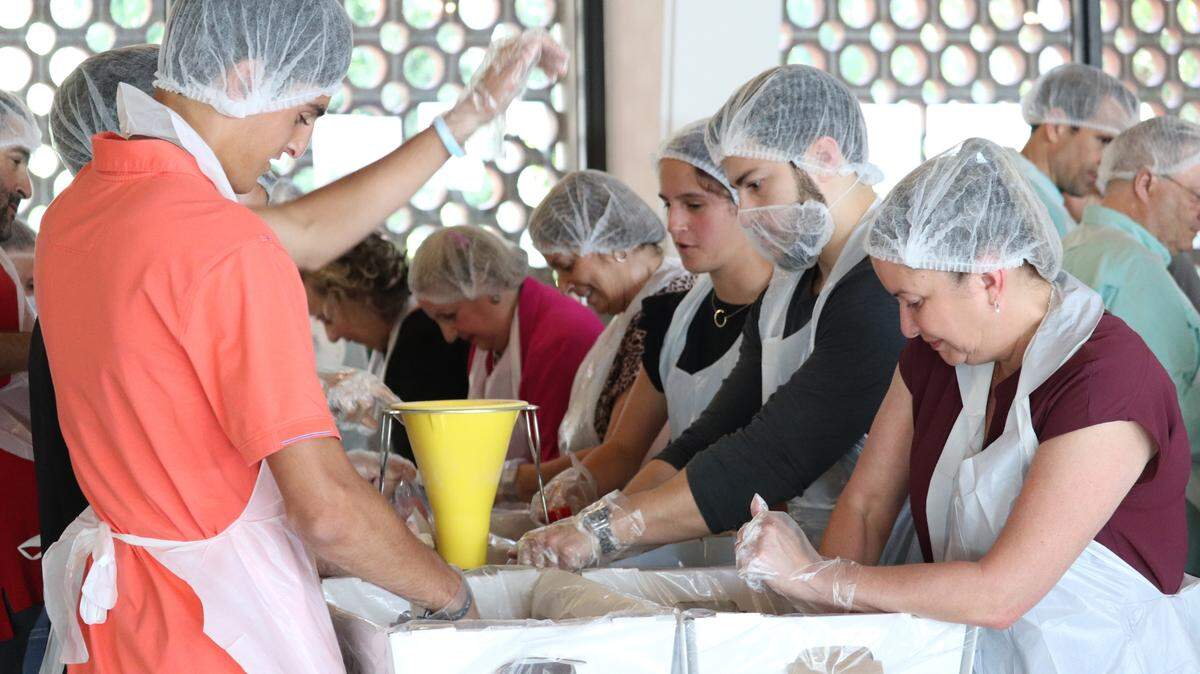
We’re gathering at churches, and synagogues and mosques this week to celebrate holidays. Ramadan started two weeks ago and runs the rest of April. Passover begins Friday night. And Good Friday leads into Easter Sunday.
Expand All
As a child in the 1930s, Ruth Greenfield attended a private school near downtown Miami, one with a “Jewish quota.” Some of the students called her a slur, the now 98-year-old remembered. “I took that information to the administration and they said don’t pay any attention.”
Greenfield, a Paris-trained pianist and founder of Miami’s Fine Arts Conservatory, remembers a time in South Florida when being Jewish wasn’t easy.
“There was a lot of antisemitism that I remember at an early age,” said Greenfield, whose family moved to Miami from Key West when she was 6 months old. “But we still had Temple Israel.”
Temple Israel, which was formed in 1922 and is celebrating its centennial this year, served as Greenfield’s refuge — a place she called her second home. Through most of her life, Temple Israel has been the place where she has seen life’s highs and lows — weddings and memorial services. It’s also been there to foster her love for Jewish learning and faith.
Ahead of Passover — which begins Friday night, spans eight days and commemorates the Jews’ exodus from Egypt — Greenfield sat at a piano in the synagogue’s chapel as she recalled spending sabbaths of years past sitting in the wooden pews for services. She even played hymns on the organ as a teenager. She was part of the 1939 congregation class. She recalls a 12-year-old congregant helping her by flipping the pages of the music. As she sat at the piano now, she began playing some of the old hymns as if the room was full of congregants.
Greenfield says she remembers lengthy services, friendly congregants and a synagogue open to everyone — something the temple has built its reputation on and one of the reasons it has survived for 100 years.
“It was a very open temple, when other places were not,” she said. “Religion shouldn’t be a tight crowd of the same people. It should have different ideas. This temple welcomes that.”
Temple Israel gets its start
Temple Israel was built out of a desire for a Reform congregation in South Florida, less traditional and observant than Orthodox and Conservative branches of Judaism. So members of Miami’s oldest congregation, Beth David — which was founded in 1912 — broke away in 1922.
Charter members began meeting in church classrooms, and their first home was a wooden structure at Biscayne Boulevard and Northeast 13th Street, now the site of the Arsht performing arts center. By 1927, 216 families had moved to the present location at 137 NE 19th St., south of Wynwood and west of U.S. 1.
In 1926, the synagogue snagged its first “star” rabbi, Jacob H. Kaplan, said Norma Orovitz, who served as the temple’s first female president in 1989.
“He already had a national presence within the Reform movement,” she said. “It was quite the coup for a relatively new synagogue to get Rabbi Kaplan.”
Then in 1936, the temple welcomed Rabbi Colman Zwitman. He was credited with the continued growth of the temple and beginning the temple’s mission of social action. He died in 1949 from World War II-related injuries. Rabbi Joseph Narot took the helm in 1950, where he would stay for 30 years. He was known for his strong stances on civil rights and the Vietnam War. During his tenure, Temple Israel continued and grew the important mission of social action.
“Temple Israel has not only survived for 100 years, we have absolutely thrived and changed and we have been innovative, but throughout the entire time we have been consistent with our Jewish values and human values of equality and of making sure that everyone is seen and heard and celebrated,” said the current rabbi, Amy L. Morrison.
By the 1960s, Temple Israel grew to 1,800 families. Orovitz called it the “glory days.” The temple even began broadcasting its Friday night services on the radio to reach those who couldn’t get to the synagogue. At the time it was the largest Reform synagogue south of Philadelphia.
Tragedy then struck the synagogue in 1980 when Rabbi Narot died by suicide. His daughter Susan Pasternack, who is the executive director of the Jewish Museum of Florida-FIU, said he suffered from depression.
“While he was a brilliant rabbi, he was a human being,” she said. “It was a shock to the whole community. His death left a huge hole.”
Temple Israel survives and thrives
In the 1970s, as many people began moving to the suburbs, Temple Israel chose to stay near downtown Miami. After Narot’s death, new rabbis came in, but membership slowly started to decline.
By 1987, the synagogue “was struggling to avoid the fate of much of the neighborhood that surrounds it,” the Miami Herald reported at the time.
“We have to turn on the sprinklers every morning to get the vagrants out of our meditation garden,” Ethel Lee, who was then the temple administrator, told the Miami Herald.
By then, membership was just under 1,100, a rabbi of six years had left and the synagogue was having to reduce staff to cut costs. But there was a commitment to stay in the central part of the city and not flee to the suburbs, where other Reform congregations had opened.
People who once lived downtown were moving to other parts of the county and the temple had to find ways to attract a Jewish population that for the most part had “abandoned Miami to a great extent and moved north,” said Henry Green, a professor of religious studies at the University of Miami.
The UM professor says the Jewish community in 1970 numbered about 230,000 in Miami-Dade County. Now that number is just above 100,000, Green said.
Miami historian Paul George said the synagogue’s decision to stay in a central area was “courageous.”
“Rather than turn tail and head to the suburbs, they stayed in an area under siege,” he said.
In 2002, Mitchell Chefitz, who had previously led an alternative worship service called Havurah of South Florida, took over. The unconventional leader set out to revive the temple, and once again people began coming back. He left in 2007. After a couple of more rabbis, Morrison, who took over in 2019, said Temple Israel has been built on the shoulders of strong leaders, who believe in the mission and turning towards faith.
“Here is an institution that has been there from almost the very beginning and has managed to survive and continue to remain stable for all of these years,” said South Florida historian Seth Bramson. “And I certainly think that they will be able to continue even with the dramatic changes in demographics.”
How they are celebrating
To celebrate, the synagogue created a passport to “join the journey to the past, present and future.”
This year, a speaker series features people discussing the synagogue’s past. On April 29, Pasternack will speak about her father. During the weekend of May 6-8, the temple will have a centennial gala. A concert featuring South Florida cantors and other guests will be May 7.
The events will culminate with an intergenerational trip to Israel in June.
“It’s a time to gather and celebrate our history,” said Mark Nedlin, the vice president of congregational engagement and leader of the centennial task force. “It’s 100 years in a city where everything is new. “
The future of Temple Israel
Now, Greenfield, the pianist, spends Friday nights watching Rabbi Morrison on Zoom. She says it’s much more comfortable than it was sitting in the pews.
She said Morrison is a great leader, who is continuing the temple’s tradition of welcoming anyone — gay, straight, white, Black, any religion, old, young, rich, poor. Everyone.
She also credits Morrison for pivoting during the COVID-19 pandemic and keeping services going. There are now around 200 families, and Morrison hopes it goes up from there.
Something the temple has going for it, she says: “The people have gotten younger. We have a young congregation.”
Nedlin says the draw has always been that “being a member of Temple Israel affords you to be with a huge diverse community.”
“We have everybody at Temple Israel and everybody is equal,” he said. “Temple Israel is that sanctuary of diversity. We have always been that.”
And while hitting 100 years is a milestone, many say there is no end in sight.
“I see no end in line,” Rabbi Morrison said. “One-hundred years is just a new beginning.”
Miami Herald research director Monika Leal and staff writer Howard Cohen contributed to this report.
This story was originally published April 13, 2022 at 1:54 PM.