Houses of worship are ‘community centers’ in Miami, a way of life for Herald columnist
READ MORE
Celebrating Holy Week, Passover and Ramadan
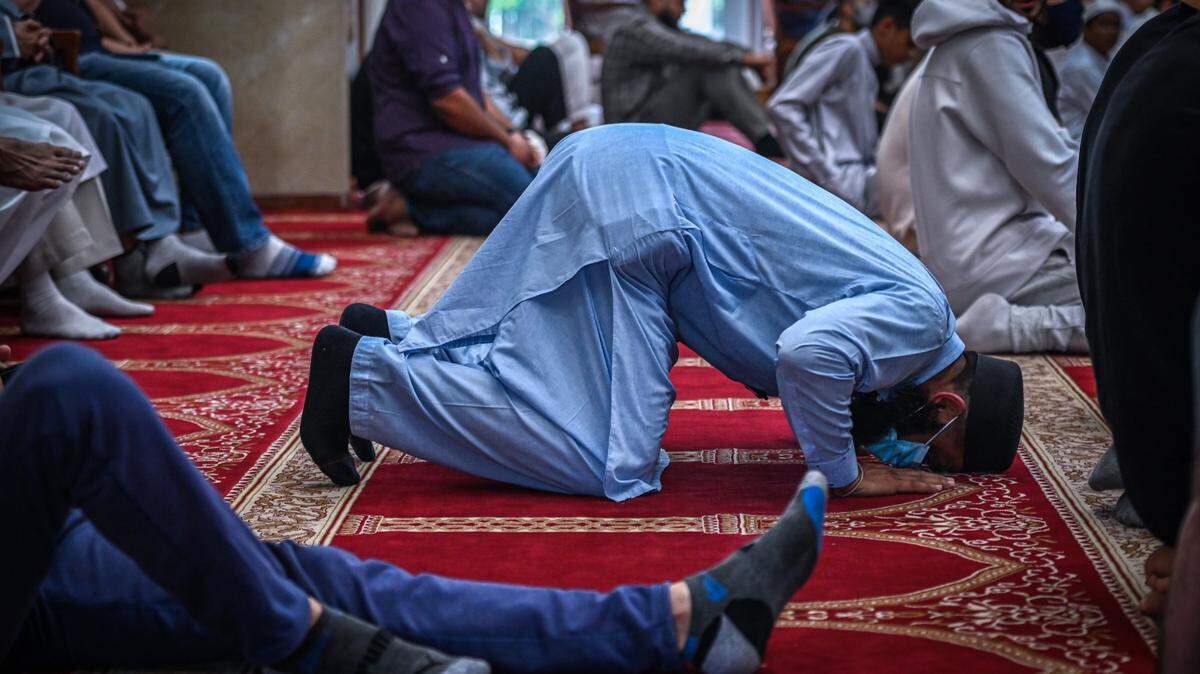
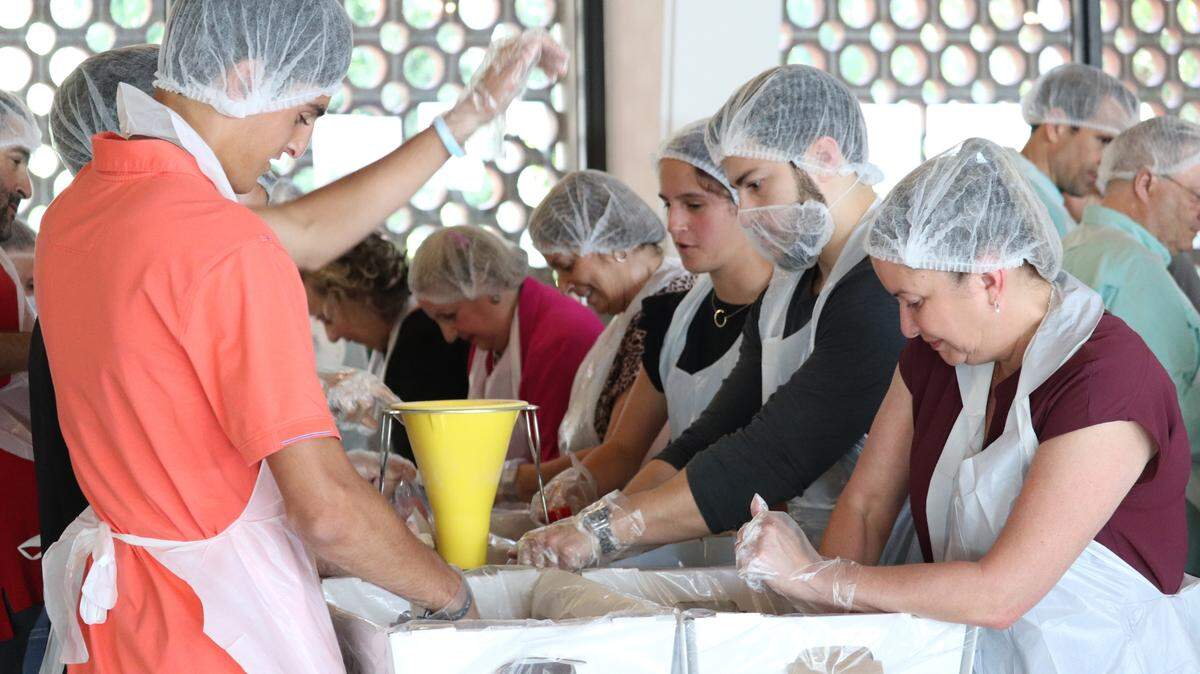
We’re gathering at churches, and synagogues and mosques this week to celebrate holidays. Ramadan started two weeks ago and runs the rest of April. Passover begins Friday night. And Good Friday leads into Easter Sunday.
Expand All
I have always loved to attend church. In fact, one of my fondest and earliest memories of church is when I said my first Easter speech at the Methodist Church in Williston, Florida. I was 4 and I wore a lavender-colored, organdy dress, a big hair bow, white socks and shiny black patent leather shoes. My speech was:
“…Roses on my shoulders, slippers on my feet… I’m my Momma’s baby girl, don’t you think I’m sweet…?”
I remember the applause and the shouts of “Amen!” as I ran back to the pew where my mom was seated and buried my head in her lap.
That Easter speech was the start of a tradition in my own family that had been in place in Black churches for generations before I was born. It was our way of living and acting out the scripture that says, “train up a child in the way he should go, and he will not depart from it…”
So, always at Eastertime and Christmastime there would be annual programs where the children in the Sunday school classes would retell the story of Jesus’ birth and resurrection through speeches and dramatic presentations. Even today, in many Black churches, as soon as a child can talk and walk up to the front of the church congregation, he or she is given a speech to learn. Sometimes it is only a two-worder like, “Happy Easter!” Sometimes it is an entire four-stanza poem. No matter the length of the “speech,” the church always responds with an astounding, “Amen!”
But to Blacks, the church has served as more than a place to “find Jesus” or to recite Easter speeches and perform in Christmas pageants. And like the members of its congregations, the Black church has withstood the tests of time.
Some, like Macedonia Baptist Church in Coconut Grove, Miami’s first Black Baptist church, and Greater Bethel A.M.E. Church in Overtown, are older than the city of Miami. In fact, Macedonia will celebrate its 127th birthday in the fall of 2022. Greater Bethel AME Church in Overtown, founded in 1895, is a year younger.
So, in addition to a spiritual home, the Black church also served as our first “community center,” where political forums were held. And where voter registration drives encouraged our people to register so we could perform our rightful duty as American citizens. It was where a girl met her “Mr. Right” (although he might not have always been the right one for her), and it was where our rites-of-passage were held — our weddings, and baby christenings, and yes, our “going home” services or funerals.
And it is were Gladys Covington, 70, is willing to drive from Miami to Richmond Heights, about 35 miles one way, two or three times a week to Bethel Church, “to a place that feels like home,” she said.
Like me, Covington had been a member of another church, before being “led” to Bethel. “I have been attending Bethel Church for 32 years now, and have worn out four cars. I knew Bethel was my spiritual home the first day I stepped into the sanctuary. Even before I heard a sermon or heard the choir sing, the Holy Spirit spoke to me and said, ‘This is the place where you need to be to grow in the Lord.’ And I have been there ever since. I love it.
Growing up with such a rich tradition, it is no wonder that the church has played such a wonderful role in my life. I was 6 when my mom moved our family to Miami, where we met and fell in love with the Rogers/Dorsett family and became surrogate members. The Rogers/Dorsett family attended Greater Bethel A.M.E. Church, a historic landmark that is still very much alive at Northwest Eighth Street and Second Avenue, just a few steps from the historic Lyric Theater.
But for some reason, Mom joined Ebenezer United Methodist Church, then located at Northwest 10th Street and Third Avenue in Overtown. The late Rev. W. O. Bartley was the pastor. Mom loved to sing, and it wasn’t long before she joined the church’s Choir #1, singing alto on the second row of the choir. She always sat me and my brother, Adam, on the second row of pews in the sanctuary so she could keep an eye on us during the service. While we attended Ebenezer, Mom occasionally allowed me to attend Greater Bethel with my friends Nellie and Floyd Dorsett. What cherished memories.
I was born a Methodist, but when I was 11, another childhood friend, Willie Mae Stephens Whitman, invited me to Sunday school with her at New Hope Baptist Church. I was overwhelmed at the hand-clapping, foot-stomping joyful noise I heard on my first visit there. While we sang wonderful hymns at my church, the service there was more subdued. And so, by my second visit to New Hope, I could hardly wait for the Rev. James Brown to “open the doors of the church” to new prospective members.
I remember very well that Sunday morning when I, a young girl, with a contrite heart walked, trembling to the front of the church, placed my hand in the Rev. Brown’s outstretched hand, and gave my life to the Lord. While I was serious about becoming a Christian, I must admit that joining the New Hope Junior Choir was a great deciding factor in my becoming a member of the church. Until the Sunday I joined the church, I had never seen youngsters my age singing such upbeat gospel songs. Songs that made even the adults in the congregation “get happy.” I simply had to be in that choir!
These early days of my love of church inspired me to learn about other houses of worship. So I was a regular visitor to other denominations throughout my life. When I was a young woman of 23, I joined The Church of God Tabernacle (True Holiness) in Liberty City, where I am still a member. And where my pastor is the 99-year-old Bishop Walter H. Richardson.
My love of exploring other denominations often led me to the Christmas Eve services at the historic St. Agnes Episcopal Church, where my childhood friend, the late Rev. Cannon Richard Marquis Barry, would become the rector. I was touched by the grandeur and music of the service. I also enjoyed attending the Catholic worship services with my Catholic friends. I believe that these “church experiences” readied me for the role I would one day have at the Miami Herald as one of its religion writers.
I was assigned to the paper’s religion beat in the early 1970s. Back then, the Jewish religion news was printed on Friday, and Saturday was reserved for Christian and other religions such as Muslim.
Getting to know people of other faiths opened a whole new world to me. Otherwise, I never would have met people like the late Rabbi Irving Lehrman, a world-renowned spiritual leader who before his retirement in 1995 had led Temple Emmanu-El in Miami Beach for nearly 50 years. It was Rabbi Lehrman, who gave me my first lesson on Judaism by inviting me to the High Holy Day services, then held at the Miami Beach Convention Center. I took along my son Shawn, who was then 10 years old.
The High Holy Day service was a way of worship I had only read about in the Old Testament of the Bible, and it taught me so much more about this “chosen people” that was often spoken about in the Bible. I learned from meeting and interacting with Rabbi Lehrman, that as a people, we had so much in common.
Being curious about the faith of others helped me to accept and respect the religions and cultures of others who are different from me. I love knowing about the holidays and customs of other religions. I share the Passover story each year with one or more of my Jewish friends. My first Passover experience was when I was invited to a Woman’s Seder by Temple Israel of Greater Miami. Attending that Passover Seder brought about a better understanding and tolerance of others, whose lifestyles and cultures are different from mine.
Church and my faith is simply a way of life to me. And attending church is as natural as the air I breathe.
This story was originally published April 13, 2022 at 7:00 AM.