Miami changes, but these old and sacred buildings carry on tradition for the faithful
READ MORE
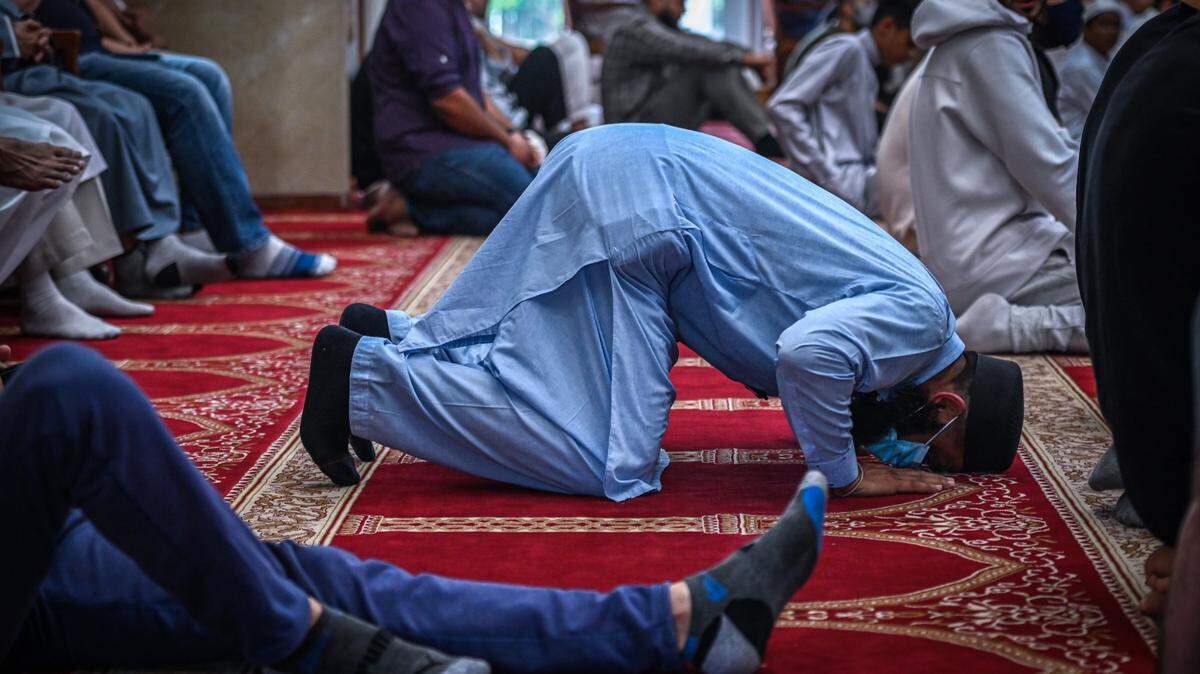
Celebrating Holy Week, Passover and Ramadan
We’re gathering at churches, and synagogues and mosques this week to celebrate holidays. Ramadan started two weeks ago and runs the rest of April. Passover begins Friday night. And Good Friday leads into Easter Sunday.
Expand All
Fredra Rhodes was essentially born into Saint Agnes Episcopal Church, a pillar of the Overtown community, and a place her family has been attending for generations. For her, Saint Agnes has been a constant in a world of change. She said she feels connected to her family and her past.
READ MORE: What is Ramadan and how do Muslims in South Florida celebrate the holiest month?
As the faithful celebrate some of the holiest days on the calendar including Easter and Passover and the month-long Ramadan, the devoted turn to South Florida’s houses of worship — many of which have endured a century of changing dynamics, demographics and shifting religious alliances.
Temple Israel of Greater Miami is celebrating its 100th anniversary this year by looking at its past and preparing for its future. Other landmark religious centers, some more than a century old, have also served their communities through the rebuilding of Miami, an influx of immigrants, racial conflicts and, most recently, the COVID-19 pandemic.
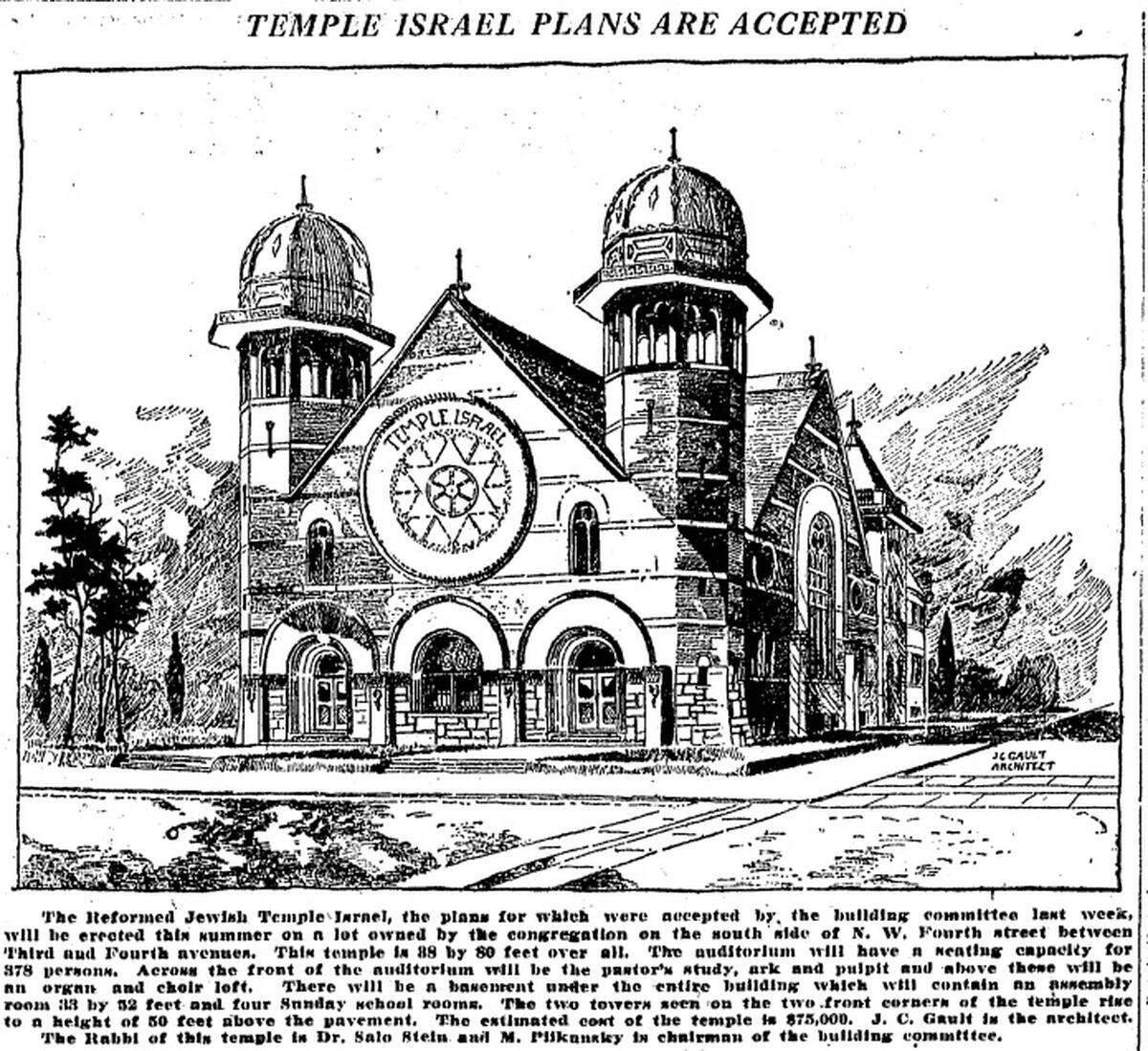
READ MORE: How a trailblazing 100-year-old Miami congregation has survived changes, and what’s next
Henry Green, professor of religious studies at the University of Miami, noted Miami’s founding in 1896 and Miami Beach’s incorporation in 1915 as key dates in the landscape of Miami-Dade and its relationship with faith.
“What you have is a community that has grown considerably, obviously demographically, and there was no mosque back then, no Eastern religion back then. It was basically just Christian and even Jewish wasn’t around at this time. You had 10, 12 Jews in Miami, but there wasn’t a congregation or anything. So what’s evolved over time reflects America,” he said.
“You do have mosques now. You do have Buddhist temples. You do have other kinds of religious sectarian movements — Scientology, etc. You have all kinds of Protestant denominations. Baptists, Methodists. What you have now is much more of an umbrella of different religious groups,” Green said.
Incredibly, some of Miami’s religious centers were even around during the last public health crisis — the 1918 influenza pandemic. Some predate the 1912 sinking of the Titanic. The start of World War I in 1914. These stalwart churches and temples survived major South Florida hurricanes like the 1926 and 1935 storms, Hurricane Betsy in 1965 and Hurricane Andrew in 1992.
And many of these institutions banded together to unite a divided community during the Civil Rights struggles of the 1960s in Miami.
“There has been a very unusual camaraderie and cordial relationship between many, if not all, of the rabbis, ministers and faith leaders of all religions even in the horrific days of segregation,” said historian Seth Bramson. “It was terrible and yet they found ways to cooperate, work together.”
Some pillars
Saint Agnes Episcopal Church, on Northwest Third Avenue, was founded in 1898, just two years after Miami was incorporated.
Saint Agnes and Temple Israel are not the only ones celebrating a centennial or more in a relatively young city.
Some, like Macedonia Baptist Church in Coconut Grove, Miami’s first Black Baptist church, and Greater Bethel A.M.E. Church in Overtown, are older than the city of Miami they serve, Miami Herald columnist Bea Hines noted.
READ MORE: Houses of worship are ‘community centers’ in Miami, a way of life for Herald columnist
Built on the backs of Bahamians who had settled in the region, Macedonia will celebrate its 127th birthday in the fall of 2022. Greater Bethel A.M.E. Church in Overtown, founded in 1895, is a year younger than Miami.
At the corner of Northeast Second Street and First Avenue in downtown Miami stands Gesù, the oldest Catholic parish in Miami-Dade, built on land donated by Henry Flagler. The church was founded in 1896.
In Miami, where there is a void of many similarly longstanding institutions like businesses and schools, religious centers have been able to survive because “of the commitment of people to them,” said Paul George, a Miami historian. “People feel like it’s part of their DNA,” he said. “They don’t want to see it fall.”
In addition, there’s Beth David, Miami’s oldest Jewish congregation, which was established in 1912 and has been at 2625 SW Third Ave. since 1949.
There’s also St. John Institutional Missionary Baptist Church at 1328 NW Third Ave. St John opened in Overtown on June 17, 1906.
“In the Black community, there are a few churches that go way back,” Green said. “The Bahamian community began actually in the Grove. Those churches are still around from the early 20th century. Gentrification and the development of the Grove is really something over the last 20 to 30 years. Those Black communities have been around for a long time. That’s where they live. That’s where their grandparents lived. That’s where they are in the same homes. The church, then, is the pillar for people to have faith in order to be empowered so that they continue a robust life in which God plays a very central role in their meaning of what they do.”
Saint Agnes
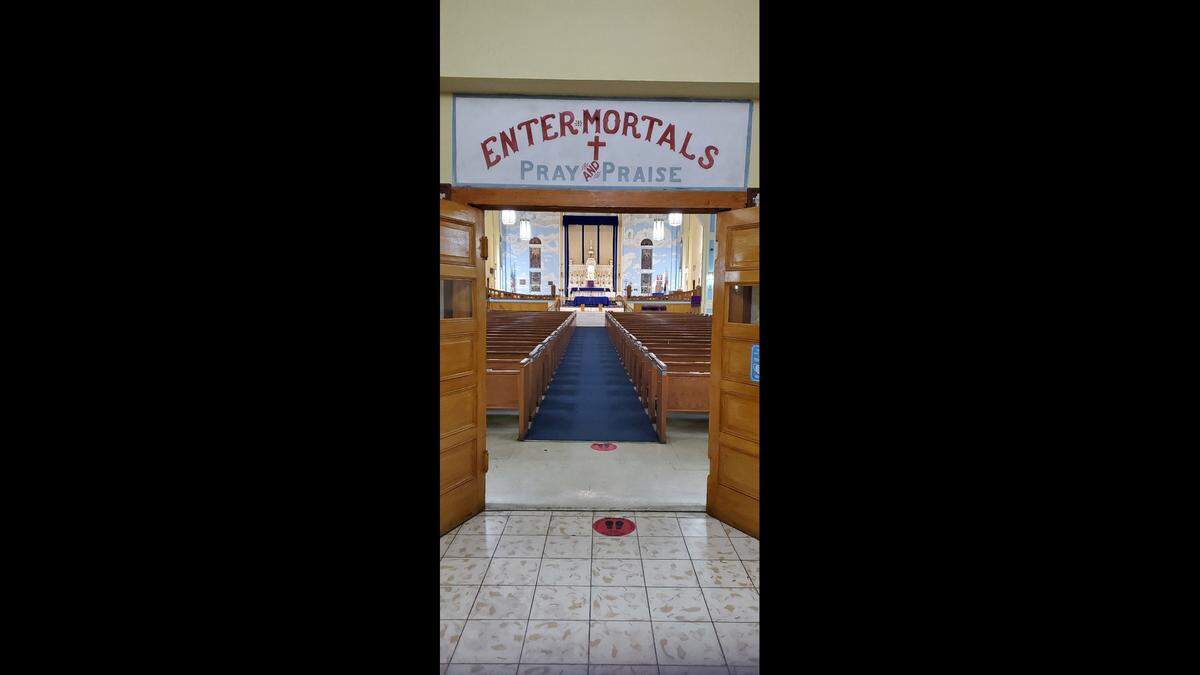
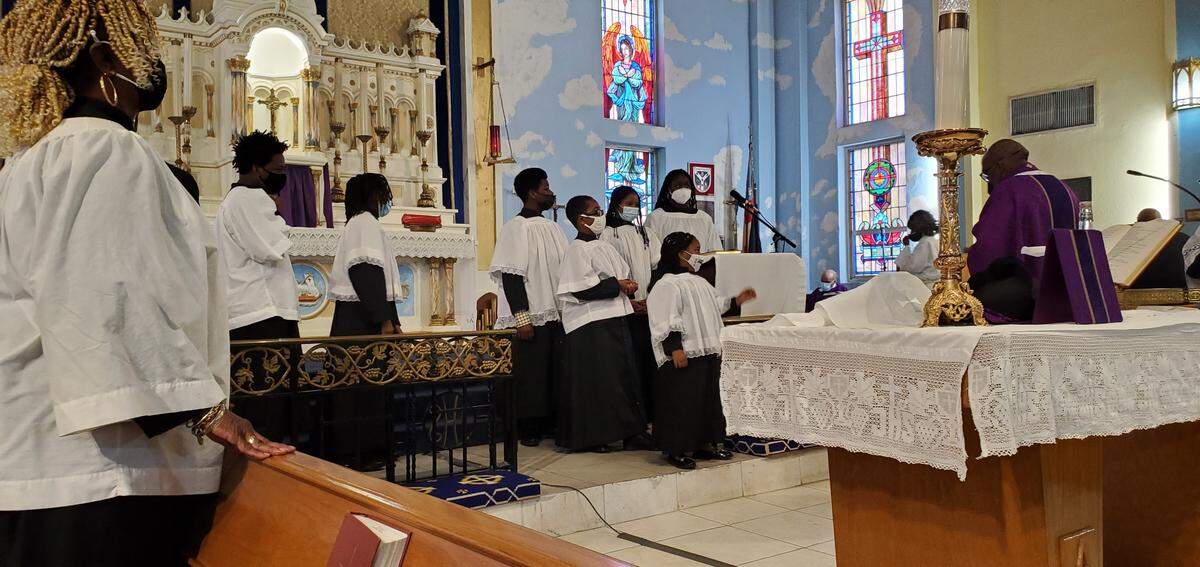
As members of Saint Agnes Episcopal Church spilled onto Northwest Third Avenue to begin last week’s Palm Sunday procession, the Overtown neighborhood came alive.
Children peeked out behind fences, adults leaned over balconies, passersby slipped out their phones — all just trying to catch a glimpse of the marchers led by both clergy members and a band complete with trumpeters, drummers, even a tuba player.
At 124 years old, Saint Agnes is woven into the Overtown community. The majority of its congregants are of Bahamian descent. “For those of us who grew up in Miami, it has been the one constant thing that offers hope,” said Rhodes, 53, a member of Saint Agnes. Rhodes has been attending since her great-grandmother went here and that longevity allows her to “continue to have that connection to family and home.”
As the parade circled the block around the hardy Saint Agnes building, the moment itself — with neighbors wanting to see the festivities and some congregants livestreaming to social media — soon became representative of how many Miami churches have remained community pillars amid the city’s continuous changes.
“If you do any kind of sociological study, what you will see is that people who become more upwardly mobile tend to become more, in the modern period, much more secularized. But if you are within a neighborhood that it’s your grandparents, your parents, and you’re not as economically privileged, then religion tends to play a much stronger role and that tends to be across the board,” Green said.
At some of these stalwart Black churches it’s often a relative, a child, who then takes over leading the services from the parent. “And so there is incredible continuity,” Green said. “It’s the same family. They are rooted in a way that it is not just a home, it’s a neighborhood. It’s also the core in terms of their mission and faith. And that resonates.”
READ MORE: What’s driving a youth movement in Miami churches? Not just prayer — but ‘action’
Changing demographics
But there are numerous challenges facing these houses of worship: Secularism. Demographics. Gentrification. And even climate change.
A Pew Research Center survey published in December found that three in 10 U.S. adults, or about 29%, self-identify as religiously unaffiliated, 6 percentage points more than in 2016. Pew suggests the trend is driven largely by young adults who are less likely than older generations to “identify with a religious group or partake in traditional religious practices.”
In another Pew survey, Florida ranked just above the middle among the most religious states in the U.S. Florida ranked No. 22 in the 2016 survey. Mississippi and Alabama were among the most religious. New Hampshire and Massachusetts were among the least devout.
Broadly speaking, “there’s been a huge movement towards secularism and nonparticipation in religious institutions except for major holidays,” Green said, citing Easter and Christmas and the Jewish New Year, Rosh Hashanah, and Yom Kippur.
“On the other hand, Catholics tend to be more religious than Protestants in terms of their attendance. And because you have a significant number of people who come from Latin America, who tend to be more religious, you would have more participation by Catholics,” Green said.
“In terms of growth in the Jewish community, in terms of Reformed Judaism, which is very dominant, according to the Pew study, recently, 70% of Reformed Jews intermarry. But what you do have is this incredible growth of Chabad, an Orthodox movement that has drawn lots and lots of people to their services over the High Holy Days. So you can’t make it a monolith. It’s not uniform,” Green said of secularism’s role in altering physical attendance at Miami’s houses of worship.
Then there’s demographics. People move. South Florida, in general, has “a much more mobile, transient population,” Green notes.
Take the landmark Temple Israel, for instance.
“The Jewish community used to live downtown and then they moved to Westchester and they moved over, then, to Miami Beach after World War II, especially. And so what happened is that Temple Israel has had a very hard time over the last 30 years trying to reach out to a Jewish population because the Jewish population — especially after Hurricane Andrew — abandoned Miami to a great extent and moved north,” Green said.
The UM professor notes that the Jewish community in 1970 numbered about 230,000 in Miami-Dade County. Now that number is just above 100,000, Green said.
Palm Beach County, on the other hand, had 10,000 Jews in 1970 and today has over 300,000, he said.
Miami economy
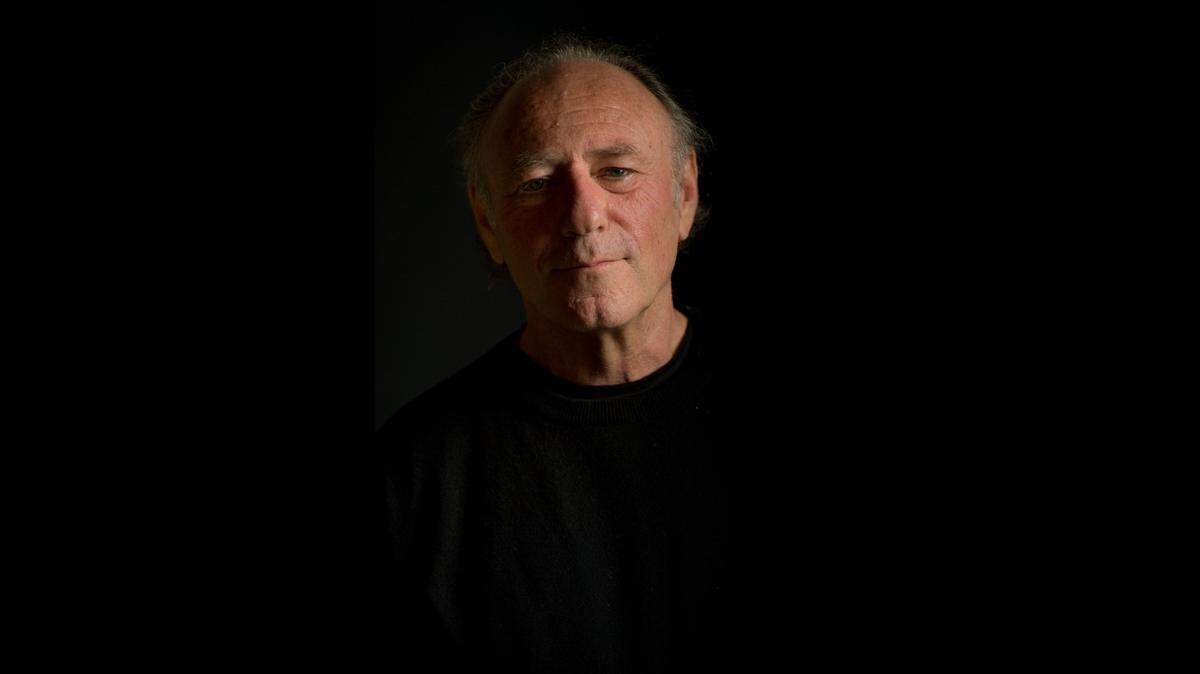
“Miami, basically, is a city that has two main economic sectors. One is hospitality and the other is health. And we’re now starting to move to high tech,” Green said.
On the health side, hospitals arose, like Mount Sinai Medical Center in Miami Beach, which was incorporated in 1946, a year after World War II ended, and opened in 1949. Baptist Hospital arrived more recently in 1960.
“That changes the nature of the land around them and provides an opportunity for developers to then come,” Green said.
Weather and taxes
Now add storms and climate change. Hurricane Andrew in 1992, in particular.
“Hurricane Andrew made a lot of developers become very excited because they can go in and buy things at a very cheap price. ... [They] have the opportunity to use the nature of our climate here to take advantage of devastating storms,” Green said.
“Take a look at Coconut Grove and Grand Avenue. The Grove, basically west to 27th Avenue in the 1980s, was still very much a Black community. Post ‘92 and then post recession Coconut Grove is basically now totally gentrified,” he added.
“This of course, is aided by the government. We are in a state in which there is no state tax. So the government then has to look at how does one get revenue in order to keep our roads and everything else moving along and paying the police and on and on. And so, one of the ways they do that is by basically taxing hospitality. You go to a hotel, for example. So therefore, it’s in fact encouraging developers to move forward with their development because then there creates a revenue base for the city to be able to do what they need to do,” Green said.
Churches, historically, are not taxed.
Finding meaning in new ways
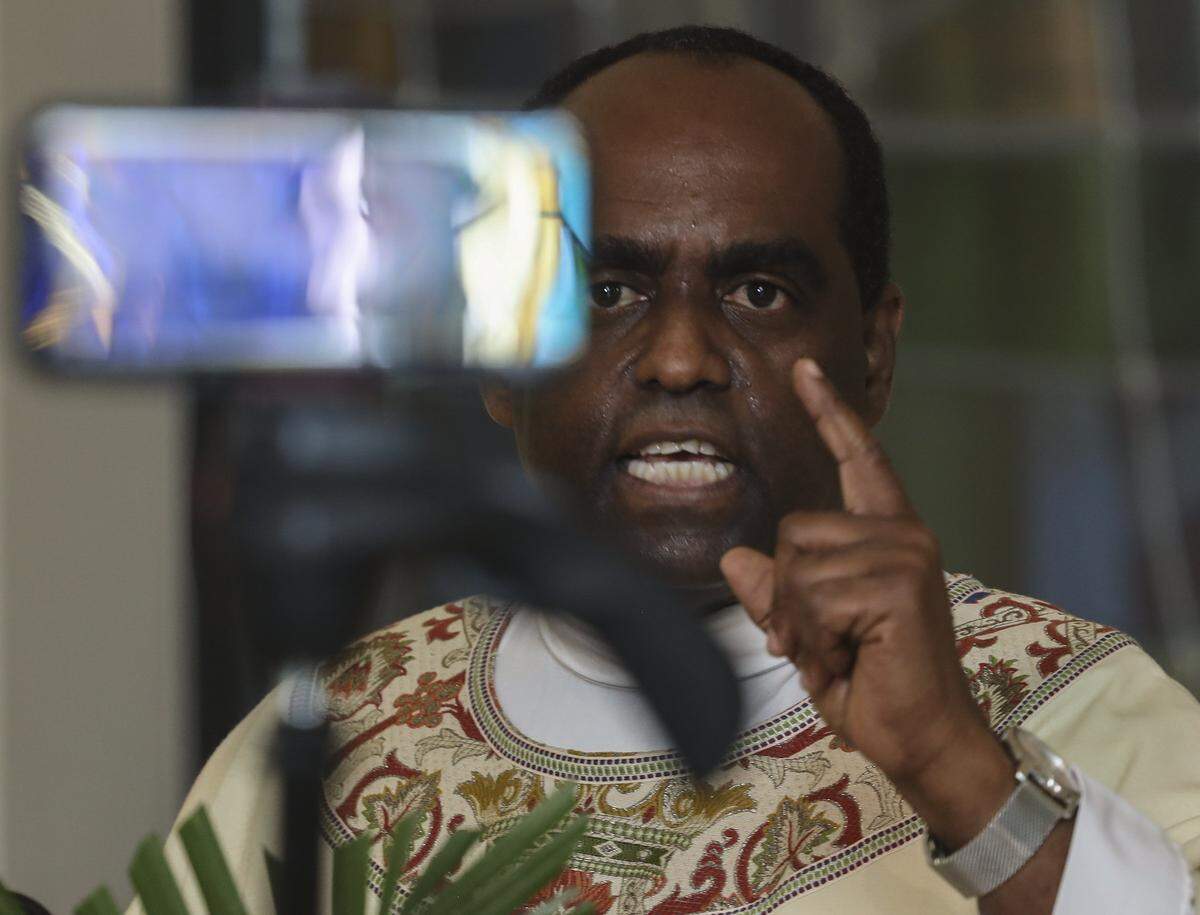
“In another age, faith was part of the air that you breathe and now that’s not necessarily the truth anymore,” Archbishop Thomas Wenski, who oversees the Archdiocese of Miami, said in an interview with the Miami Herald.
Some are turning to technology to reach the plugged-in through Bible apps and services sent out as live-streams. There are also dating apps based on one’s religious affiliation. WhatsApp group chats. Social media. Online ministries.
But technology can also stymie going into a traditional brick-and-mortar house of worship, of course. The pandemic hasn’t helped.
Some parish leaders also promote young adult nights of worship, Bible studies and social activities tied to religion as enticements.
“In terms of established churches and synagogues, like Temple Israel, although they might not have the bodies in the institution, on the other hand the relationship between people’s search for meaning and their connection to religious groups — or I call spiritual groups — there’s all these different [means],” says Green.
Yoga, for instance.
“Sure, people do it for physical exercise, like Pilates. But many people do yoga because they’re connecting to this spiritual connection,” Green said. “People are still searching for meaning, but in the 21st century, it might not be through the established infrastructures, churches, synagogues, whatever we’ve had in the past, but in new forms, and in new ways that, in fact, will lead to a new kind of transformation and I can even call it a reformation.”
Miami Herald staff writers C. Isaiah Smalls II and Michelle Marchante contributed to this story.
This story was originally published April 14, 2022 at 6:00 AM.