
How Miami-Dade became the COVID epicenter of Florida and what happened month-by-month
Miami-Dade County has been the epicenter of the novel coronavirus in Florida, its 230,000-plus COVID-19 cases accounting for more than one-fifth of the state’s one million tally.
As of Dec. 2, Miami-Dade recorded more cases than 27 states, including Massachusetts and Washington, whose populations are more than double that of the county, according to the New York Times’ national coronavirus database. The county’s 3,860 deaths are higher than the death tolls in 29 states.
Here’s a look at some of the key milestones over the nine months the county has been contending with the coronavirus:
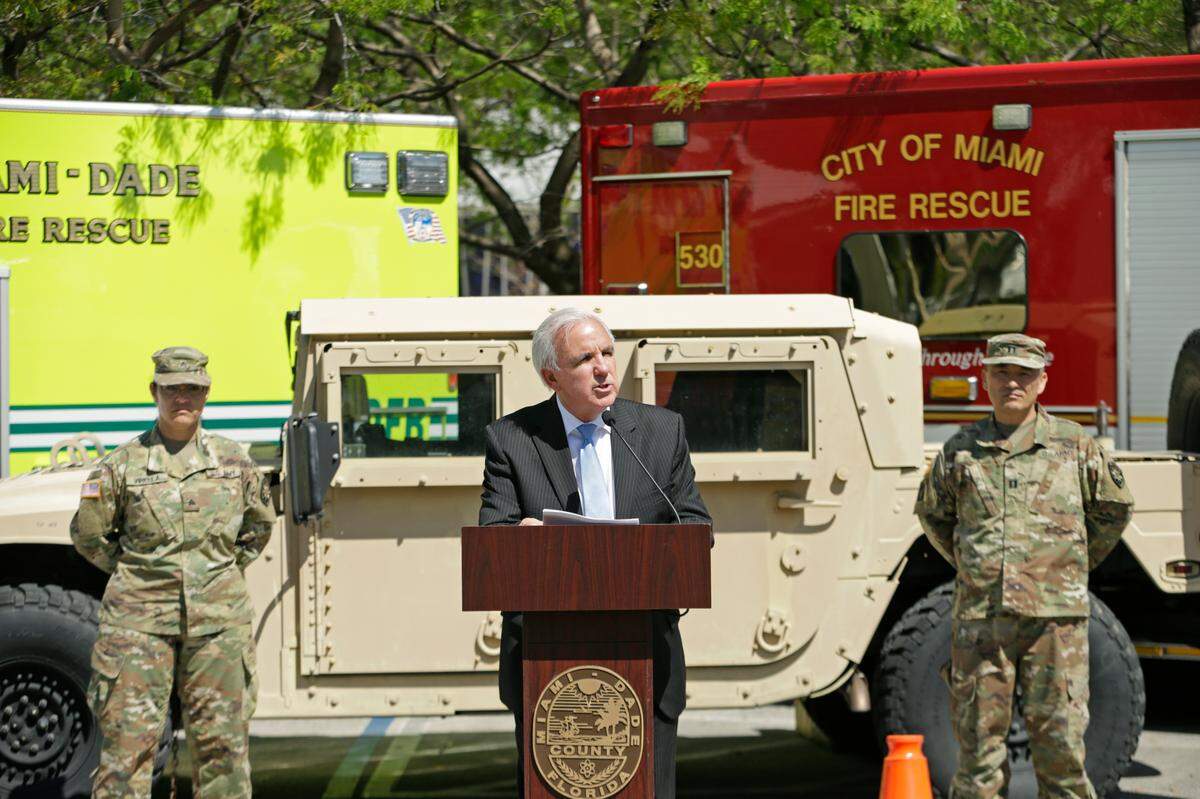
March: 0 to 2,123 cases; 0 to 7 deaths
Shutdowns and new safety measures to prevent the spread of the novel coronavirus in Miami-Dade started as a slow trickle, then suddenly escalated into a rush.
In March, Miami-Dade saw its first 2,123 cases and seven deaths. That led to a shutdown of businesses and public places in the county by month’s end.
On March 12, Miami-Dade Mayor Carlos Gimenez declared a state of emergency as the county faced its first discovered case of COVID-19. This came after Gov. Ron DeSantis declared a state of emergency in Florida on March 9.
On March 17, Gimenez ordered restaurants, movie theaters, playhouses, nightclubs and general gathering places to close unless providing pickup or delivery food options.
On March 19, all parks, beaches and recreational facilities in the county were ordered to close.
On March 24, Miami-Dade residents were told not to gather in groups of 10 or more in public spaces.
On March 26, Gimenez issued the “Safer at Home” order, which urged residents to remain at home as much as possible.
On March 27, Israel Carrera, 40, was identified as the first to die from COVID-19 in Miami-Dade. It was believed that he contracted the virus while at the Winter Party Festival, which took place March 4-10. It was later found that 38 men became sick at the event. Many of them tested positive for the coronavirus.
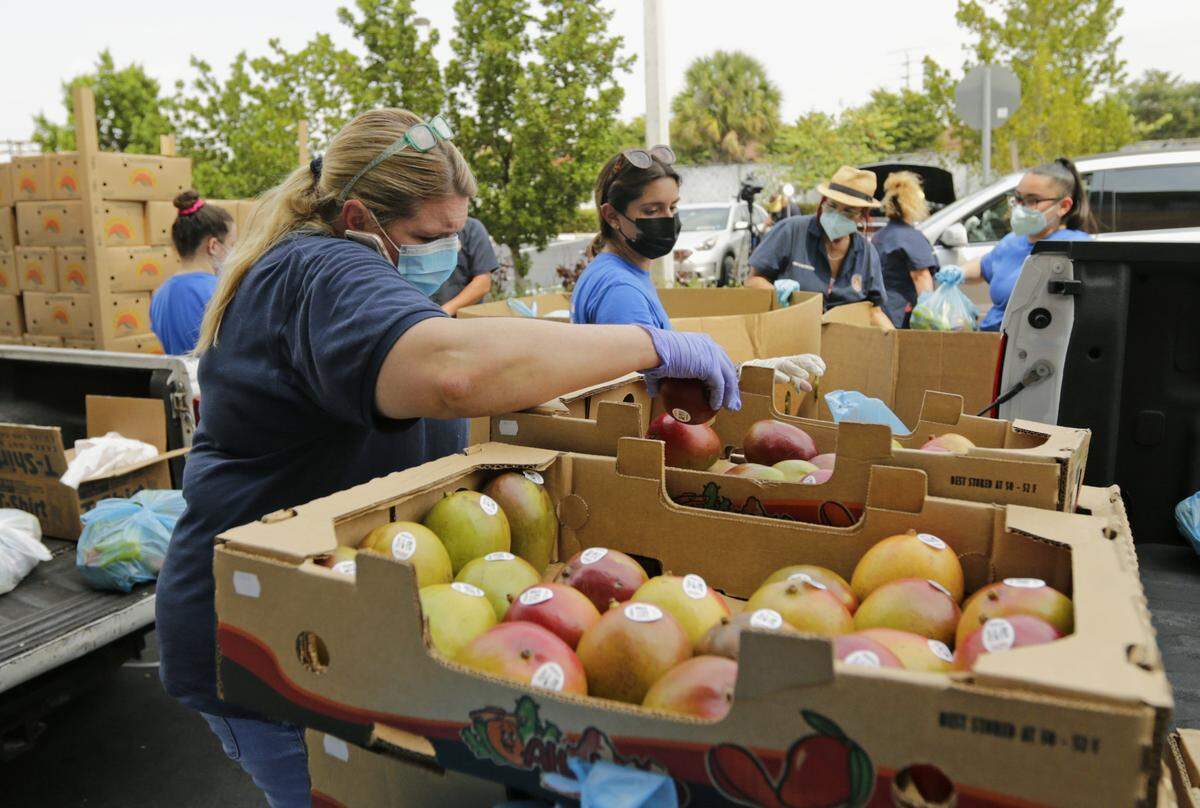
April: 2,416 to 12,063 cases; 11 to 352 deaths
Despite the shutdown of nonessential businesses, escalating safety measures and the state and county’s stay-at-home orders, Miami-Dade saw cases and deaths skyrocket from March, with 9,647 more cases and 341 new deaths reported in April.
Even with rising numbers, the county took its first steps toward reopening toward the end of the month.
On April 1, Gimenez ordered all adult daycare centers in Miami-Dade to close by the weekend, having already closed senior centers. Gov. DeSantis followed Gimenez lead by issuing a statewide stay-at-home order limiting essential services.
On April 4, the Broward Sheriff’s Office announced that Deputy Shannon Bennett had died from COVID-19, the first South Florida law enforcement officer to succomb to the disease.
On April 11, organizers of the Winter Party Festival said 38 attendees had become sick and some had tested positive. Israel Carrera and volunteer Ron Rich died from COVID-19 after attending the event.
On April 15, Miami-Dade County Public School Superintendent Alberto Carvalho said reopening schools in the 2019-2020 school year is “not unlikely but imprudent.” The Florida Department of Education’s timeline included the return of students to school by May 1.
On April 30, Miami Beach police said they had already issued 652 warnings to people for not wearing masks at recreational spaces.
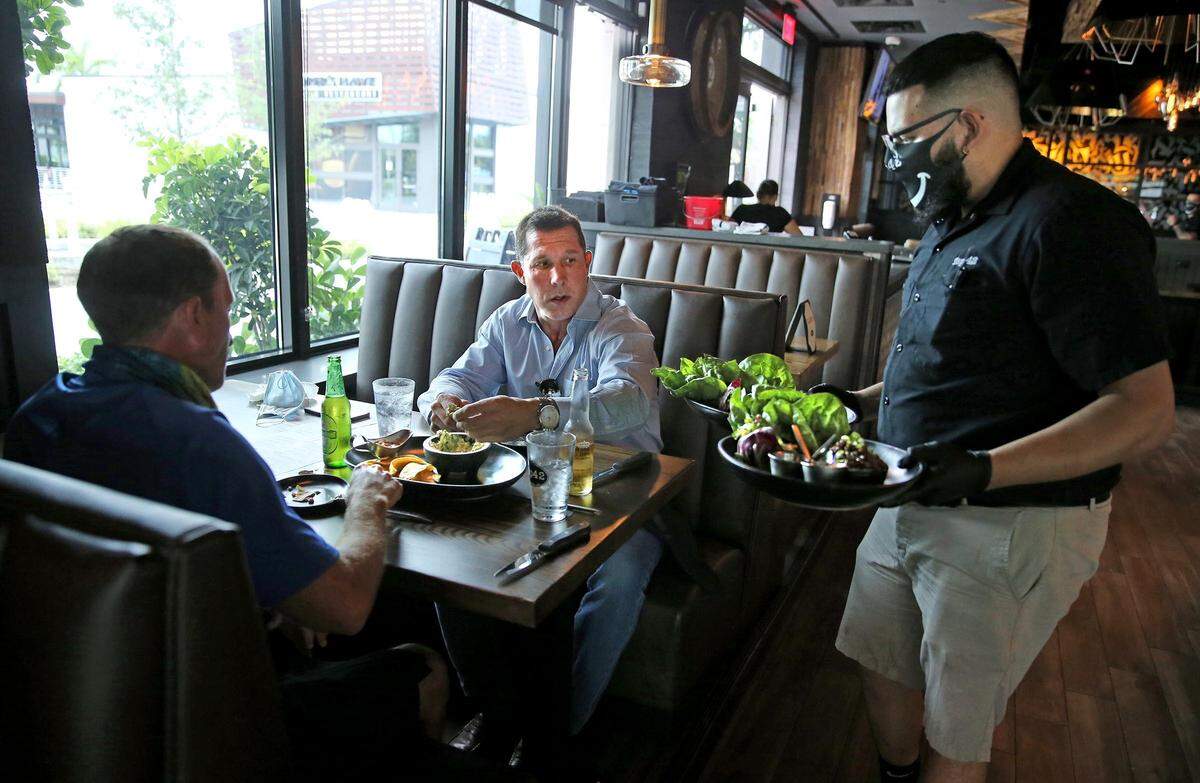
May: 12,389 to 18,000 cases; 358 to 700 deaths
Miami-Dade saw a fewer new monthly cases reported in May than April, with only 5,611 more reported. But deaths still trended up, increasing by 342. Aside from March, this would be the lowest monthly increase in new cases.
On May 1, the DeSantis administration released information about coronavirus fatalities at long-term care facilities after more than a month of refusing to make the data public. News organizations sued to get the data, which showed that nursing homes and assisted living facilities accounted for 1 in 3 coronavirus deaths. South Florida accounted for nearly half of all deaths at elder-care facilities.
On May 13, Gimenez released “The New Normal” reopening plan, a color-coded system designed to track the county’s restrictions. When released, the county was in the orange phase, meaning parks and opens spaces were allowed to reopen. That happened in April. The county looked forward to entering the yellow phase in a few days, which meant limited openings of businesses.
On May 18, a majority of businesses classified as nonessential reopened to the public after being forced to close for nearly two months. Businesses not approved to reopen included hotels, bars, pubs, nightclubs, gyms, movie theaters and massage parlors.
On May 31, Gimenez went back on his order of reopening Miami-Dade beaches on June 1 due to vandalism, theft and damaged storefronts in downtown Miami on May 30 from a peaceful protest that turned violent.
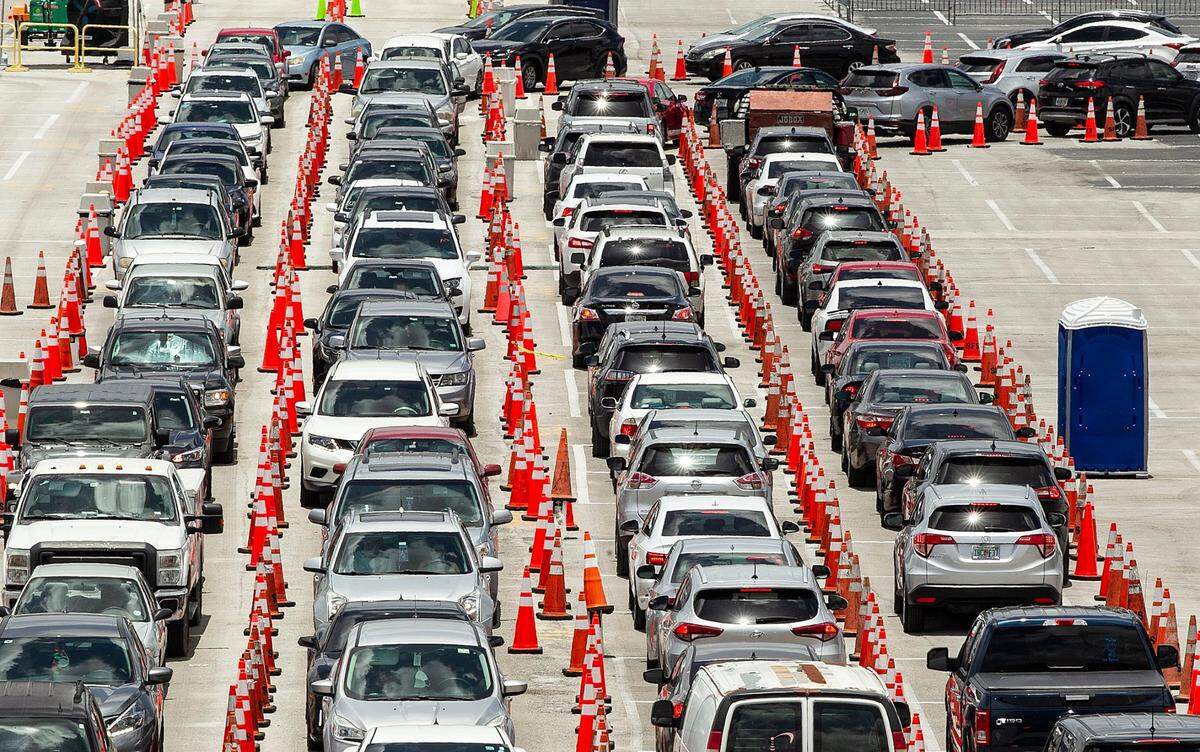
June: 18,139 to 36,820 cases; 702 to 991 deaths
June ushered in another wave of reopenings and built hope of returning to normal. But growing virus cases and deaths toward the end of the month began scaring some businesses into closing again.
There were 18,681 more cases and 289 new deaths in the month. June’s final days broke records for daily case increases, which was foretelling of what was to come in July.
On June 1, Miami-Dade hotels and motels were allowed to reopen after a two-month shutdown. As with all other reopening, this one came with strict new safety guidelines.
On June 5, Florida entered the second of its three-phase reopening plan. This allowed for bars, movie theaters, tattoo shops, massage parlors and tanning salons to open at 50% indoor capacity. Miami-Dade, Broward and Palm Beach counties were not included in this phase and were not allowed to reopen many any of these businesses.
On June 8, Miami-Dade moved into its Green and Blue Flag phases. This meant gyms, tattoo shops, massage parlors, dog parks, summer camps, short-term vacation rentals and libraries could reopen. The newest batch of reopened places still had to follow strict virus safety rules, including mandatory masks and social distancing.
On June 10, Miami-Dade beaches were allowed to reopen after being closed for nearly three months. Beaches had been scheduled to reopen June 1, but that was delayed due to a curfew Gimenez imposed in response to anti-police brutality protests in downtown Miami.
On June 11, many casinos in Miami-Dade reopened their doors, including Casino Miami, Hialeah Park Racing and Casino, and Magic City Casino. Arcades, museums, movie theaters and strip clubs also had sporadic reopenings from June 1 to June 20. The county required these establishments to submit a reopening plan before being allowed to open their doors, resulting in no uniform reopening date.
On June 21, the mayors of Miami, Hialeah, Miami Gardens, North Miami Beach, Miami Shores, Aventura, and Key Biscayne said they would be requiring people to wear masks at all times in public.
July: 37,961 to 118,462 cases; 1,000 to 1,611 deaths
What seemed like a slow climb back to normalcy for residents was stopped in its tracks as July played out. The month was plagued with several rollbacks on reopenings and rising cases.
July saw the peak of new monthly cases in Miami-Dade, with 80,501 new cases. The rocket in cases caused Gimenez to roll back many of the freedoms allotted in May and June. Although Miami-Dade saw a record high in cases, the same isn’t true for deaths, with only 611 more.
On July 1, a Miami Herald report found more than 7,000 Florida children had tested positive for the coronavirus and 12 diagnosed with multi-system inflammatory syndrome, or MIS-C. In South Florida, 2,865 children had contracted the virus. Also on this day, Gimenez ordered all restaurants to close on-site dining from 12:01 a.m. to 6 a.m. daily. He also expanded the mandatory mask order that now required masks in public as well as in businesses.
On July 2, Gimenez announced the re-closures of casinos, strip clubs, movie theaters and other entertainment venues. They had only been allowed to be open for about a month.
On July 7, Gimenez closed indoor dining in restaurants and only allowed outside dining. The decree allowed beaches, offices, stores and hair salons to stay open at the time.
On July 23, it was announced a 9-year-old girl had died from COVID-19 in Putnam County, making her the youngest to die from the virus in Florida. Four other children had died from COVID-19 at this time.
On July 29, Miami-Dade County Public Schools announced the 2020-2021 school year would start remotely on Aug. 31. The school district said it had until Sept. 30 to decide whether conditions allowed for the school district to reopen Oct. 5 for in-person classes.
.JPG "IMG_128_MD_AUDITORIUM_TE_3_1_C9IR5MAJ_L585200357 (1).JPG")
August: 121,207 to 156,910 cases; 1,647 to 2,437 deaths
August brought Florida and Miami-Dade back on its reopening schedule as a decline in new cases stretched over the month, although new monthly deaths reached its peak in the county.
With 35,703 new cases in the month for Miami-Dade, it was enough to help push toward reopening the state. The effort to reopen went on in Miami-Dade even though the county saw 790 more deaths, which is its current death toll peak.
On Aug. 15, medical examiner’s offices in South Florida had a backlog of more than 1,200 suspected COVID-19 deaths awaiting certification, more than 650 were in Miami-Dade. The Florida Medical Examiners Commission voted to streamline the review process.
On Aug. 20, Miami-Dade County Public Schools confirmed 578 employees had tested positive for the virus from March through July. The school district employs 40,000 people.
On Aug. 24, a 6-year-old girl from Hillsborough County died from COVID-19 related complications, making her the youngest person in Florida to die from the disease.
On Aug. 26, Gimenez ordered the reopening of nearly every retail and commercial business in the county. Businesses forced to remain closed included bars, nightclubs, movie theaters, bowling alleys, arcades, concerts and strip clubs.
September: 159,059 to 170,400 cases; 2,537 to 3,279 deaths
September continued a downward trend in new cases in Miami-Dade, but deaths were still high.
The county saw 11,341 new monthly cases, the lowest since May, and 742 more deaths, which would begin a decrease in monthly death tolls that would last into November. September also marked the full reopening of Florida.
On Sept. 17, Gimenez allowed for the reopening of movie theaters, concert houses, convention spaces, auditoriums, playhouses, bowling alleys, arcades and indoor amusement facilities.
On Sept. 25, Florida entered the final phase of the state’s recovery plan. This allowed for the reopening of all businesses, with some under strict safety guidelines like capacity restrictions. This pushed Miami-Dade to reopen bars and nightclubs. The county also stopped issuing citations for not wearing masks.
On Sept. 30, Miami-Dade County Public Schools voted to begin a staggered reopening of schools on Oct. 5, with all students wishing to go to in-person learning to be back in class by Oct. 9.
October: 170,882 to 185,891 cases; 3,284 to 3,647 deaths
October ended a two month downward trend in cases when 15,009 more were reported. As for deaths, 363 were reported in the month which was a steep drop from September.
On Oct. 4, Gimenez removed the mandatory mask and face covering in Miami-Dade. This meant masks were no longer required when exercising and in most cases when outside. Business mask policies would stay intact.
On Oct. 5, more than 22,000 students returned to classrooms in Miami-Dade public schools. Another 40,000 were expected to return to schools on Oct.7.
As of Oct. 31, schools had been opened for 27 days and had 408 total positive cases in students and employees, according to the Miami-Dade Public Schools Coronavirus Dashboard.

November: 186,809 to 231,761 cases; 3,662 to 3,839 deaths
November continued an upward trend in cases in Miami-Dade County, more than doubling the amount of new monthly cases in October.
With 44,952 new cases in the month, November may be marking the beginning of a second wave. Deaths in the county continued on a downward trend for the third month in a row, with 161 more reported.
On Nov. 1, President Donald Trump held a rally at Miami-Opa-locka Executive Airport. The rally broke several of the county’s “New Normal” rules, including breaking social distancing and mask polices in mass gatherings and keeping attendees past the county’s midnight curfew.
On Nov. 27, Miami-Dade’s former mayor, Congressman-elect Carlos Gimenez, and his wife tested positive for COVID-19. He had said he was “feeling good and experiencing no symptoms at this time.”
On Nov. 30, newly elected Miami-Dade Mayor Daniella Levine Cava said she tested positive for COVID-19 and was experiencing mild symptoms. She believed she contracted it when her husband, who is a doctor, tended to a patient in a house call.
This story was originally published December 3, 2020 at 8:37 AM.
%20Cropped%20(2).jpg)