
Welcome to ‘real’ North Beach. Is the anti-South Beach finally ready for prime time?
READ MORE
The new Miami: a series of villages
Not so long ago, Miami-Dade was a story of east — the sprawling Beach — and a mainland of undifferentiated suburbs, centered by a central business district that shut down at 5 p.m. Today the county increasingly is coalescing around a series of urban villages or centers — compact, pedestrian-friendly places where people can live, shop or dine out, even work or go to school, with few or mercifully short trips by car. Here’s a look at some of the county’s burgeoning neighborhoods.
Expand All
Editor’s note: As of May 2021, a plan to redevelop the historic Byron Carlyle theater, which has been closed since the fall of 2019, was rejected in a 5-1 Miami Beach commission vote in response to local opposition. The city continues to discuss alternatives.
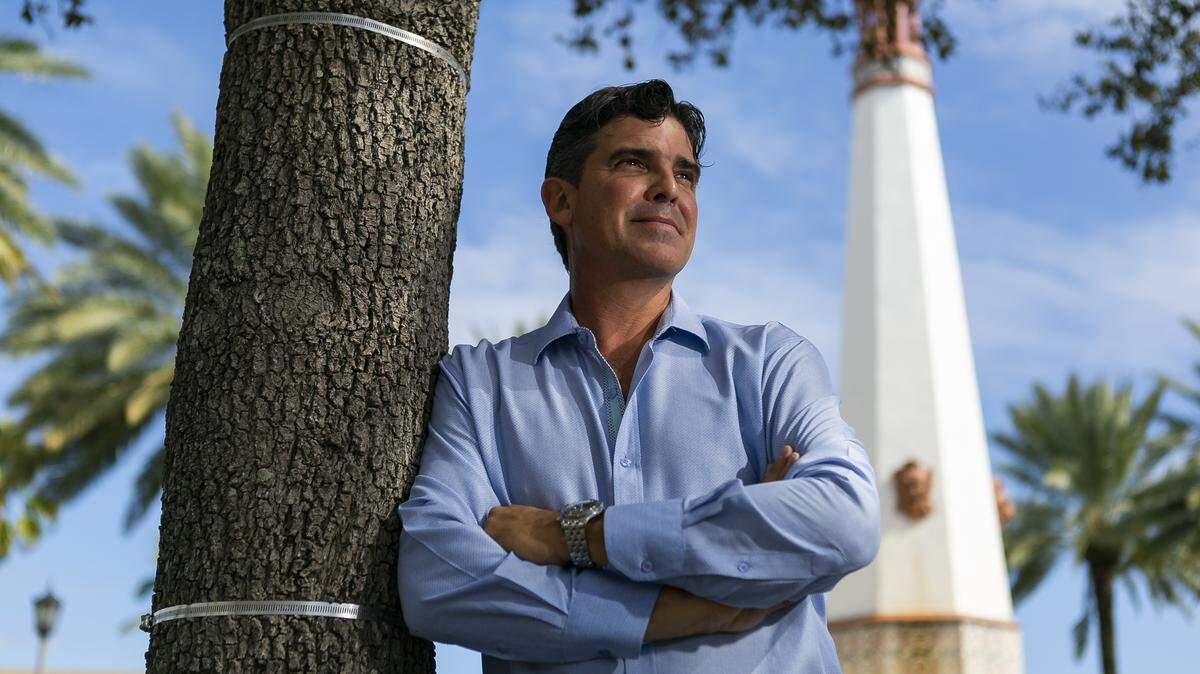
Some 20 years ago, architecture buff, activist and music promoter Kirk Paskal moved to Miami Beach’s North Beach section. He thought he had landed himself a little bit of urban heaven.
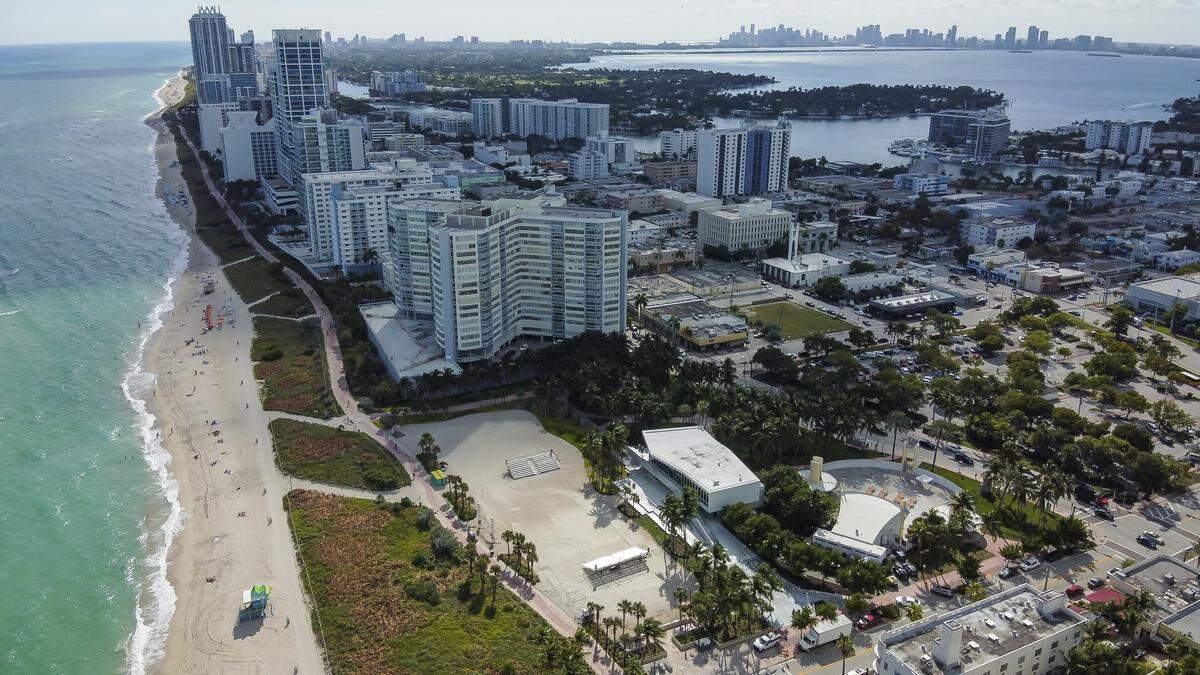
Like many others, Paskal was awed by North Beach’s modest, affordable yet distinctive mid-20th Century architecture, its low-scale walkability, the abundance of parks. And above all, the intimate proximity of water everywhere — the Atlantic Ocean on one side, waterways and Biscayne Bay on the other, and in between a series of islands connected by 14 scenic bridges.
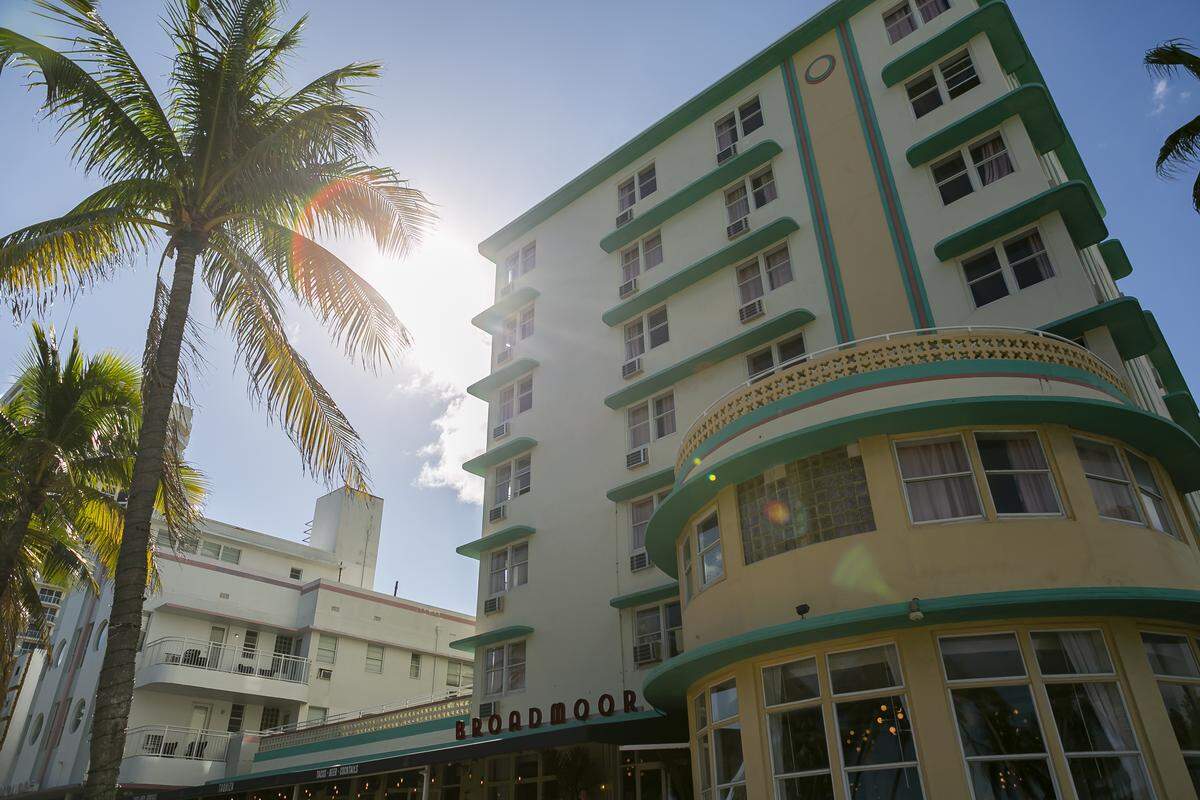
He soon discovered that North Beach had history, authenticity, personality and a wide range of amenities, neighborhoods and people. A picturesque, French-inspired fountain on Normandy Isle and a Space Age bandshell on the beach. Suburban-style single-family homes occupied by old-line, well-to-do Beach families and clusters of garden-style apartments redolent of the subtropics and densely populated by immigrants and hotel workers.
There were tourist spots, too, including hotels where Frank Sinatra’s Rat Pack once hung out. At one, the formerly grand Deauville, the Beatles performed on the Ed Sullivan Show in 1964.
Sure, it looked tired and down-at-the-heels, in places badly in need of rejuvenation. Much of its population was poor. But as South Beach rose to unpredictable heights just a few miles south, Paskal figured it was only a matter of time before North Beach was on the comeback trail, too.
He bought a four-unit, late-Deco 1948 apartment building on the Tatum Waterway, renovated it and rented out three of the units, keeping one for himself. And he waited.
“When I bought, I thought, ‘This neighborhood is so amazing, everybody is going to discover it,’” Paskal said.
He’s still waiting.
The neighborhood long touted as Miami Beach’s Last Frontier, its next inevitable hot spot, has been stubbornly stuck in the past.
Though North Beach never hit the skids like South Beach did decades before, the area — particularly its commercial and multi-family districts — continued a slow and steady decline. Several city master plans, rezonings and proposals for historic districts like those that spurred the South Beach revival failed to spark much interest or draw new investment.
One of its gems, the expansive beachfront North Shore Open Space Park, became overgrown, colonized by feral cats and more than a bit dicey. A second, Ocean Terrace, the two-block North Beach version of Ocean Drive, saw some of its Art Deco and Miami Modern buildings fall into ruin. Vacant storefronts, and crime, proliferated. A third jewel, the 540-room Deauville, hit by a fire and Hurricane Irma, shut down and sits moldering, prompting a suit by the city.
But finally, there are a flurry of signs that suggest Paskal’s hopes for North Beach could be someday soon, if belatedly, vindicated.
South Beach refugees and young professionals priced out of Brickell and Edgewater in Miami have moved in significant numbers into North Beach’s relatively affordable rentals. That, in turn, has led to the opening of a spate of new restaurants and bars, including branches of South Beach’s uber-popular La Sandwicherie and Taquiza.
INTERACTIVE TOOL: WHERE CAN YOU AFFORD TO BUY OR RENT IN SOUTH FLORIDA
The new spots have expanded a range of longstanding Argentine and Italian offerings, founded by a wave of South American immigrants in the past two decades, that have managed to hang on amid declining business thanks to loyal clienteles. The newcomers have also brought fresh life and prospects for a commercial revival to Collins Avenue and the Normandy Isle fountain district.
South Beach Group hotels operator Allan Lieberman has opened several low-key hostelries in smartly renovated historic MiMo buildings originally designed by distinguished architects of the era, drawing a mostly European clientele eschewing boisterous South Beach.
Developer David Martin of Terra Group, meanwhile, has nearly completed an ultra-luxury star-architect condo tower on Collins Avenue at the city line on 87th Street. The tower, by Italian architect Renzo Piano, might prove to be another cordoned-off island for the wealthy, but Martin has built a broad new public esplanade to the beach. He also gave the city $10 million as a condition of project approval to fund a plan to substantially revamp the Open Space park directly to the south, the city’s largest, now renamed North Beach Oceanside Park.
An Argentinian chain, Urbanica The Hotels, announced plans recently for construction of a new 200-room hotel on a vacant lot at Collins and 67th Street.
Some potentially even more consequential undertakings may be in the offing.
After failing to win Beach voters’ support for a plan to redevelop the historically designed Ocean Terrace that would have meant demolishing much of it, developer Sandor Scher won city commission approval in July 2019 for a less-intensive but still substantial alternative. It calls for his Ocean Terrace Holdings to build a $15 million public green space on the beachfront street, requires preservation of key historic buildings, and allows Scher additional hotel space and permission to erect a new residential tower.
For decades, the city stinted public investment in North Beach, residents say. No more. It just opened the new Altos del Mar Park on the beach immediately to the north of Ocean Terrace. Administrators have also floated a $60 million plan to build an aquatic center with a competition swimming pool, a new community center, library and parking garage on a large city lot fronting the North Beach Bandshell — itself renovated and operating a regular schedule of hip, popular musical performances under new management by the nonprofit Rhythm Foundation.
But the initiative that may ultimately shape the future of North Beach is a sweeping and as yet untested blueprint that was hammered out in a hard-fought compromise over several years by hundreds of North Beach residents, developers and property owners, activists and preservationists.
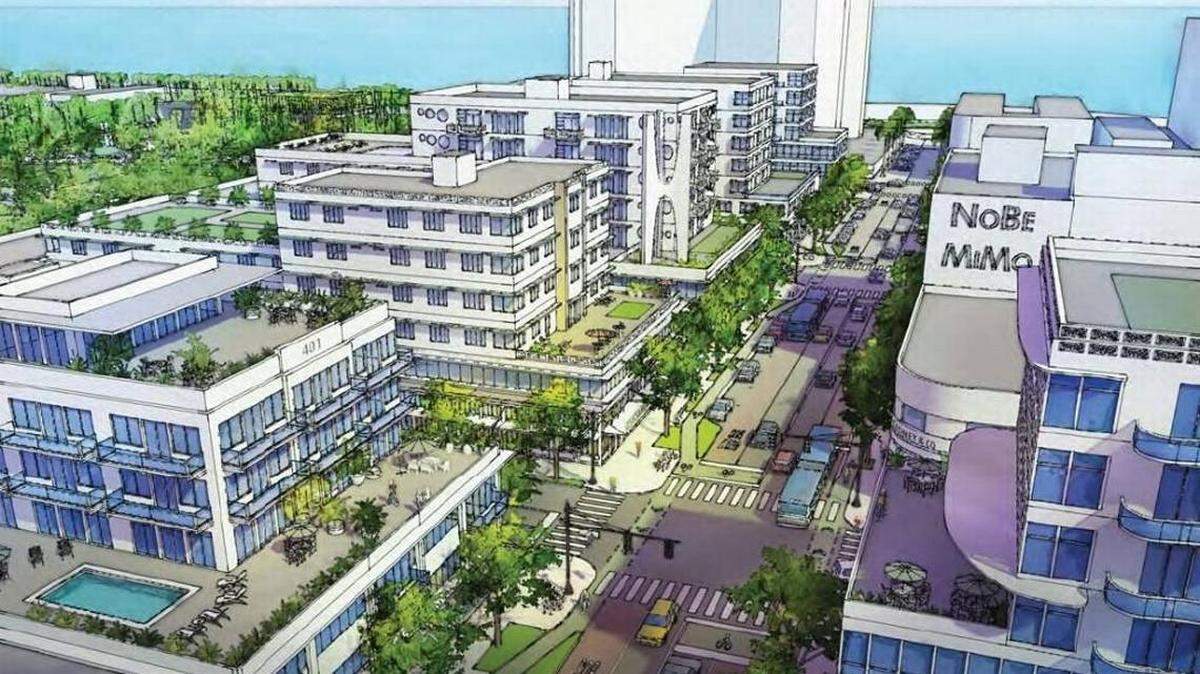
The unusual scheme, outlined in the 2016 North Beach Master Plan and ratified in a public referendum and a series of city commission votes, aims to balance new, taller and more intensive mixed-use development in the neighborhood’s compact town center along 71st Street with the establishment of two historic districts, and a set of neighborhood-conservation rules.
Though often described as a neighborhood, North Beach is actually much larger than that — it’s the upper third of the city of Miami Beach, with a population of around 40,000, running from 63rd Street north to the boundary with the town of Surfside. It comprises at least a half dozen distinct neighborhoods, including Normandy Isles and Normandy Shores on the largest island in Biscayne Bay, a resort strip along Collins, the town center, the Harding Avenue district and island communities like Biscayne Point and Park View.
The conservation rules and the historic districts — one on Normandy Isle and the other along the multi-family residential spine of Harding Avenue — are designed to protect not only the area’s defining scale and architecture but a portion of its stock of affordable apartments and the people who live in them.
The new town center guidelines, which allow micro-units to foster housing affordability, are intended to turn several lifeless blocks into a vibrant and pedestrian-friendly urban district that can anchor a broader revitalization of North Beach.
URBAN CENTER
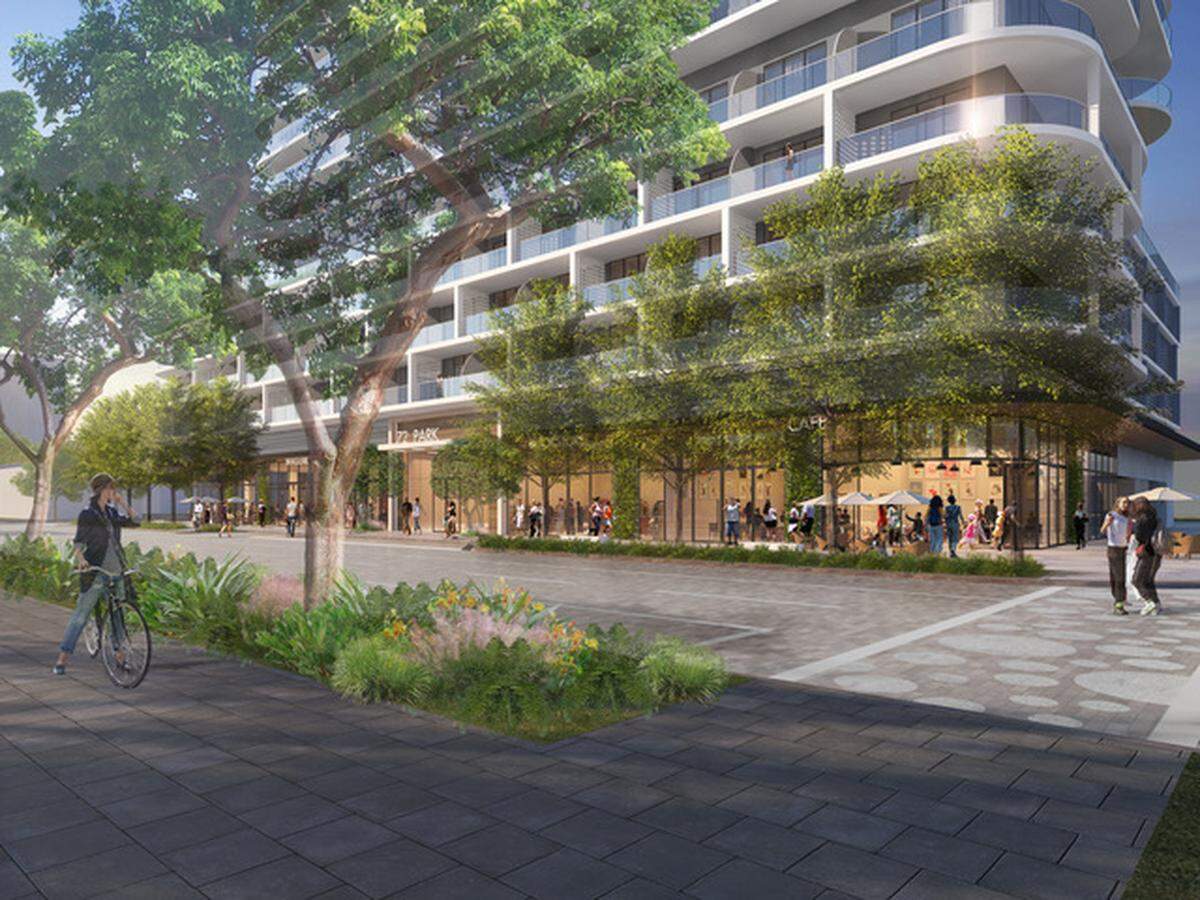
The rezoning has already drawn a plan for a new 22-story, 283-unit residential tower from a pair of Beach developers, Russell Galbut and Matis Cohen. Their plan, which includes 121 micro-units and ground-floor retail in a sleek tower designed by Miami’s Arquitectonica, won city commission approval in October despite some objections over its height.
Cohen and Galbut also put in a bid for another potential game-changer in the town center, the redevelopment of the city-owned Byron Carlyle Theater. The partners proposed a seven-story building with 114 workforce units — that is, apartments affordable for city workers, police and teachers — and an adjoining office building, both also including retail.
A competing bid from Pacific Star Capital contemplates an 11-story, 160-room hotel. Both proposals also include required cultural facilities to replace the 50-year-old theater, until recently home to O Cinema but so severely hobbled by water intrusion, mold and structural issues that the city concluded it’s not worth saving.
Cohen, principal of Kahunah Properties, has been amassing property in North Beach since 2010 and says he is now possibly the area’s largest private landholder. He said he took a big risk, adding that he believes revitalization could not happen without the ability to build more densely, a position he forcefully pushed during the master planning process.
Like Paskal, with whom he has repeatedly been at odds, Cohen says he long ago saw the potential in North Beach. But he said the turnaround they’ve both been working for is not yet assured.
“I went all in on North Beach when it was really harsh here. I put my money where my mouth is,” Cohen said in an interview at Cachito, a bustling Latin corner cafe and bakery in the town center. “I see North Beach as Miami Beach’s best-kept secret. It’s been kind of a forgotten land. Now there are the first signs of excitement. I’m both excited and nervous.”
Unresolved differences remain among residents and stakeholders like Cohen and Paskal. Cohen complains that the creation of historic districts by itself does little to support or encourage renovation and ignores the consequences of expected sea-level rise that will in time likely swamp small waterfront buildings. Protecting them may prevent their replacement with higher structures better suited to withstand rising seas, he said.
Preservationists like Paskal and the Miami Design Preservation League’s Daniel Ciraldo, on the other hand, contend that the town center zoning plan approved by the city commission went well beyond what voters expected when it opened the door to towers as tall as 200 feet.
“The community agreed to a height increase,” Paskal noted drily. “They didn’t agree to 21 stories.”
Activists also complain that the city dropped a master-plan recommendation for a program that would allow owners of historic properties to sell “air rights” to developers to fund renovations. And they say the city must explore ways of mitigating the impact of rising seas, including installing pumps, providing incentives for property owners to rebuild seawalls, and improving drainage.
Still, a public process so fraught that Miami New Times once described it as a “war” managed in the end to produce a remarkable consensus that the resulting plan is the best way forward for North Beach, supporters say.
“I am wildly optimistic about North Beach,” said Miami Beach Commissioner Ricky Arriola, a key backer of the plan along with former Mayor Philip Levine, who launched the effort while in office. “We have laid the groundwork from a legislative perspective to make that happen. This is going to be the biggest success story in Miami-Dade County in years. Once it’s done, the quality of life is going to be very high.”
QUALITY OF LIFE
That last concept is critical, Arriola and others say.
While North Beach will always welcome tourists, they say, it should remain a place for locals, in keeping with its original design. Unlike the resort-like, seasonal South Beach, the developers who built North Beach envisioned its neighborhoods as homes for year-round residents. Even today, its residents encompass an improbably diverse population of middle-class and working-class Miami Beach families, children and retirees, artists and immigrants who opened restaurants and shops and have provided the resort city a good chunk of its workforce.
Its stability is reflected in North Beach’s thriving synagogues and churches and its well regarded public and private schools. But its heart may lie in the dense apartment districts crowding North Beach’s waterways and lining the blocks west of Collins, long occupied by immigrants and service workers, mainly Hispanic. Their low earnings mean North Beach has a median household income of only $31,890, according to the master plan — far under the already low county median of $49,000.
Arriola notes that one of the master plan’s aims is to avoid displacing these low-income residents.

“You are not going to see a lot of foreign investment and second-home buyers,” he said. “You will see new people move in, but the character will be working people. The character will be preserved by the legislation. You won’t see those charming MiMo garden-style apartments torn down and replaced by luxury high-rises. We are not looking to change the character. We just want to enhance it.”
Though its decline dates to the city’s broad descent in the 1970s and 1980s, North Beach received an injection of energy with the arrival of Argentinian immigrants fleeing their country’s economic crisis in the early 2000s. Cheap rents and available storefronts attracted new residents and businesses, including bakeries and Italian-Argentine mainstays like Cafe Prima Pasta, turning the North Beach mainland into Little Buenos Aires. Many have since moved on, though several restaurants remain, some thriving but others struggling as the neighborhood’s fortunes again turned downward.
The area’s ups and downs have brought sporadic bursts of crime, including a serious gang problem that was only ended in recent years through a concerted campaign by residents and Beach police. Though crime is now relatively low overall, some trouble spots linger, like dive bars and convenience and liquor shops that draw an unsavory clientele.
That also includes one of North Beach’s defining properties, the glass MiMo International Inn at the foot the 79th Street Causeway on the western flank of Normandy Isle. City planners have been trying to work out a deal with its owners to clean it up by renovating and expanding the property while declaring it a protected landmark, but persisting problems with prostitution and other criminal activity have delayed action.
That seedy impression of North Beach was only accentuated by the closing of the Deauville, one of the Collins corridor’s key drivers of economic traffic, in 2017. The massive, shuttered building has been on occasion invaded and vandalized by homeless people. The loss of tourists has left businesses in the immediate vicinity that relied on them struggling to survive.
An extensive renovation by Terra of the nearby Carillon Hotel, another historic landmark, has not helped much. Its original Canyon Ranch Spa operators pulled out, leaving behind a quiet hotel and residential complex that generates little foot traffic. Neither does a new luxury condo on the strip that’s occupied mostly by part-time residents.
Some North Beach advocates fear that Terra’s Eighty-Seven Park won’t do much to boost the area, either. They complain that it replaced an architecturally significant if rundown hotel that, if renovated as Terra’s Martin once promised, would have generated more economic activity than a luxury condo.
IDENTITY QUESTION?
But Martin argues that the new tower and its famed architect can change the perception of North Beach, draw fresh attention and investment to the area and generate activity by helping open up the Oceanside city park to a new and diverse mix of visitors.
“North Beach was always a very local, residential place. It had an identity question,” Martin said. “I think North Beach needs a jolt. It needs to cater to all. That’s what’s going to make this neighborhood sing. This could evolve into one of the best neighborhoods Miami has to offer.”
Even skeptics welcome the planned, Terra-financed park makeover. It’s designed by the New York office of prominent Dutch firm West 8, also responsible for Soundscape Park, where the heavily attended Wallcasts at New World Symphony’s headquarters take place.
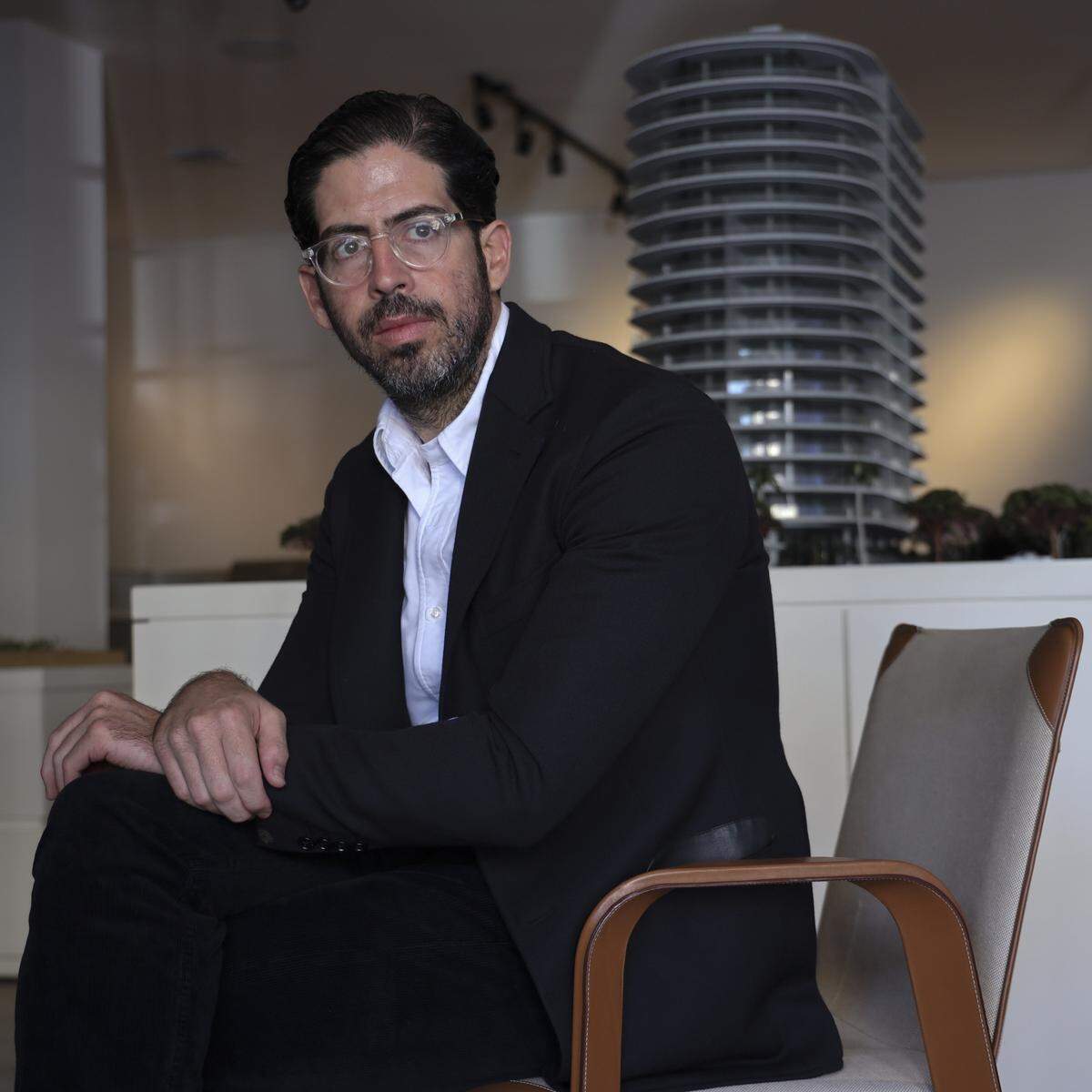
The West 8 plan for North Beach aims to make the dense park more inviting and safe by tidying up unruly sea grape and gumbo-limbo tree islands, clearing out thick undergrowth, and opening clear paths and vistas of the beach and ocean. Its natural dune area will be expanded, and grand new entrance gateways and lights friendly to nesting turtles installed.
Work is out to bid now and should start next year, city officials said. Once it’s done, the park will connect along a recently finished public beach walk that now runs the entire length of North Beach’s shoreline south to mid-Beach and beyond.
Martin also hints that completion of the condo will spur proposals for the reuse of a series of largely unused city-owned parking lots that run along the west side of Collins down to the town center — a critical piece of real estate that’s long lain fallow. The city has come up with no new use for the so-called West Lots, aside from a pop-up skate park, since the operators of the closed Wynwood Yard pulled out of a plan to move to the property.
Martin would not elaborate. But he and others say that development of housing and retail along the strip could help weave together the isolated shoreline and the multi-family neighborhoods to the west with a revitalized town center.
There, developers insist, the new projects to come will be true to North Beach’s working-people ethic.
Cohen says he’s not yet sure whether his recently approved tower will be rentals or condos. But he pledged it will be “attainable” for the Beach workforce and help create a true neighborhood feel.
“We want this to be inclusive. You would be living within a connected environment. You can know your neighbor,” he said. “An urban village, that is what the town center is supposed to be. The idea is that North Beach is a place for civilized living with all the amenities, and without all the things associated with South Beach.”
Still, locals and activists fear that extensive redevelopment will nonetheless drive gentrification, pushing out poorer working residents. Scher, they note, paid $90 million for just one block of Ocean Terrace.
Rents in North Beach have already been climbing for years, said Daniel Veitia, a longtime Normandy Isle resident and one of the busiest property managers and listing agents in the neighborhood. In 2005, he said, a one-bedroom apartment went for $800 a month. Now the same unit rents for as much as $1,450 a month, said Veitia, who also sits on the city planning board.
The increase, Veitia said, has been driven mostly by rising property taxes and insurance costs, especially for flood insurance, as well as demand. The cost of renovating long-dilapidated buildings, which runs around $1.5 million for a 12-unit complex, puts even more pressure on rents because owners and investors need to recoup their money, he added.
The consequence, he said, is that North Beach apartments are occupied increasingly not by working-class families or hotel workers, though many remain, but “transient” single millennials and couples with higher incomes. Longtime residents are squeezed out or forced to dedicate more of their meager income to rent.
“This neighborhood is getting poorer and richer at the same time,” he said.
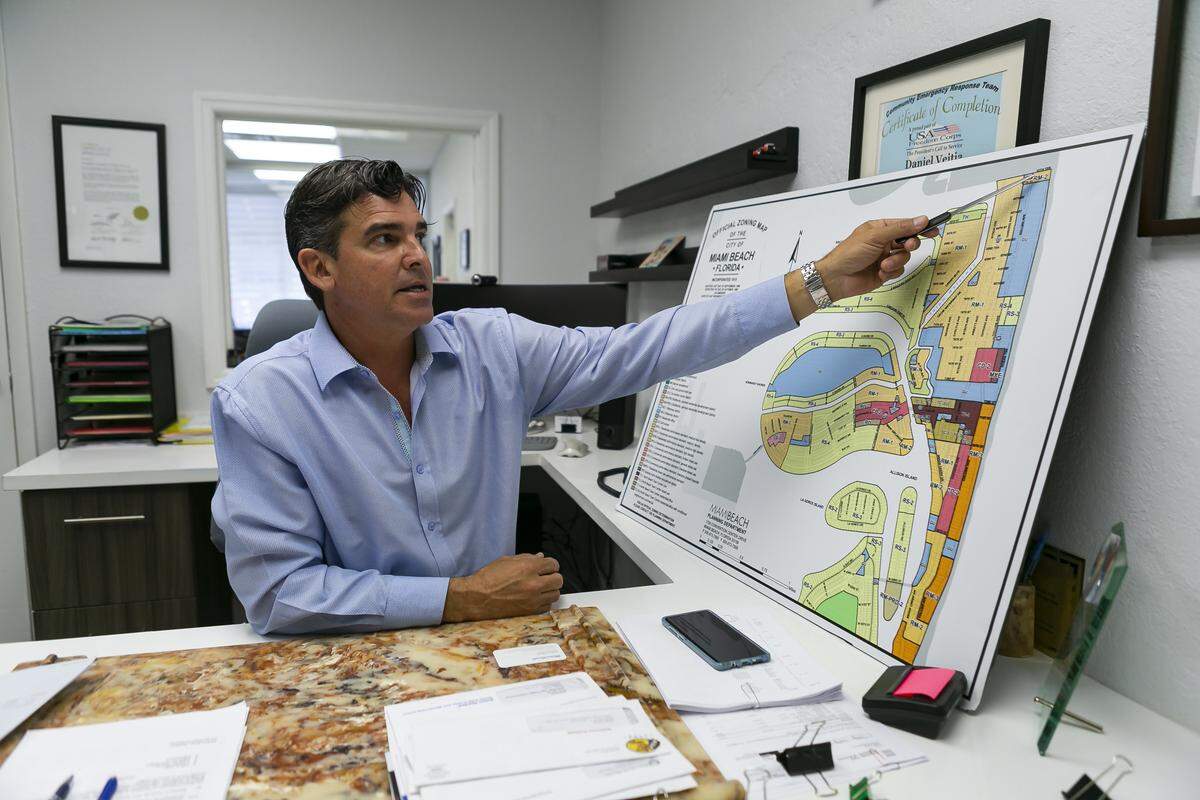
Still, North Beach and local businesses desperately need those millennials and their higher spending power, Veitia said, noting that at mid-year, the last count, there were 38 vacant storefronts in the area.
Whether the new town center zoning rules, which replaced guidelines that he said were too restrictive to attract investors, will be more effective won’t be clear until additional proposals roll in, Veitia said. But he worries that the area’s low incomes may hinder it.
“We tried it before. I think this time we got it right. This is really the key to bringing North Beach to the next level. We saw everything happening around us on the Beach. But not North Beach. Nothing was happening in North Beach,” he said. “There is concern. Is there enough spending power here to drive investment? There are gaps in the economics.”
But the new plan gives North Beach a fighting chance, he said, arguing there is room for sensitive redevelopment in both the town center and the historic and conservation districts.
“New development can come. New development has to happen. This can be a real community. Not a place where developers come in, knock everything down and build everything new and bring in all new people. That’s not us. We want to preserve our sense of community. It won’t run into Sunny Isles or South Beach. We think we can tame it. I think we have it under control,” he said.
”We gave the developers all they wanted. If it doesn’t happen, I would be very disappointed.”
BUSINESSES TAKE LEAD
Still, Veitia and his neighbors in the commercial district that surrounds the Normandy fountain aren’t biding their time. Veitia, whose office is steps from the fountain, and other business owners have created a new nonprofit group, the Normandy Fountain Business Association, that’s been promoting the district and organizing concerts at the plaza to lure residents and visitors.
The city plans to expand the small plaza around the fountain next year to create more of a pedestrian atmosphere in what boosters like David Sexton, owner of event space Painting with a Twist, say has all the elements to become one of the most charming corners of Miami-Dade County.
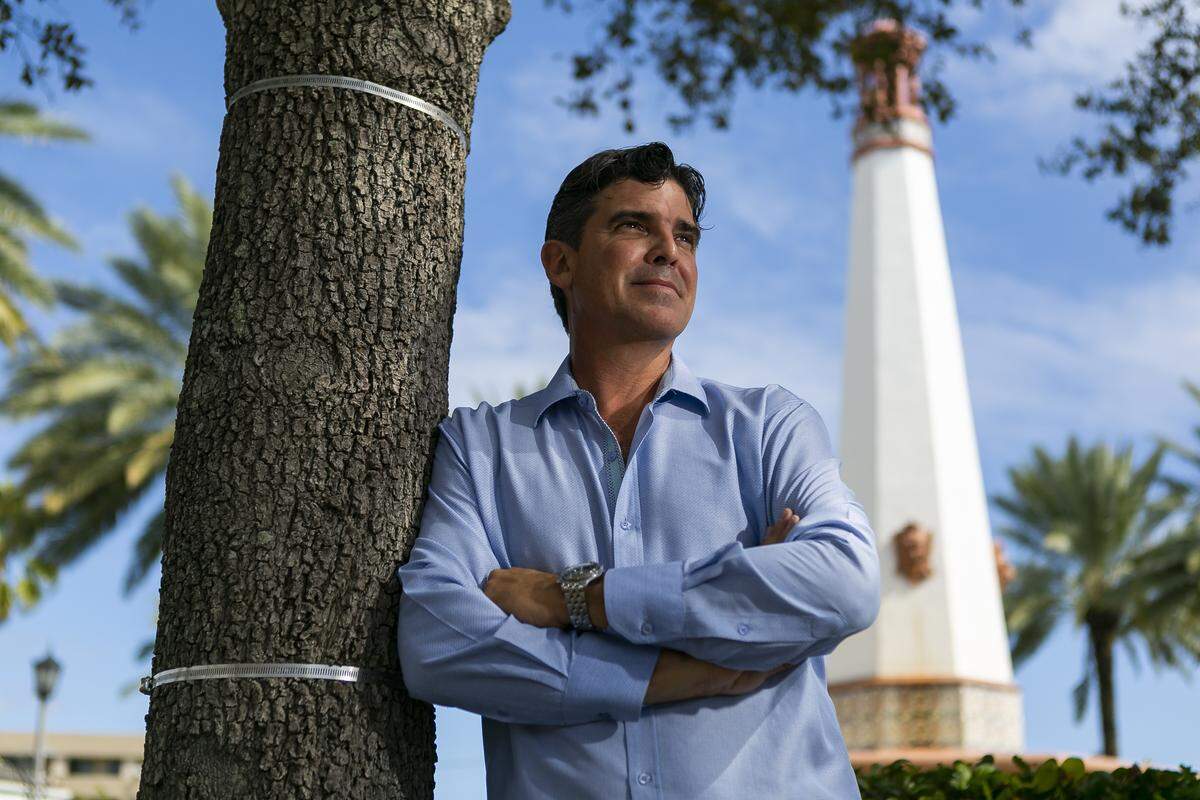
In a tight radius of a few blocks, with the fountain at its center, the district encompasses some 60 small businesses, a mix of offices and retail services. Longtime dining spots include Argentinian steak house Las Vacas Gordas, whose new owners are trying to reverse a decline in business, and Sawaddee, a Thai-and-sushi restaurant that draws customers from across the county.
They have been joined recently by newcomers like down-home neighborhood bar Bob’s Your Uncle, opened by New Yorker Danielle Savin, who also co-owns the Upper West Side original; and Silverlake Bistro, a lauded restaurant by the operators of Hialeah’s acclaimed French gourmet spot La Fresa Francesa.
But business has been uneven, and some storefronts look shabby. The district could come into its own with more daily activity, more shade trees and a program of facade touch-ups, Veitia and Sexton say.
Sexton, who fled South Beach in 2002 as it was turning into party central, extolled his life in the fountain district. He lives two blocks away, on a canal with a view of the water, walks to work and dine and doesn’t own a car.
“It definitely has a groovy village vibe. It has a bohemian charm,” Sexton said. “It’s super-walkable. It’s sort of becoming a thing, and you can feel it developing around you.
“It’s a real mix of people. It feels real. We have seen South Beach, and it’s not for us. The question is, how can we grow in a way that is correct for us? I think that’s what’s happening. I hope that’s what’s happening. We’ll see.”
John Stuart lives a few blocks away at the King Cole condo tower — formerly a hotel where the Rat Pack disported. Like Sexton, he walks everywhere — to Sabor Tropical Supermarket for organic avocado mayo, and to North Beach Park’s renovated tennis courts. The King Cole has kayak parking, and he and his partner paddle around the waterways on weekends.
“The physical infrastructure of this place is such — walkable, planned neighborhoods, the beach, the network of canals, the diversity of food and shopping, and, I hope, the continued affordability of housing — that maybe there’s hope,” said Stuart, an architect and academic who runs Florida International University’s Miami Beach Urban Studios on Lincoln Road.
To a significant degree, the revitalization of North Beach will hinge on what happens in its newly designated historic districts. The Normandy Isle district, which is split in two, includes the fountain and neighborhoods on both sides of it. A second district also comprises two sections: the Harding corridor and the Tatum Waterway a few blocks to the west.
It’s hard to overstate the extent and the consistency of the scale of North Beach’s historic architecture. The historic districts include hundreds of structures listed as contributing — meaning they merit stringent levels of protection, though they can still be expanded or even, in some cases, replaced.
But restorations can be expensive and complicated, and economic incentives to carry them out are few. To encourage renovation, special zoning rules do allow short-term rentals, sharply curtailed elsewhere in Miami Beach, so long as there’s 24-hour supervision on site. But short-term rentals can also reduce the stock of affordable housing.
The city and preservationists have proposed other measures to boost the districts’ economic prospects, including a plan by Arriola to allow limited commercial use along Tatum Waterway, like neighborhood coffee shops or small convenience stores.
“We want some commercial activation. Not a lot,” Paskal said. “So give us a little.”
For proof that preservation can work, he said, look at the South Beach Group hotels, which Paskal calls “beautifully renovated and respectfully run.”
“It’s great to see them lively and vibrant,” he said.
For Paskal, preserving the low scale and the look and feel of the neighborhood and what he referred to as its “allure and authenticity” will be critical to promoting its neighborliness and securing North Beach’s future — and decidedly not South Beach flash.
“We don’t have the architectural bells and whistles and cake decorations of South Beach,” said Paskal, who swims in the ocean every day, walking to the beach over the footbridge from Biscayne Beach island neighborhood. “It’s modest.
“And that’s the beauty of it”.
NORTH BEACH AT A GLANCE
Population: 39,768
Demographics: 66% Hispanic
Median household salary: $77,418
Primary work/industry: Accommodation
Median property value: $369,016
School grade: A
Personal crime: 45
Property crime: 51
Source: Data USA, Florida Department of Education and Esri, which ranks crime using a national base line of 100.
This story was originally published January 6, 2020 at 6:00 AM.
.JPG)