Sinking towers reveal limits of what we know about building on barrier islands
READ MORE
Built on Sand
The Miami Herald examined the impacts of continuing to build on Florida’s barrier islands, which are at high risk from rising seas and strengthening hurricanes, as well as the little-understood geologic consequences of packing bigger and heavier high rises on sinking sand.
Expand All
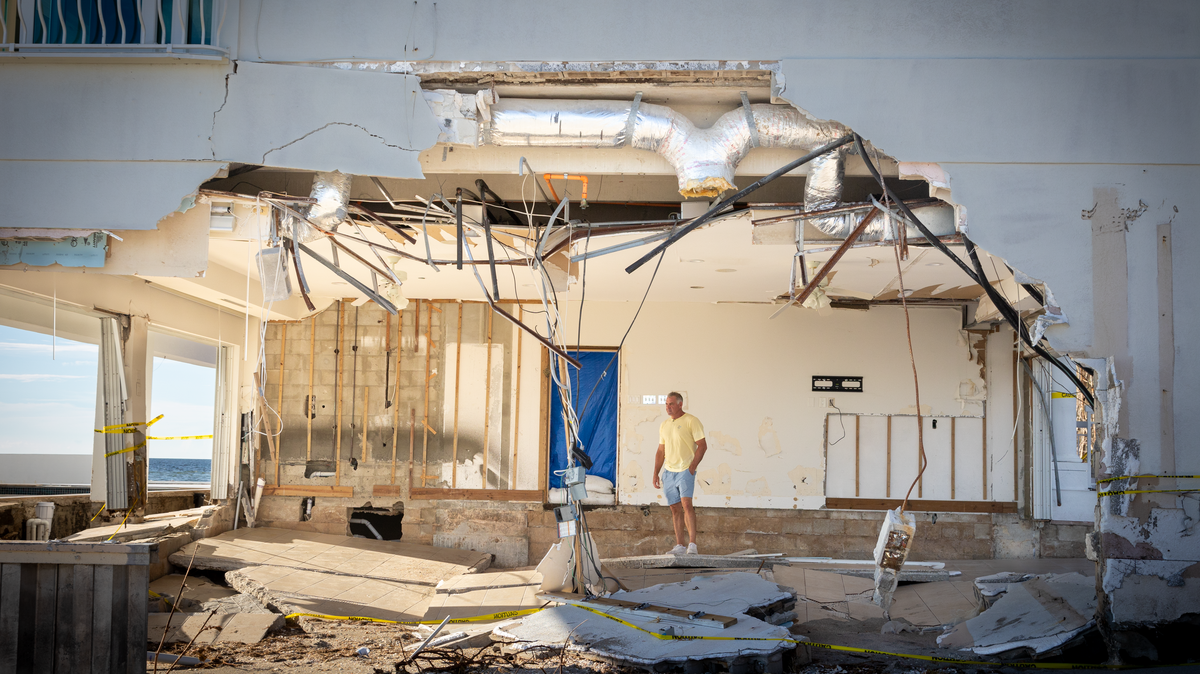
Florida keeps packing people and buildings on barrier islands. It comes at a high cost
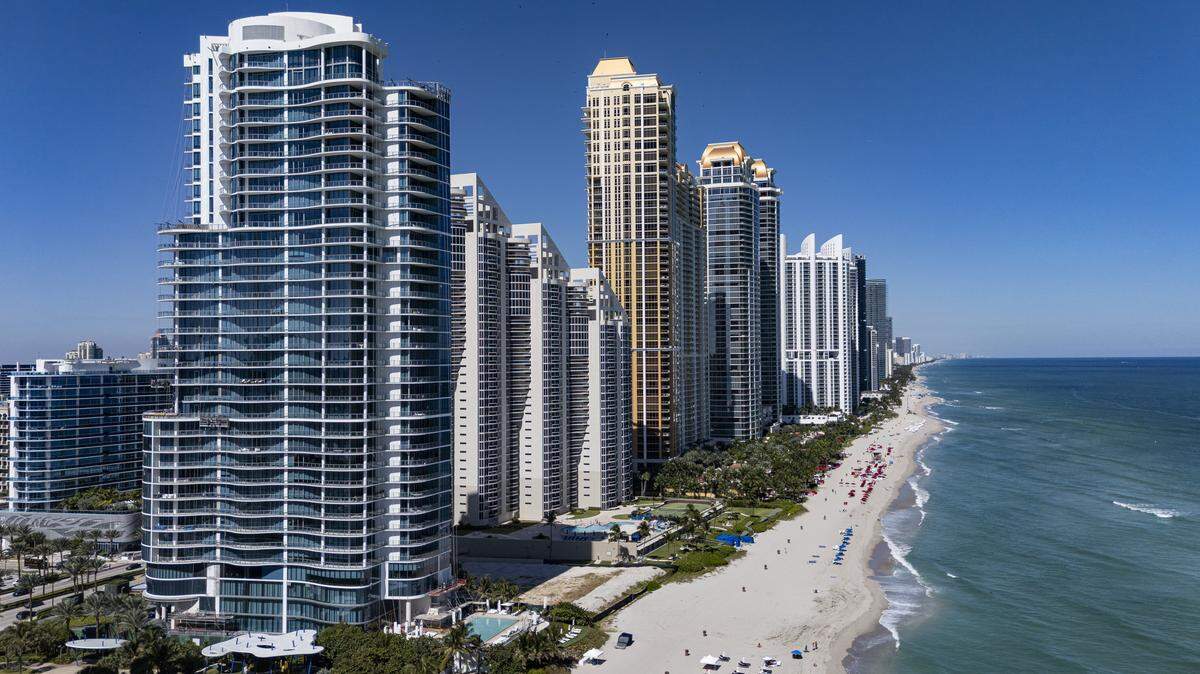
Sinking skyscrapers? As buildings got bigger in Sunny Isles, so did engineering concerns
Sinking towers reveal limits of what we know about building on barrier islands
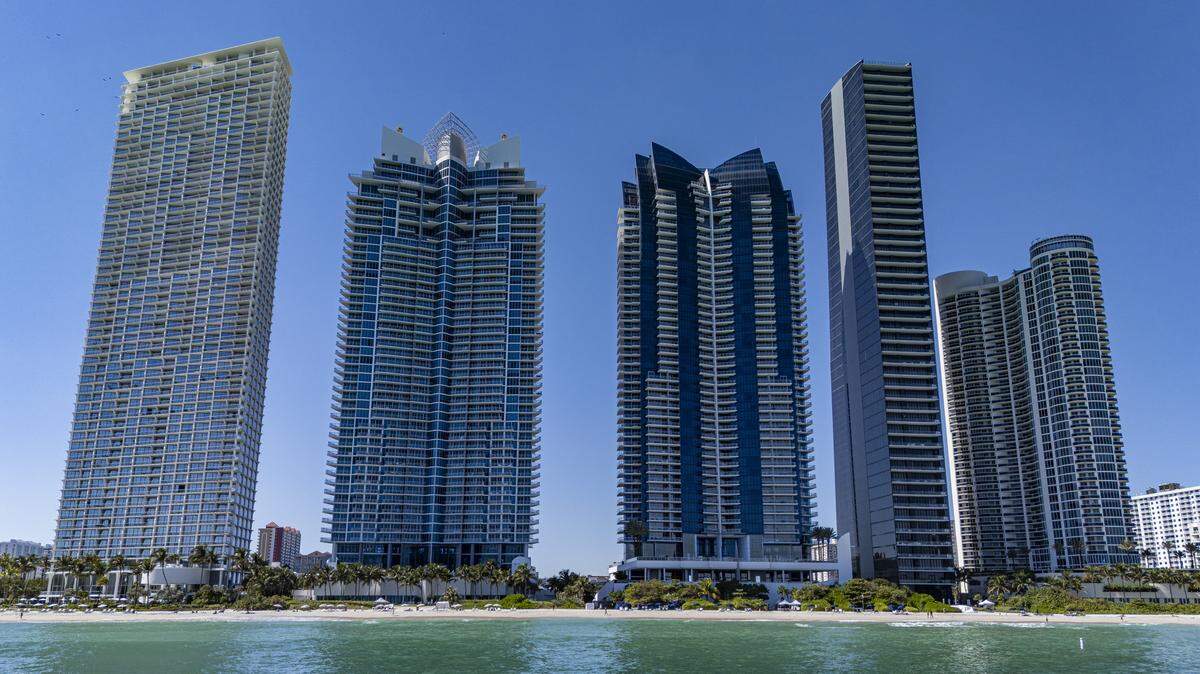
Amid construction boom, experts urge for monitoring of sinking South Florida towers
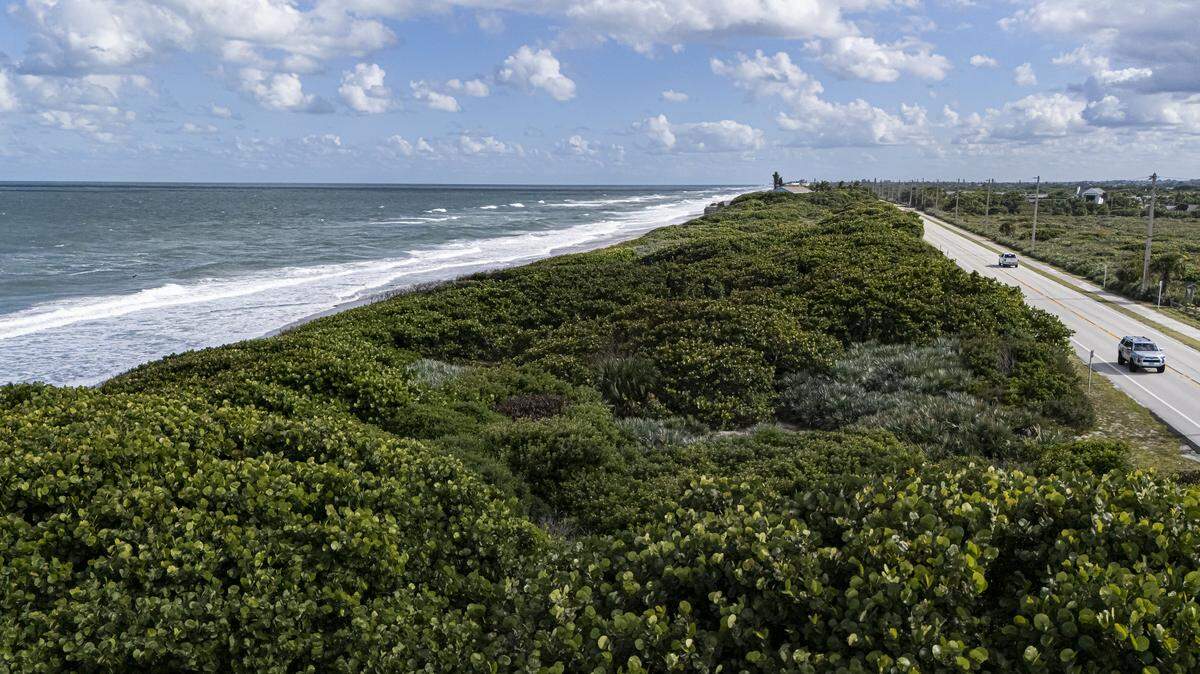
How this Florida barrier island community pushed back against overdevelopment
Unseen forces are at work under the gleaming towers lining barrier islands like Sunny Isles Beach.
Drilling from adjacent construction can displace soil and shake buildings. Higher tides and rising seas can push water higher than in the past. Already, underground parking garages are being flooded with corrosive puddles. Deeper down, out-dated stormwater drainage systems could be weakening the already porous limestone bedrock South Florida is built on.
They’re some of the factors that might play roles in the unexpected sinking measured in some of Miami-Dade’s coastal high-rises over the last few decades.
While a University of Miami study found 35 buildings from Miami Beach to Sunny Isles Beach sank up to 3.1 inches between 2016 and 2023, a Miami Herald investigation shows that engineers had already begun grappling with surprising amounts of what the industry calls “settling” as early as the mid-2000s. Some, records show, have sunk two to three times more than initially predicted.
But even today, after the construction of dozens of new oceanfront towers, experts don’t have definitive answers for the unexpected sinking. One thing is clear: Building on islands composed of shifting sand and porous rock comes with added uncertainty and challenges.
“There is some characteristic there that is allowing, or causing, this movement … a characteristic of the soil,” said Rick Slider, head of Slider Engineering, a firm with offices in South Florida and the Tampa Bay area, and one of more than a dozen experts, from structural engineers to geochemists, interviewed about the issue by the Herald.
Their takeaway is that the underground dynamics of a barrier island like Sunny Isles and the underlying limestone of South Florida, particularly under the pressure of massive buildings, are complex, poorly understood and largely unresearched. They argue the risks and reasons have to be analyzed and investigated, not just to protect future investors, but to help protect the real estate and construction industries critical to the economy. The U.S. Bureau of Economic Analysis puts the impact of those twin powerhouses at $50 billion annually in Miami-Dade County alone.

“So much rests on real estate in Florida that it would be criminal to ignore the slightest risk to our wealth or well-being,” said Jean-Pierre Bardet, former dean of the University of Miami’s college of engineering and a faculty member.
Sunny Isles Beach could serve as a case study for future barrier island development. The building boom of luxury condos and hotels dramatically multiplied the height and weight of buildings on the oceanfront. Heavier objects generally compress more ground underneath, so the scale of new construction is the leading cause in the surprise sinking. But experts also have theories about additional possible contributing factors.
Two other likely suspects are concerns familiar to many barrier island residents — construction vibration and the increasing intrusion of water that climate change is only making worse.
Bad vibes: A leading suspect
The potential impact of construction vibration on nearby structures is no secret. Residents can literally feel the effect above ground — and they’ve long been the source of complaints and lawsuits. Because of the potential for structural damage, building codes set specific limits on vibrations. Contractors are also required to assess nearby buildings before they start drilling, and are liable for any cracks and damages that occur as a result.
But it’s not just the nearby residents and buildings that get rattled. Enough vibration can also have ripple effects on surrounding land. Just like shaking a tin of ground coffee, sand under buildings can consolidate and become more compact. The load on top can then sink into the newly created space.
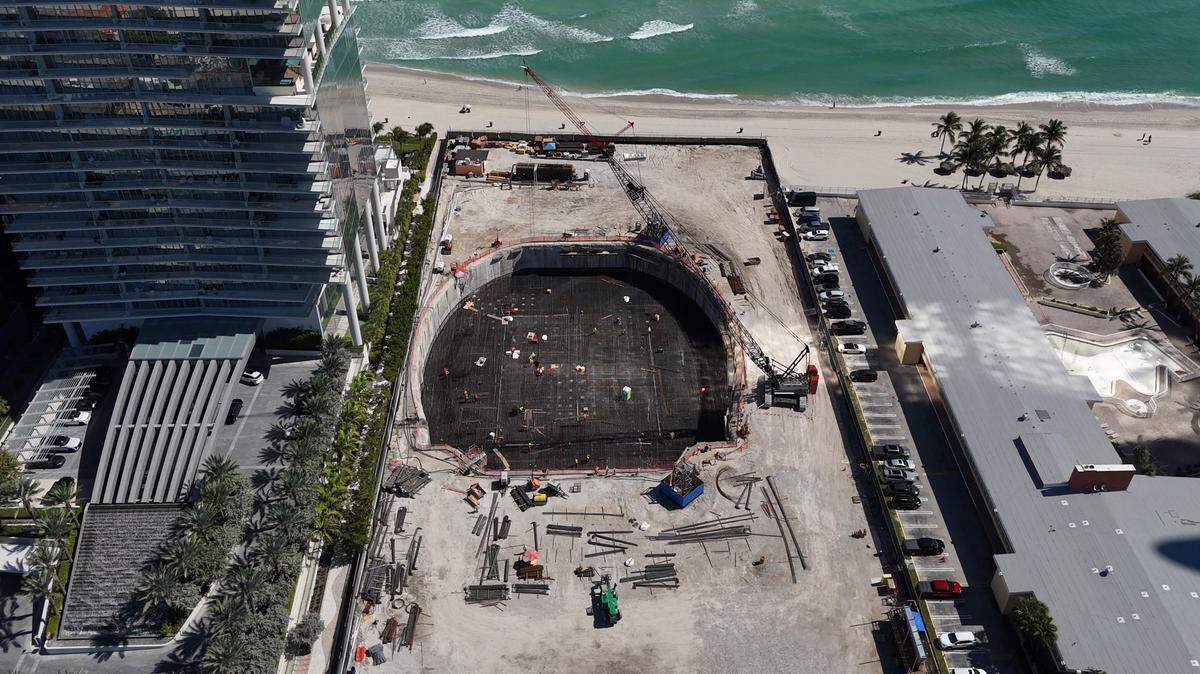
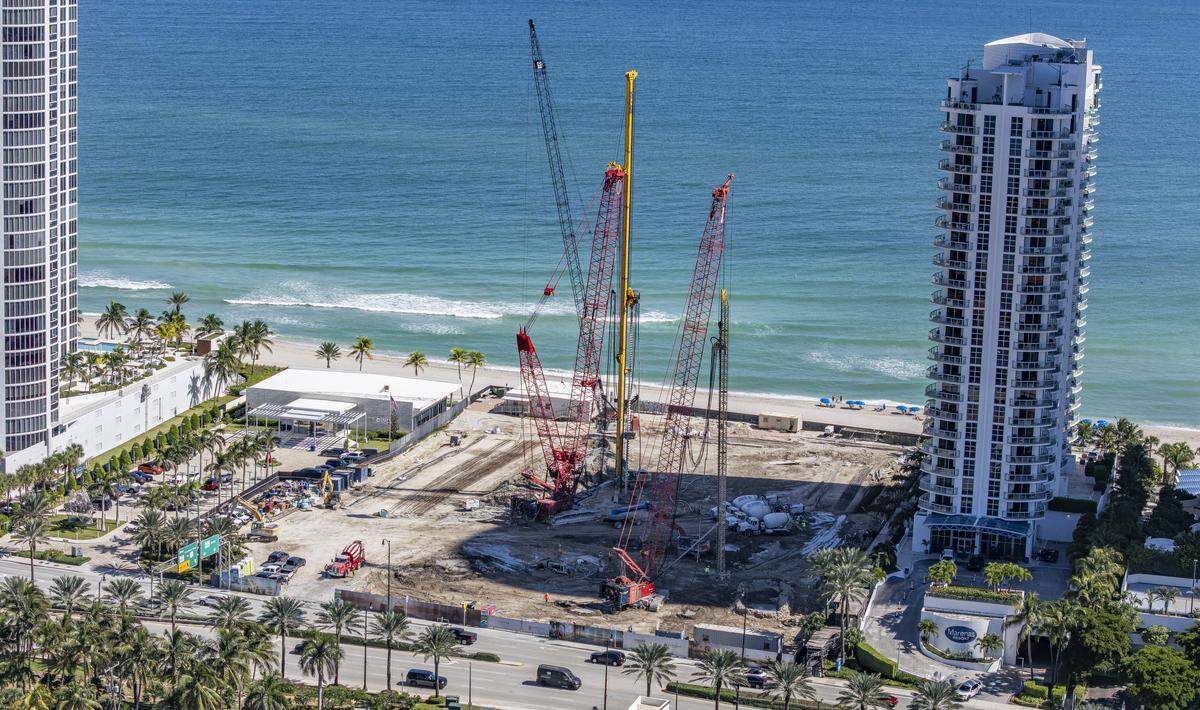
The potential to trigger some unexpected settling in nearby buildings is acknowledged in the latest available geotechnical engineering reports filed with Sunny Isles Beach for the Bentley Residences, soon to be among the tallest high-rises in the city.
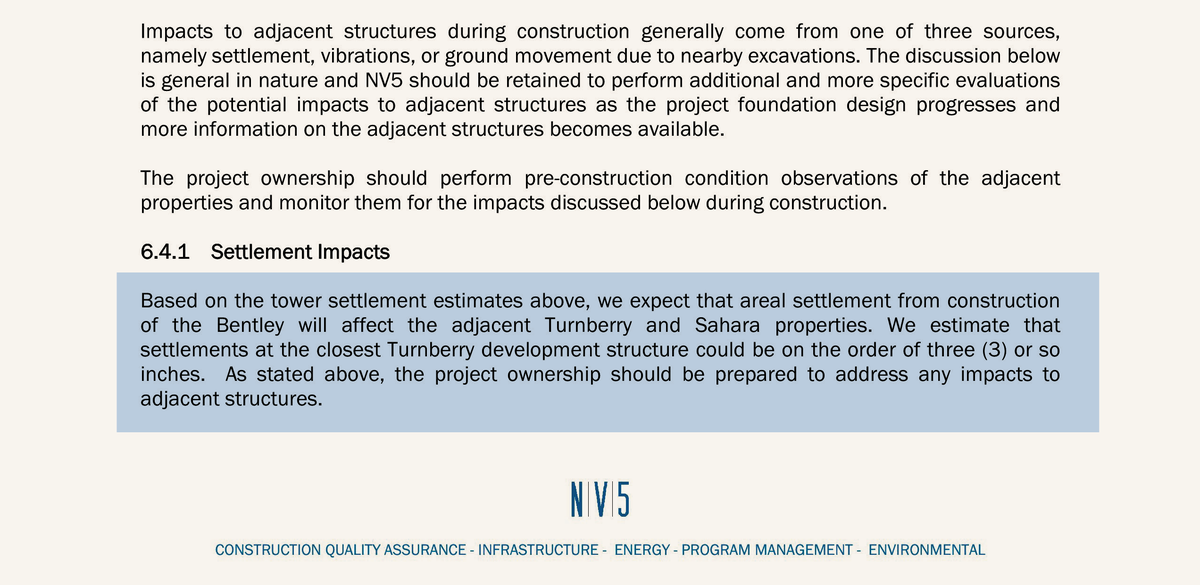
The report, produced in 2023 by the engineering firm NV5 as part of an analysis determining how to construct the building’s foundation, called for drilling pilings down some 200 feet. NV5 did not respond to repeated calls and emails for comment, but its report noted that engineers “expect that area settlement from construction of the Bentley will affect the adjacent Turnberry Ocean Club Residences and Sahara properties. We estimate that settlements at the closest Turnberry development structure could be on the order of three (3) or so inches. As stated above, the project ownership should be prepared to address any impacts to adjacent structures.”
The management for the Turnberry did not respond to requests for comment, while Dezer Development, in charge of the Bentley, declined to be interviewed or respond to a written query. Owners of the Sahara, one of the last vintage motels in Sunny Isles Beach, could not be reached.
That type of vibration-induced settlement is not an isolated concern. Vibration is enough of a recognized issue that new sensor technology is now being marketed to detect even miniscule vibration effects — though few buildings in South Florida monitor them. In the aftermath of the UM study released last December, the town of Surfside also discussed strengthening its building code to further restrict the maximum vibration levels, but the discussion soon fizzled out.
Worries about the effects of water
Another leading suspect is perhaps an obvious one on a barrier island: Water.
It can be a problem by itself and also worsen the effects of construction vibrations, said Sinisa Kolar, a principal based in the Miami offices of the Falcon Group, a structural engineering company operating nationwide.

On a barrier island like Sunny Isles, groundwater sits just below the sand that beachgoers stroll on. Dig a hole down just a few feet, and it’ll start filling in with water. Then add vibration, Kolar said, “and now water allows the sand to float… It’s going everywhere. It’s displacing itself.”
With a heavy building on top and enough water underground, 10 feet of dry sand could be consolidated down to “9 or 8, 7, 6, because sand is now being filled in the gaps everywhere,” he said.
With rising seas pushing groundwater levels up from underneath while also pushing tidal flooding deeper inland and more frequently, the impacts of water on soil stability are likely to only increase, he said.
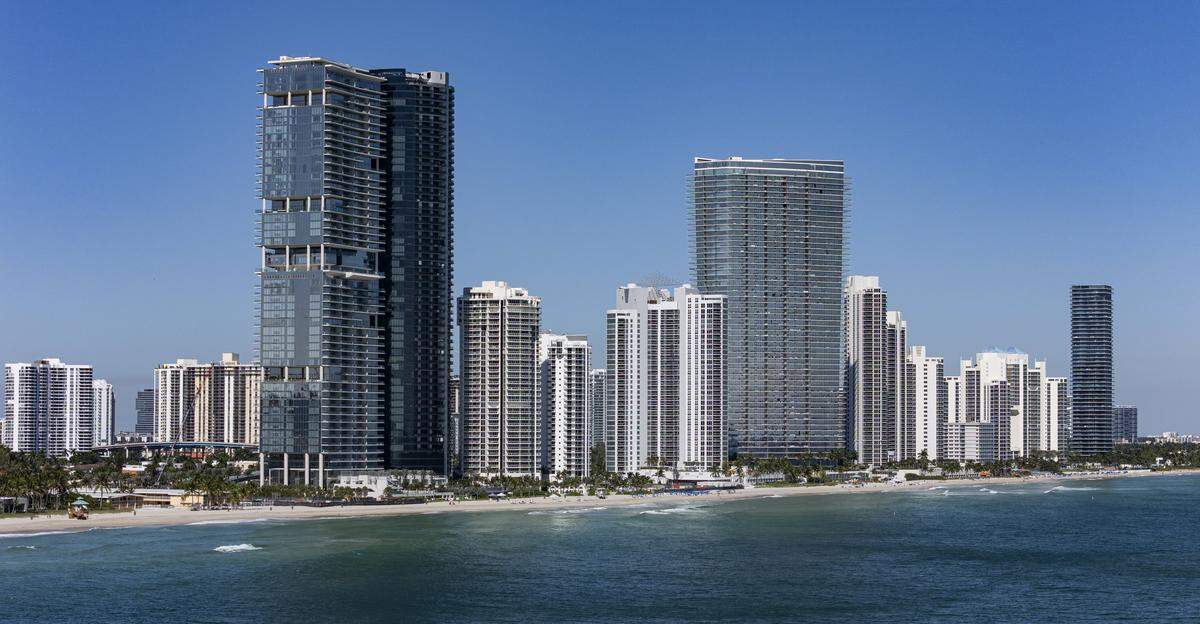
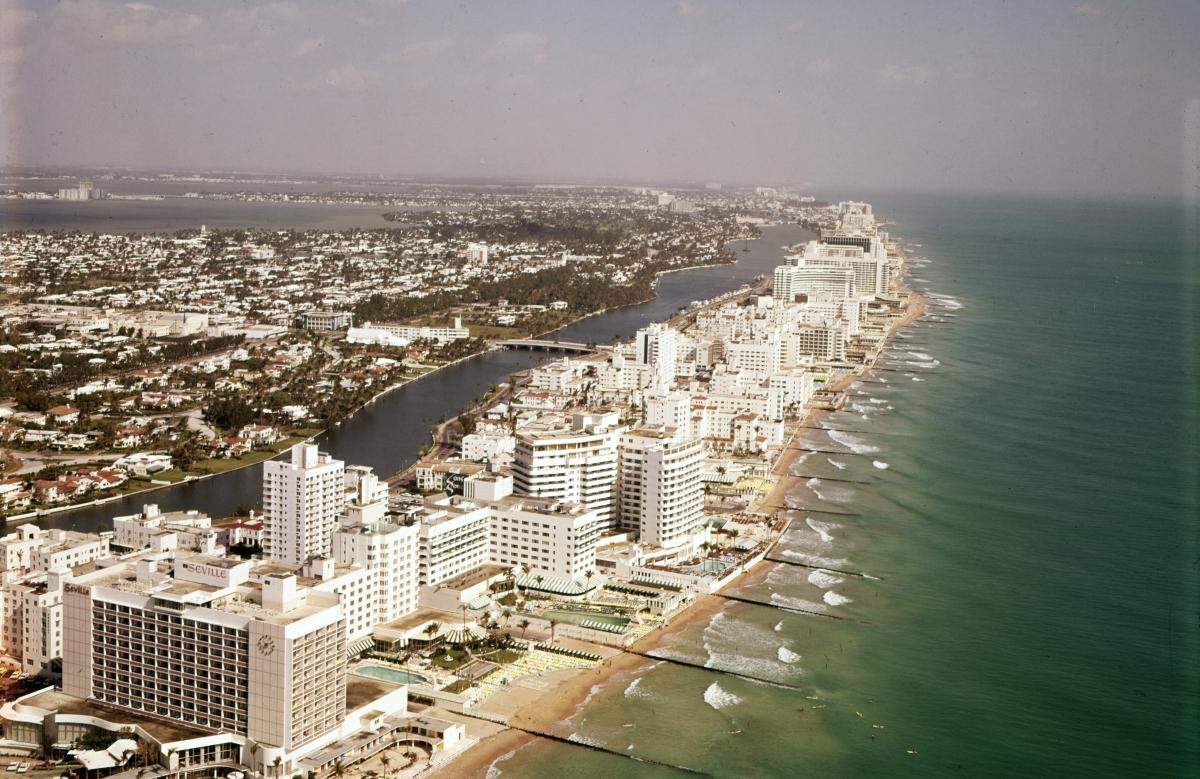
Florida has been building big hotels and condos on barrier islands like heavily developed Miami Beach without significant problems for decades, so engineers have plenty of experience in how to do it. But Sunny Isles has raised the ceiling on tower height. The 23,000-people city ranks #15 on a list of tallest skylines in the US; its high-rises among the tallest and skinniest ever built on the Florida coast. The weight pressing down on relatively small parcels of land is enormous.
The underestimated sinking of some towers along Sunny Isles Beach also suggests something unaccounted for may be at work underground, Kolar said, not “anything that any engineer ever thought of.”
Dissolving our bedrock?
One of those unknowns — at least theoretically — could include ongoing deterioration of South Florida’s limestone bedrock.
Formed some 130,000 years ago, this Swiss-cheese like rock is made of calcium carbonate — essentially a salt. As for any salt, fresh water is its quiet undoing. Each year, rain alone dissolves millions of tons of underground limestone.
So unnoticed under our feet, new holes are forming, and old ones grow larger, said Peter Swart, a geochemist at the University of Miami. What worries him is that we might be accelerating that process – and that nobody knows by how much.
Along any coastline, fresh and saltwater mix relatively close to the surface, forming a mix so destructive to limestone that the places with similar bedrock like the Bahamas and the Yucatan peninsula are now riddled with underground caves popular with divers. The same brackish mix, Swart says, is speeding up the dissolution of the rock ridge much of Miami and South Florida is built atop. Sea levels have already risen by 4 inches since 1993 and continue to accelerate, pushing the impacts deeper and farther inland, according to the National Oceanic and Atmospheric Administration.
“It’s making more holes in the rock, and at some point – I don’t know when – there’ll be a lot of holes there, and there’ll be some kind of, you know, collapse or something,” Swart said. “Whether it enhances the subsidence of these buildings is unknown.”
In South Florida, any potential impact might take centuries — when rising seas are projected to pose far more of a problem for barrier islands — but the dearth of research makes it impossible to predict a timetable or impacts on the ground above.

Ironically, the primary method of keeping fast-developing barrier islands dry from flooding might be accelerating the issue.
On a natural barrier island, rain and stormwater would drain into surrounding waters or slowly trickle into the ground. But Miami-Dade’s barrier islands became so densely developed that most of the ground is covered, said Marina Blanco-Pape, the deputy director of Miami-Dade’s Regulatory and Economic Resources Department.
Adding to the difficulty, groundwater on the islands is incredibly close to the surface, Blanco-Pape said, especially during high tide, when “it could almost bubble up through some stormwater infrastructure.”
So to speed drainage, wells help handle the runoff, operating either by gravity or, even faster, with pumps. Some of the pump wells go down about 100 feet, Blanco-Pape said, and all “go into the limestone”
The wells are no longer the county’s preferred stormwater strategy — too expensive and inefficient, Blanco-Pape says — but thousands of them are being operated. None of the experts the Herald spoke to could say how much freshwater, corrosive to limestone, goes into the wells, and the Florida Department of Environmental Protection has yet to reply to repeated requests for information dating back to October.
Swart can’t say how much of a problem it is or when it might become one. “All I know is that if you’re pumping water – fresh water – into the ground, by the ocean, then you’re probably creating some kind of unnecessary problem,” he said.
Technology to identify the safest areas for drainage wells exists, and the impacts, he said, should be better monitored and studied – particularly along barrier islands.
But South Florida has a long history of avoiding issues that might restrict growth or take into consideration its long-term effects. He called it “the ostrich approach. They stick their head in the sand.”
This story was originally published December 1, 2025 at 5:00 AM.