Sinking skyscrapers? As buildings got bigger in Sunny Isles, so did engineering concerns
READ MORE
Built on Sand
The Miami Herald examined the impacts of continuing to build on Florida’s barrier islands, which are at high risk from rising seas and strengthening hurricanes, as well as the little-understood geologic consequences of packing bigger and heavier high rises on sinking sand.
Expand All
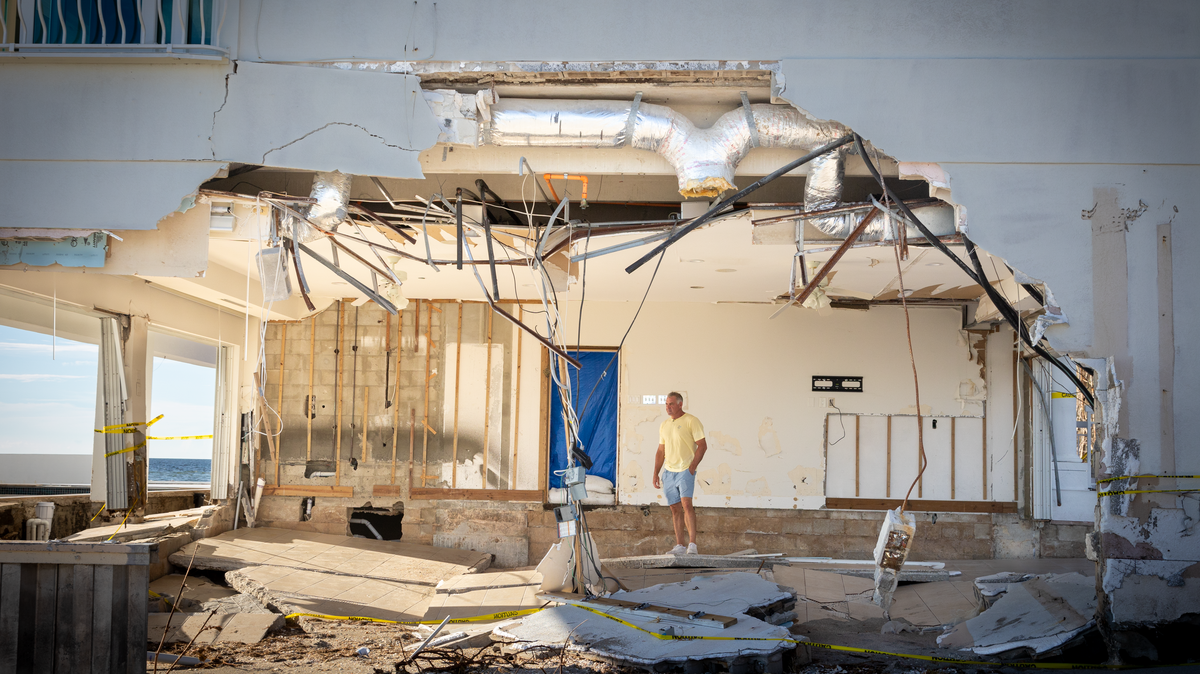
Florida keeps packing people and buildings on barrier islands. It comes at a high cost
Sinking skyscrapers? As buildings got bigger in Sunny Isles, so did engineering concerns
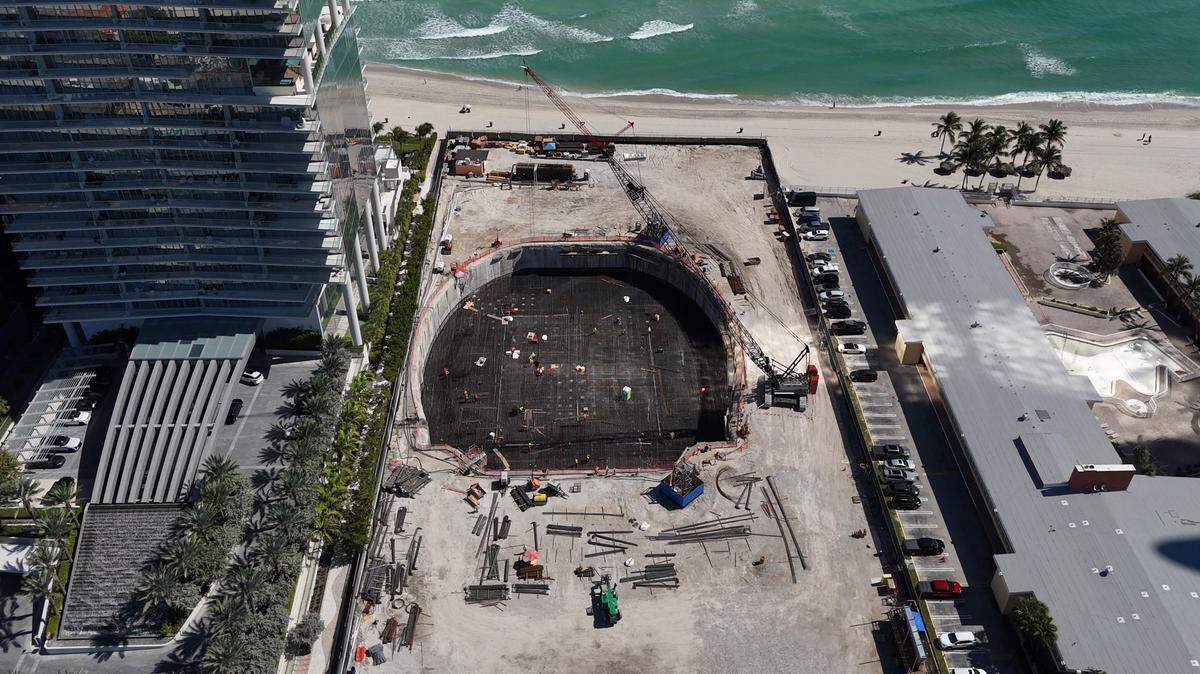
Sinking towers reveal limits of what we know about building on barrier islands
Amid construction boom, experts urge for monitoring of sinking South Florida towers
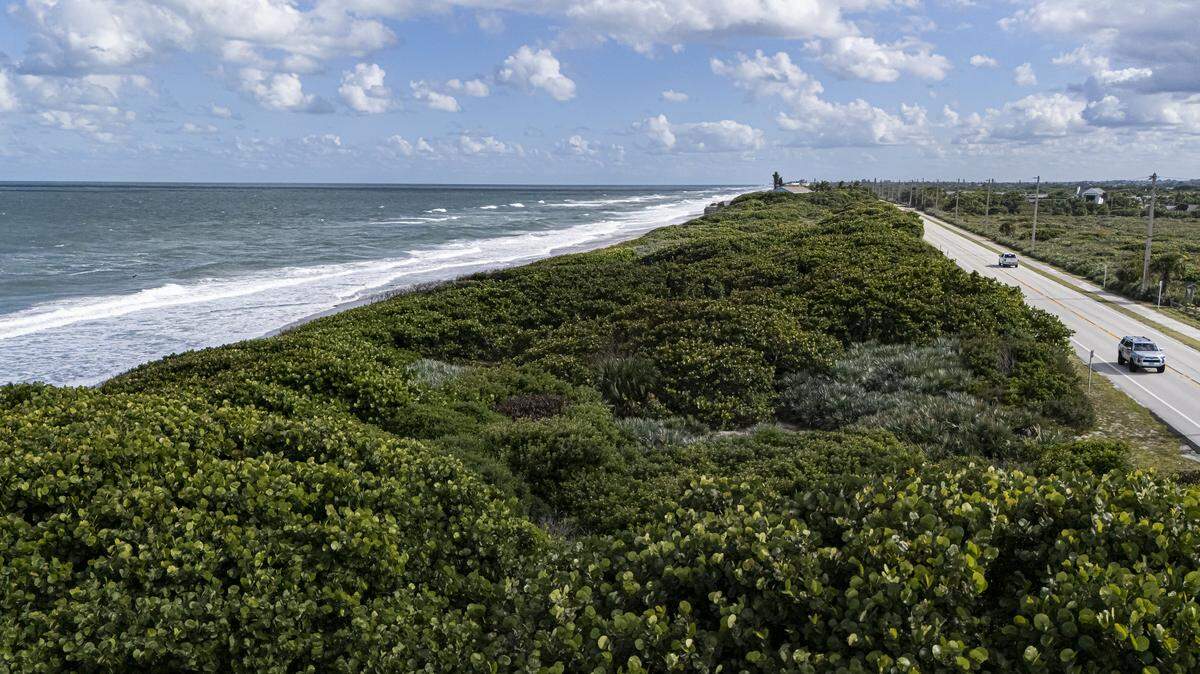
How this Florida barrier island community pushed back against overdevelopment
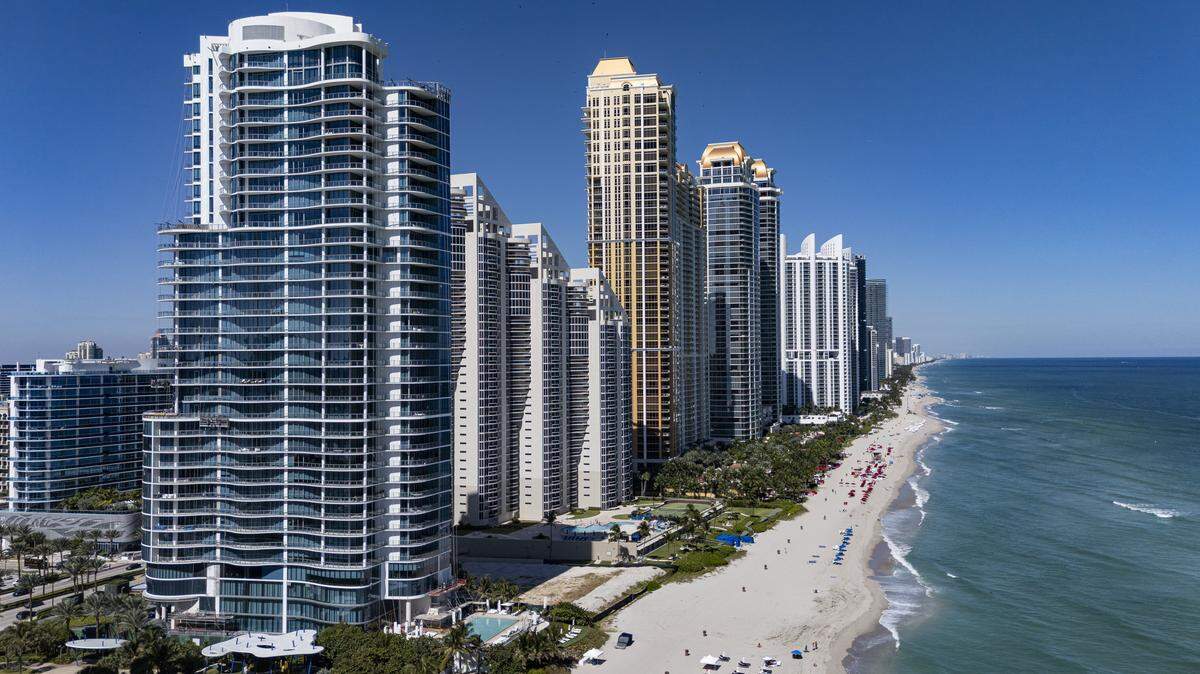
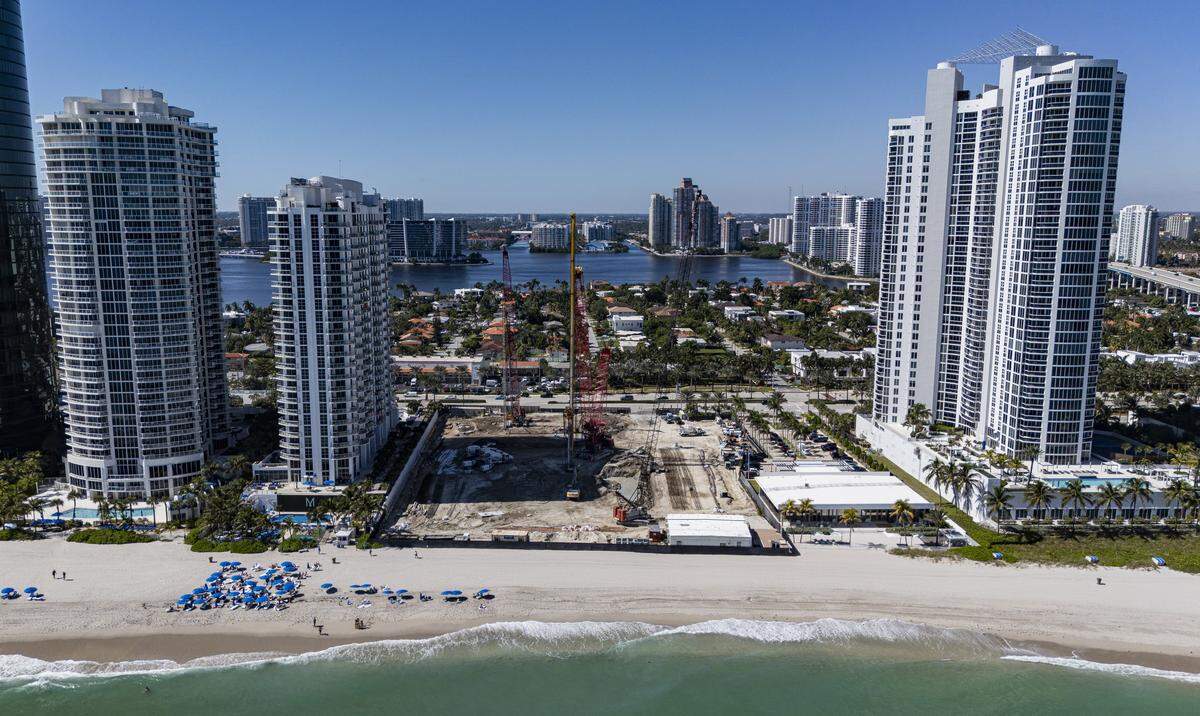
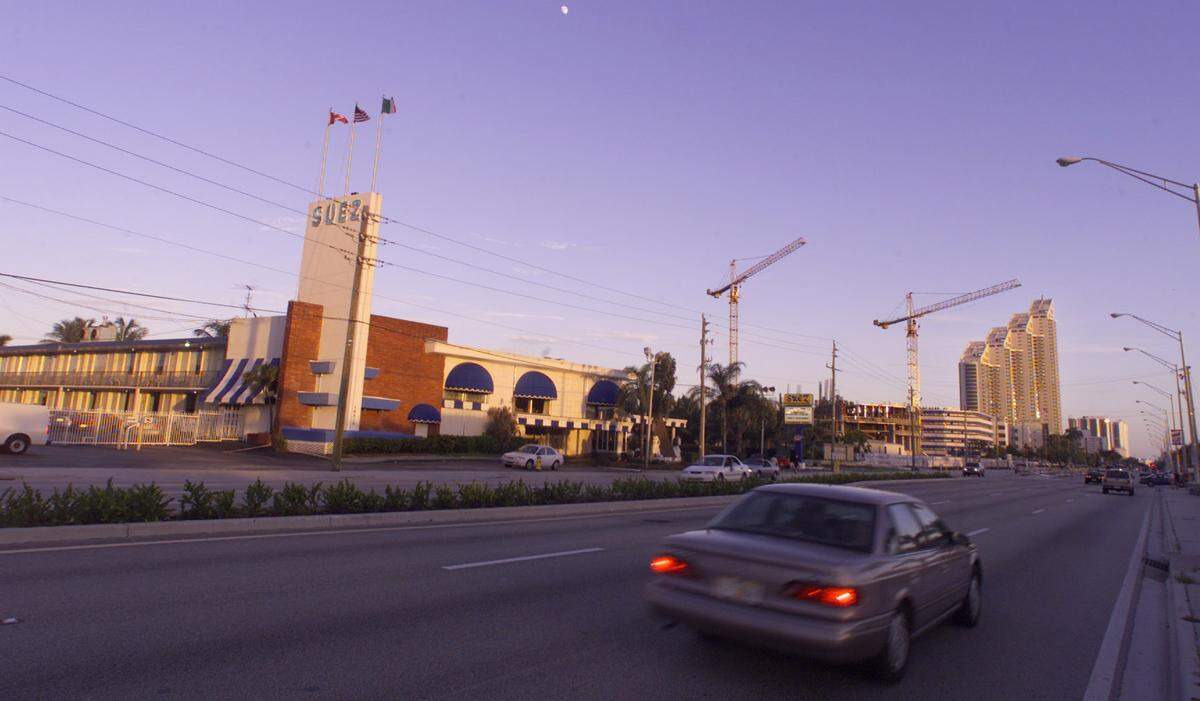
When developers began transforming the kitschy waterfront motels of Sunny Isles Beach into luxury high-rise condos and hotels more than two decades ago, they were confident they understood the challenges of erecting massive towers on shifting sand.
They were wrong.
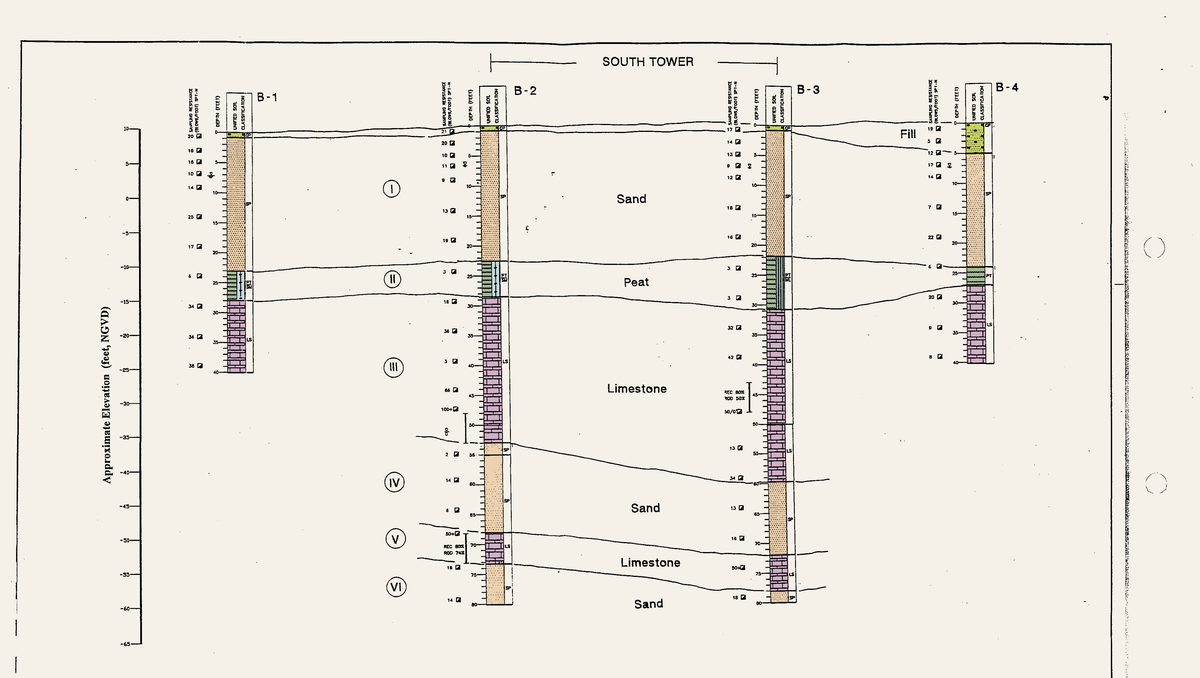
It turned out to be far more complicated than anyone expected. Within just a few years, engineers discovered they’d underestimated how much some buildings would sink on a barrier island composed of varying layers of sand, silt, peat and porous limestone — much the same material underlying many of South Florida’s premier oceanfront properties.
In their own reports filed with the city, geotechnical engineers acknowledged the miscalculations. As one firm wrote a decade into the building boom: “We note that this area of Sunny Isles has had several tower structures settle significantly more than predicted.”

At least a handful of towers have sunk as much as two to three times more than expected, the Miami Herald found in a months-long analysis of dozens of engineering reports covering nearly every building along the city’s multibillion-dollar skyline. The reports, crucial to the design of building foundations, show a long-running struggle to accurately predict the amount of sinking and continuing questions over how to curb it.
Despite ever-deeper foundations for higher and heavier towers — the latest now extend 20 stories down, more than twice as deep as the foundations of the city’s first towers — some oceanfront buildings still settled at amounts that puzzled engineers.
And the most recent reports question whether drilling deeper, even to the limit of current construction methods, is enough. The 2023 geotechnical reports for the Bentley Residences and the St. Regis, now under construction as the city’s tallest towers, sum it up this way: “Prediction of settlement of heavy towers in South Florida is extremely difficult. This task has historically been even more complex and difficult in the Sunny Isles Beach area.”
Any builder will tell you that some settling — the weight of a structure compressing the soil beneath — is normal, the predicted amount accounted for during construction. But experts caution that unexpected sinking, particularly if excessive or uneven, can create costly problems over time: cracked pipes and facades, warped floors, misaligned doors and windows, or driveways that are a step higher than the lobby.

If you own a condo on Sunny Isles Beach, there are some important points to understand: For starters, none of more than a dozen experts the Herald interviewed suggest there are immediate structural or safety concerns and there are no public reports of damage or repairs. Most problems, if they do occur, also can be fixed.
But the experts’ larger concern is that no one is monitoring the post-construction movement of towers that have clearly pushed the envelope on coastal development.
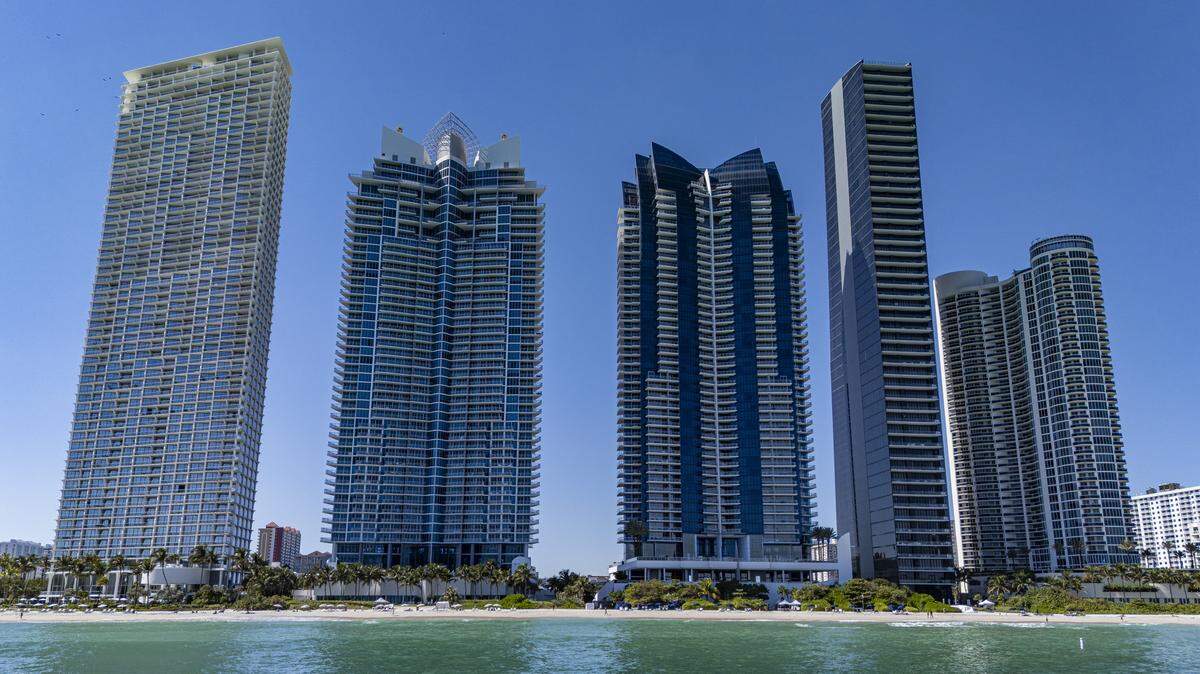
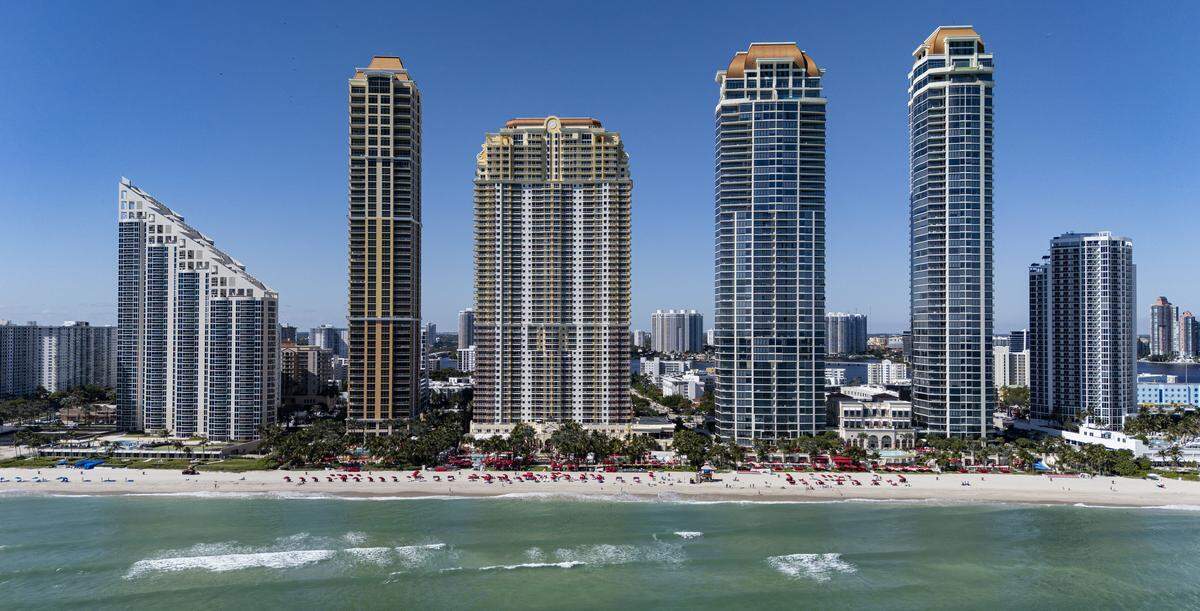
The small city of 23,000 now ranks #15 on a list of tallest skylines in the US; its high-rises among the tallest ever built on the Florida coast. Experts say determining whether sinking slowly continues or stabilizes could dictate whether the industry needs to rethink its lofty ambitions or find new ways to anchor seaside towers — not just on Sunny Isles Beach but in other coastal communities that share similar inherently unstable geology.

“I think this is something that potentially all of South Florida suffers from,” said Anil Misra, chair of the civil and environmental engineering department at Florida International University. “We absolutely need to find alternate ways for foundations and different ways to build, but first we need to find out what causes the settlement.”
Bigger, taller towers are the leading suspects. But other forces, natural and human, might play roles as well. Vibration from nearby construction can contribute and sea rise or something else could be affecting sand deep under our feet. But nobody’s really sure.
“Unfortunately, in my world, in geotechnical engineering, the ‘not sure’ is more than in many other disciplines within engineering,” said Robert Gilbert, chair of the Fariborz Maseeh Department of Civil, Architectural and Environmental Engineering at the University of Texas at Austin, who the Herald shared reports with for review.
UM sinking study rattled residents
The issue first burst into public view last year, when a peer-reviewed study led by the University of Miami, with contributions from five scientific institutions in the U.S. and Europe, found that even today many towers continued to experience unexpected sinking.
The UM-led study, based on satellite measurements, identified 35 buildings sinking between 2016 and 2023 along Miami-Dade’s barrier islands. The long, gleaming row of Sunny Isles’ oceanfront buildings was most affected: About 70 percent of these buildings sank during those eight years between nearly an inch and just over 3 inches, the study found — showing that settling continued years after some were constructed.
In beachfront communities still rattled by the deadly 2021 collapse of the Champlain Towers condo in Surfside, the study drew intense scrutiny — even though federal investigators and other experts had previously ruled out settling as a factor in the tragedy.
“Until this particular study, nobody even thought that these things are happening, or that these things could happen,” said Sinisa Kolar, a Miami-based principal at the Falcon Group, a structural engineering company operating nationwide.
But public records show the findings were no surprise to geotechnical engineering companies hired by developers to help break new ground on the beachfront of Sunny Isles.
In more than 2,000 pages of documents — most filed with the city and a few older ones with Miami-Dade County — the Herald found numerous reports referencing unexpected sinking as early as two decades ago. Throughout Sunny Isles’ massive building boom, which began in the early 2000s, four geotechnical companies have worked on most of the high-rises: URS, NV5, Langan and Kaderabek. None replied to repeated requests for comment from the Herald. Kaderabek was acquired by NV5; its former principal did not respond to repeated requests for comment over several weeks.
To Gilbert, the University of Texas professor, the evolving reports show geotech engineers doing what they are supposed to do: applying new data and past lessons to push developers to strengthen foundations on buildings unlike any that preceded them on South Florida barrier islands.
Florida has been packing big condos and hotels on its beaches for decades, but nothing like what has gone up in Sunny Isles. Miami Beach’s iconic Fontainebleau, for example, opened in 1954 with its 11 stories supported by a large and distinctive curving footprint. Sunny Isles’ luxury towers reach four, five, even nearly six times higher — greatly increasing the pressure on the ground below.
Within just a half-dozen years, records show engineers and developers began going deeper in an effort to control unexpected sinking. By 2012, for example, the geotech engineers for the Chateau Beach recommended drilling pilings 135 feet deep – about 50 feet more than for the earlier Jade Beach and Trump Towers, described as comparable in weight.
“Every time you do something you’ve never done before, you learn,” Gilbert said.
But the geotech reports, together with the UM study, show there is lots of learning left to be done about settlement concerns that remain largely unknown to the public and unmonitored by any regulators.
“Clearly, from the engineering side, the state of the art is not refined enough to take into account the kind of geology that South Florida has,” said FIU’s Misra, who the Herald shared reports with for review.
Despite the questions surrounding settlement, it remains unclear what — if any — problems the issue has caused. While the geotech reports document surprising settling in a string of beachfront buildings, none point to any resulting repairs. The reports also don’t mention how many buildings, exactly, have been impacted, or whether and how the additional settling was addressed. The UM study found and identified 35 buildings — more than 20 of them in Sunny Isles — that experienced settlement long after construction.
The Herald reached out to developers, homeowner associations or management companies of each high-rise mentioned in this story. Most declined interview requests or to answer detailed queries or did not respond at all. The Trump group (unaffiliated with the president), which built the Acqualina chain of high-rises on Sunny Isles Beach, said that “the building is settling as designed.” Fortune International and the Chateau Group said “responsible and safe development has always been, and will continue to be, the highest priority”.
The mayor of Sunny Isles Beach, Larisa Svechin, also downplayed any sinking concerns, echoing comments she made after the UM study last year. She told The Herald that developers in Sunny Isles “work with world-class engineers, often exceeding safety standards,” and that the city had not received any reports of structural issues related to excessive settling.
The underlying challenge of barrier islands
Ideally, large buildings are anchored to solid, immovable bedrock. Many of the geotech reports — which are produced before the buildings go up — point to the extreme challenges of construction on sand-dominated barrier islands like Sunny Isles, where stable strata can be hard to find.
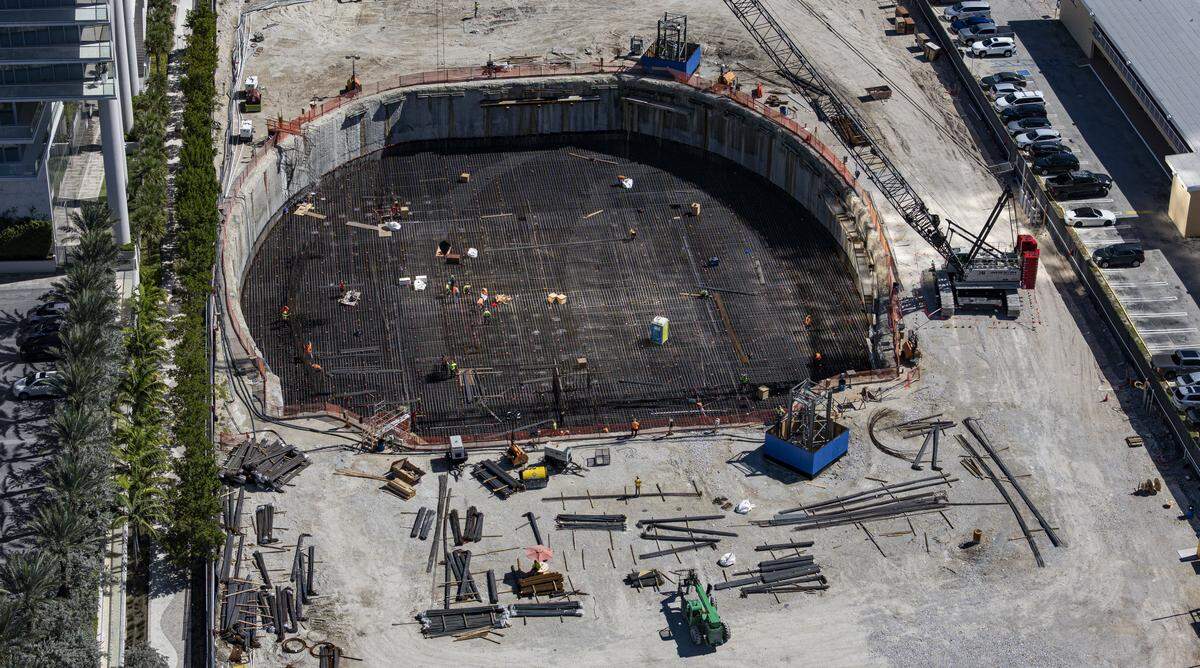
That wasn’t really an issue for the quirky mom-and-pop low-rise hotels that defined Sunny Isles Beach from the 1950s until the early 2000s. But to support new, massively heavier modern towers, engineers needed to drill dozens, even hundreds of augered cast-in-place (ACIP) piles – essentially, oversized columns to transfer the weight of a building through the mishmash of sand, silt and peat into deeper, more solid layers.
For the 50-floor Acqualina Resort and Residences on the Beach, among the first on the beach, geotechnical engineers in 2001 outlined several proposals to tackle settlement in their report. Pilings of 75-feet were an option, though “the potential exists that the settlement of the tower would be significant.” More stable, 130-feet deep pilings, on the other hand, “will be more expensive and time-consuming.”
Eventually, developers settled in between – 118 feet deep. That choice reduced settlement, “but not to the degree initially envisioned,” the same engineering company acknowledged a decade later in a report for a new project. Lighter sections of Acqualina Resort sank 7 inches, heavier ones 10 inches. Typically, the foundation textbook advice is for engineers try to limit it to around 1 to 3 inches, depending on the soil, though experts say more is possible and can cause little if any damage as long as it’s accounted for.
Reports by another company, Kaderabek, also show how much the thinking on foundation design changed within a handful of years. In 2005 and 2007, engineers projected a manageable 6-inch settlement for Trump Towers 1, 2 and 3.
“We have confidence in our predictions,” the firm concluded at the time.
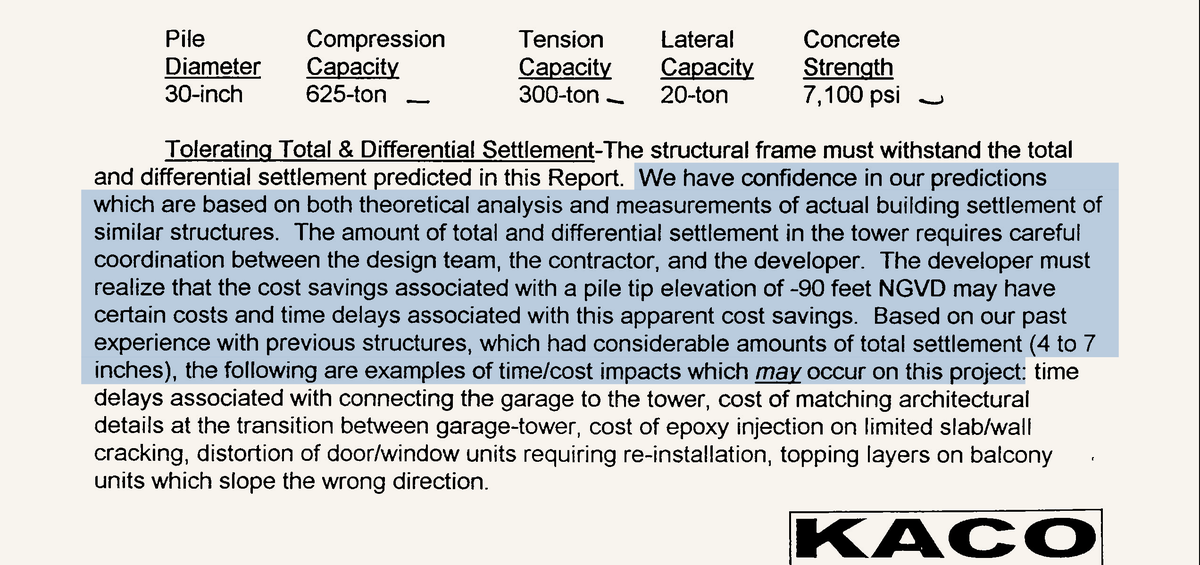
By 2011, their geotech analysis for a new yet-to-be-built project, the Porsche Design Tower, reflected eye-opening real world results. The Trump Towers and Jade Beach, another building, each had settled 9 inches, the report notes. That was 3 inches more than predicted for Trump Towers. And 5 to 6 inches more than the 3 to 4 inches originally predicted for the Jade Beach. The UM study published last year also suggests more settling has occurred since.
A few extra inches might sound small, but experts told The Herald that can mean the difference between a low-maintenance building and one with an array of potential problems: driveways a step higher than the lobby; broken or leaking underground pipes and utilities; poorly draining balconies. Because of that, settlement predictions usually err on the side of caution.
“Normally, it’s lower than what they predict,” said John Pistorino, an engineer with 40 years-plus experience who helped write South Florida’s building code and sits on Florida’s board of engineers.
Like several experts interviewed for this story – engineers with years of construction experience in South Florida as well as distinguished university academics – Pistorino expressed surprise at the Herald’s findings from the geotech reports.
So did Rick Slider, head of Slider Engineering, which works on prestigious high-rises across six offices in South Florida and the Tampa Bay area: “Well, obviously, that is a problem...if you’re anticipating four inches, and it shows up at nine.”
The most potentially problematic scenario, experts told The Herald, would be if settlement turns “differential.” That’s construction-speak for some parts of a building sinking more than others. Minor differential can go largely unnoticed. But as differential settlement increases, so does the possibility of cracks to walls or even damage to structural elements.
Several geotech reports also raise it as a concern. In the 2011 report written before construction of the Porsche Design Tower, Kaderabek engineers made the case for deeper foundations, pointing specifically to the potential risk of differential settlement. With 85-foot deep pilings, they estimated the building could settle about 14 inches, with a high chance of uneven sinking. The “prudent” recommendation was to drill down at least 135 feet to prevent “cracking of structural members, structural frame distortion, and balconies with reverse drainage.” According to an industry news site, developers decided to be more than prudent, drilling even deeper, to 155 feet.

In construction, like any business, cost is often a factor in decisions. Several reports discuss options for deeper foundations but also highlight the added expenses of doing so. In the end, said Jean-Pierre Bardet, the former dean of the University of Miami’s school of engineering, it’s common for developers to balance risks of some settlement against the costs of, for example, drilling deeper foundations that might run millions of dollars more in time, labor and material.
“There is a decision process which is made by the owner, and there is a financial dimension to the complete aspect of the project,” he said. “Deep foundations are very expensive.”
Owners, not developers, likely to pay repair bills
The Leaning Tower of Pisa is the most famous example of uneven sinking but also evidence that such buildings can stand for centuries. But modern luxury skyscrapers, including in New York City and San Francisco, also have been impacted. In some rare cases, the most severely affected are unoccupied and owners have filed lawsuits against developers seeking hundreds of millions of dollars.
In South Florida, engineering repairs triggered by excessive settling could add to already extraordinarily high maintenance costs for coastal buildings exposed to corrosive salt water spray every day and facing added risks from rising sea levels and tides and stronger hurricanes.
And under Florida law, it’s condo owners and associations — not developers and construction companies — who are most likely to face the bills if significant problems emerge decades down the road. Florida allows lawsuits over structural defects for only seven years. That was reduced from ten in 2023 after industry lobbying, which is a time frame more common across the U.S. Some countries in Europe stretch that to 30 years.
“It is a short period of time for something to uncover itself,” said Frank Soto, a lawyer specializing in high-rise construction defect litigation in Miami.
That means continued settling could, in the long term, potentially leave homeowner associations with a “huge expense,” said Kolar, the Falcon Group engineer who has worked with some of the buildings identified in the UM study. If prospective owners knew their building faced continuous, massive repair bills from sinking damage, “nobody’s ever going to buy,” he said.
But with no formal monitoring program, experts say there is little incentive for developers or even current owners to chart if sinking continues or stabilizes. Ongoing settlement and the possibility of repairs could potentially affect resale or property values.
Hector Silva, president of Prive Advisory Group in Miami, which consults prospective buyers of luxury condos, said that the Herald’s findings and the UM-led study are “definitely, at this point, important public information that we have a duty to disclose to buyers.” That’s even with the uncertainty if and how unexpected settlement might affect long-term maintenance costs.
While it “would probably give buyers some pause,” he said, “some might not care, because they just might see this as one among a flurry of potential environmental and climate risks for being on the ocean.”
How high is too high?
While the reports document surprising settlement, some key questions are outside their scope. Is this underlying geology of this stretch of Sunny Isles somehow different from other barrier islands in South Florida? How many buildings have settled beyond predictions? What was the exact reason and was there damage?
Most important: will towers continue to sink, as the UM-led study showed, or will they stabilize? That’s unknown because long-term settlement isn’t monitored by cities or building departments. The authors of last year’s UM study and the experts The Herald spoke to have called for better monitoring and for data to be shared publicly, so that independent experts can help assess what’s happening.
Meanwhile, engineers in Sunny Isles Beach continue grappling with the already “extremely difficult task” of calculating and controlling settlement.
In 2023 reports for the Bentley Residences and the twin towers of the St. Regis Residences, which when completed will rank among the tallest ever on the Florida coast at 700-plus-feet, geotech engineers included settlement data from eight towers already built along the city’s 2.5-mile-long Sunny Isles beachfront. The towers, all above 600 feet with similar foundations, showed “considerably different settlement behavior” ranging between 3 and 14.5 inches.
The report does not name the eight buildings, but notes that the trend toward even more luxurious, and, thus, heavier buildings might play a role in unexpected settlement.

In the past, the Federal Aviation Administration had long been the agency putting a ceiling on the height of many Miami-Dade towers, constraining developments in Sunny Isles Beach to 649 feet to facilitate airplanes landing at Miami-Opa-Locka Executive Airport. But the FAA has also been granting exemptions. The Estates at Acqualina North and South are 672 feet, and the developers who acquired the low-rise Miami Beach Club for $130 million have requested an exception for an 820-feet tower that, if approved, would take over the title as tallest in the city.
Now, it’s the ground, not airspace, that might finally cap developers’ lofty ambitions. With the Bentley, developers decided to shave about three floors off to make it lighter, according to the latest geotechnical report.
For the 716-feet building, engineers recommend sinking supports down 200 feet. For comparison, that’s more than twice as deep as the first and more modest oceanfront towers in the city. It’s even deeper than the foundation of the Burj Khalifa, the world’s tallest building erected on the sands of Dubai. That stands 2,722 feet — about 4 times higher than the towers of Sunny Isles.
Drilling down that far is almost unheard of, said FIU’s Misra. “Two hundred feet of foundation is unbelievable… it is possible, but it is amongst the longest,” he said. The Bentley’s geotech report also points out that it’s the maximum depth that can be achieved with the piling system currently used.
Other foundation systems and ways to mitigate settlement are discussed in the report, but dismissed. The conclusion: Too “fraught with practical challenges” for the sandy barrier island.
This story was originally published December 1, 2025 at 5:00 AM.