
Events are always in demand, and if you are trying to figure out how to become an event planner, you are looking at a field with real opportunity.
More than 2 million weddings were held across the U.S. in 2025, and weddings are only one part of the industry. Businesses host conferences, nonprofits plan fundraisers, and families celebrate birthdays, graduations, and other big moments every day.
But how do you turn planning events into an actual career?
The job includes fun things like touring venues and creating beautiful setups, but planners also manage budgets, vendors, timelines, contracts, and client expectations.
Breaking in is its own problem when nobody has hired you yet, and starting out with no event experience covers the routes people actually use.
In this career guide, I’ll explain what event planners do, what you really need, and how to gain experience and find work.
Key Takeaways
- No Single Path: A degree helps with some jobs but is not always required.
- Experience Comes First: Start with volunteer work, assistant roles, or smaller events.
- More Than Creativity: Planners manage budgets, vendors, deadlines, and changes.
- Build Proof: Use photos, materials, and testimonials in your portfolio.
- Expect Different Hours: Events often happen at night or on weekends.
See What Event Planning Is Really Like
Event planners organize the details that keep an event on schedule and within budget.
The work may include:
- Discussing the event’s goals with clients
- Setting the date, location, guest count, and budget
- Researching venues and checking availability
- Requesting and comparing vendor proposals
- Negotiating services and reviewing contracts
- Building timelines, floor plans, and seating arrangements
- Coordinating food, transportation, lodging, and equipment
- Confirming details with vendors and event staff
- Overseeing setup, registration, and breakdown
- Monitoring the event and fixing unexpected problems
- Reviewing final bills and approving payments
Some planners also help shape the theme and guest experience, while others focus more on logistics. The job often includes nights, weekends, travel, and long hours around major events.
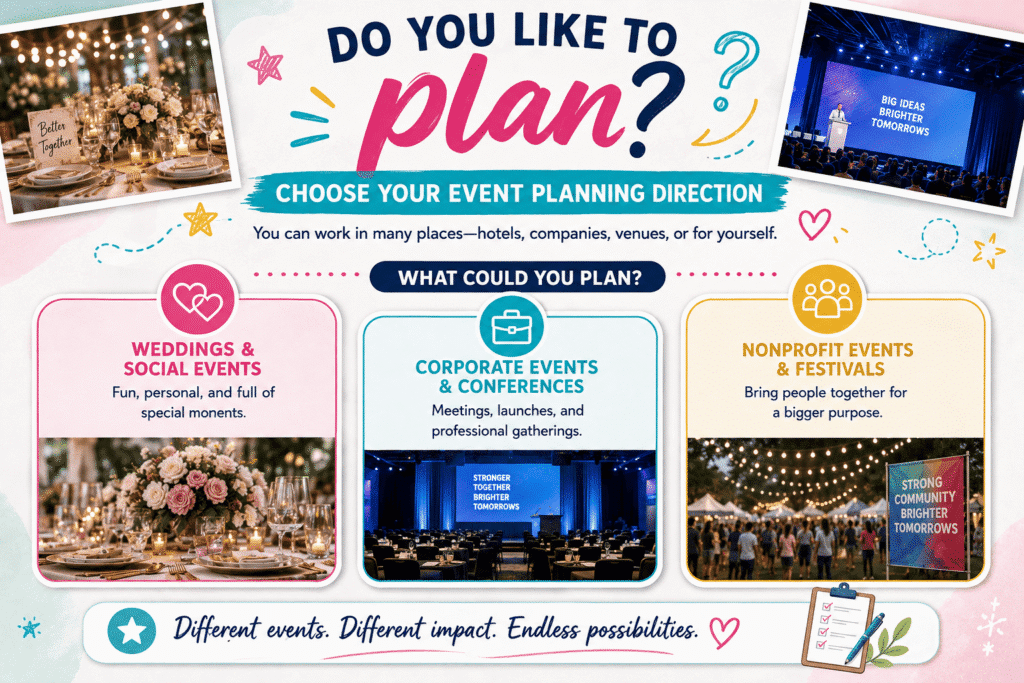
Choose Your Event Planning Direction
You can work for a hotel, company, venue, or event agency. Another option is assisting an experienced planner, coordinating events for one venue, or working independently and finding your own clients.
What Could You Plan?
- Weddings and social events include ceremonies, receptions, birthdays, showers, and reunions. These usually involve personal details, creative themes, and emotional clients.
- Corporate events and conferences include meetings, launches, retreats, conventions, and seminars. Expect firm schedules, speakers, registration, travel, and technology.
- Nonprofit events and festivals include fundraisers, galas, concerts, fairs, and public celebrations. These may involve sponsors, donations, limited budgets, large crowds, and added safety planning.
You do not have to stay in one category forever. Choosing a direction now simply helps you find relevant experience and create a more focused portfolio.
Corporate work is the most structured of those directions, and the steps to become a corporate event planner differ enough from weddings and social events to deserve their own plan.
Know What You Actually Need
There is no single degree, major, or certification required for every event planning path.
The Bureau of Labor Statistics says event planners typically need a bachelor’s degree, especially with hotels, corporations, and convention centers.
Common majors include hospitality, business, and communications. Other employers may accept relevant experience instead, while independent planners can start without a degree but must follow local business and permit requirements. Event planner certification is optional and mainly provides extra training or credibility.
| Item | Required? | Clear Answer |
|---|---|---|
| College degree | No | Not legally required, although some employers require one |
| Planning certification | No | Completely optional |
| Previous experience | No | Not legally required, but commonly expected by employers and clients |
| Business registration | Yes, for business owners | Required when your state or local government requires your business type to register |
| Local business license | Yes, where required | Independent planners must follow the rules for the city or parish where they operate |
| Event permits | Yes, for covered events | Required when an event involves regulated activities such as alcohol, food sales, street use, or large public gatherings |
You do not need to collect certifications before helping with your first small event. Training can teach the process, but experience shows you how to manage real clients, vendors, deadlines, and changes.
Strengthen Your People & Business Skills
Event planning gives you the chance to work closely with people and bring their ideas to life. Clients are counting on you to understand what they want, respect their budget, and help make the experience special.
People Skills You Will Use
- Listen before offering ideas
- Ask clear questions
- Explain prices, limits, and changes
- Set realistic expectations
- Handle criticism professionally
- Keep clients updated
- Communicate with vendors and staff
- Stay calm around stressed clients
- Solve disagreements without escalating them
A beautiful setup will not make up for ignored messages or unclear expectations. Good communication helps clients feel supported and can lead to reviews and referrals.
Why Business Skills?
Independent planners also need to know how to price their services, follow a budget, use contracts, send invoices, and track payments and expenses. They should keep personal and business finances separate while learning how to market their services and maintain client records. Business courses, books, mentorship, and local small-business programs can help fill any skill gaps.
Pro Tip: If the business side is new to you, a short course can help you build practical planning skills and prepare for paying clients.
Get Great Experience Without Starting Too Big
You can start with smaller events and build your experience from there. They give you plenty of room to learn before moving on to larger weddings or business conferences.
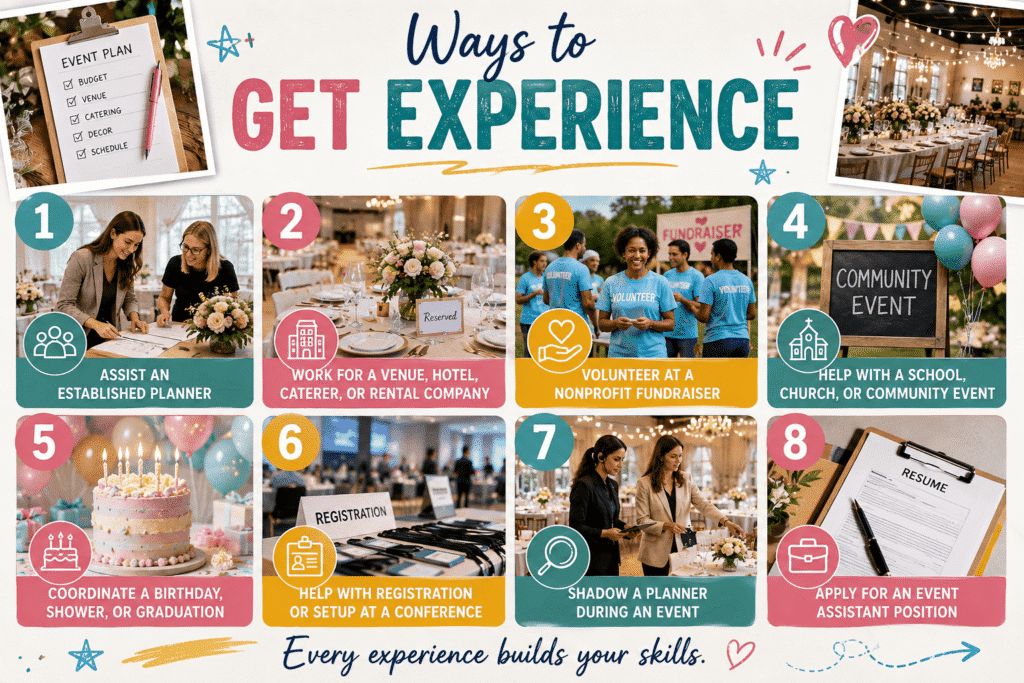
Ways to Get Experience
- Assist an established planner
- Work for a venue, hotel, caterer, or rental company
- Volunteer at a nonprofit fundraiser
- Help with a school, church, or community event
- Coordinate a birthday, shower, or graduation
- Help with registration or setup at a conference
- Shadow a planner during an event
- Apply for an event assistant position
Try to do more than decorate. Help with the timeline, guest list, budget, vendor communication, floor plan, or setup schedule.
After each event, record what worked, what went wrong, and what you would change. That is how basic experience turns into better planning skills.
Build Your Portfolio and Start Finding Work
A portfolio shows employers and clients what you can actually do.
What to Include:
- Event Photos: Show the full space, tables, signs, decorations, and setup.
- Planning Materials: Include timelines, checklists, floor plans, and vendor schedules.
- Creative Work: Add mood boards, themes, color palettes, or invitation concepts.
- Testimonials: Request short reviews from clients, organizers, or planners you assisted.
- Event Details: Mention the guest count, event type, and results when appropriate.
- Your Exact Role: Explain what you personally planned or managed.
From there, use your work to apply at venues, hotels, and event companies. Independent planners can share it through a simple website or social page, connect with local vendors, and ask previous clients for referrals. If you still need experience, look for assistant roles or begin with smaller planning packages.
My Final Take on Becoming an Event Planner
Event planning can be such a fun career if you love being creative, meeting people, and turning someone’s ideas into an experience. You get to help create days that people may remember for years, which is a special job.
Just know that the pretty setup is only one part of it. You will also manage budgets, timelines, vendors, questions, and last-minute changes. That does not mean you need to know everything on day one. Start by helping with smaller events, pay attention to what works, and save examples for your portfolio. With each event, you will feel more confident, make connections, and get closer to the planning career you want.
Check out this full review of the best event planning courses to find one that matches how you want to learn.
FAQs
What does an event planner do from start to finish?
An event planner manages all aspects of an event, including setting goals, researching venues, negotiating with vendors, creating timelines, coordinating invitations, and overseeing the event on the day to ensure it runs smoothly.
What essential skills are needed to become a successful event planner?
Key skills include strong organization, clear communication, budgeting ability, problem-solving under pressure, time management, and creativity to design memorable experiences that fit client goals.
Do I need a degree to become an event planner?
A degree is not mandatory, but studies in hospitality, communications, marketing, or event management can strengthen your application and prepare you for internships or larger employers. Short online courses can also be practical alternatives.
How can I gain experience and build a portfolio as a beginner event planner?
Start by volunteering at local events, assisting with community fundraisers, or interning at agencies. Document each project with photos, budgets, timelines, and testimonials to create a compelling portfolio showcasing your skills and problem-solving.
What are some effective strategies to find clients and launch an event planning career?
Networking through local professional groups, industry events, and online platforms like LinkedIn is crucial. Define your services, develop a professional website and social media profiles, and begin with manageable events to build reputation and referrals. For a step-by-step path to going independent, see our guide on how to start an event planning business.

![Education.com Coupon Code [Verified Discounts]](https://www.miamiherald.com/careers-education/wp-content/uploads/sites/2/2026/10/education-com-promo-code-mh-1024x768.jpg)
![AATBS Discount Codes [Verified Coupons]](https://www.miamiherald.com/careers-education/wp-content/uploads/sites/2/2026/10/aatbs-promo-code-mh-1024x768.jpg)
![Pocket Prep Discount Code [Verified October 2026 Coupons]](https://www.miamiherald.com/careers-education/wp-content/uploads/sites/2/2026/10/pocket-prep-promo-code-mh-1024x768.jpg)
![Hosting.com Coupon Discounts [Verified October 2026 ]](https://www.miamiherald.com/careers-education/wp-content/uploads/sites/2/2026/10/hosting-com-promo-code-mh-1024x768.jpg)
![At Your Pace Online Coupon Code [Verified Discounts]](https://www.miamiherald.com/careers-education/wp-content/uploads/sites/2/2026/10/aypo-promo-code-mh-1024x768.jpg)
![Coursera Coupon Discounts [Verified October 2026 ]](https://www.miamiherald.com/careers-education/wp-content/uploads/sites/2/2026/10/coursera-promo-code-mh-1024x768.jpg)