
If you want to know how to start an event planning business, the good news is you do not need a huge team or fancy office on day one. Planning events for fun is one thing.
Running a business means clients, payments, contracts, vendors, and real deadlines.
That sounds like a lot, but you do not need a huge team or fancy office to start. You need a legal setup, clear services, proof of your skills, and a way for clients to book you.
Today, I’ll walk you through the six main steps for turning your planning skills into a real event business.
Key Takeaways
- Handle the Legal Setup — check your state and local rules first.
- Create Clear Services — decide what clients can book.
- Build a Real Brand — choose a name people can remember.
- Show Your Skills — create an honest starter portfolio.
- Prepare for Bookings — set up your website, payments, and planning tools.
1. Handle the Legal Setup First
You will want to start by checking the business rules in your state, city, and county or parish. This is what even those with business degrees find tricky.
There is no single event planning license used across the country. Your requirements depend on your location, business structure, and services.
The main legal steps may include:
- Choosing a sole proprietorship or LLC
- Registering the business
- Filing a DBA or trade name
- Getting local licenses or permits
- Applying for an EIN or state tax ID
- Checking home-business rules
- Buying business insurance
You also need a written client contract. It should cover your services, payments, cancellations, date changes, extra work, and each person’s responsibilities.
Not every business needs the same forms. Check official state and local websites before accepting money. Keep the order simple:
Choose a structure → Register → Get required IDs and permits → Get insured → Prepare your contract
2. Choose Your Events, Services, and Rates
Now decide what people can hire you to plan.
You might focus on weddings, birthday parties, showers, company events, fundraisers, or small community events.
Choose events you already understand. Your first booking does not need to be a giant wedding with 300 guests.
Next, turn your help into clear services.
| Service | What You Handle |
|---|---|
| Full Planning | Budget, venue, vendors, timeline, and event day |
| Partial Planning | Specific details the client still needs help finishing |
| Event-Day Coordination | Vendor arrivals, setup, timeline, and event flow |
Write down exactly what each service includes. This stops a small package from slowly becoming months of extra work.
When setting rates, count all your time. Event planning includes meetings, emails, research, travel, setup, cleanup, and the event itself.
You can use a flat package rate, hourly rate, or percentage of the event budget. Choose one that fits your services and local market.
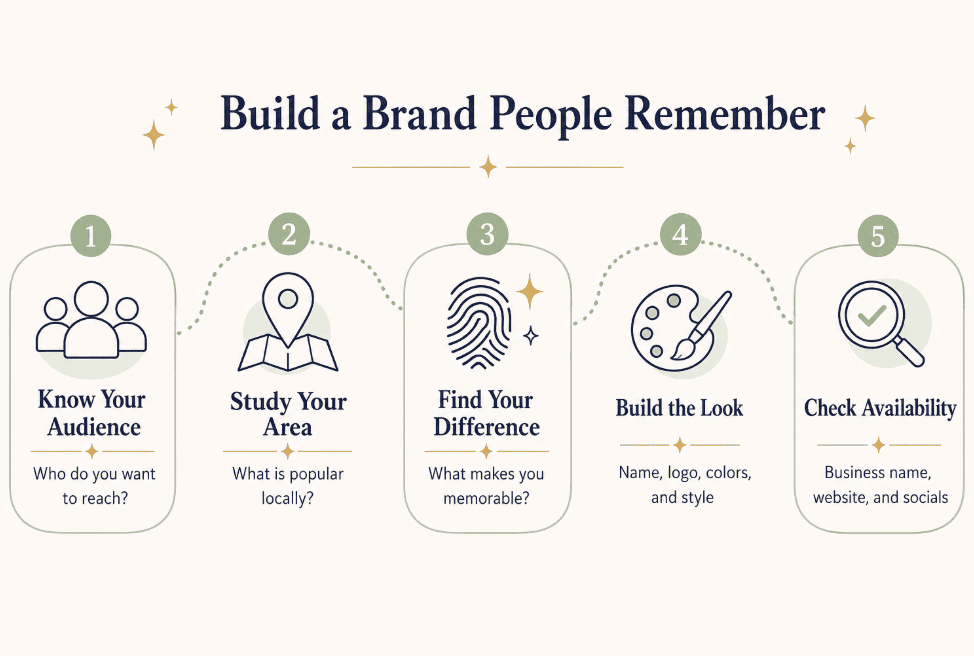
3. Build a Brand People Can Remember
A strong brand can help your event planning business get noticed and attract the right clients.
- Know Your Audience: Decide whether you want to reach couples, parents, businesses, nonprofits, or another group.
- Study Your Area: Look at local planners and event planner career outlook data, popular event styles, and services already offered.
- Find Your Difference: Choose something that makes your business easy to remember, such as your event type, style, service level, or client experience.
- Build the Look: Create a name, logo, colors, and overall style that fit your target audience.
- Check Availability: Search business records, website addresses, and social media usernames before using the name.
4. Find the Right People Early
You do not have to figure everything out alone. Start building connections before your first booking.
- Meet Local Vendors → Introduce yourself to venues, florists, photographers, caterers, DJs, and rental companies.
- Ask More Questions → Learn how events work in your area, what clients request, and which problems come up most often.
- Find People You Trust → A few reliable contacts can help with advice, referrals, pricing questions, and future events.
- Put Yourself Out There → Confidence grows when you talk about your business, share your ideas, and let people know what you are building.
The right connection could lead to your first vendor partnership, referral, or client.
5. Build Your Portfolio and Website
Clients need somewhere to see your work and learn about your services.
If you have not booked an event yet, create a sample setup, volunteer, assist another planner, or plan something for someone you know. Include clear photos and label sample work honestly.
Structured training can also help you build skills before your first paid booking. See our roundup of the best event planner courses for options worth comparing.
Create a simple website with:
- Services and rates
- Portfolio photos
- Service area
- Contact form
- Business email
Set up your inquiry, contract, and payment process. Test every form and link before publishing.
6. Prepare Your Planning System
Do not wait for your first client before creating the tools you will use.
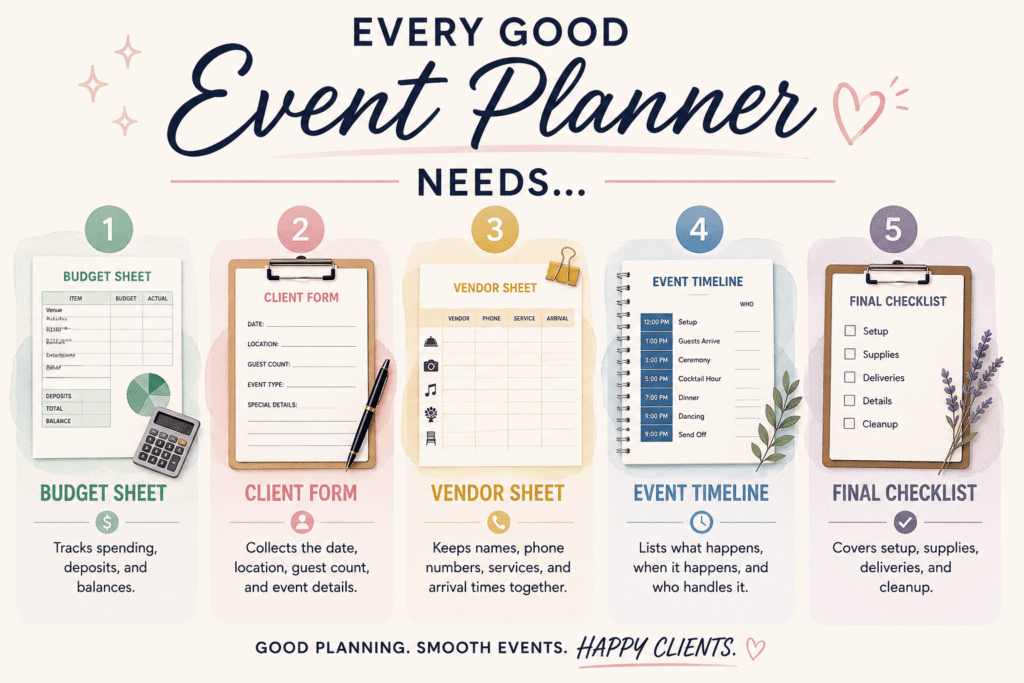
Every event needs a few basic documents:
- Budget Sheet → Tracks spending, deposits, and balances
- Client Form → Collects the date, location, guest count, and event details
- Vendor Sheet → Keeps names, phone numbers, services, and arrival times together
- Event Timeline → Lists what happens, when it happens, and who handles it
- Final Checklist → Covers setup, supplies, deliveries, and cleanup
Keep these documents in one folder for each client.
You should be able to open one place and find the event plan without searching through emails, texts, and random notes.
Run through a pretend booking before launching. Practice sending the forms, creating the timeline, and organizing the event folder.
That quick test can show you what is missing before a real client is waiting.
My Final Thoughts
Starting an event planning business becomes easier when you follow the right order.
Handle the legal setup. Decide what you offer. Build a brand and portfolio. Then create the website, payment process, and planning system.
You do not need to look like a huge company on day one.
You need a business that is legal, clear, and ready to guide a client from the first message to the final event checklist.
Be confident in what you are building, keep learning, and enjoy what comes next.
FAQs
Can I really start an event planning business with no experience?
Yes, but do not take on a large paid event before you understand the work involved. Start with smaller events, assist an experienced planner, volunteer, or create styled setups for your portfolio. Be honest about which events are real client work and which are samples.
How much money do I need to start an event planning business?
You can start small without renting an office or buying a lot of décor. Your early costs may include business registration, insurance, a website, planning software, contracts, marketing, and basic supplies. The total depends on your location and the services you plan to offer.
Should an event planner form an LLC?
Not every event planning business needs an LLC. The right structure depends on your location, taxes, personal liability, and future plans. Review the U.S. Small Business Administration’s official business structure guide, then check your state’s requirements or speak with an attorney or accountant before deciding.
How do event planners find their first clients?
Start by telling people in your local network what services you offer. You can also connect with venues and vendors, join local business groups, post your work online, and offer a smaller starter package. Referrals become easier once you have photos, reviews, and completed events to show.
What should I have ready before booking my first event?
Prepare your services, rates, contract, payment schedule, cancellation policy, client questionnaire, planning timeline, and vendor process. You should also have a separate business bank account and a clear way to track payments, deadlines, and client decisions.

![Education.com Coupon Code [Verified Discounts]](https://www.miamiherald.com/careers-education/wp-content/uploads/sites/2/2026/10/education-com-promo-code-mh-1024x768.jpg)
![AATBS Discount Codes [Verified Coupons]](https://www.miamiherald.com/careers-education/wp-content/uploads/sites/2/2026/10/aatbs-promo-code-mh-1024x768.jpg)
![Pocket Prep Discount Code [Verified October 2026 Coupons]](https://www.miamiherald.com/careers-education/wp-content/uploads/sites/2/2026/10/pocket-prep-promo-code-mh-1024x768.jpg)
![Hosting.com Coupon Discounts [Verified October 2026 ]](https://www.miamiherald.com/careers-education/wp-content/uploads/sites/2/2026/10/hosting-com-promo-code-mh-1024x768.jpg)
![At Your Pace Online Coupon Code [Verified Discounts]](https://www.miamiherald.com/careers-education/wp-content/uploads/sites/2/2026/10/aypo-promo-code-mh-1024x768.jpg)
![Coursera Coupon Discounts [Verified October 2026 ]](https://www.miamiherald.com/careers-education/wp-content/uploads/sites/2/2026/10/coursera-promo-code-mh-1024x768.jpg)