Everyone has attended that one event that seemed effortless—a wedding, a fundraiser, a community festival—you name it. What most people didn’t see was the planning behind the scenes that made everything run smoothly.
If you’ve ever wondered how to become an event planner with no experience, you’re not alone. It’s one of the most common questions people ask when considering a career change or looking for a creative profession that doesn’t require years of experience or education before getting started (although many do major in communications).
The good news? There isn’t just one way to break into the industry. Whether you’re interested in planning weddings, nonprofit fundraisers, corporate events, or social gatherings, I found several ways to get your foot in the door.
Key Takeaways
- Build practical experience: Volunteer, intern, or organize small events to develop hands-on skills.
- Consider certification: Some programs can teach event-planning fundamentals in as little as six weeks.
- Create a portfolio: Show potential employers or clients what you can do, even if you haven’t been paid to plan an event.
- Start with entry-level roles: Assistant and coordinator positions can help you gain experience and build industry connections.
- Develop transferable skills: Organization, communication, and problem-solving are valuable in event planning.
Understand what event planners actually do
Before deciding how to become an event planner without experience, it helps to understand what the job really involves.
Event planners coordinate nearly every aspect of an event, including:
- Managing budgets
- Researching venues
- Negotiating with vendors
- Creating timelines
- Solving last-minute problems
- Coordinating staff and volunteers
- Communicating with clients
The work is often fast-paced, requiring flexibility and attention to detail. While creativity plays a role, organization is the glue that holds it together.
Learn the basics of event planning
Not interested in spending years earning a degree? The good news is that formal education isn’t always required.
One of the more interesting things I came across is that there are professional training programs that can be completed in about six weeks. Whether you choose an event planning course for beginners or a professional certification program, structured training can provide a solid introduction to the industry. If you would prefer to learn event planning online, this might be a good option.
These programs teach event-planning skills for beginners, such as budgeting, contracts, vendor management, marketing, and event logistics, making them a practical option for someone who wants structured training without committing to a multi-year degree.
Whether you choose a certification course, online classes, or self-guided learning, building a strong foundation will make it easier to pursue an event planning career with no experience.
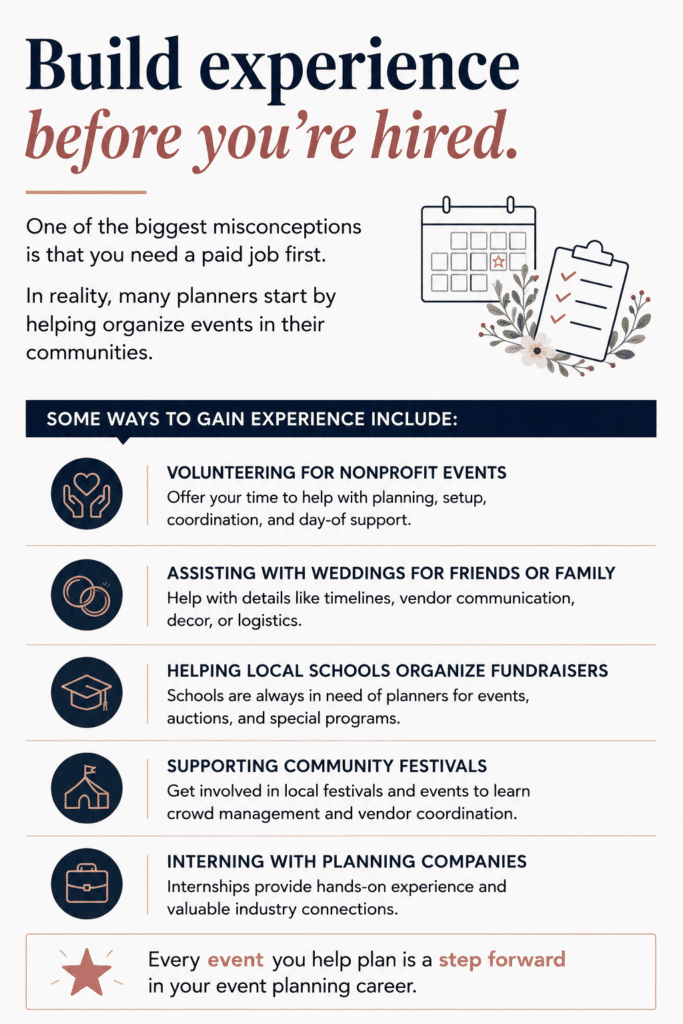
Build experience before you’re hired
One of the biggest misconceptions is that you need a paid job first.
In reality, many planners start by helping organize events in their communities.

Some ways to gain experience include:
- Volunteering for nonprofit events
- Assisting with weddings for friends or family
- Helping local schools organize fundraisers
- Supporting community festivals
- Interning with planning companies
Even coordinating smaller events shows valuable skills that future employers or clients want to see. An event planning internship can also provide valuable hands-on experience and industry connections.
Build an Event Planning Portfolio
When you’re an event planner with no experience, your portfolio becomes one of your strongest assets.
Instead of focusing on paid work, include projects you’ve organized or contributed to, like:
- Birthday parties
- Charity events
- School functions
- Community gatherings
- Styled event mockups
Include photos, timelines, budgets (when possible), and descriptions explaining your role. Showing your planning process often matters just as much as the finished event.
Apply for entry-level opportunities
If you’re wondering how to get into event planning, an entry-level role can provide valuable industry exposure.
Many companies hire assistants and coordinators to support experienced planners while also giving them first-hand experience.
Event planners work across a wide range of industries, including corporate conferences, weddings, nonprofit fundraisers, festivals and trade shows, so you don’t have to limit yourself to one type of event when you’re starting.
Some common entry-level event planning jobs include:
- Event coordinator assistant
- Venue coordinator
- Catering coordinator
- Conference assistant
- Event marketing assistant
These positions help build relationships with vendors, venues, and clients while providing hands-on experience that can lead to more advanced roles.
Likewise, don’t overlook event planning jobs without experience that emphasize transferable skills such as customer service, hospitality, project coordination, or administrative work.
Develop skills employers value
Successful event planners rely on much more than creativity.
Some of the most important skills include:
- Communication
- Time management
- Organization
- Budgeting
- Negotiation
- Problem-solving
- Leadership
- Adaptability
Many of these skills can come from previous jobs in retail, hospitality, education, customer service, or office administration.
Don’t Be Shy: Start Networking
One word: Connections.
The people you meet today could become the clients, vendors, or mentors who help shape your career tomorrow.
Attend local networking events, trade shows and industry conferences whenever possible. Join professional associations, connect with planners on LinkedIn, and don’t be shy—introduce yourself to local venues and vendors.
Many planners earn referrals simply because they’ve built strong professional relationships over time.
You may even find an event planning mentorship through an experienced planner who’s willing to share advice.
Consider starting your own businessa
Some people choose to start an event planning business with no experience after building foundational skills through volunteer work, professional training, or small projects.
Starting small helps you gain confidence while building your reputation.
Many new planners start by specializing in:
- Birthday parties
- Baby showers
- Bridal showers
- Small weddings
- Corporate meetings
- Community events
As your portfolio and client base grow, you can gradually move toward larger events.
Ready to Start Planning?
Learning how to become an event planner with no experience may seem intimidating at first. Still, whether you’re wondering how to start event planning from scratch or simply looking for your first opportunity, every planner starts somewhere.
There isn’t just one “correct” path. Some people get a degree, others complete a short certification program, and many build experience by volunteering before landing a paid job.
What they all have in common is a willingness to learn, stay organized, and keep building their experience one event at a time. If planning, problem-solving, and bringing people together are things you see yourself doing in the future, there’s no reason to wait until you have years of experience before taking that first step.
When you are ready to train, see our best event planner courses to compare programs that fit beginners with no paid experience.
FAQs
Can I become an event planner with no experience?
Yes, you can become an event planner with no experience. Many professionals begin by volunteering, completing certification programs, and applying for entry-level positions before moving into larger roles.
Do I need a degree to become an event planner?
You do not need a degree to become an event planner. While some employers prefer a bachelor’s degree, others prioritize practical experience, organizational skills, and professional certifications.
How long does it take to become an event planner?
The timeline for how long it takes to become an event planner varies. Some people complete certification programs in six weeks, while others gain experience over several months through volunteer work or entry-level jobs.
What are the best entry-level event planning jobs?
The best entry-level event planning jobs include assistant event coordinator, venue coordinator, conference assistant, catering coordinator, and event marketing assistant.
Can I start an event planning business with no experience?
Yes, you can start an event planning business with no experience. However, it’s generally recommended to build experience first through smaller events, volunteer opportunities, or assistant roles.