‘It’s great for this city’: Why Orange Blossom Classic, Miami Gardens are ‘perfect fit.’
READ MORE
A South Florida classic returns
HBCU culture will be celebrated throughout Labor Day weekend as Florida A&M plays Jackson State at Hard Rock Stadium in the first Orange Blossom Classic since 1978.
Expand All
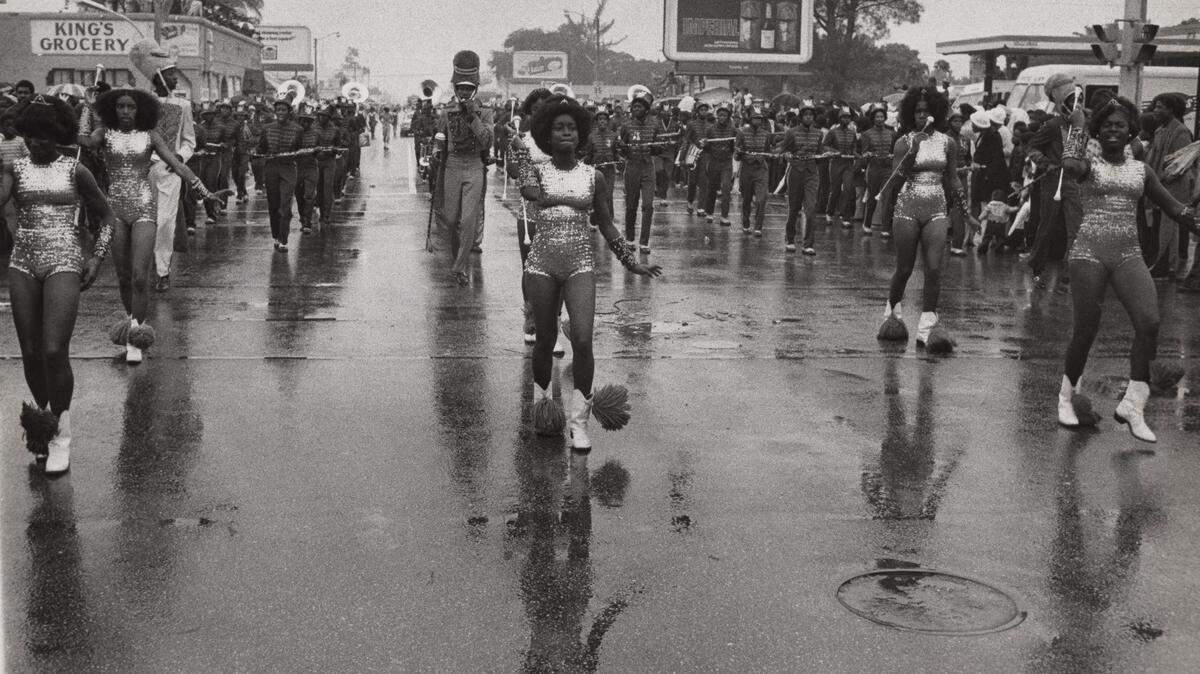
Expect ‘a celebration of Blackness’ with the return of the Orange Blossom Classic
‘It’s great for this city’: Why Orange Blossom Classic, Miami Gardens are ‘perfect fit.’
Deion Sanders, other NFL greats raise profile, lead resurgence of HBCU football
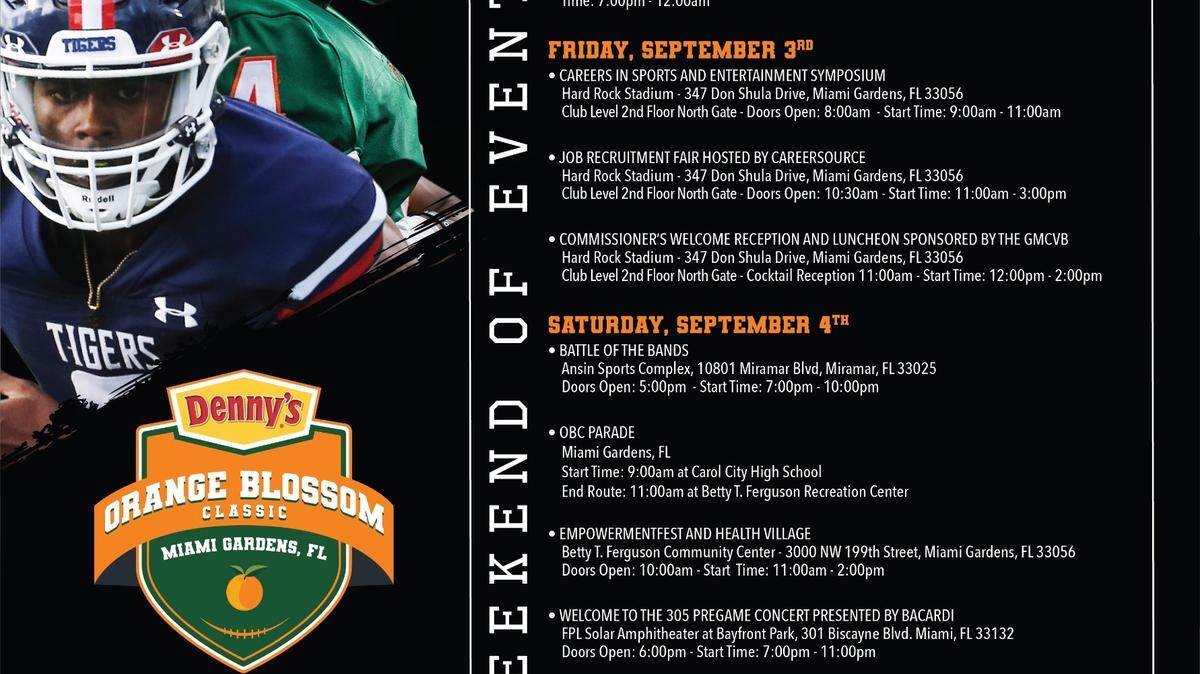
The Orange Blossom Classic is more than a football game. Here’s a schedule of events
How many HBCUs are in Florida? Here’s where they are and some of their famous alumni
Deion Sanders will prowl one sideline during the Orange Blossom Classic as coach of the Jackson State Tigers. The Florida A&M Rattlers, who have won 15 Black national championships, will try to win their record 27th classic. They will square off in Hard Rock Stadium, where the Kansas City Chiefs won Super Bowl 54 in 2020 and the Alabama Crimson Tide won its 18th national championship in January.
The game between Football Championship Subdivision opponents will feature a national star in Sanders and a national brand in Florida A&M, playing at a venue known internationally, albeit one often misidentified as being in Miami. It is not, of course — not that the NFL or College Football Playoff mind. They’re more than happy to show aerial shots of South Beach — which is, of course, also not Miami — and entirely ignore Miami Gardens, the majority-Black city where the stadium resides.
The Orange Blossom Classic does not want to do the same.
“Knowing all the individuals that are coming in from different cities who have never set foot in this stadium,” said Kendra Bullock-Major, the executive director of the Orange Blossom Classic, “I think it’s great for not just the African-American community, I think it’s great for Hard Rock. I think it’s great for the city.”
‘The perfect fit’
The Orange Blossom Classic, which is coming back after a 43-year hiatus Sunday, is “the perfect fit” for Miami Gardens and Hard Rock Stadium, Bullock-Major said. For 45 years, the Orange Blossom Classic annually pitted the Rattlers against another Historically Black College or University (HBCU) for the de facto Black national championship. For more than half of those 45 years, the game was at the Orange Bowl in Miami.
The Orange Bowl, of course, no longer stands — replaced by loanDepot park in the Little Havana neighborhood of Miami — and the Miami Dolphins and Miami Hurricanes now call Hard Rock Stadium home. If the Orange Blossom Classic was going to return to Miami-Dade County for its revival this year, Hard Rock Stadium was always going to make the most sense, and its location in Miami Gardens made it even more of “a no-brainer,” Bullock-Major said.
Miami Gardens is the largest majority-Black city in Florida, with a growing economy and collection of middle-class neighborhoods. In the last decade, major national chains — like Walmart, Starbucks and even Topgolf — have come to the city, and its first mixed-use development is in the works, with the city hoping it will create a “downtown” within the sprawling suburb.
Hard Rock Stadium has always been a boon for Miami Gardens economically — it’s the biggest taxpayer in the city and creates jobs — even if Miami fans aren’t always spending their money at local businesses and outsiders in town for major events are typically staying in other South Florida cities. Those crowds on a typical Saturday or Sunday are almost always majority white and Hispanic. This one will be majority Black.
“This is the first for this facility,” Bullock-Major said. “I think it’s great for the Dolphins. I think it’s great for our community.”
BANKING ON IT
With more than a month until the game, the Orange Blossom Classic projected an economic injection of about $15 million from out-of-town visitors, according to a spokesperson for the game. Organizers based figures on a projected attendance of about 35,000 with roughly 40 percent expected from out of town.
Not all of it will stay in Miami Gardens — Florida A&M’s alumni hotel is in Fort Lauderdale and Jackson State’s is in Aventura, and a pregame concert Saturday is in Miami — but the Orange Blossom Classic itself is making sure to prop up minority-owned local businesses through its “Business Unite” initiative.
The initiative, in essence, will make local businesses part of the Orange Blossom Classic’s production. A little more than a month before the game, organizers had vetted out more than 30 local businesses to contribute to the classic’s weekend operations.
“We’re looking for everything from a DJ to lighting to decor,” Bullock-Major said. “We pull from the list of those businesses we have vetted.”
The flowers and fencing surrounding the stadium Sunday? There’s a good chance it came from “Business Unite.” The lighting setups and sound systems for tailgates around Miami Gardens? They probably came from “Business Unite,” too. Even the janitors and port-a-potties around the parking lots could come through the initiative — janitorial services and portable restrooms are both on the list of businesses eligible to participate in “Business Unite.”
The Orange Blossom Classic is also putting together a much larger list of minority-owned businesses — more than 200 companies — it will provide to visitors to “serve as a guide throughout the weekend.”
“We have our minority-owned business directory,” Bullock-Major said, “to say, ‘Hey, this is where you can go if you need everything from beauty and barber services to catering for any private events that they may be having.’ ”
In June, the Orange Blossom Classic also hosted the first of its monthly One Big Community Pop-ups at Lorna’s Caribbean & American Grille in Miami Gardens. It was a celebration of Black Music Month, featuring Luther Campbell and other pioneers of the Miami music scene.
When the Orange Blossom Classic last came to South Florida in 1978, Miami Gardens wasn’t even an idea — just a collection of changing neighborhoods in northwestern Miami-Dade County. Now there’s no place the game would rather take place.
“It’s not just game day or game week,” Bullock-Major said. “Our goal is for this program to help these minority-owned businesses throughout the year.”
This story was originally published September 1, 2021 at 6:00 AM.