
Lessons from Florida: DeSantis willfully exploits racial fears. Reject his dangerous vision | Opinion
READ MORE
Lessons from Florida
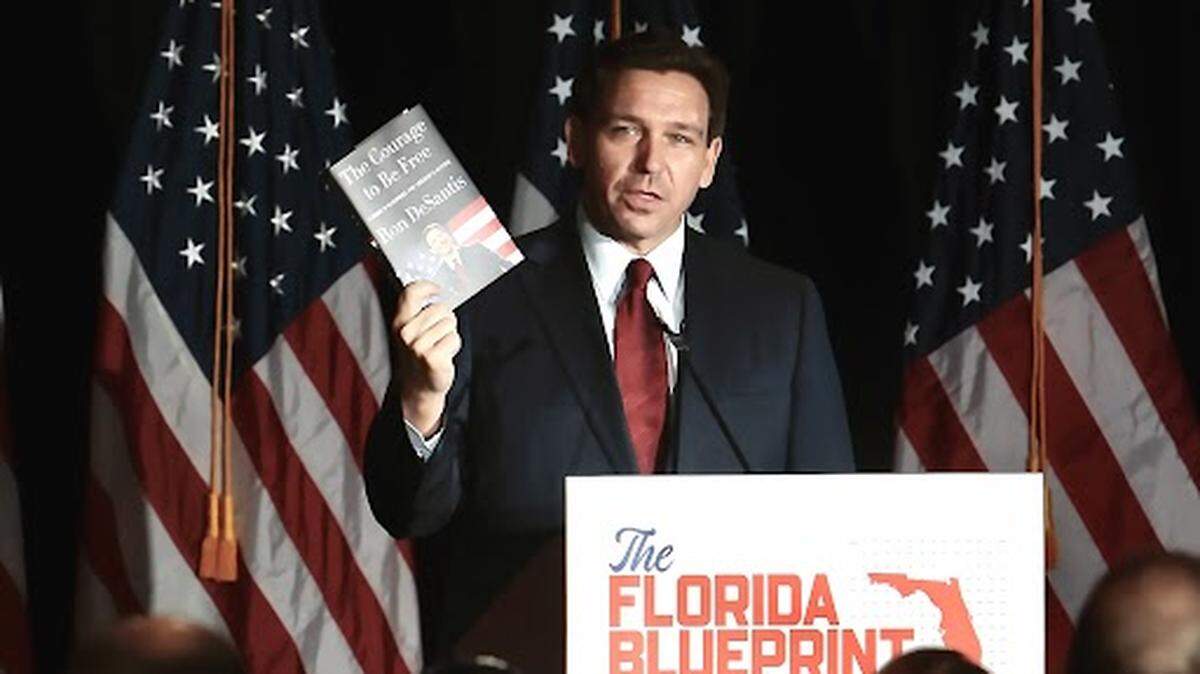
In its series “Lessons from Florida,” the Editorial Board evaluates Ron DeSantis’ role as governor as he takes the “Florida Blueprint” nationwide in his presidential campaign. We know what it’s like to live under his influence. Given his vow to “make America Florida,” it’s important that people beyond the state’s border know, too.
Expand All
Lessons from Florida: ‘Blueprint’ DeSantis touts is missing one thing: a reality check | Opinion
Lessons from Florida: DeSantis vilifies minorities. Imagine what he’d do as president | Opinion
Lessons from Florida: Thought Trump’s Big Lie was a problem? DeSantis’ is even scarier | Opinion

Lessons from Florida: DeSantis will decry classroom ‘indoctrination’ — unless it’s his own | Opinion
Lessons from Florida: DeSantis willfully exploits racial fears. Reject his dangerous vision | Opinion
In our “Lessons from Florida” editorial about “othering,” we decried Gov. Ron DeSantis’ willingness to direct his political wrath at undocumented immigrants, Blacks and LGBTQ+ people. We called it “un-American.”
However, when it comes to specifically demonizing African Americans — devaluing them, though citizens, and undercutting their political power — such targeting is as American as it gets, unfortunately.
Through words and deed, Florida’s governor is using a tried, true and divisive tool to instill in white Americans a fear of this country’s demographic changes and their loosening grip on power and supremacy in most every facet of American life.
“They view this political power as a zero sum game,” said Andrew Thompson, an assistant professor of political science, political behavior and public opinion at George Washington University. The thinking is, he says: “ ‘They are going to usurp my power in my career, my neighborhood.’”
Thompson calls it a “ status threat,” uncertainty about the future.
“They don’t know how things are going to look,” he said.
Should DeSantis somehow overcome his gaping deficit in the polls as he runs a distant second to Donald Trump for the Republican presidential nomination, there should be little doubt that diluting Blacks’ painfully hard-won — and always fragile — ability to function on equal footing with other Americans will be part of his agenda.
He, of course, would not be the first governor — or the first president — to seek to deny Black Americans full enfranchisement. In 1963, Alabama Gov. George Wallace vowed in his inauguration speech at the state Capitol: “Segregation now, segregation tomorrow, segregation forever.”
A century earlier, President Andrew Johnson vetoed civil-rights legislation that sought to assist 4 million formerly enslaved Blacks as they transitioned to freedom. “By far, more than any other president in the history of this nation, Johnson halted the progress of African Americans to claim their rightful social, political and economic rights, which had a devastating effect on their march to equality for decades to come,” wrote historians John Hope Franklin and Alfred Moss, Jr., in their 1947 book “From Slavery to Freedom.”
President Rutherford B. Hayes withdrew federal troops stationed in the South, leaving the region able to deny to Blacks the social and political rights they had begun to enjoy.
Voter suppression
Unfortunately, in 21st century Florida, DeSantis has been almost as explicit in this quest. Republicans’ contemporary efforts to put Blacks’ constitutional rights on the chopping block did not necessarily originate in Florida, but DeSantis has sharpened the ax.
In his first term, DeSantis went straight for Blacks’ access to the voting booth. Last year, he tore up the state Legislature’s proposed new congressional map, redrawn every decade based on the U.S. Census — and which favored Republicans. He called lawmakers back to a special session, imposed upon them his own map that erased two districts from which Black congressional candidates traditionally have been elected, then pretty much dared state lawmakers to reject it. They didn’t.
Voting-rights groups sued, and last week, Circuit Judge J. Lee Marsh sent the plan back to the Florida Legislature, telling lawmakers to draw a new congressional map. Marsh found “the diminishment of Black voters’ ability to elect their candidate of choice in violation of the Florida Constitution.”
Marsh’s won’t be the final word, as DeSantis and other states’ leaders are pushing similar cases toward the U.S. Supreme Court and, ultimately, a showdown over the venerable Voting Rights Act.
In 2021, the Republican-majority state Legislature forced voters to request mail-in ballots every two years, instead of what had been four years. In addition, mail-in ballots will be invalidated if two or more ballots are submitted in the same envelope, a reasonable method for any couple or family to use.
Since 2020, Democrats have used mail-in ballots more than Republicans. Clearly, they stand to be more affected — negatively.
Laws also place restrictions on the use of drop boxes and on how third-party organizations, like the NAACP, register new voters.
Who’s cheating?
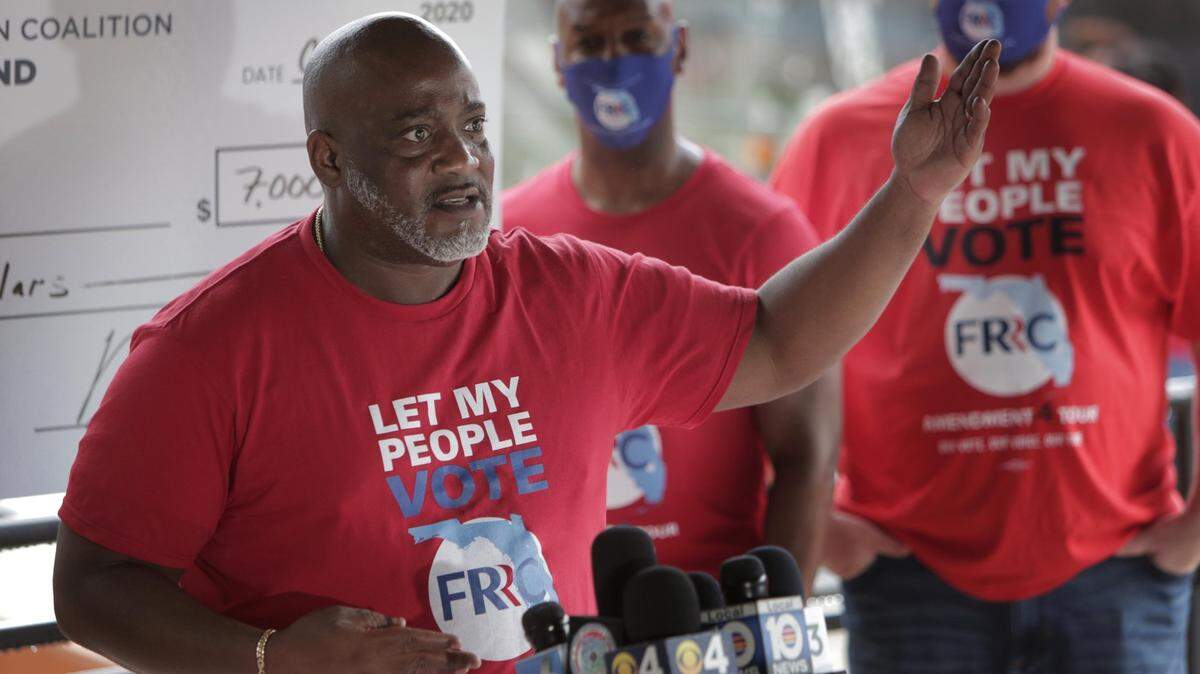
Soon after his election in 2018, DeSantis cast aside the will of a majority of voters in the state who supported restoring felons’ voting rights and put stumbling blocks in their path to the ballot box.
It led to an embarrassing set of arrests in 2022, courtesy of DeSantis’ unnecessary Office of Election Crimes and Security, created to investigate and prosecute election fraud. Almost 20 felons, mostly Black, were arrested for voting, which they did because the state allowed them to do so.
“We want everyone to vote, but we don’t want anyone to cheat,” DeSantis has explained. In truth, it’s the Republicans who are cheating, rigging the game so that they win, and Black Floridians are bearing the brunt of the subterfuge.
In the arena of free speech, DeSantis has shut off another avenue of constitutionally guaranteed right of expression. He saw opportunity in the George Floyd protests of 2020, mostly peaceful in large Florida cities, with instances of vandalism and violence, such as police cars set afire.
HB 1 is an open-ended law that gave police too much discretion to decide whether a protest was peaceful or not. After a lawsuit was filed, the DeSantis administration argued that the “anti-riot” law had nothing do with Black Lives Matter and other social-justice groups. A federal judge wasn’t buying it. Neither did the Editorial Board, which feared even peaceful protesters, demonstrating for the “wrong” cause, would be subject to arrest.
U.S. District Judge Mark Walker wrote that the law “empowers law enforcement officers to exercise their authority in arbitrary and discriminatory ways.” The law is temporarily blocked as it moves through the courts.
But what’s a loss in court, when DeSantis has the funds — our taxes — to appeal? Plus, he still has gotten his political point across.
Alternative facts
And, of course, there’s the issue of Black history — how it is taught, how it is spun and for whose benefit. DeSantis has imposed his revisions to the how these chapters of American history are presented in the classroom. Again, another vaguely worded law has teachers fearful of even posting pictures of Rosa Parks and Martin Luther King in their classrooms. Indeed, a Central Florida teacher was admonished by a colleague to take them down. She was treading into the dreaded critical race theory — the idea that systemic racism is embedded in American society — by having them on display.
No, DeSantis did not invent racial divisiveness and the attack on Black clout. But he has gone out of his way to exploit it.
Though his anti-woke message hasn’t resonated across the country, the lesson from Florida — and from political history — is that there’s a good chance his anti-Black actions, unfortunately, will.
DeSantis is tapping into bigotry and racism. Voters who know what this country really stands for should reject his offensive vision for the country.
This story was originally published September 10, 2023 at 9:38 AM.