
Lessons from Florida: ‘Blueprint’ DeSantis touts is missing one thing: a reality check | Opinion
READ MORE
Lessons from Florida
In its series “Lessons from Florida,” the Editorial Board evaluates Ron DeSantis’ role as governor as he takes the “Florida Blueprint” nationwide in his presidential campaign. We know what it’s like to live under his influence. Given his vow to “make America Florida,” it’s important that people beyond the state’s border know, too.
Expand All
Lessons from Florida: ‘Blueprint’ DeSantis touts is missing one thing: a reality check | Opinion
Lessons from Florida: DeSantis vilifies minorities. Imagine what he’d do as president | Opinion
Lessons from Florida: Thought Trump’s Big Lie was a problem? DeSantis’ is even scarier | Opinion

Lessons from Florida: DeSantis will decry classroom ‘indoctrination’ — unless it’s his own | Opinion
Lessons from Florida: DeSantis willfully exploits racial fears. Reject his dangerous vision | Opinion
The slogan is catchy: “Make America Florida.”
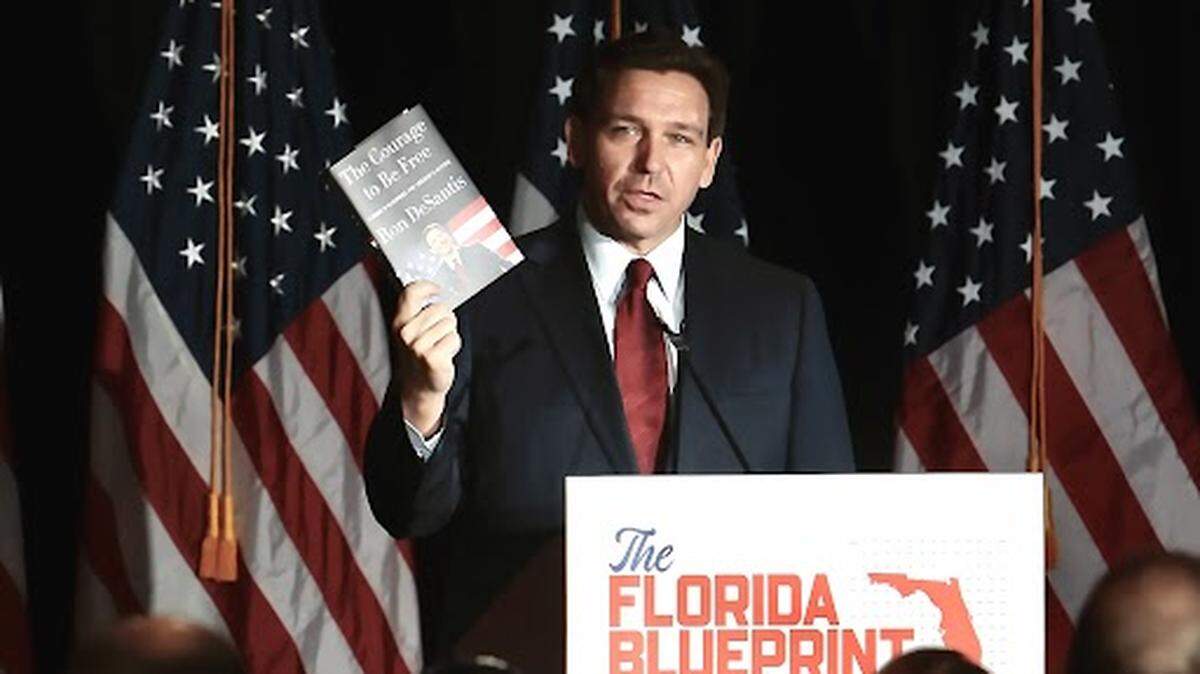
On the GOP presidential primary trail, Florida Gov. Ron DeSantis’ brand has been of a competent governor who gets conservative priorities implemented with unprecedented efficiency — from banning classroom instruction about LGBTQ issues to using taxpayer dollars to relocate migrants who aren’t even in Florida.
But DeSantis’ “Florida Blueprint” has cracks.
It is true that DeSantis exerts control over the state’s lawmaking process like no governor before him and he’s adept at sniffing out cultural grievances among conservative voters that he uses to ram through his policies.
But he’s been successful largely because of a compliant Republican-controlled Legislature.
Despite Florida’s previous status as a “purple” swing state, its government is deep red. DeSantis faces no real opposition thanks to a Florida Democratic Party that can’t figure out how to win elections and the state’s rightward shift in recent years.
Republicans’ super-majority control of the Florida House and Senate affords them the privilege of ignoring opposing views. But one-party rule doesn’t reflect the reality that DeSantis would face if elected president in 2024 (and if he can recover in the polls).
DeSantis’ track record in Florida should come with a warning to the rest of the country: Although he has excelled at pushing his party to pass partisan policies, he hasn’t been tested on his ability to unite or lead in times of deep division.
The payback governor
DeSantis isn’t a skilled statesman as much as he is a political boss whose biggest source of power has been the threat of retribution against his own party members. DeSantis is a “mean, vindictive, petty man,” said Mac Stipanovich, a former GOP strategist who left the party after Donald Trump’s 2016 election. Republicans fall in line or risk DeSantis’ payback.
Tallahassee isn’t Washington, D.C. If elected president, DeSantis would have to make deals with a divided Congress, where he was once a backbench member of the U.S. House who disliked Capitol Hill politics and the backslapping it requires, Politico reported.
It’s not just that DeSantis hasn’t had to reach across the aisle. He hasn’t had to rein in different factions within his own party. In Florida, there’s one way to be a Republican today: the DeSantis way. There are few conservative mavericks left in Florida government in the mold of the late U.S. Sen. John McCain, who famously blocked Trump’s attempt to repeal the Affordable Care Act.
How would DeSantis deal with Republicans who aren’t fearful or sycophantic? It’s not clear.
Pulling back the curtain
The “Florida Blueprint” masks another reality: DeSantis and Republicans have become sloppy at writing laws.
A consequence of one-party rule is that legislation now is rushed through, without meaningful debate. The laws are too vague, confusing and ripe for court challenges.
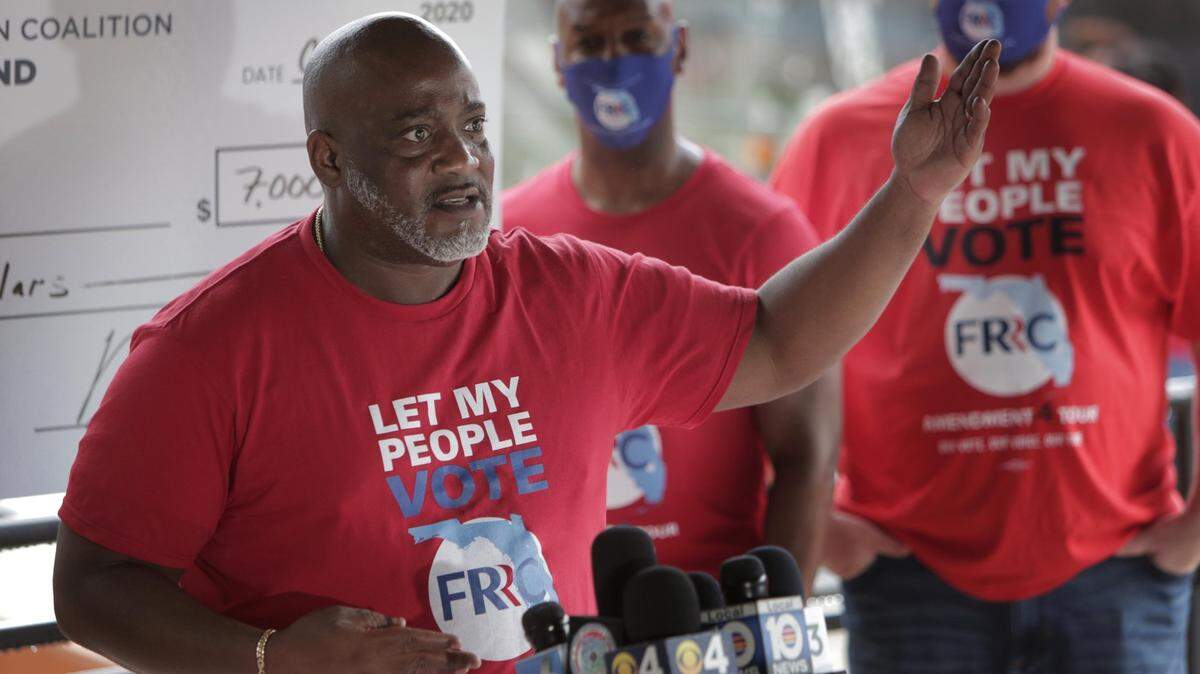
One example is the legislation passed to implement Amendment 4 — approved by 65% of voters in 2018 — which restored most felons’ right to vote. The Legislature, backed by DeSantis, has nearly thwarted the measure, passing a law that required felons first pay back all fines and court fees. The problem is Florida has no centralized system to determine if someone has fulfilled those requirements.
Amid confusion, supervisors of elections issued voting cards to people not eligible to get their rights restored — and DeSantis’ own administration failed to flag them. Some were later arrested by DeSantis’ new election crimes police, giving him an opportunity to boast about cracking down on voter fraud that the state should have stopped in the first place.
The Florida Rights Restoration Coalition, which drafted Amendment 4, sued Florida in July alleging the state impeded the will of voters.
Reversed in court
One of DeSantis’ first culture-war measures was a 2021 anti-Big Tech bill that, despite having all the marks of unconstitutionality, cruised through the Legislature. The law, in part, banned social-media companies from de-platforming Florida political candidates, levying fines of up to $250,000 a day for violations.
After industry groups sued on First Amendment grounds, a federal judge blocked key parts of the law, calling it “riddled with imprecision and ambiguity,” and an appeals court upheld much of the ruling. Florida has asked the U.S. Supreme Court to weigh in.
DeSantis’ signature “Stop WOKE Act,” which limited how teachers and college professors can teach about race, also got dressed down in court. U.S. Circuit Judge Mark Walker last year temporarily blocked the law from being enforced in higher education, calling it “positively dystopian.” An appeals court denied Florida’s request to stay Walker’s order.
Federal courts recently blocked, at least temporarily, laws and policies that targeted children attending drag shows, banned Medicaid coverage for gender-affirming healthcare and banned minors from receiving such care. The DeSantis administration is also entangled in a legal battle with Disney, which accuses the state of retaliation over its opposition to a parental rights law known as “Don’t say gay.”
Some of these rulings could get reversed on appeal in DeSantis’ favor, and others already have been. But the point is that a DeSantis presidency would push the limits of the U.S. Constitution through laws, if he can get them passed, and executive orders. Court battles over a president’s policies have become normal in America’s polarized politics. The difference with DeSantis is that legal fights don’t seem to be a consequence of his actions, but the goal.
This is DeSantis’ sledgehammer approach to governing. He seems more concerned with headlines than prudent governing. Voters should ask whether the “Florida Blueprint” is exactly what its title denotes, a strategy to govern a state like Florida, where opposition has been neutered, or an effective way to lead a diverse nation.
Let Florida be a lesson.
Click here to send the letter.
BEHIND THE STORY
MOREWhat's an editorial?
Editorials are opinion pieces that reflect the views of the Miami Herald Editorial Board, a group of opinion journalists that operates separately from the Miami Herald newsroom. Miami Herald Editorial Board members are: opinion editor Amy Driscoll and editorial writers Isadora Rangel and Mary Anna Mancuso. Read more by clicking the arrow in the upper right.
What's the difference between an op-ed and a column?
How does the Miami Herald Editorial Board decide what to write about?
The Editorial Board, made up of experienced opinion journalists, primarily addresses local and state issues that affect South Florida residents. Each board member has an area of focus, such as education, COVID or local government policy. Board members meet daily and bring up an array of topics for discussion. Once a topic is fully discussed, board members will further report the issue, interviewing stakeholders and others involved and affected, so that the board can present the most informed opinion possible. We strive to provide our community with thought leadership that advocates for policies and priorities that strengthen our communities. Our editorials promote social justice, fairness in economic, educational and social opportunities and an end to systemic racism and inequality. The Editorial Board is separate from the reporters and editors of the Miami Herald newsroom.
How can I contribute to the Miami Herald Opinion section?
The Editorial Board accepts op-ed submissions of 650-700 words from community members who want to argue a specific viewpoint or idea that is relevant to our area. You can email an op-ed submission to oped@miamiherald.com. We also accept 150-word letters to the editor from readers who want to offer their points of view on current issues. For more information on how to submit a letter, go here.
This story was originally published September 4, 2023 at 4:38 PM.