
Miami Dysfunction: Saved by bell, commission skating by with self-serving districts | Opinion
READ MORE
Miami Dysfunction
Miami Dysfunction is a series of editorials that examines flaws in the city of Miami’s structure of governance.
Expand All
This editorial is part of Miami Dysfunction, a series that examines flaws in the city of Miami’s structure of governance.
Timing is on the side of Miami’s city officials, not on the side of voters who are headed to the polls in November.
Thanks to a dragged-out court case over how the city’s five commission districts were drawn, it appears the city will be able to squeeze in a victory to the benefit of the people in power.
In the past week, a federal judge ruled against the city, throwing out the district map the commission drew in June. That ruling was reversed by an appeals court that said it was too close to the elections to force the city to adopt a new map. The civic groups that sued Miami, claiming the city split residents and neighborhoods to achieve a specific racial and ethnic makeup of the commission, are asking the U.S. Supreme Court to step in. It’s a long shot. As of this writing Monday afternoon, there had been no response from the court.
Miamians don’t have to keep up with the courts, or understand the Voting Rights Act, to get what’s truly happening.
From the get-go, the City Commission has been motivated by power. Commissioners gave a good talk from the dais about Miami’s tradition of having three Hispanic commissioners, a Black one and an “Anglo” one — which the lawsuit says violates the law. But they were looking out for themselves first.
The city’s motivation didn’t change when the federal judge forced them to redraw the districts in June after ruling that the plaintiffs, among them the NAACP, were likely to prove in trial the city violated the U.S. Constitution.
Or was it just a coincidence that the maps neutralize Commissioner Alex Diaz de la Portilla’s only opponent in the Nov. 7 election? The lines of his District 1 were suspiciously drawn to move Miguel Gabela, who’s been campaigning since February, to another district. Gabela filed his own lawsuit on Monday challenging the city’s map.
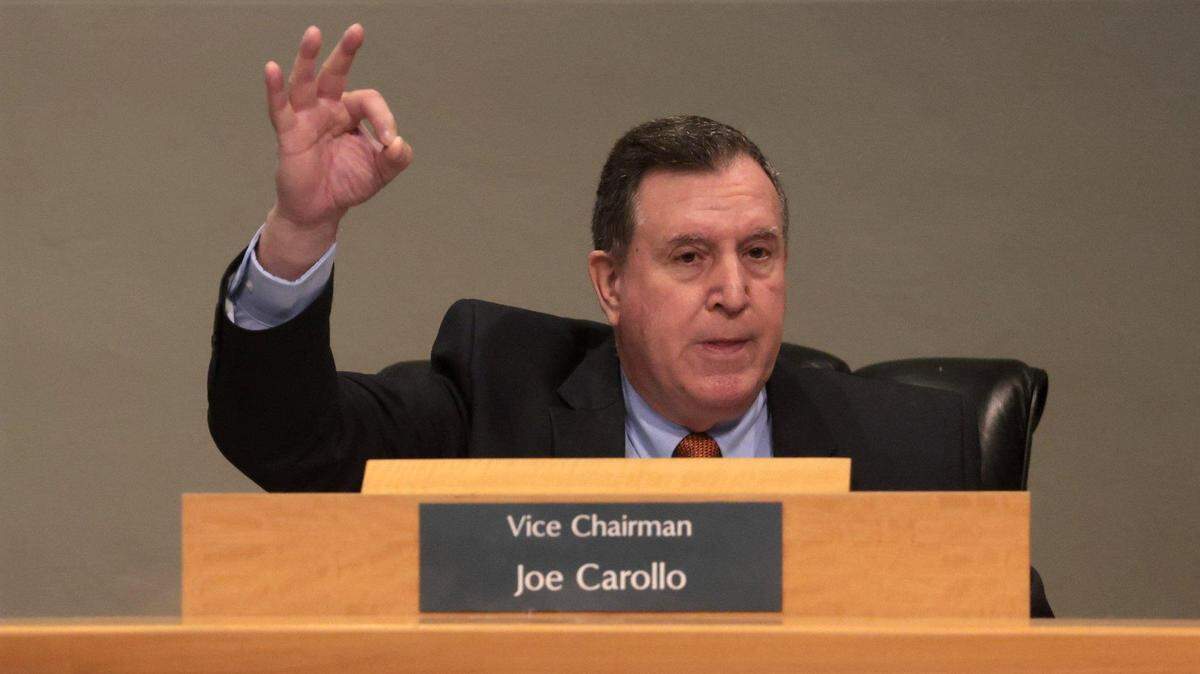
Perhaps it is just a stroke of fate that Commissioner Joe Carollo’s longtime home in Coconut Grove was moved into his District 3. When Carollo was elected in 2017, his home belonged in District 2. He claimed to live in a Brickell condo, inside District 3, to meet the city’s residency requirements. After the election, his opponent filed a lawsuit, claiming Carollo never actually moved, but lost in court.
Thanks to the redrawn districts, Carollo can legally reside in his six-bedroom home and reap the financial benefits of claiming a homestead exemption on his property taxes, which is granted only for someone’s primary home.
And here’s another twist. The home of the opponent who sued Carollo, Alfie Leon, was conspicuously moved out of District 3 to District 4, where Commissioner Manolo Reyes is running for reelection this fall. That means that if Leon was planning to run to replace Carollo when he reaches his term limit in 2025, he’s out of luck.
Meanwhile, residents of Coconut Grove and the historic Black West Grove, who fought to remain unified in a single district, lost their battle, at least for now. U.S. District Judge K. Michael Moore wrote in his ruling last week that the maps the city presented to the court in June continued to split neighborhoods and facilitate “racial separation.” Moore ordered Miami to temporarily adopt a map drawn by the plaintiffs while the case moves through the court system. A trial is scheduled for 2024.
In a split decision, the U.S. Court of Appeals for the 11th Circuit reversed Moore’s ruling and sided with Miami. The court blamed the plaintiffs for waiting too long — nine months — to sue the city and cited a legal principle that the courts should not interfere with election law so close to an election. The appeals court also wrote that it’s not clear that the map Moore forced Miami to adopt fixed “the alleged racial sorting in the City’s re-districting legislation.”
Essentially, the city prevailed because the clock is running out, not necessarily because it did a good job. It’s still likely that when voters go to the polls in November to elect, or reelect, three commissioners, they may be doing so in districts that violate the U.S. Constitution, as Moore argued in his decision.
In the end, the true winners aren’t the residents of Miami, but those who manipulate the city’s political process for their own gain.

Click here to send the letter.
BEHIND THE STORY
MOREWhat's an editorial?
Editorials are opinion pieces that reflect the views of the Miami Herald Editorial Board, a group of opinion journalists that operates separately from the Miami Herald newsroom. Miami Herald Editorial Board members are: opinion editor Amy Driscoll and editorial writers Isadora Rangel and Mary Anna Mancuso. Read more by clicking the arrow in the upper right.
What's the difference between an op-ed and a column?
How does the Miami Herald Editorial Board decide what to write about?
The Editorial Board, made up of experienced opinion journalists, primarily addresses local and state issues that affect South Florida residents. Each board member has an area of focus, such as education, COVID or local government policy. Board members meet daily and bring up an array of topics for discussion. Once a topic is fully discussed, board members will further report the issue, interviewing stakeholders and others involved and affected, so that the board can present the most informed opinion possible. We strive to provide our community with thought leadership that advocates for policies and priorities that strengthen our communities. Our editorials promote social justice, fairness in economic, educational and social opportunities and an end to systemic racism and inequality. The Editorial Board is separate from the reporters and editors of the Miami Herald newsroom.
How can I contribute to the Miami Herald Opinion section?
The Editorial Board accepts op-ed submissions of 650-700 words from community members who want to argue a specific viewpoint or idea that is relevant to our area. You can email an op-ed submission to oped@miamiherald.com. We also accept 150-word letters to the editor from readers who want to offer their points of view on current issues. For more information on how to submit a letter, go here.
This story was originally published August 7, 2023 at 3:47 PM.
