Miami Dysfunction: Residents, shake up this city and demand a larger commission | Opinion
READ MORE
Miami Dysfunction
Miami Dysfunction is a series of editorials that examines flaws in the city of Miami’s structure of governance.
Expand All
There’s a common expression in Miami politics: Everyone knows how to count to three.
Three is the number of city commissioners required to pass legislation with a simple majority. It allows a small group of commission members to hijack the legislative process and intimidate colleagues who don’t want to see their priorities killed on the dais.
Miami has been embroiled in a legal battle over how commission seat districts were redrawn last year following the 2020 U.S. Census. In May, a federal judge sided with a coalition of civic groups that argued in a lawsuit that commissioners broke up neighborhoods like Coconut Grove and Flagami for the sake of hitting “racial quotas” and maintaining the ethnic makeup of the commission. The judge ordered the city to redraw its district boundaries.
Instead of temporarily fixing a broken system by moving district lines, it’s time for Miamians to demand more.
Miami’s City Commission must grow from five districts to seven or nine, as many community advocates suggested to the Herald Editorial Board. The exact number should be part of a discussion we hope to spur.
Miami is the largest city in South Florida. It projects itself as a hub of tech and financial companies rivaling New York and San Francisco. Yet Miami is run like Mayberry. The city has the same number of commission seats as Stuart, a sleepy retirement community on Florida’s Treasure Coast, population 18,200. Miami Beach and Hialeah, smaller neighboring cities, have larger commissions.
U.S. Census numbers show Miami’s population has grown to almost 450,000 since voters adopted single-member districts in 1997. The population was fewer than 372,000 back then. Miami voters opted for districts because they wanted more diverse representation after the city ended up without a Black commissioner for the first time in 30 years.
Compare Miami to cities of similar size across the country. Tampa (population: 398,000) has seven council members, four of them elected in districts and three at-large. Atlanta (population: 500,000) has 12 council districts plus three members elected at-large. Long Beach, California (population: 451,000), has nine districts.
Power concentration
Size is not the only reason to reform Miami’s system of government.
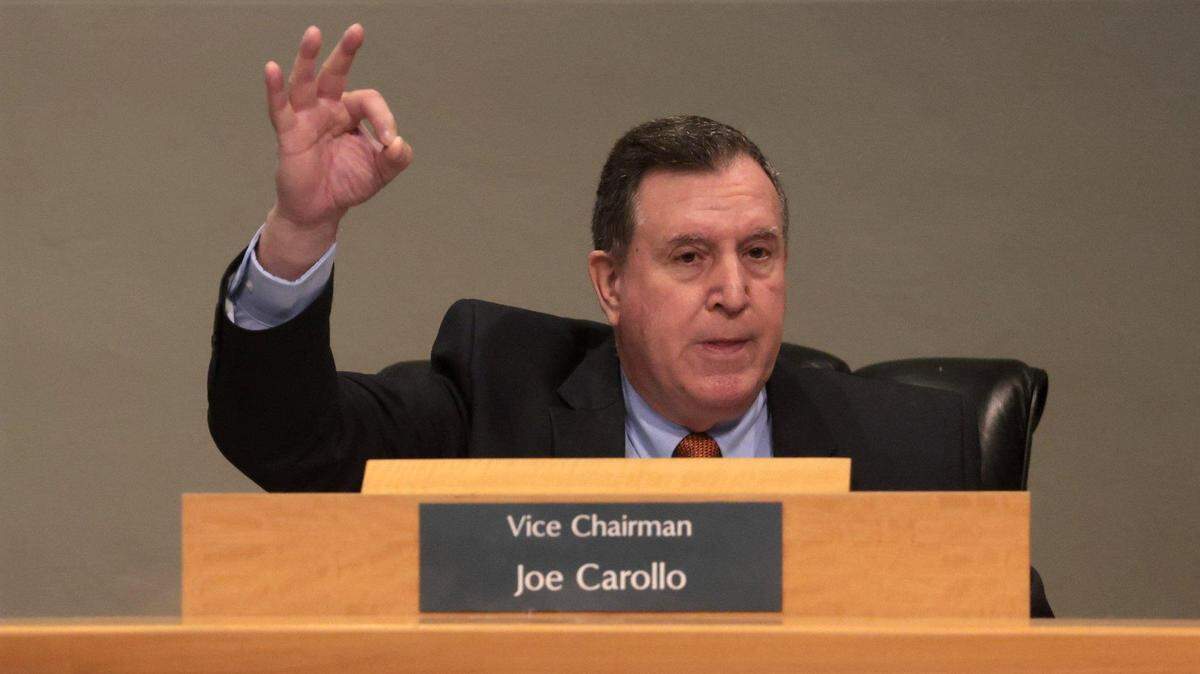
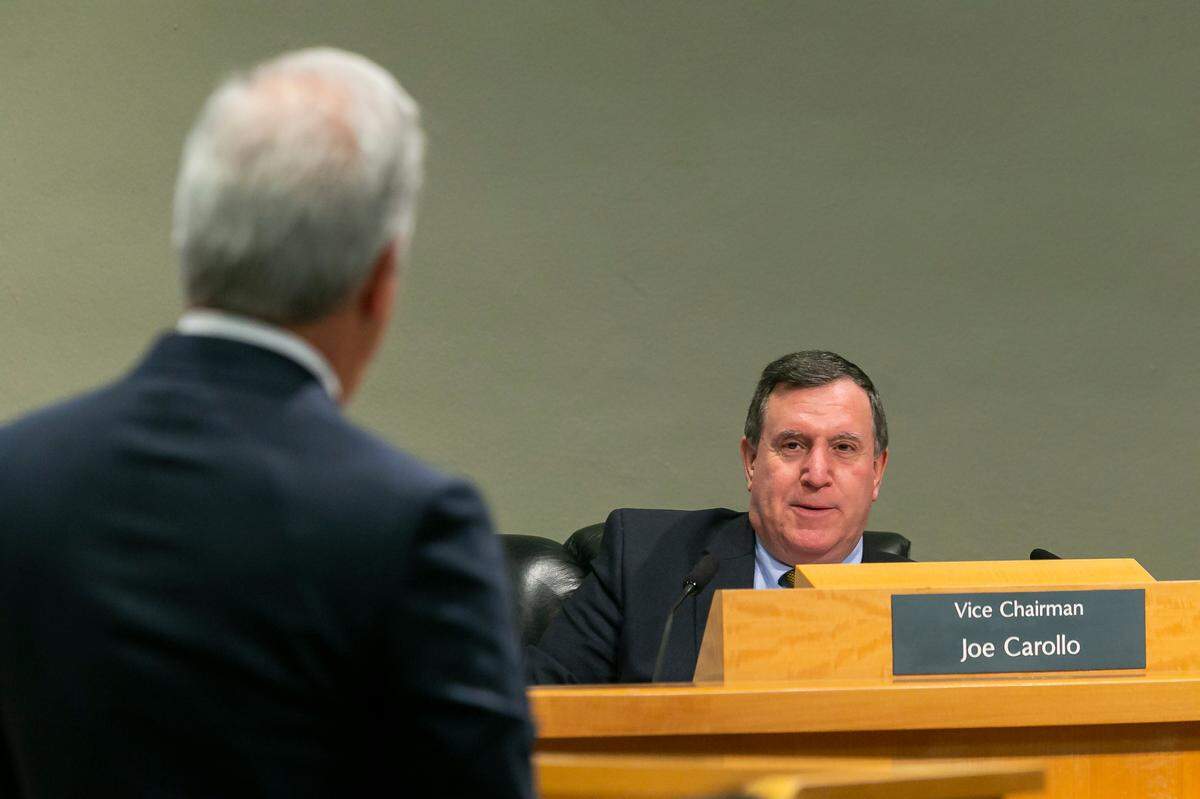
It is not an overstatement to say that a lot of dysfunction stems from how Miami structures its elected body. That has allowed Commissioner Joe Carollo to abuse his position for so long. With few at City Hall willing to stop him, it took a federal jury in June to conclude Carollo weaponized the Miami’s code enforcement against two Little Havana businessmen as retaliation for supporting his 2017 election opponent. Carollo has been ordered them pay $63.5 million in damages and is expected to appeal that decision.
Other commissioners and staff must have known this was going on, but Carollo holds 20% of the power on the commission. Add the vote of his ally/frenemy Commissioner Alex Diaz de la Portilla and they only need one more vote to control the commission on most matters.
“Frankly, [more districts] may be the only thing that saves the city of Miami,” J.C. Planas, an election lawyer who was part of an unsuccessful effort in 2020 to recall Carollo, told the Herald Editorial Board. Planas, a former Republican state representative is planning to run for Miami-Dade County supervisor of elections as a Democrat next year.
To be clear, this is not a Carollo problem. If it were, we could wait until he reaches his term limit. Any commissioner can become too powerful. More districts would dilute the power of elected officials who hold too much of it.
We recognize the arguments against a larger commission. Representatives elected in smaller districts run the risk of focusing too much on parochial issues, like fixing pot holes, and less on big-picture challenges like sea-level rise and mass transit. Diluting the power of commissioners also dilutes the power of the individual communities they represent. But the reasons for more districts are abundant.
The current system has allowed three commissioners elected with a voter turnout of no more than 15% in the past four municipal elections to control decision making for Florida’s second-largest city. Miami holds municipal elections in odd years instead of presidential or midterm elections, when voters are more likely to go to the polls. That election calendar guarantees low turnout.
These factors together have created a disconnect between Miami’s needs and its government. More voices on the dais will force commissioners to build consensus, leading to better decisions.
City missed the boat
The city is missing the perfect opportunity to enact these changes. The lawsuit and order by federal Judge K. Michael Moore that the city redraw districts boundaries should have kicked off a conversation on the dais. It didn’t. The commissioners wouldn’t vote to dilute their own power.
On June 14, they approved a new set of five districts that still require court approval. The American Civil Liberties Union and the community organizations that sued the city — among them two NAACP branches and Coconut Grove community group GRACE — have said they will oppose the new maps, arguing it is still gerrymandered.
The new maps also have another problem: They keep the questionable decision of drawing the lines of District 3 to include Carollo’s Coconut Grove home. The six-bedroom house on Morris Lane previously was in another district, so when Carollo ran for his seat in 2017 he rented a West Brickell apartment to meet the city’s residency requirements. The new maps also pushed the home of Diaz de la Portilla’s opponent in the November elections, Miguel Angel Gabela, outside his District 1.
It’s clear that Miami commissioners used the redistricting process to amass and maintain power. A small commission only makes it easier for them to run the city for such personal gain.
The Herald Editorial Board spoke to several of the plaintiffs who sued the city. Although their lawsuit deals with the maps that currently exist, they, too, are having conversations about pushing the city to have seven to nine commission seats.
“Our services would be improved,” said GRACE board member Clarice Cooper, who lives in West Coconut Grove.
The way forward
Changes to Miami’s government system require a city charter amendment, which must be approved by voters. The easiest way to accomplish that would be if the commission put the proposal on the ballot, but there’s little appetite for that. The only other way is a citizen-driven referendum. That would require the certification of petition signatures from 10% of registered voters as of the last municipal general election, according to state law. That’s 21,760 signatures based on the 2021 elections.
A citizens’ initiative needs to be organized and ironclad. Paying signature collectors and mounting a campaign to convince voters could cost upwards of $500,000, Planas said. There may be legal hurdles, too, as the proponents of the Carollo recall learned in 2020.
After the city clerk’s office rejected a batch of more than 1,900 petition signatures, saying they were delivered too late, the recall committee sued the city. After months of litigation — and a lawsuit by Carollo himself — a district judge ruled the petitions were indeed late. Although they were submitted online before a deadline, they were physically delivered after it.
It’s only wise to anticipate Miami City Hall would try to undermine any efforts to increase representation. It’s time for Miami to grasp its own future. People who care about the city must take action and start a petition process soon. If Miami wants to be the city of future, it cannot afford a dysfunctional system of government any longer.
This is the first editorial in a series that examines flaws in the city of Miami’s structure of governance.
BEHIND THE STORY
MOREWhat's an editorial?
Editorials are opinion pieces that reflect the views of the Miami Herald Editorial Board, a group of opinion journalists that operates separately from the Miami Herald newsroom. Miami Herald Editorial Board members are: opinion editor Amy Driscoll and editorial writers Isadora Rangel and Mary Anna Mancuso. Read more by clicking the arrow in the upper right.
What's the difference between an op-ed and a column?
How does the Miami Herald Editorial Board decide what to write about?
The Editorial Board, made up of experienced opinion journalists, primarily addresses local and state issues that affect South Florida residents. Each board member has an area of focus, such as education, COVID or local government policy. Board members meet daily and bring up an array of topics for discussion. Once a topic is fully discussed, board members will further report the issue, interviewing stakeholders and others involved and affected, so that the board can present the most informed opinion possible. We strive to provide our community with thought leadership that advocates for policies and priorities that strengthen our communities. Our editorials promote social justice, fairness in economic, educational and social opportunities and an end to systemic racism and inequality. The Editorial Board is separate from the reporters and editors of the Miami Herald newsroom.
How can I contribute to the Miami Herald Opinion section?
The Editorial Board accepts op-ed submissions of 650-700 words from community members who want to argue a specific viewpoint or idea that is relevant to our area. You can email an op-ed submission to oped@miamiherald.com. We also accept 150-word letters to the editor from readers who want to offer their points of view on current issues. For more information on how to submit a letter, go here.
This story was originally published June 30, 2023 at 12:54 PM.