Miami-Dade’s sargassum problem isn’t going away — and neither are the costs
The last time Toronto resident Victoria Brosman vacationed in South Florida she swore she’d never return.
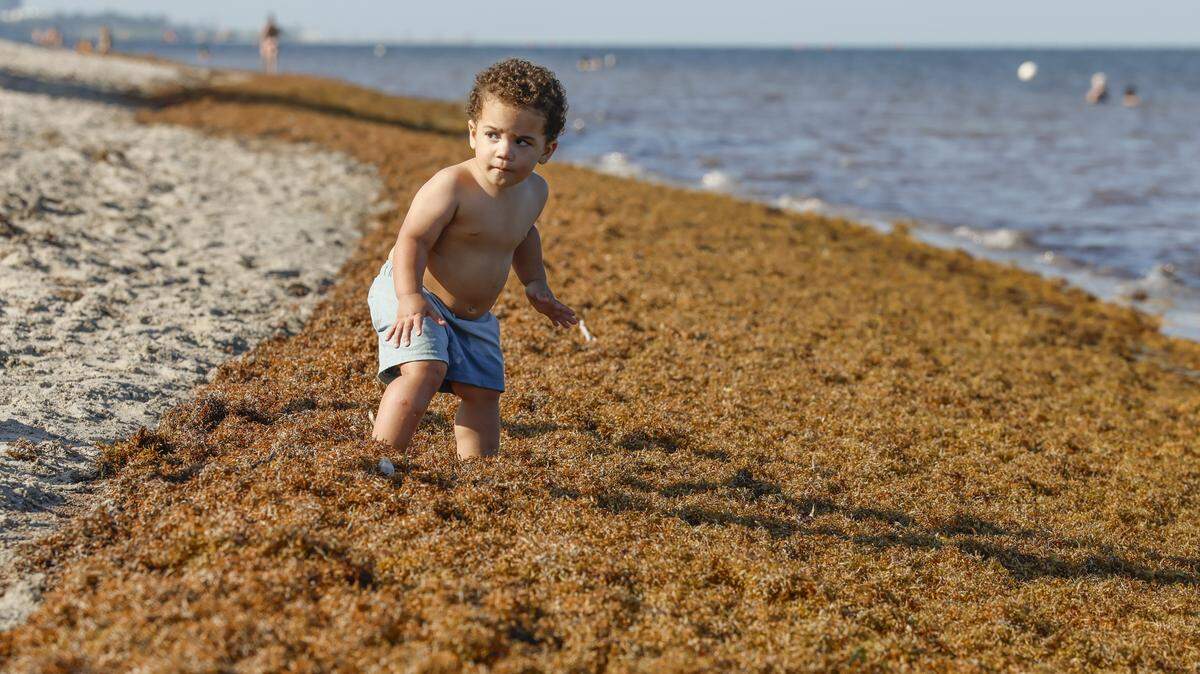
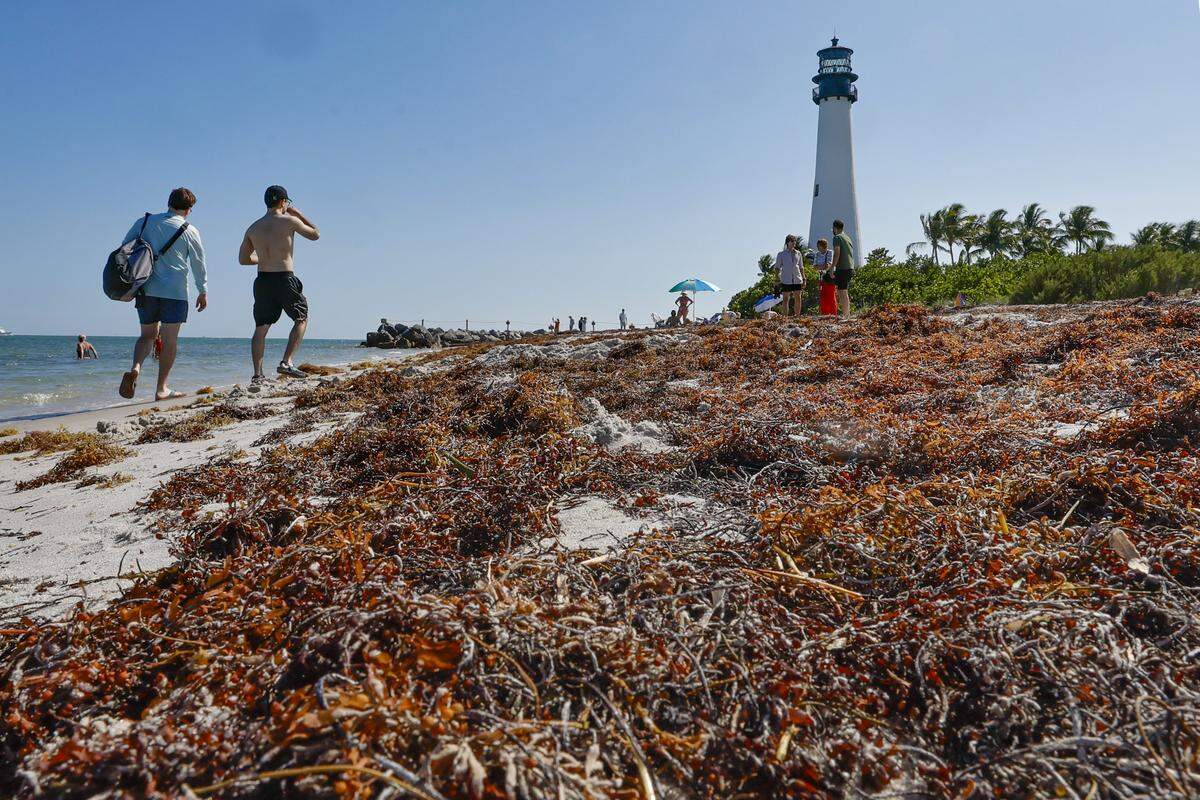
The sand by her beachfront hotel in Bal Harbour was piled high with sargassum, a scratchy brown seaweed that tangles in hair and boat motors, and when left to rot on a beach, can smell like rotten eggs
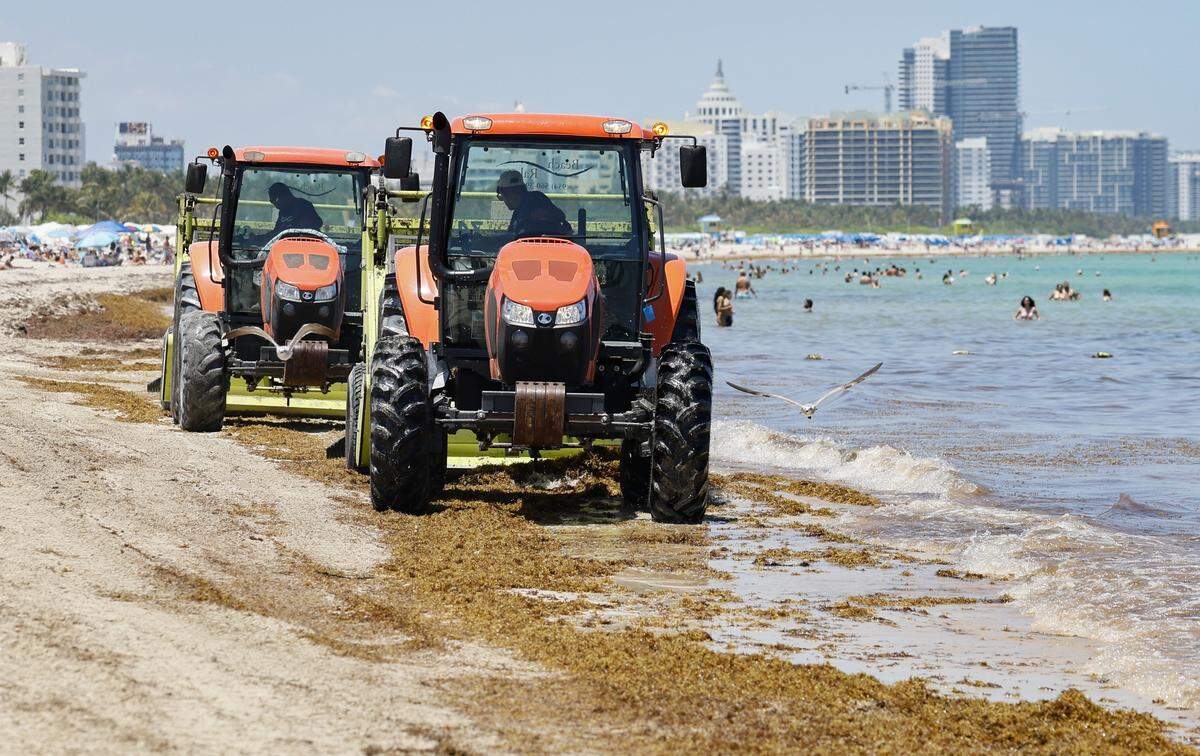
Every morning, heavy-duty tractors raked the beach to gather the mats of seaweed, but by the end of the day, the ocean dumped a new supply of sargassum in the same place.
Her family even relocated to a hotel on Key Biscayne, but she said conditions were no better.
“Our photos from that trip are still an astounding reminder of why every time we wish to make an easy trip for respite, Florida is no longer an option,” Brosman said. That was three years ago.
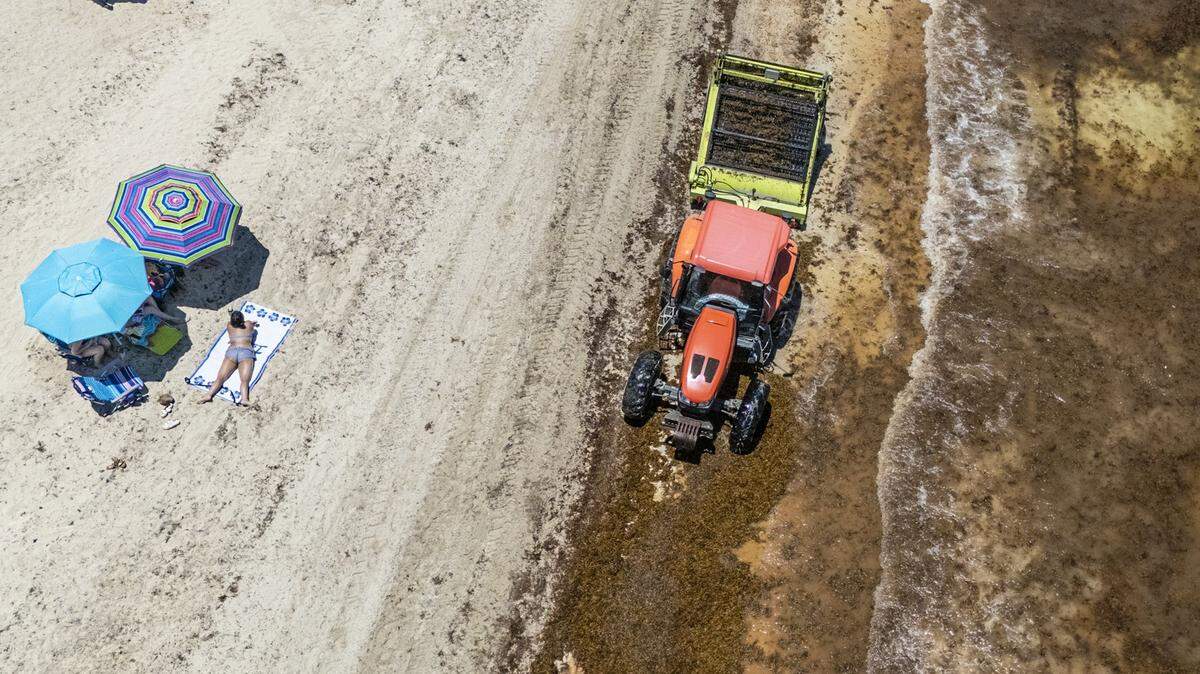
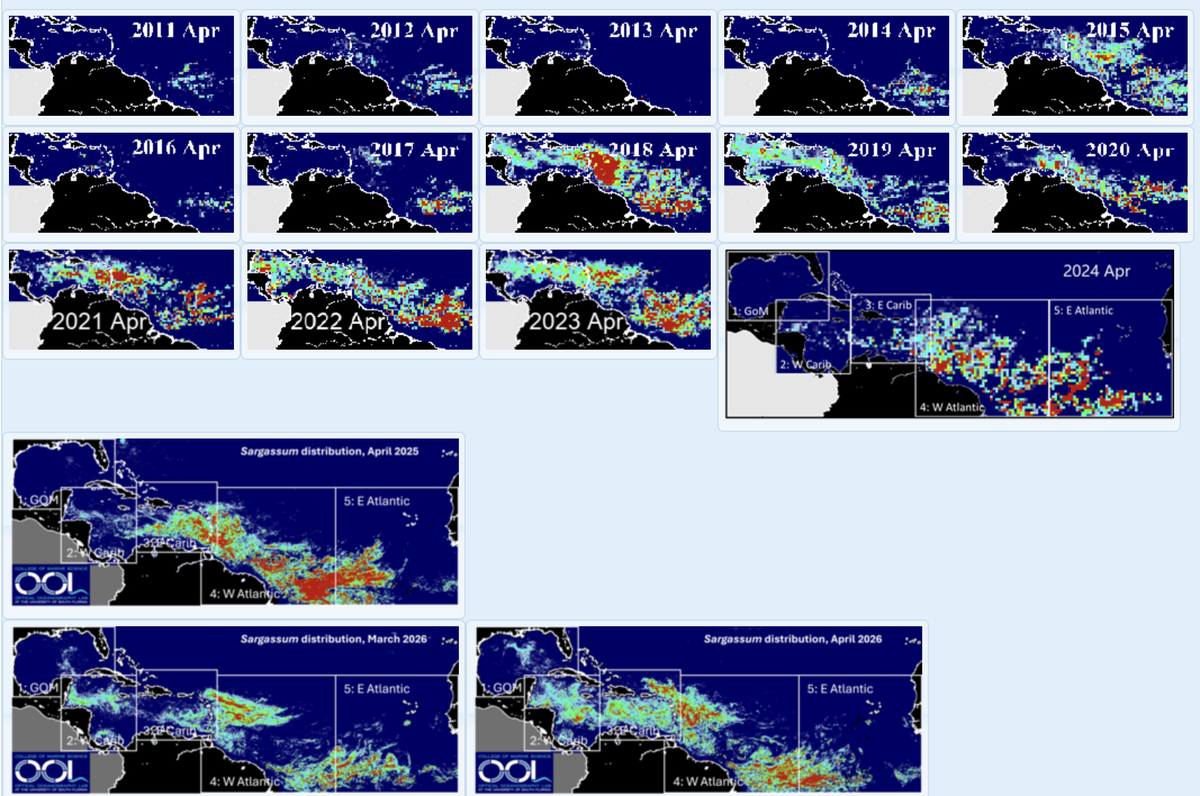
This year is predicted to be another big sargassum year, which could potentially be more record-breaking than the 2023 and 2025 seasons. And the problem is only expected to get worse, with blooms growing larger and arriving earlier. Taxpayers spend nearly $4 million each year for tractors to remove sargassum from the shore. But clean-up and processing is just one of the costs of dealing with sargassum. When the seaweed drives visitors away, losses ripple through hotels, restaurants and bars, experts say.
This January, satellites spotted more sargassum blooms than ever for that month, according to Chuanmin Hu of the University of South Florida, who pioneered tracking sargassum using NASA satellite data.
What’s to blame? Wind, fertilizer run off and higher temperatures due to climate change could all be impacting how the sargassum belt forms and moves.
Climate change could also be behind the wind carrying the sargassum west in record amounts through the Atlantic Ocean, Joaquin Trinanes, a NOAA sargassum researcher, said.
“What is scary to me as a scientist is, in the last two or three years, more and more historical records are being reached,” Hu said. “At a certain time, I said, ‘Well, this is a record.’ Three months later, ‘Well, this is another record.’”
Where is the sargassum? Tourists and scientists want to know
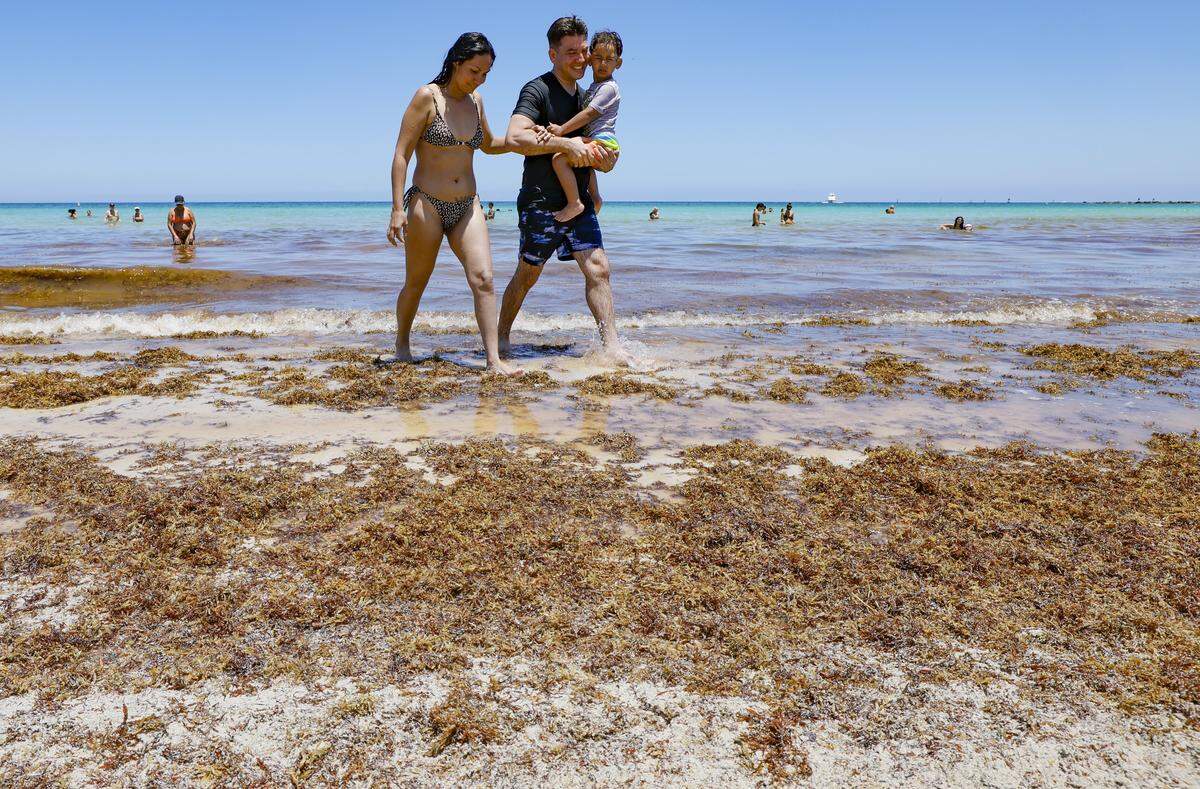
On Thursday, three tractors spent more than an hour raking the beach at South Pointe Park in Miami Beach as beachgoers weaved around them, stepping over thick piles of sargassum that turned the shoreline water a murky brown. At Crandon Park Beach, a crew shooting an ad for Bush’s Baked Beans adjusted their camera angles to crop the piles of seaweed out of the frame.
Tourists to Florida are getting wise to just how disruptive sargassum can be before they even arrive.
In a Facebook group with more than 17,000 members dedicated to discussing Florida’s sargassum, travelers regularly debate whether to keep or change their plans to avoid the rotten-egg-smelling seaweed.
Brena Watson, of St. Louis, had been planning a summer trip to Miami, Hollywood Beach or even Key West. After seeing photos in the group, she reconsidered.
“We don’t need that in our lives,” she said, adding they may skip the beach altogether for Las Vegas or New York City.
“A beach vacation should be clean and pretty and nice,” Watson said.
Eric Page, an Iowa resident who said he was unaware of the issue, booked an Airbnb for September but is now considering canceling.
“I feel sick to my stomach,” he said.
.JPG "MIA_2026-05-07AD0141seaweedscavengerhunt (1).JPG")
Woods Hole Oceanographic Institution Ocean Discovery Center scientist Di Jin estimates losses in tourism and fishing in Florida due to sargassum at about $2.7 billion. Factoring in trickle-down impacts—like empty restaurants and unused services—the total rises to roughly $5 billion, with worst-case estimates nearing $10 billion.
“Sargassum is no longer just an environmental nuisance,” Jin said. “It’s causing significant, tangible economic impact.”
The researchers are very up front that the economic modeling does make assumptions. More accurate economic estimates would require direct business surveys.
Tourism is a major engine of the local economy. According to the Greater Miami Convention and Visitors Bureau, the 28 million tourists who visited Miami-Dade County in 2024 spent $22 billion. And so far, there’s no way to prevent the huge piles of seaweed from washing up on shore.
“Nobody can stop the huge amount of sargassum that’s in the ocean,” Hu said. “You can only prepare.”
Right now, no one could tell you with certainty which beach is going to be hit the hardest next week or next month, or even tomorrow.
But that’s the next step.
Researchers want to be able to forecast how much sargassum is coming and which beaches it’s headed for, so that governments can make better decisions about where to deploy their expensive clean-up resources, and tourists can decide where they want to go swimming.
The closest to that now is a new National Oceanic and Atmospheric Administration (NOAA) tool that helps see how severe the sargassum might be along the coast that day.
The predictions are not perfect. If sargassum is picked up by satellites close to shore, the model will infer that it will reach the coastline. But winds and currents can shift quickly, changing its path. Then there will also be days when there isn’t any information about the sargassum location because there are clouds blocking the satellite view.
Joaquin Trinanes, a NOAA researcher who worked on the sargassum inundation report tool, said they are constantly working on improving their models – and beachgoers can help them by submitting photos.
.png "GOMF (1).png")
County solutions will take a while to be effective
Stopping sargassum at sea isn’t practical in South Florida. Hu said the powerful Gulf Stream off Miami is far stronger than currents in much of the Caribbean, making barriers difficult to anchor and potentially damaging to reefs. On top of that, state and federal rules limit removing sargassum in the ocean, and no offshore barriers have been approved, partly because the seaweed provides habitat to small fish and crustaceans while in the water.
So, for now, the only solution is to gather it from the beach and place it in landfills. But beyond costing a pretty penny, there are environmental and climate concerns with dumping all that organic material into the landfill. As it decays, it turns into methane, a potent greenhouse gas warming the atmosphere.
That urgency has pushed Miami-Dade County to search for long-term solutions for managing the recovered sargassum.
The county worked with the Miami-Dade Innovation Authority to select start-up companies to pilot turning the piles of sargassum into something useful, like fertilizer or building materials.
But the path to testing has proven to be difficult. Although awards were announced in 2023 to four companies — Algas Organics, X Net, Carbon Wave and Chemergy—testing didn’t begin until 2025. Much of the delay came from deciding what seaweed the companies could use. Sargassum is known to carry with it heavy metals like arsenic which can make people sick. But as of October, all four companies have a supply for testing and have until September to complete multiple testing rounds.
Elsewhere, sargassum is already being repurposed. It’s used as cooking fuel in Grenada and processed into fertilizers by companies like Algas Organics and CarbonWave.
While officials in Miami-Dade search for better ways to manage the seaweed, many locals and tourists have simply learned to live with it — and occasionally even appreciate what it brings.
For Erin Mills, a tourist from Phoenix who was hanging out at South Pointe Park in Miami Beach, there was an upside to the seaweed.
Many fish live, hide and eat the small shrimp and crabs that are within the seaweed, which made her snorkeling adventure more exciting. She saw a stingray, and many puffer and parrot fish.
“If anything, it added because I saw more critters,” Mills said.
Ashley Guerra-Orozco, who grew up in Miami and brought her young kids to Crandon Park Beach on Friday, had a message for worried tourists:
“Get over it, it’s really not that bad,” she said.
Ashley Miznazi is a climate change reporter for the Miami Herald funded by the Lynn and Louis Wolfson II Family Foundation and MSC Cruises in partnership with Journalism Funding Partners.
This story was originally published May 9, 2026 at 4:30 AM.