Burning garbage vs. leaving it in a dump: Which is better for climate change?
READ MORE
Where will our garbage go?
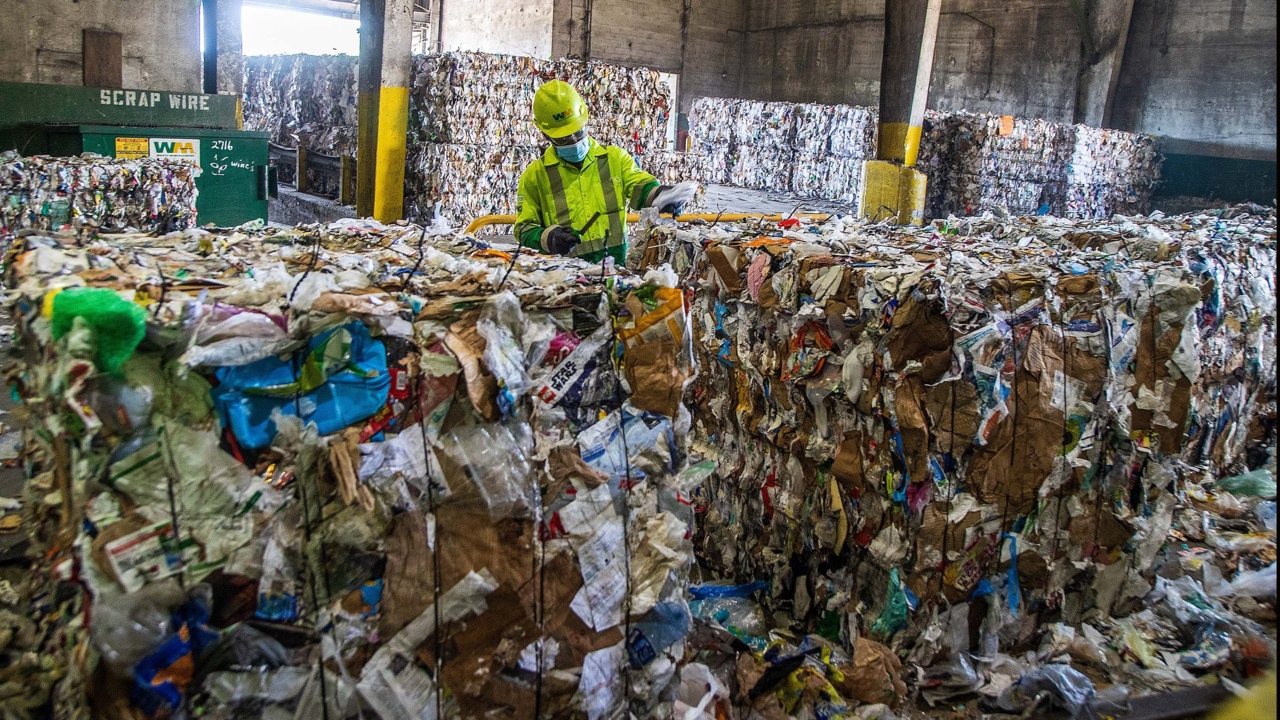
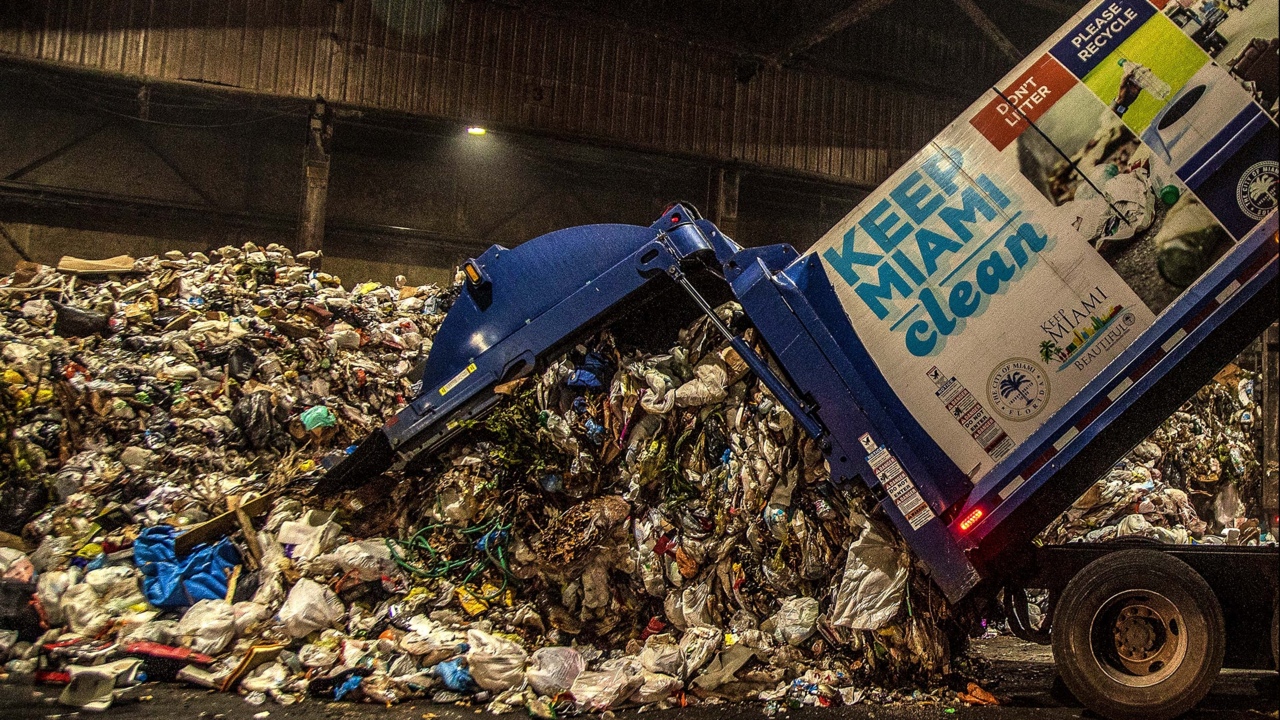
Trailing much of the state in recycling rates and left with shrinking space to bury trash locally, Miami-Dade County faces a string of challenges over the next 12 months related to garbage.
Expand All
Miami-Dade’s trash problem is bigger than having too much of it and no place to put it. That garbage also releases greenhouse gases that cause climate change, a challenge in a county that’s pledged to slash those emissions dramatically.
Each of the county’s two main options — burying trash in a dump or burning it into ash — comes with its own potential environmental and health concerns. But which one is better for the climate?
The answer depends on how the numbers are crunched. But the simplest way to compare the two is to see how many greenhouse gases they emit, a figure reported to the EPA every year.
Miami-Dade County’s trash incinerator plant in Doral releases more carbon dioxide, a greenhouse gas that causes climate change, than any other county-owned facility — about 266,000 metric tons a year, according to EPA records. That’s less than the average coal or natural gas-fired power plant in Florida.
Still, the incinerator facility doesn’t hold a candle to the three top industrial greenhouse gas emitters in the county — FPL’s natural gas plant at Turkey Point (2.3 million metric tons) and two cement producers, Cemex Miami (675,000 metric tons) and Tarmac Pennsuco Complex (1.2 million metric tons).
The company that runs the incinerator, Covanta, argues that the plant’s pollution footprint is best measured against landfills. By that measure, the county’s three landfills combined, which handle the half of the county’s trash that isn’t burned, release twice as much greenhouse gas.
However, by Covanta’s own accounting, it releases almost double the carbon dioxide it officially reports to the EPA. That’s because the EPA doesn’t count burning plant material like grass clippings and branches, classifying it as carbon neutral.
Michael Van Brunt, Covanta’s vice president of environmental and sustainability, said the company ships samples from its garbage piles to a Florida lab that uses radiocarbon testing to figure out what percentage of the trash is plant-based and what percentage is plastic-based. From there, the company does the math on how much of its emissions officially count.
Similarly, those landfill numbers are likely an undercount, too. Dumps full of rotting food and organic material release methane, a greenhouse gas that warms that planet far more than carbon dioxide. Exactly how much? That’s the million-dollar question.
Emerging research shows that methane may actually heat the planet 80 times more than carbon dioxide does over a 20-year period. The latest EPA calculations are based on older science that showed methane was only 25 times more powerful over a 100-year stretch.
Plus, other research shows that landfills leak more methane than the amount predicted by EPA-generated computer models.
“There’s a lot of data emerging that shows our models on landfills are way off,” Van Brunt said. “Unfortunately, the models haven’t caught up with the science.”
For Van Brunt, the more climate-friendly option is clear — his employer. He points to the conclusions of the EPA, the European Union and the United Nations, all of which ranked landfilling as the least preferable way to dispose of trash.
“It’s pretty well concluded that waste-to-energy is the preferable option when you look at things from a life-cycle perspective,” he said.
But for some environmentalists, the air quality impacts of waste incineration outweigh any perceived climate benefits. Emily Gorman, Florida chair of the Sierra Club, said a better option for communities is to do a better job recycling and composting so that landfills produce less methane.
“We have never seen combustion of municipal solid waste that is clean, healthy and safe. Maybe someday someone will figure it out, but it hasn’t happened yet,” Gorman said. “When we’re thinking about the climate fight this is a smaller part of the conversation. But for public health and safety, this is a big deal.”
Thanks to a recent Florida law, burning garbage also now officially counts as renewable energy, on par with solar panels or wind turbines. Climate action advocates criticized the change, questioning whether burning trash for energy really counts as renewable energy if it still produces greenhouse gas emissions. Even if the only difference is on paper, it matters in cities like Miami-Dade, which have a long way to go to meet their emissions-cutting goals.
Miami-Dade’s climate action strategy specifically calls for replacing the incinerator with a newer one that can burn even more garbage. The plan envisions a new facility that burns enough trash to not only power itself but charge the county’s fleet of electric cars and trucks.
“Using electricity from the Resources Recovery Facility, electric garbage vehicles could ultimately be fueled by the very garbage they collect,” the report reads.
This story was originally published April 27, 2022 at 6:00 AM.