Who wants a new $1 billion trash incinerator? Not Doral, where the old one stinks
READ MORE
Where will our garbage go?
Trailing much of the state in recycling rates and left with shrinking space to bury trash locally, Miami-Dade County faces a string of challenges over the next 12 months related to garbage.
Expand All
They say it ruins barbecues and pool days. That it cuts short strolls through the park. That it sticks to their hair and clothes, even when they come inside.
It’s that smell, that awful smell — maybe the most common complaint, right after traffic, in a booming city with good schools and low crime.
“It’s disgusting. Like eggs. A chemical odor that burns your nose,” said Gina Romero, who has organized with other neighbors in Doral to push the county into addressing the foul emissions from the sprawling Covanta waste-to-energy plant.
The facility is the keystone of the county’s garbage processing system, burning about half of the entire county’s garbage 24 hours a day, every day of the year. Of the 3,000 odor complaints the city of Doral received from 2016 to 2021, the majority named Covanta as the source. Some of those complaints are from Romero, who said the stench has been so bad at times that it has woken her at night to call 311.
When the plant was built 40 years ago in the northern section of Doral, its only neighbors were farm fields and industrial zones. But Doral has changed a lot since then and is now a growing city of about 75,000, with suburbs and apartment complexes springing up around the incinerator and nearby landfill.
Many residents want it gone and for Miami-Dade County, which owns the plant, to take its future waste disposal business elsewhere. But with landfills filling up and important recycling contracts expiring soon, Miami-Dade County is instead looking to replace it with a new, higher-tech waste incinerator built right next door.
That’s a plan that could affect not just Doral but every taxpayer in the county. The estimated cost of upgrading the facility could run north of $1 billion.
The county has an October deadline to make any changes to its agreement with Covanta, the company that operates the plant, or the lease auto-renews for 20 more years.
At the same time, the plant’s air quality permit is up. State and federal agencies have to decide whether the plant poses a danger to the communities around it, as some advocates have argued, or if it gets to keep burning trash.
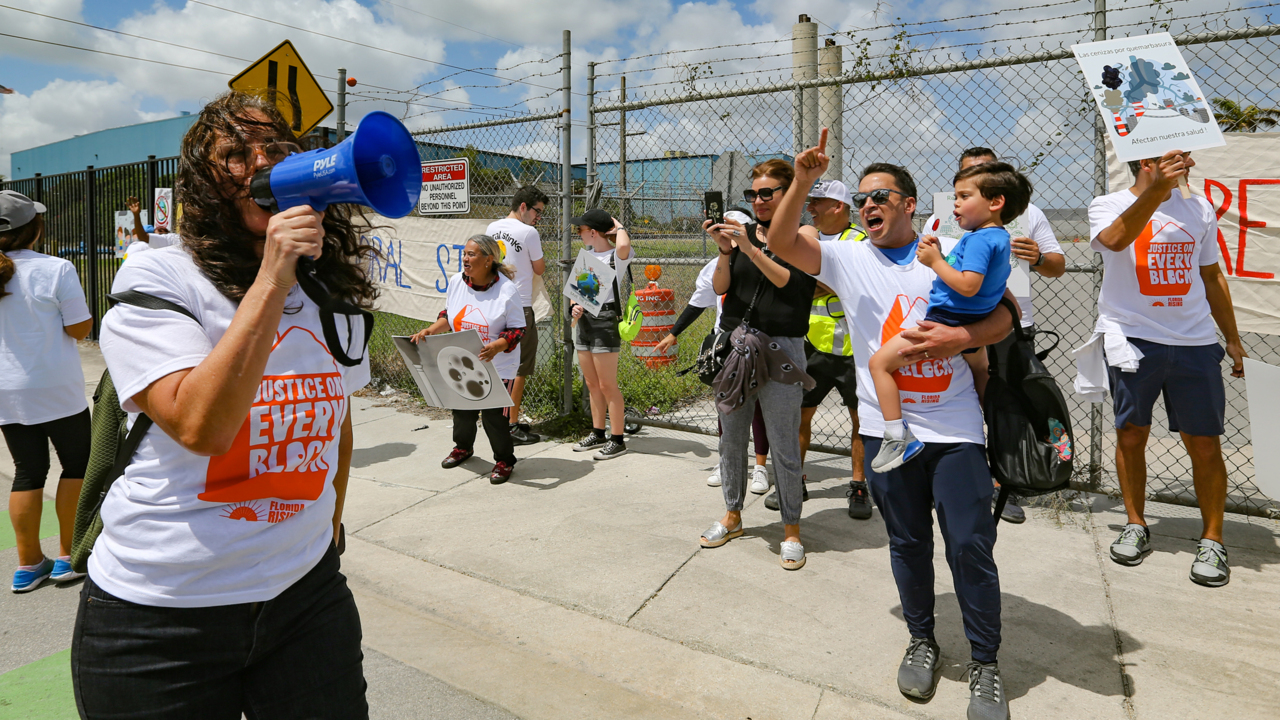
“Now is the ideal — and the only time, really — that we can make a move on it as residents,” said Ivette Gonzalez Petkovich, president of the Doral Community Coalition, which got more than 5,000 signatures on a petition to move the plant.
The battle over the incinerator has also drawn the attention of environmental advocacy group Earthjustice, which has argued to the Environmental Protection Agency that the plant is an environmental justice issue.
Like most of Florida’s 10 waste-to-energy plants, this one is in a neighborhood occupied primarily by people of color. The plant — just south of Northwest 74th Street and almost dead center between the Palmetto Expressway and the Florida Turnpike — is also near public and subsidized housing, as well as schools. And next door to the incinerator is another landfill that recently got permission to rise to 340 feet tall, which would make it the second-highest point in the entire state.
“It goes beyond this one incinerator in Doral, it’s a statewide problem,” said Dominique Burkhardt, an attorney at Earthjustice. “What becomes the government’s duty when you have a residential community and you have this polluting facility right in the middle of it?”
A new plant, but where?
With trash problems piling up and places to build plants few and far between, the county’s leaders appear loath to give up on the Doral site.
Mayor Daniella Levine Cava has made clear she’s interested in replacing the Covanta facility with newer tech — and fast. In an April memo, she said her administration is already planning for a new plant.
That could, at the very least, reduce the number of complaints. More modern facilities, like one in Palm Beach County built in 2015, promise they don’t have the same odor issues as aging plants like Miami-Dade’s. A newer plant would have stricter pollution limits since the EPA allows older facilities to pollute more. It could also handle a lot more garbage every day, a handy answer to the crisis of nearly full landfills in a county with a growing population.
County Commissioner Jose “Pepe” Diaz — whose district includes Doral, Hialeah, Medley and Sweetwater — wants to move even faster. In a committee hearing in mid-April, he passed a resolution forcing the county to choose a location and invite bidders to submit plans for a new plant within 60 days. Dozens of Doral residents showed up to push back, begging Diaz to slow down the process before the area gets stuck with a fourth waste site.
“If somebody could come up with something better, I’ll be the first one to be supportive of it. But I want reality. I don’t want to just kick it away and give it to someone else and let them suffer,” Diaz said. “Let’s solve it altogether.”
The decision left residents like Gonzalez Petkovich, who’s also a candidate for Doral city council, upset and suspicious of the sudden speedup of the county’s timeline for a new facility. She said she would like to see the county set up a task force with residents and scientists to go over the best options and locations for a new facility.
“I think the frustration from the residents’ part is we’re being asked to trust them that there’s nowhere else to go and to trust them that the technology will be odorless. And I think that’s problematic,” she said. “We want this to slow down so it can be studied and we make good choices and years from now we don’t regret doing this at such a fast pace.”
Residents were also upset when some commissioners pointed out that it was the residents’ choice to buy homes near an industrial facility with a long-running odor issue. Gonzalez Petkovich said that attitude dismisses the other reasons why people choose to live in Doral, like the parks and sense of family and community.
“We bought anyways because quite frankly this is an amazing place to raise your kids. That’s why we’re here, but that doesn’t mean that we give up and say it’s OK that it smells as bad as it does,” she said.
Where does the stink come from?
Covanta has long argued that it shouldn’t be blamed for all of the smell and pointed to its next-door neighbors, an open landfill and a closed one, as other sources of stink.
“I’m not saying we’re odor-free,” said William Meredith, area asset manager for Covanta in Miami-Dade and Palm Beach, where the company has a new incinerator facility. “I don’t think it’s as bad as the people are saying.”
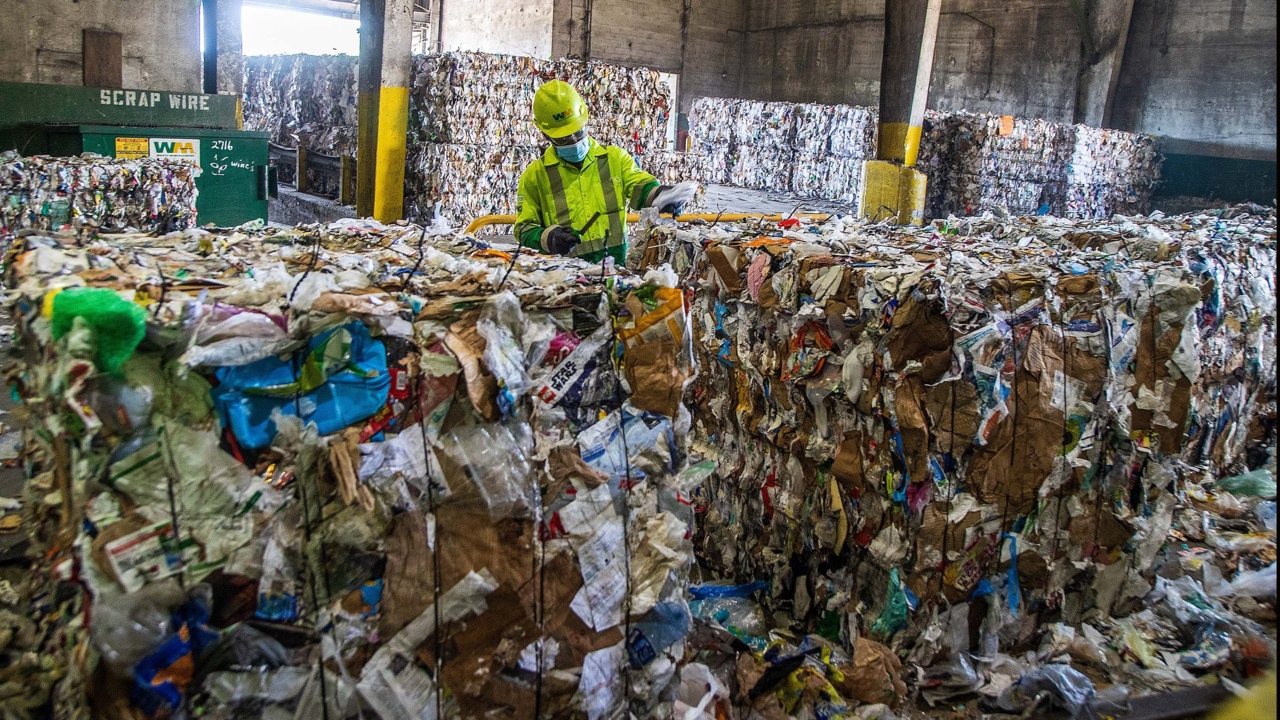
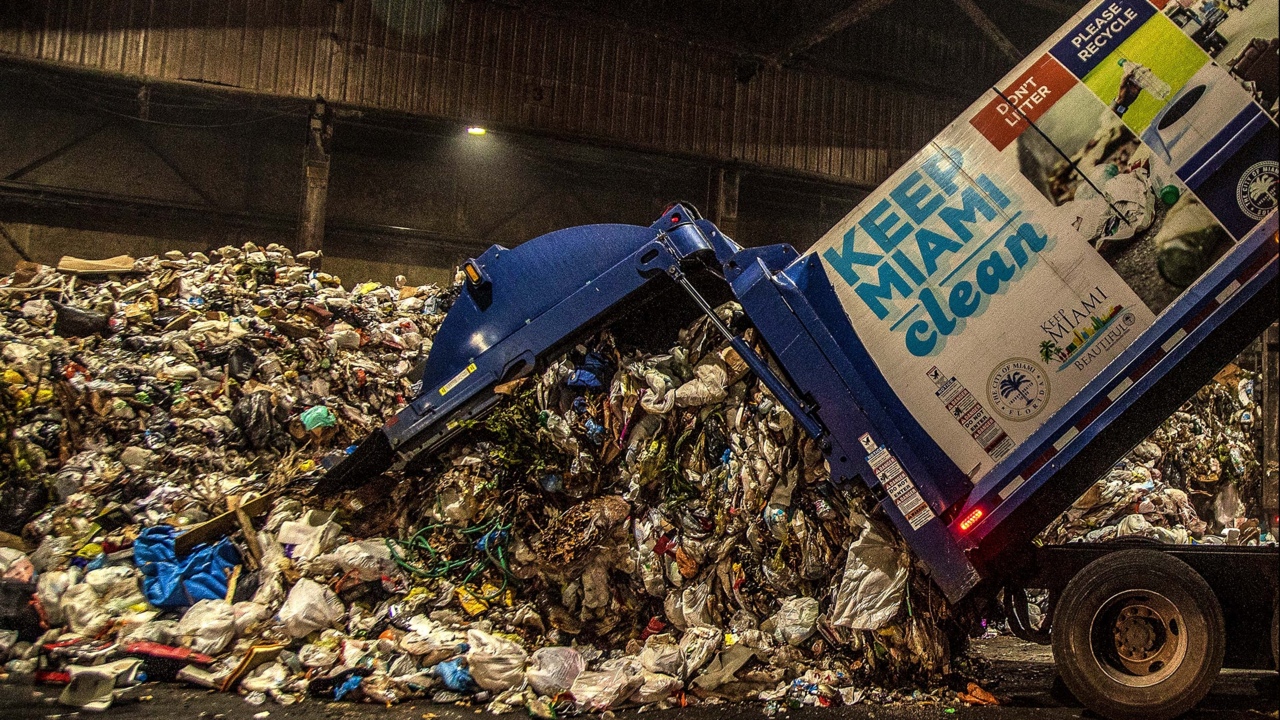
Meredith says the incineration process breaks down the trash so completely that odor isn’t an end product. But trash smells can escape the plant in the early stages. Trucks dump tons of garbage into the vast warehouse where mounds of trash form and rats can be seen darting from the sides of hills inside the enclosed facility.
If bay doors stay open too long, Meredith says, that’s where smell can escape.
A more modern design would reduce that possibility with a better-sealed facility and a quicker incineration process, leaving less time for garbage to wait for processing.
“It can get better with a new plant,” he said.
It doesn’t stink everywhere in Doral all the time. Homes closer to the incinerator and the nearby Medley landfill report complaints more often, which lines up with the findings of a team of scientists Doral hired in 2020.
The researchers placed sensors around the city to detect high levels of hydrogen sulfide, a smelly “swamp gas” produced by rotting food and other organic material, over the course of a month. Because it’s heavier than air, hydrogen sulfide tends to collect in low-lying areas. The researchers found higher levels of the gas (and therefore, noticeable odor) on days with low barometric pressure and low winds. They theorized that high winds blow the smell away, and on days with high barometric pressure the gas may dissolve into nearby lakes and rock pits.
The report also concluded that the levels of hydrogen sulfide they recorded, even at their highest, never crossed the line from nuisance to a public health concern.
Covanta says that’s the case with everything that comes out of the facility’s tall stacks. In the last five years, the state has only dinged the company once, in 2018, for turning in a mandatory report late.
That hasn’t always been the case. From 2003 to 2008 the facility, which was operated by a different company at the time, was smacked with more than $500,000 in state fines for emitting more than it was allowed to. That earned the incinerator a spot on a nationwide EPA watch list.
When everything works as intended at the incinerator, burning trash heats up pipes full of water that produce enough steam to turn a turbine and power 28,000 homes. The smoke from the charred garbage then gets routed through a series of filtration devices, cleaning out most of the toxic gunk.
By the time it leaves the plant, the levels of toxins like lead, mercury and cadmium are low enough to pass muster with the state. But not low enough to ease the worries of some neighbors.
READ MORE: Miami-Dade has millions of tons of trash
An environmental justice issue
Covanta’s continuing operation hinges on a state and federal decision on an air quality permit that expired earlier this month.
Groups like the Doral Community Coalition and Florida Rising are trying to get the state’s Department of Environmental Protection to deny the permit. But an important public meeting is in limbo after Earthjustice filed a complaint to the EPA alleging that DEP has made it harder for residents to voice their opinions. For one thing, DEP didn’t intend to have a real-time translator for the meeting, in a community of predominantly Spanish speakers.
DEP did not respond to requests for comment on when the meeting might be held or how it’s handling the now-expired permit.
Even if DEP does approve Covanta’s permit, the EPA will get the final say. And Earthjustice hopes that the administration’s new focus on environmental justice will sway the agency to block the permit — or at least call for some major reforms.
Burkhardt, the Earthjustice attorney, said her organization is “100% against incineration anywhere” because of the harmful pollutants it emits.
“Incineration is bad. Incineration emits pollutants that cause cancer, that cause asthma in children, that disproportionally affect the elderly,” she said. “It would not be a solution to pick up this incinerator and plop it down in another community that will have the same issues.”
The Doral facility, like all but one of Florida’s nine other incinerators, is in a neighborhood made up mostly of people of color. Using EPA screening data, Earthjustice found that 93% of the people who live within 3 miles of the Covanta facility are Black or Hispanic, and 36% live below the poverty level.
Even though the facility came long before the people did, Burkhardt argues its operation still amounts to an issue of social injustice because the incinerator primarily impacts people of color.
Rather than adding another polluting facility to this same neighborhood, Earthjustice wants Miami-Dade to follow the path of communities like San Francisco and Berkeley that have completely reworked how they address garbage by recycling more, composting food and plant matter and lowering their emissions citywide.
“We recognize this is not a shift that can necessarily happen overnight,” she said. “But locking the county into another five, 10, 20-year contract incinerating waste when that money could be spent on building out this alternative method of waste management, that isn’t right.”
Correction: An earlier version of this story incorrectly stated the number of new incinerator facilities in Palm Beach County.
Miami Herald Staff Writer Douglas Hanks contributed to this story.
This story was originally published April 27, 2022 at 6:00 AM.