Miami-Dade has millions of tons of trash and is running out of places to put it
READ MORE
Where will our garbage go?
Trailing much of the state in recycling rates and left with shrinking space to bury trash locally, Miami-Dade County faces a string of challenges over the next 12 months related to garbage.
Expand All
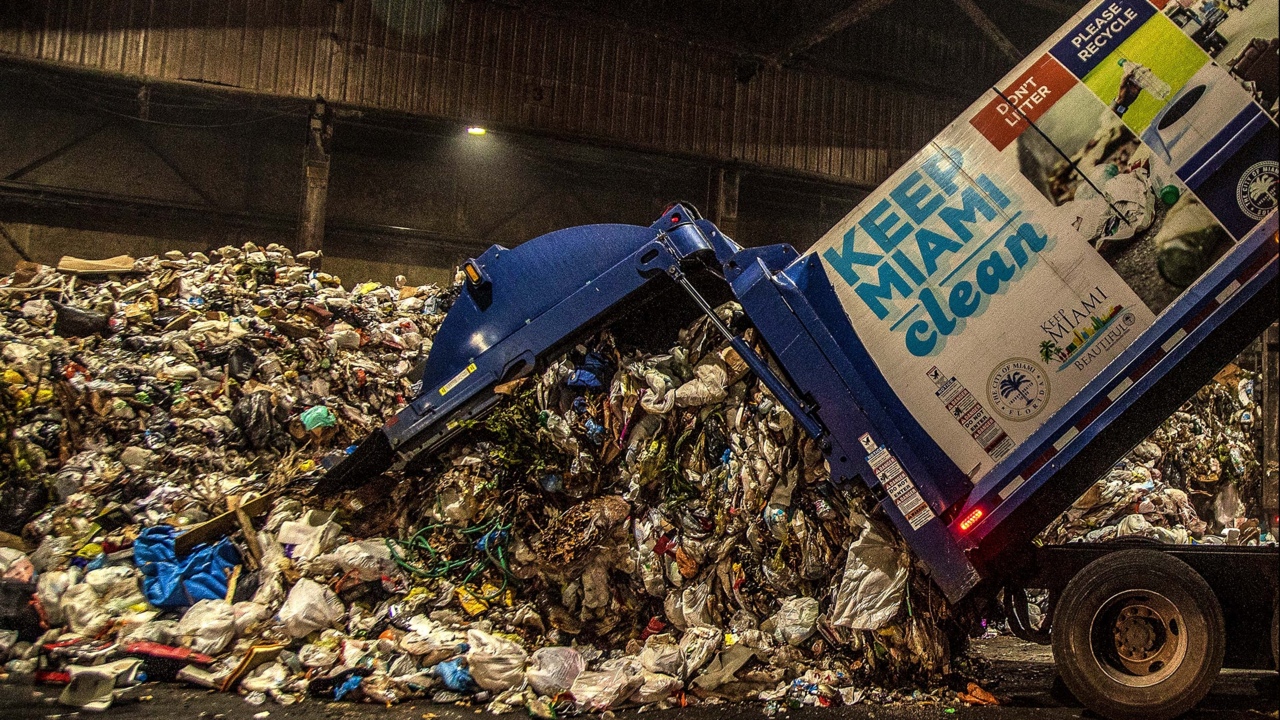
From a Miami depot on a recent morning, tractor-trailers loaded with about 800 tons of trash headed out for a 130-mile trek north to a private landfill near Lake Okeechobee, a long-haul trash run for a local government running out of options.
It is seen as a short-term solution for a long-term problem. Miami-Dade is running out of land to bury its refuse, failing to get residents to recycle enough to make a dent and unable to burn enough to make up the difference.
Since September, Miami-Dade has been trucking about 15,000 tons of household garbage a month from a waste holding station off Northwest 12th Avenue and 20th Street, across four county lines, to Waste Management’s 970-acre landfill in Okeechobee County.
“It basically buys time,” said Michael Fernandez, director of Miami-Dade County’s Solid Waste Management Department, which oversees two county-owned landfills nearing capacity and an incinerator plant. “Once you fill up everything, what options do you have?”
Trailing much of the state in recycling rates and left with shrinking space to bury trash locally, Miami-Dade County faces a string of challenges over the next 12 months related to garbage.
▪ Landfills reaching capacity. Reports filed with the Environmental Protection Agency show the North Dade landfill is almost full, and expected to reach capacity by 2025. The South Dade landfill would last a decade more, with capacity forecast to run out in 2036.
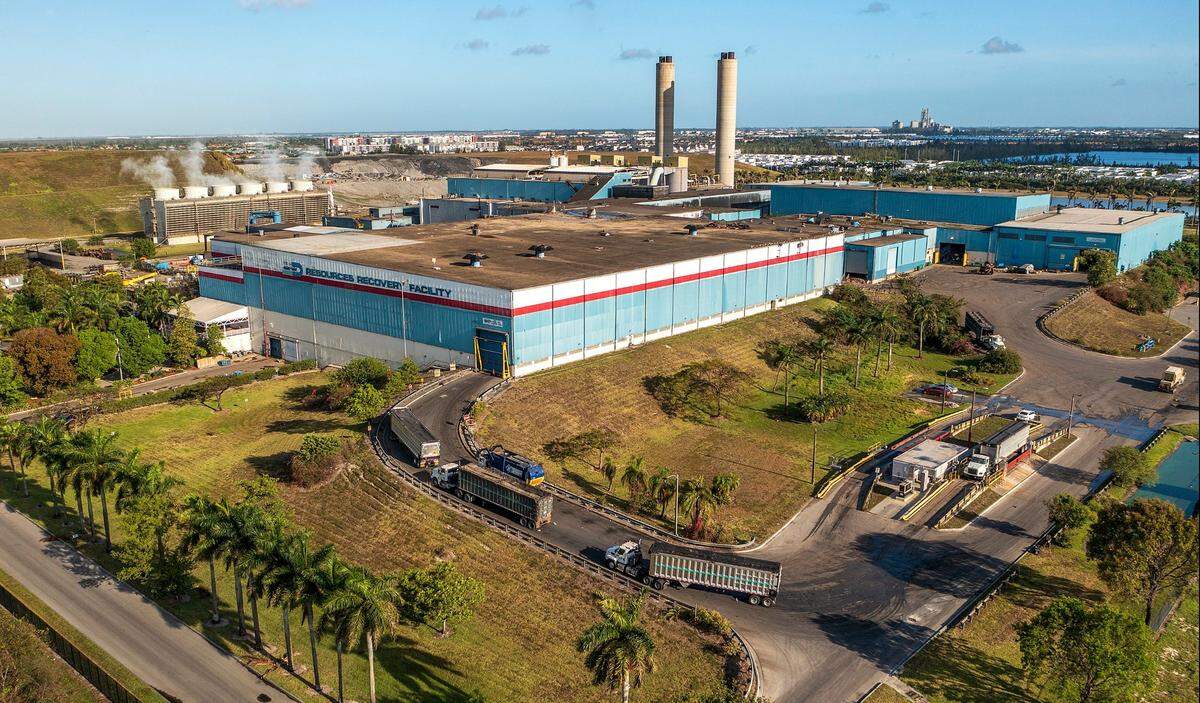
▪ Incinerator issue. Covanta runs the county’s waste-to-energy facility in Doral that makes electricity out of roughly 800,000 tons of garbage from Miami-Dade each year. Doral leaders call it a blight on the city’s quality of life for the smell and steady stream of waste-hauling trucks, while the county considers building a modern replacement next door.
▪ Recycling contract ending. Material from curbside recycling bins from 350,000 homes across Miami-Dade currently wind up in a Broward County plant run by Waste Management, but the Houston-based company says it won’t extend the 2008 agreement when it expires in March 2023.
▪ New recycling plant. Miami-Dade isn’t just exploring how to build a new incinerator plant. It may build its own recycling plant as well. Last summer, a county consultant recommended building a modern recycling plant next to the Covanta facility, with Miami-Dade hiring an operator to process recycling on-site.
Trailing in recycle ranking
More recycling could help lessen the waste load, but that has also been a challenge in Miami-Dade, Florida’s most populous county.
The county’s garbage fleet, city waste operations and private trash haulers picked up about 4.3 million tons of waste in 2020, according to the latest statistics from Florida’s Department of Environmental Protection.
Of that, 19% was recycled, leaving Miami-Dade trailing recycling rates among the rest of Florida counties with a population of 1 million and more. Miami-Dade ranked 43rd overall out of 67, when not counting trash the municipalities burn and convert into electricity.
Broward County recycled about 30% of its trash in 2020, as did Orange County, according to the state statistics. Palm Beach and Hillsborough finished the year with a recycling rate of between 45% and 49%. Pinellas County beat them all with a recycling rate of 51%.
Smaller counties represent the extremes on the state recycling chart: Dixie and Glades counties, both with fewer than 17,000 people, are listed with 0% recycling rates, while Charlotte County, population 188,000, leads Florida with a 77% recycling rate.
Part of Miami-Dade’s struggles with recycling stem from residents filling those bins with the wrong type of trash for the county’s pickups every other week. The routes run through all neighborhoods outside of city limits, including 20 municipalities such as Miami Gardens, Miami Beach and Pinecrest.
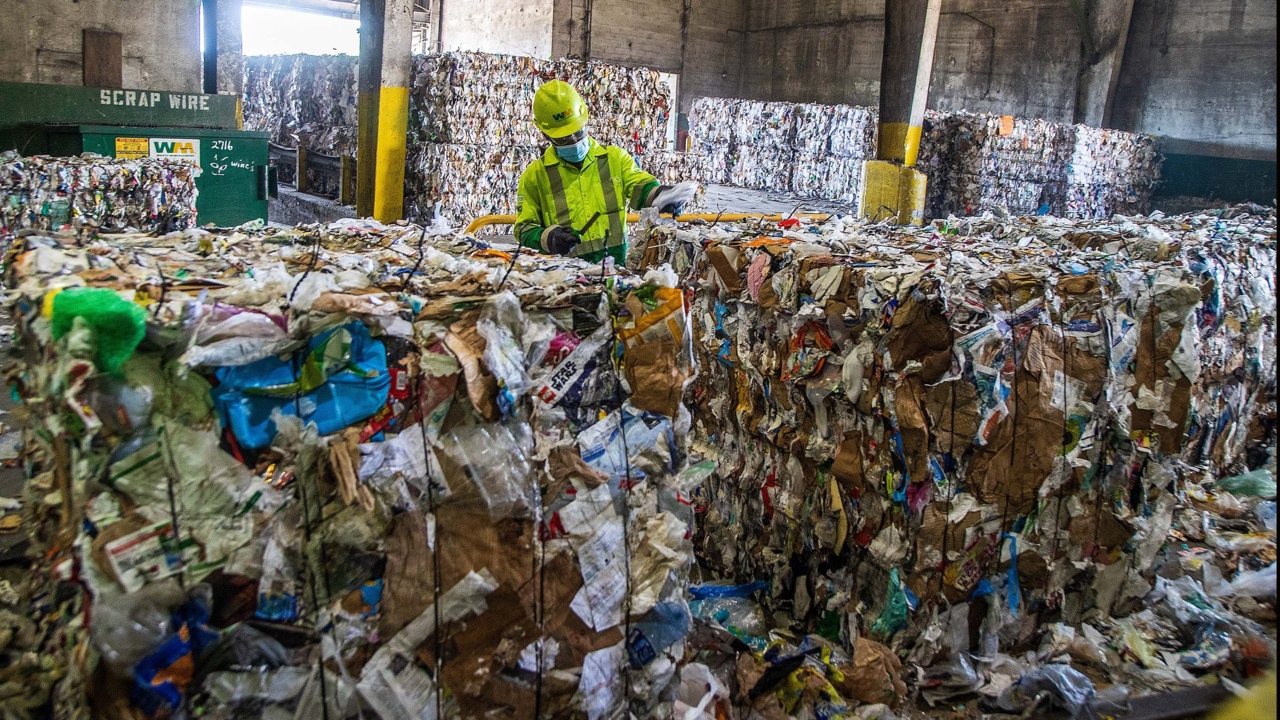
It all gets trucked to Waste Management’s regional recycling center off Route 27 in the outskirts of Pembroke Pines, where machines and employees separate trash from reusable material.
“See all the flies?” Dawn McCormick, Waste Management’s director of communications and government affairs, said near a 15-foot mound of refuse formed from the day’s supply of curbside pickups. “That means there’s food in there somewhere. Unfortunately.”
Relatively poor compliance with recycling rules was cited as one challenge for Miami-Dade in a February memo that Mayor Daniella Levine Cava sent to county commissioners analyzing options once the agreement with Waste Management ends next year.
She noted when Miami-Dade exercised its last renewal of the Waste Management contract in 2015, the county agreed to a campaign aimed at lowering contamination rates — the portion of material customers put in their recycling bins that shouldn’t be there. Contamination rates hit 25% in 2015, then climbed, according to recycling audits, to 49% in 2020.
That’s a rate so high that a firm the county hired to analyze recycling options, Kessler Consulting Inc., recommended Miami-Dade conduct a new analysis since “only in rare instances has KCI noted this scale of contamination.”
Like other recycling companies, Waste Management asks customers to limit recycling to basic categories of mostly clean waste: plastic jugs and bottles, paper, cardboard, aluminum cans and glass bottles. Plastic grocery bags are a persistent problem, since they wind up clogging the metal sifters designed to separate paper from the heavier materials.
Machines can’t do all the work. After the mechanical paper screening, the stream of refuse gets dumped onto conveyor belts running by Waste Management workers in yellow helmets.
They’re tasked with hand sorting what the machines missed, a scramble to grab what’s most valuable in a given square foot of refuse sliding by.
Each worker stands next to a barrel for depositing recyclable materials, plucking out laundry detergent jugs, packing boxes, cans and water bottles. Signs posted about the work stations identify the target lists by the resale value of recyclable materials. “The most valuable is aluminum cans,” McCormick said. “Then plastic bottles and jugs.”
Pay starts at $15 an hour. “It’s an extremely hard job,” said Carmelo Andino, operations supervisor at the plant.
After China exit, recycling in demand again in U.S.
The last five years saw sharp swings in demand for the kind of recyclable materials being sorted at plants across the country. Prices dropped in 2018 when China stopped buying foreign recyclable shipments mixed with garbage, drying up the most profitable place for processing companies like Waste Management to sell their raw materials.
Those price declines filtered through municipal recycling budgets across the United States, where revenue from recyclable sales offsets processing and pickup fees. In 2018, Deerfield Beach paused its recycling program for six weeks over higher fees, Sunrise shifted recycling shipments from the Waste Management plant to an incinerator in Davie, and Pasco County dropped glass from its curbside programs, according to a summary in the Levine Cava memo.
Industry analysts said the domestic market for curbside recycled materials has rebounded, fueled in part by the hunt for fiber to replace the drop-off in recycled paper from offices that sat empty during the pandemic. Large U.S. beverage companies, including Coca-Cola and Pepsi, also are buying more to meet internal requirements for making bottles out of recycled plastic.
“Prices are at record highs, and they have been for more than a year,” said Lynn Rubinstein, director of the Northeast Recycling Council. She said the rebound from the price plunge caused by China has left recycling processors more focused on better sorting in their plants to meet higher standards required by U.S. companies.
“China would pay for a ton of material that, candidly, was garbage,” she said. “So you and I didn’t have to pay that much attention to what we were putting in our recycling bins.”
The Kessler report said governments in Miami-Dade’s position are facing higher processing fees from recycling plants and more stringent contamination standards when they try to renew long-standing recycling agreements that were signed before the China exit. That can include financial penalties for exceeding target contamination rates, and higher processing fees by recycling plants.
Cody Marshall, who advises local governments on recycling strategies, said the best long-term agreements don’t cause budget problems when commodity prices fall and recycling programs find their bottles, cans and paper don’t generate as much revenue to offset costs.
“All cities need to be protected in years when prices are down,” said Marshall, chief community strategy officer at the Recycling Partnership, a nonprofit that promotes better recycling at the local level. “It’s critical for a local government to get into a sound contract, and not focus on today’s prices.”
A new recycling plant in Doral?
In her February memo to county commissioners, Levine Cava recommended that Miami-Dade build its own recycling facility alongside a new modern incinerator plant. That would allow the new recycling plant to operate on electricity generated by the incinerator. Miami-Dade would hire a private operator to run the recycling plant, in the same way Covanta operates the county-owned incinerator operation.
With its own plant, Miami-Dade could design a process that accepts more materials than the Waste Management facility, where plastic silverware is currently considered contamination.
It also would end Miam-Dade’s reliance on private-sector recycling options at a time when Waste Management and a former Broward County competitor, Bergeron Environmental and Recycling, are in a court fight over alleged anti-competitive practices.
Levine Cava’s memo doesn’t say whether Miami-Dade should build those two new waste facilities on the existing incinerator site in Doral, but there’s a push to keep that area the hub for waste operations.
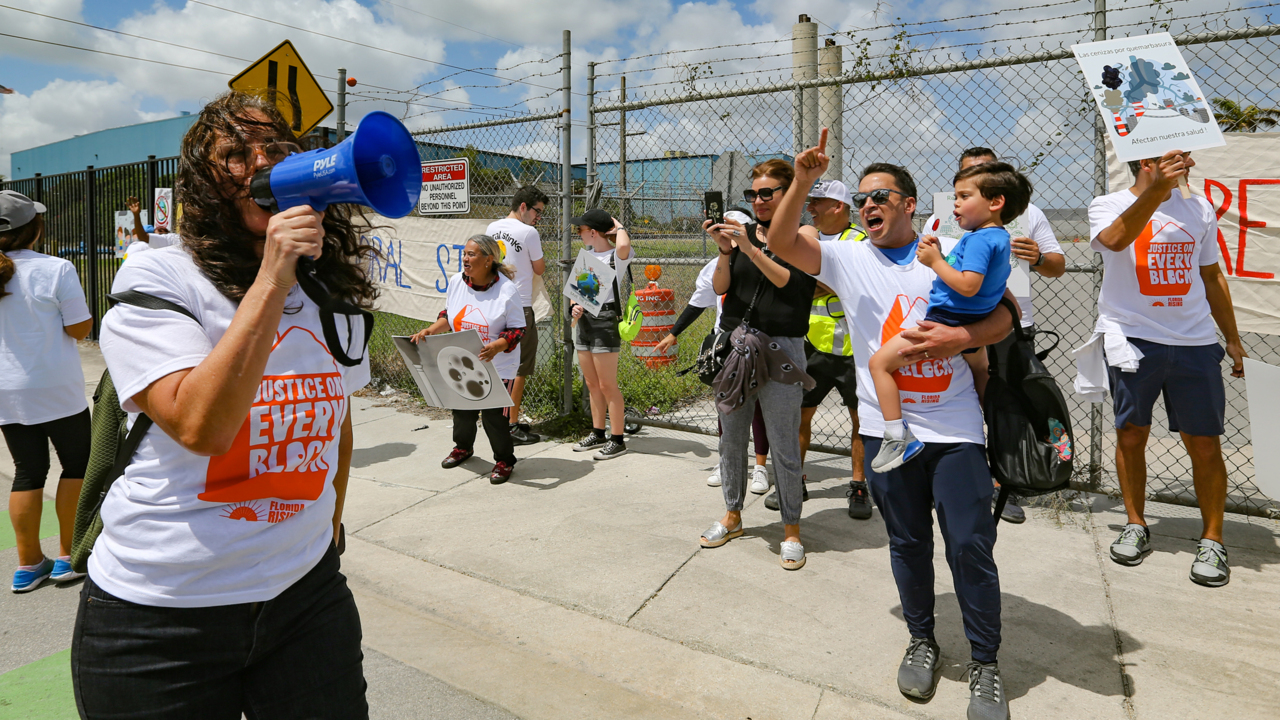
Legislation that Commission Chairman Jose “Pepe” Diaz filed in April called for putting the new incinerator on the same Doral site where the existing Covanta plant operates. City leaders and residents argue that suburban Doral has suffered long enough with the odors and trash trucks that come with the countywide incinerator plant.
READ MORE: Who wants a $1 billion trash incinerator?
“It’s not just the smell,” said Doral Mayor J.C. Bermudez, who is running to replace the term-limited Diaz as District 12’s county commissioner. “It’s truck traffic, and congestion, and quality of life.”
Diaz agreed to revise his legislation to consider other sites, but said he doesn’t want a decision delayed. “We’re not going to sit here and make this the eternal story,” Diaz said at an April 13 hearing on his resolution, which awaits a final vote before the full commission. “Let’s find solutions.”
While the Covanta plant generated enough electricity to power the facility and about 28,000 households last year, the power sales don’t come close to covering the costs.
The county’s 2022 budget lists $72 million in expenses for the facility, and a projected $8 million in energy sales.
“It’s not about producing electricity,” Fernandez, the Solid Waste director, said during a recent tour of the Covanta operation. “It’s about reducing the amount of garbage that goes into landfills.”
Miami Herald Staff Writer Alex Harris contributed to this report.
This story was originally published April 27, 2022 at 6:00 AM.