Beauty still abounds under surface of Biscayne Bay. Coral City Camera offers a glimpse
READ MORE
Biscayne Bay on the Brink
Expand All
For most, Biscayne Bay is a glittering backdrop for selfies or a beautiful spot to boat on, but the real magic lies beneath the waves.
The Coral City Camera, a 24/7 livestream of bay residents, offers a glimpse of some of the mesmerizing critters that are still thriving beneath the waves. Colin Foord, the artist and marine biologist behind the feature, calls the camera Miami’s “online, digital public aquarium.”
Despite the camera’s location in one of the most urban spots of the bay, a cruise berth in PortMiami, it manages to capture both the bigger, popular creatures most people know, like lemon sharks, dolphins and, of course, manatees, but also a real-time look at some of the less well-known and equally special denizens.
Shireen Rahimi, a filmmaker with a PhD in marine science from the University of Miami, said there are plenty of ways for Miami-Dade residents to get involved in saving the bay and all its inhabitants, and if more people understood what they stood to lose, they’d be more willing to work to save it.
“I don’t think people realize that under the causeways we drive over, you can just get in the water and see so many fish,” she said. “Don’t be afraid to just go explore it because there’s still a lot of very cool things to see.”
The camera has captured dozens of different species. Here are a few:
1. Spotted Eagle Ray
These rays occasionally leap out of the ocean and soar in the air for a few feet before splashing back down, but most often they can be found swooping gracefully along a reef.
“They’re beautiful, majestic animals that you imagine in Natural Geographic,” Foord said.
2. Parrotfish
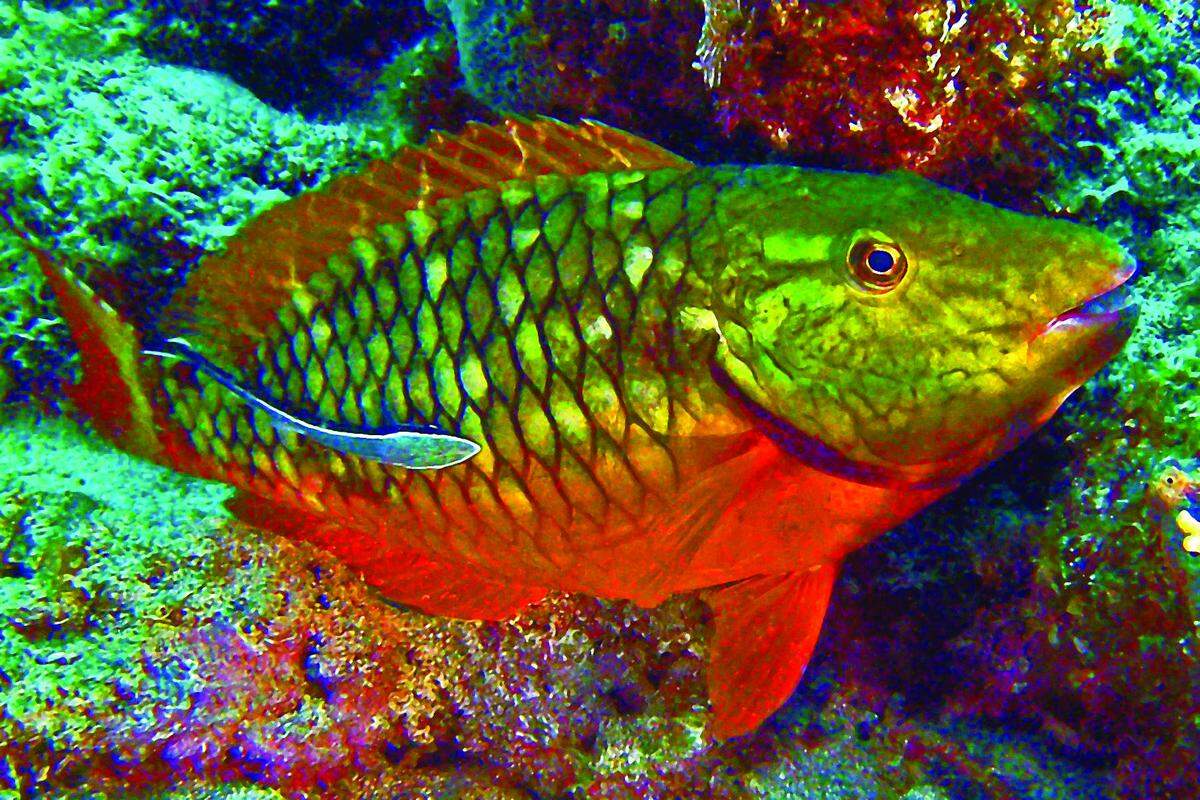
Some of the most beautiful creatures in the bay are parrotfish, which come in a variety of neon colors that change as they mature. Parrotfish are well known for using their beak-like mouths to chew algae off coral, scraping off chunks of coral in the process that they later poop out as pristine white sand.
“They remind me of the rainbow fish, a childhood favorite,” Rahimi said.
3. Caribbean Reef Squid
Squids have a unique ability to change color rapidly to match their surroundings, scare off potential predators or attract a mate. Schools of squids sometimes make an appearance on camera, shifting colors as they soar by.
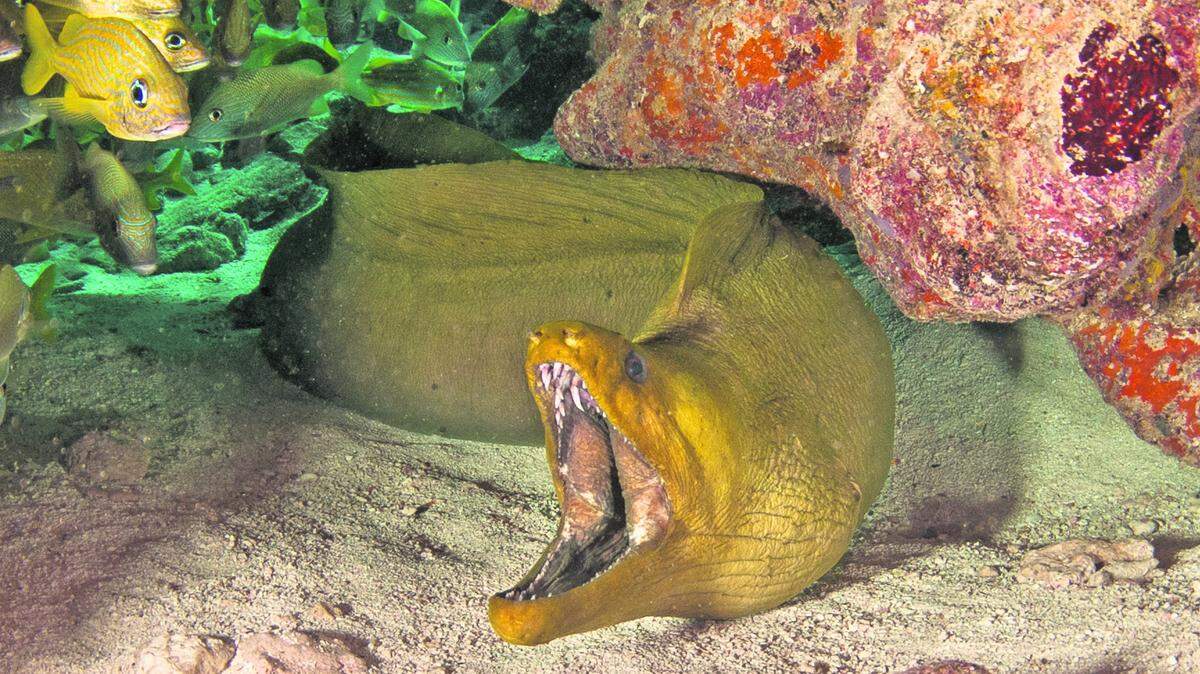
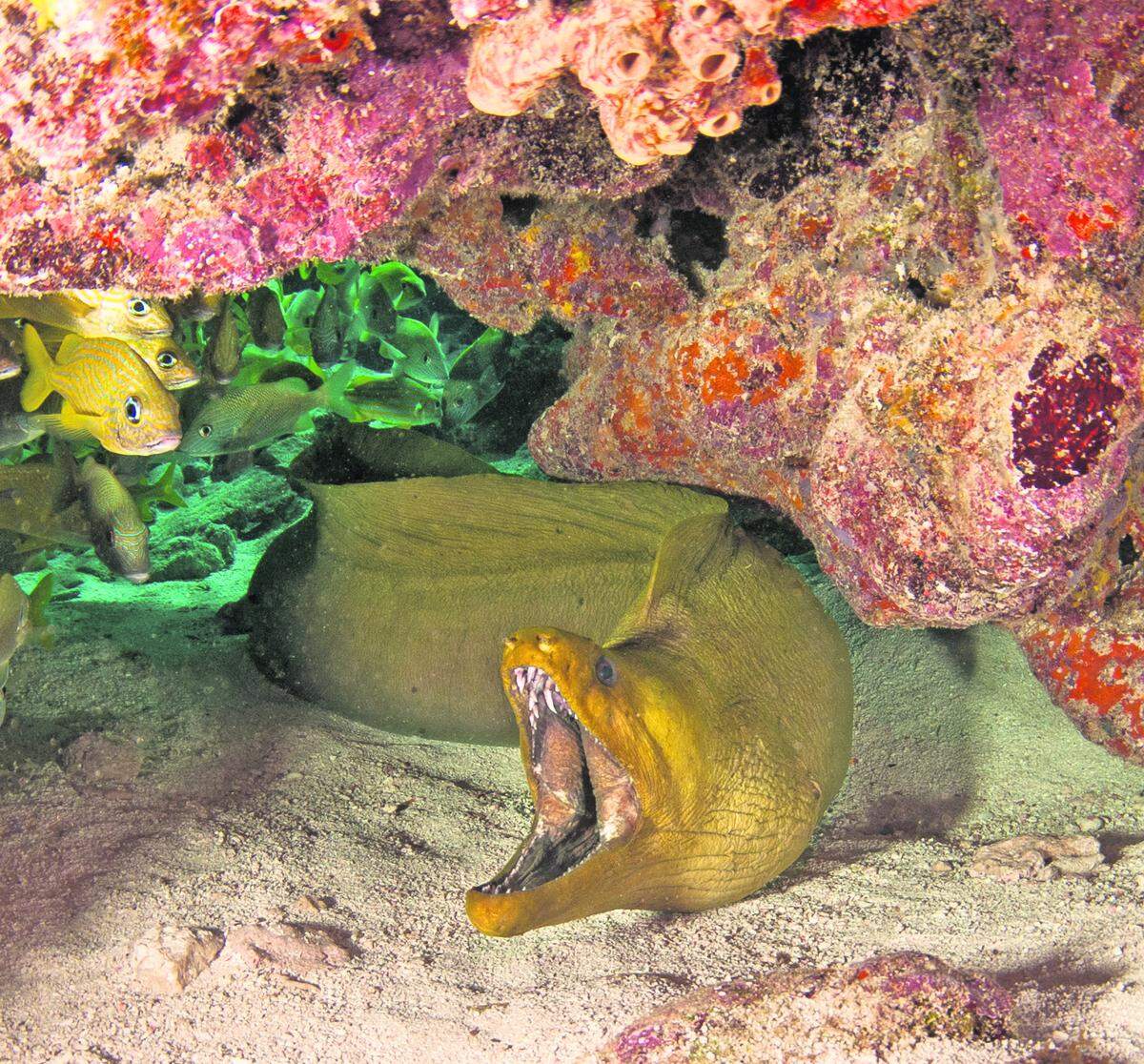
4. Eel
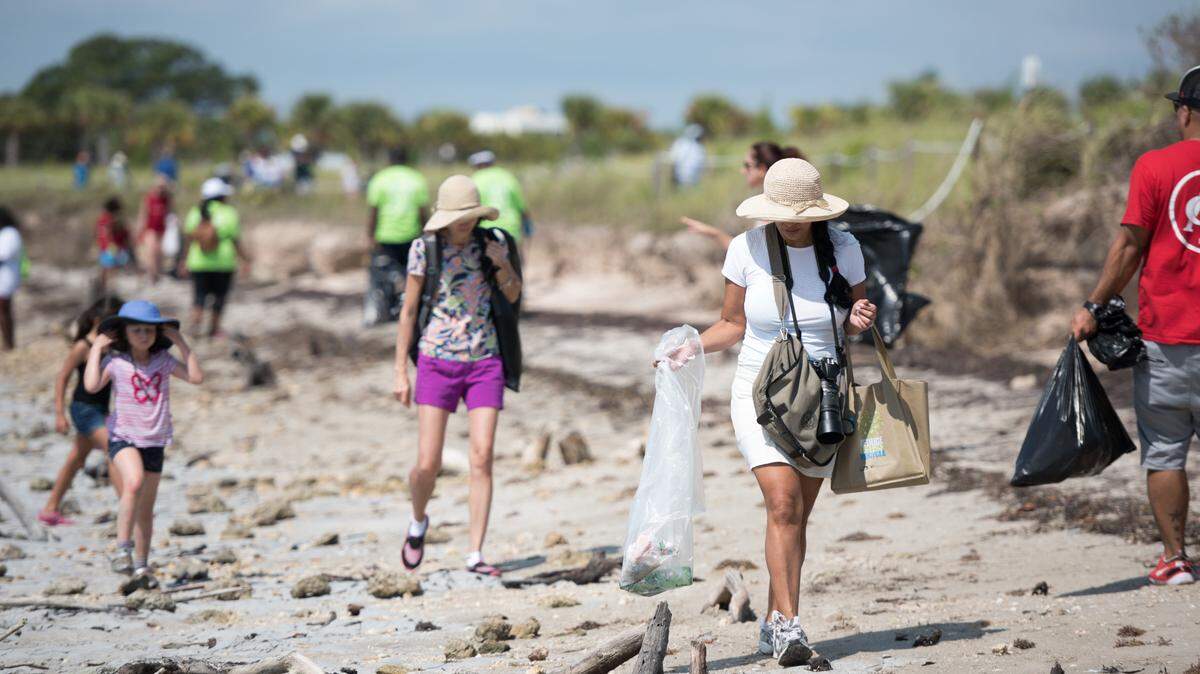
After the summer 2020 fish kill, Theo Quenee, co-founder of ocean cleanup and advocacy group Send It 4 The Sea, led volunteer crews as they shoveled the dead wildlife off the shores of Biscayne Bay. Among the corpses, he discovered some new-to-him species.
“There were these tiny eels. I actually had learned about so many types of species that i didn’t even know were in the bay,” he said.
Biscayne Bay National Park has registered more than 20 different species of eels alone in the park.
5. Angelfish
Biscayne Bay is home to many species of angelfish, including the iconic Queen variety with its bright blue and gold coloration. Foord says his favorite are the French angelfish, which have defined black and gold stripes when young.
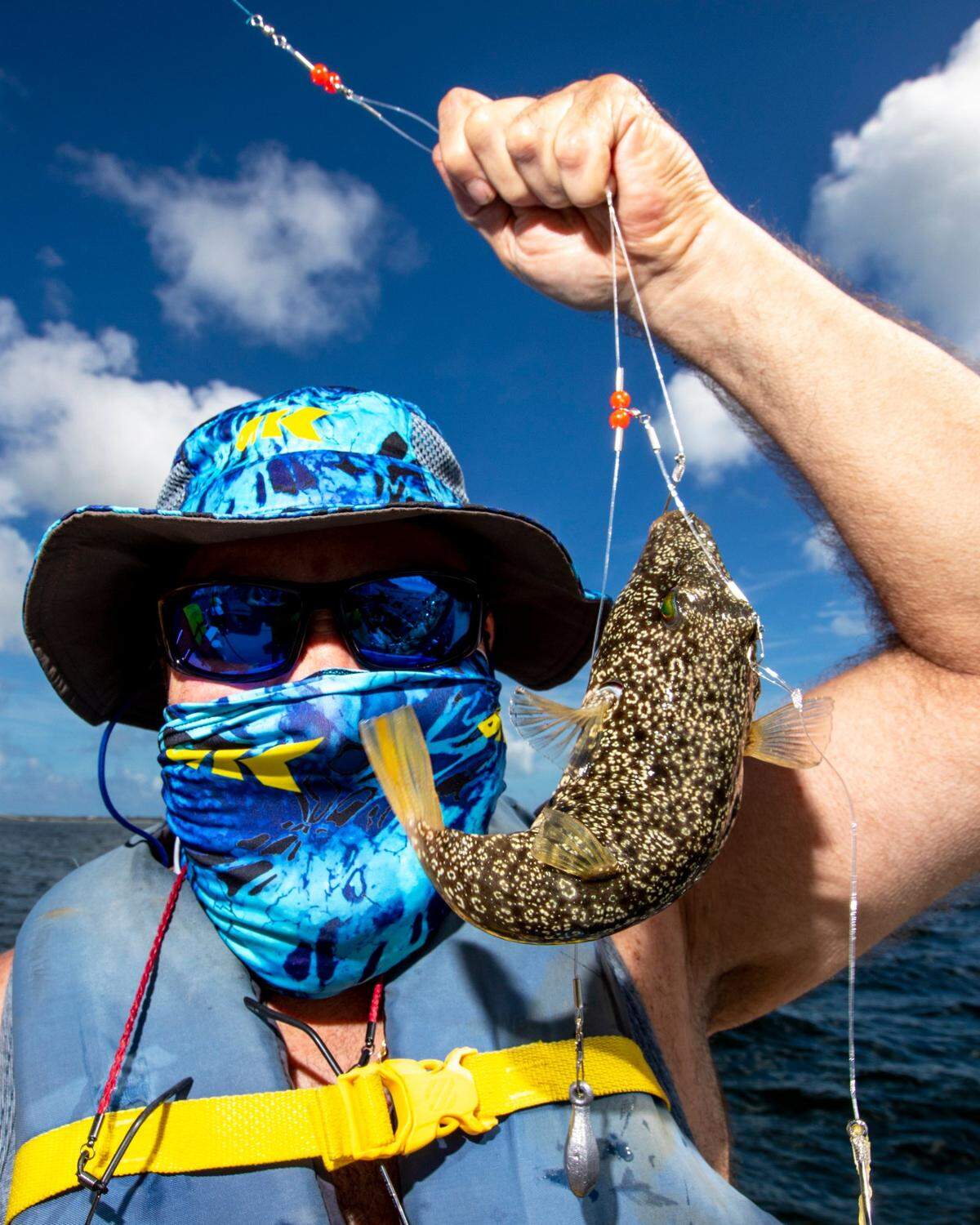
6. Puffer fish
As cartoons have immortalized, puffer fish are best known for their defensive strategy of swallowing copious amounts of seawater or air and blowing themselves into inedible nubby balls. For good measure, nearly all varieties of puffer fish are incredibly toxic.
The Key West Aquarium writes that one puffer fish contains enough toxin to kill 30 adult humans.
7. Bioluminescent Algae
The first time Quenee saw bioluminescence on a nighttime kayak trip in Biscayne Bay, he thought someone had broken a glow stick in the water.
“And then I looked much closer at the source of light and I saw it was moving,” he said.
With each movement of the water, it glowed with an almost supernatural light, the result of dinoflagellate organisms that glow blue to discourage predators. Now he leads kayak trips near Key Biscayne for boaters to see the phenomena for themselves from June through October.
8. Octopus
The most infamous octopus in Miami, the one that washed up in a Miami Beach parking garage after a king tide, isn’t alone in the bay.
“They’re mostly nocturnal. They’re definitely abundant,” Foord said.
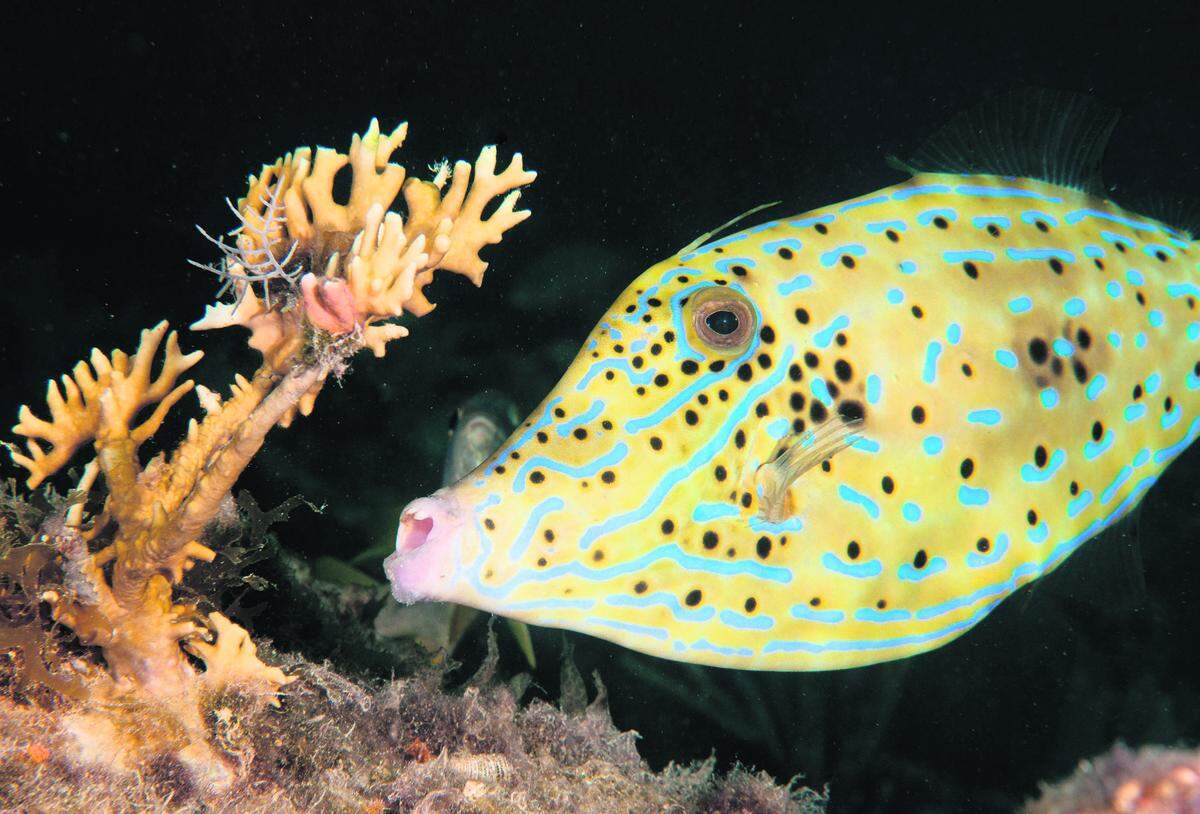
9. Filefish
The most common filefish in Florida is the scrawled filefish, a squashed-looking creature with intricate markings that it can change to camouflage with its surroundings.
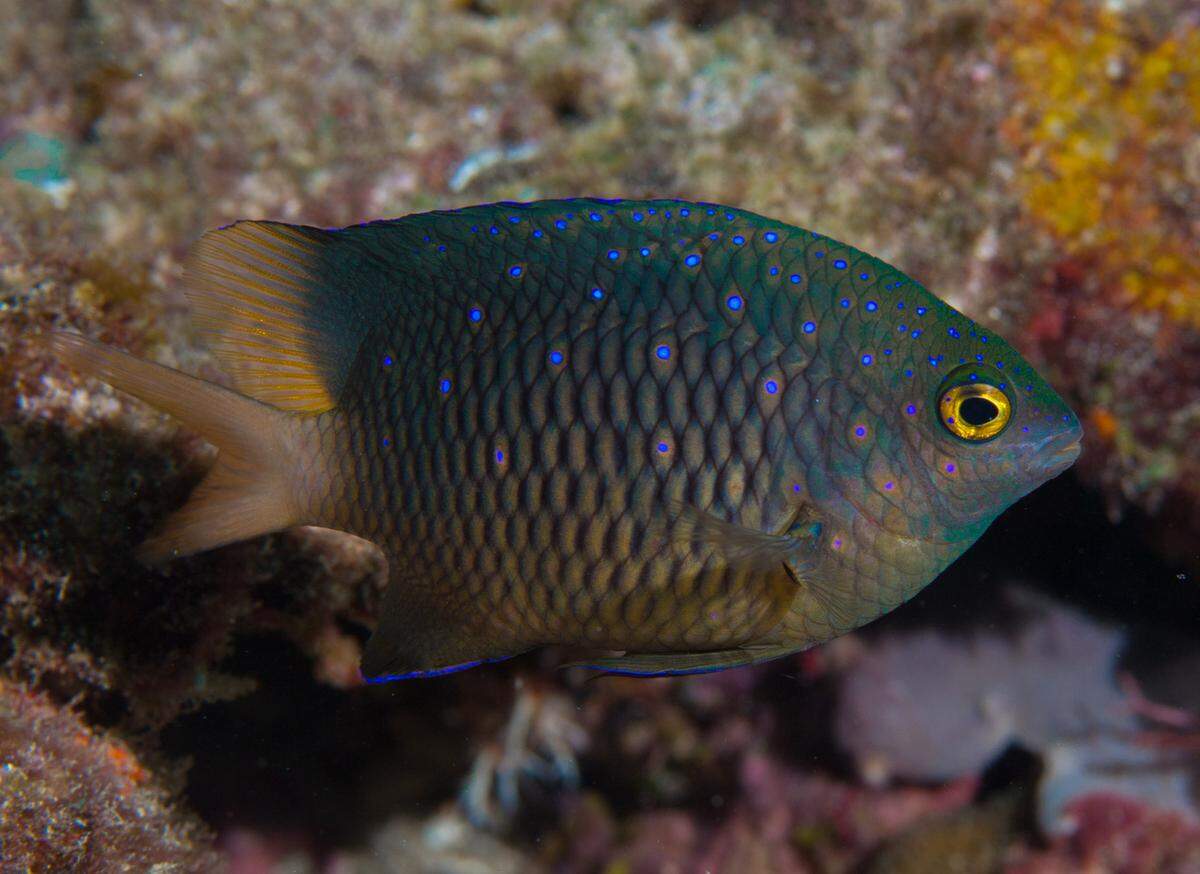
10. Damselfish
These fish come in a variety of bright colors. The jewel damselfish is navy blue with bright turquoise spots. The Beaugregory damselfish is two-toned, with a blue top half and a yellow bottom half. They tend to be territorial and confrontational with divers that invade their space.
This story was originally published November 14, 2021 at 7:00 AM.