Seagrass die-off in Biscayne Bay could get worse before it gets better. ‘Work must start now’
READ MORE
Biscayne Bay on the Brink
Expand All
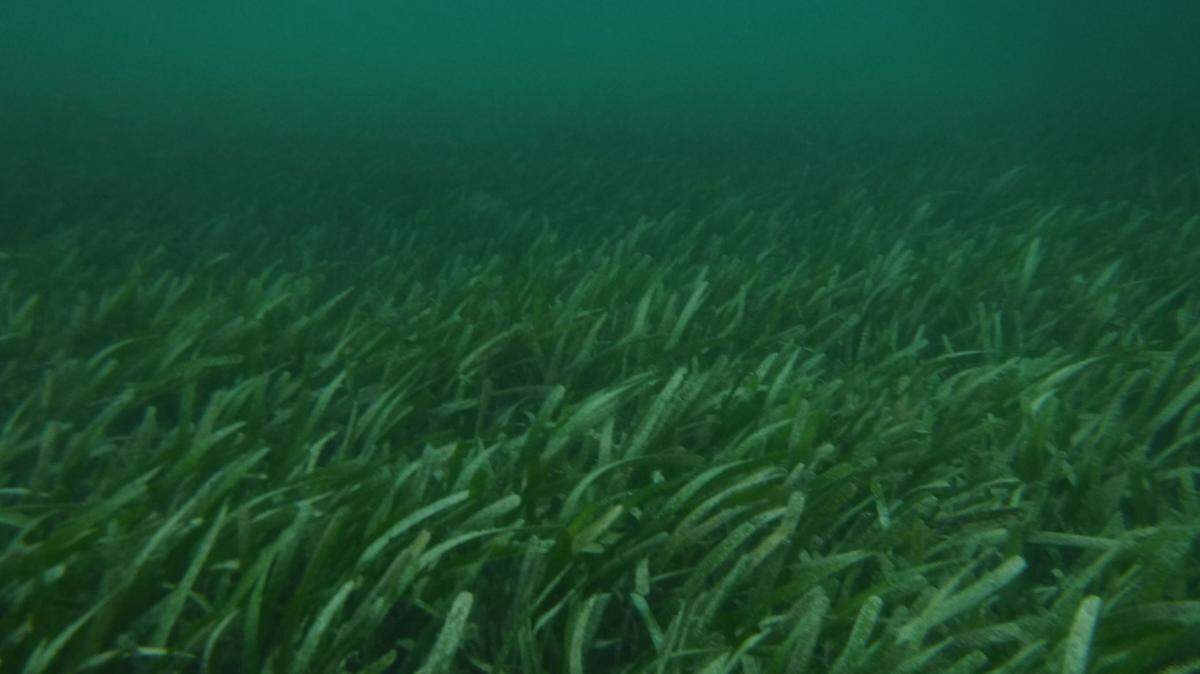
Biscayne Bay owes a lot of its turquoise waters and world-famous fishing to extensive seagrass meadows that once covered large swaths of the bay bottom. But the lush grasses that produce oxygen and provide habitat for marine life have been dying at an alarming rate as pollution is turning some of the bay’s clean water into a murky and lifeless soup full of algae.
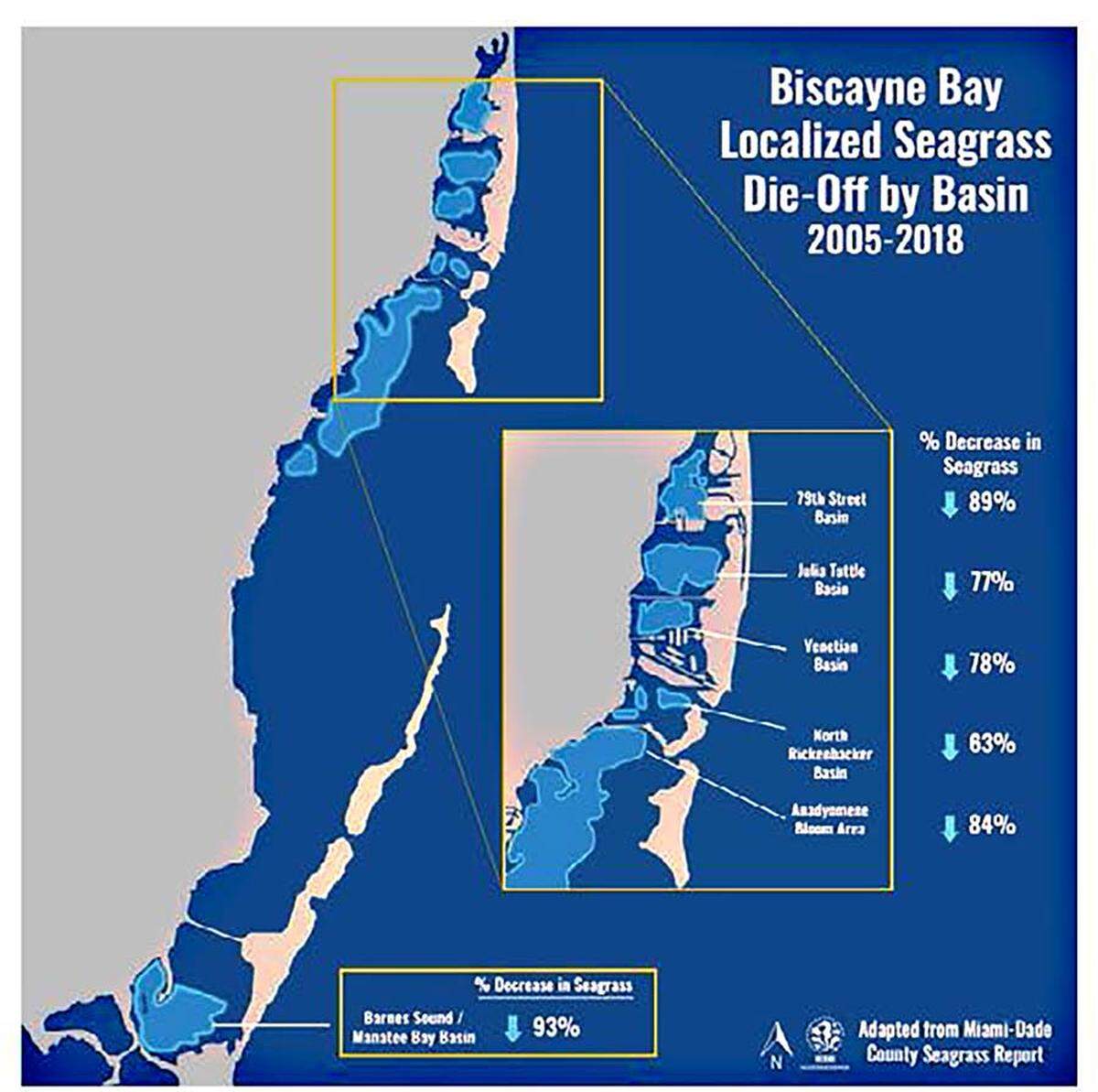
The seagrass decline is more dire in the north end of the bay, which has lost as much as 90% of its cover over the past two decades, according to Miami-Dade County data. It’s the result of a cumulative dump of nutrient-packed water from canals that flow through the county’s most densely populated areas, leading to a buildup that scientists worry may push the bay over a tipping point.
A significant loss is happening in the shallow basin between the Julia Tuttle and 79th Street causeways, near the area where thousands of fish died for lack of oxygen last year. Even with so much past loss, recent research by the University of Miami indicates that the deterioration of seagrass meadows is only worsening.
The northern bay, bordered by Miami Beach and other barrier islands, suffers from lower water circulation and flow patterns, which means pollution and algae cover tend to accumulate. It’s also the part of the bay that receives the most volume of dirty water from drainage canals like the Little River, Biscayne Canal and Snake Creek.
In the central part of the bay, a bloom of a macroalgae starting after heavy rainfall during Hurricanes Katrina and Wilma in 2005 made the water so murky that nearly 85% of seagrass beds near inshore areas died. A persistent algae bloom blocked sunlight that’s essential for the marine plants to grow. But in that basin — which is influenced by the Coral Gables Waterway, Snapper Creek and Cutler Drain and benefits from better circulation — county scientists have started to notice some signs of a recovery.
Like the central bay, the bay’s southern region was also affected by major storm events that boosted the volume of water dumped from canals, triggering algae blooms. In Manatee Bay and Barnes Sound, 93% of seagrass beds are gone. In that area, seagrass recovery is minimal, and chlorophyll levels, an indicator of algae blooms, remain high. And pollution will only worsen as development increases in South Miami-Dade, advocates have warned.
Together, the trend lines point to one of the biggest threats to reviving Biscayne Bay’s marine life.
“The problems that we have in the North Bay are just slower in South Bay, because the bay is bigger, it’s more well flushed, and there are fewer people down there. But we’re seeing the early signs of the same thing happening,” said FIU biology professor and seagrass expert James Fourqurean. “The expectation is that things will get worse before they get better. But we need to start working now on reversing this trend.”
In 2013, scientists started to notice that the decline of seagrass beds in the northern basins was accelerating and by 2016 the extent of the die-off began to sound alarms.
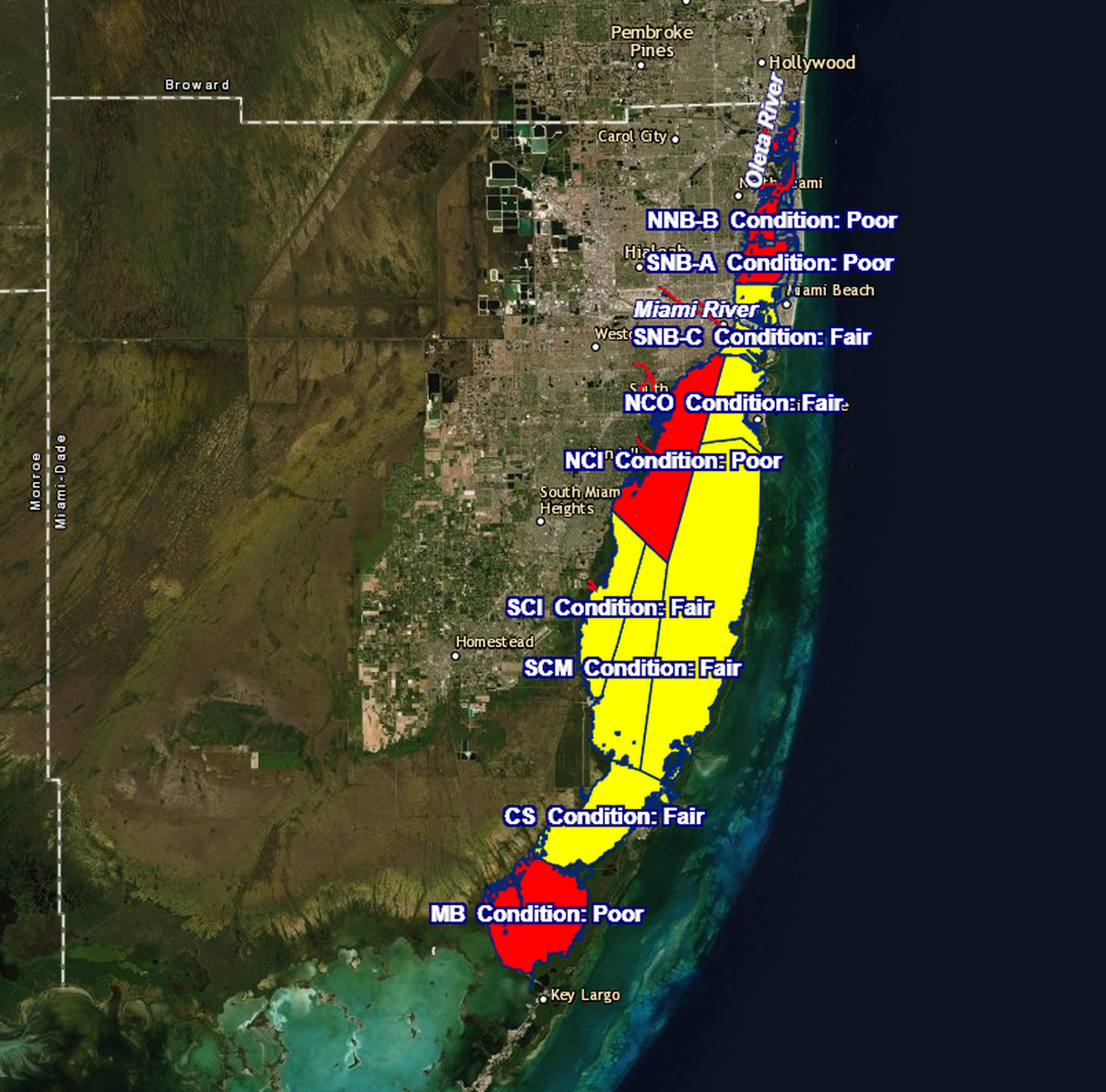
Pollution levels in those areas have been consistently above criteria set by the state in 2012 for Biscayne Bay, which was designated as Outstanding Florida Waters, worthy of special protections. Nitrogen, phosphorus and chlorophyll parameters help the county and state understand how much pollution the system is able to assimilate, said Omar Abdelrahman, a biologist at Miami-Dade County Environmental Resources Management.
Though more research is necessary, especially in the Little River and other canals, pollution in the northern bay has been consistently high for a while, unlike levels in the central and southern regions, which have fluctuated over time, Abdelrahman said. So when extreme heat days hit the county or torrential rains fill up canals in a short period of time, the bay goes over a threshold that produces ecological effects like a seagrass die-off.
“One of my favorite analogies is a boxer. No one punch may knock you out, but cumulative blows over time — and you have some blows that are harder and some blows that are less hard — but cumulatively you will reach a point where a jab may not even be the hardest blow,” said the biologist.
That’s why an aggressive effort to reduce phosphorus pollution — which comes from leaky septic tanks, failing sewage pipes and stormwater runoff — going into the northern part of the bay is an urgent step the county must take to put seagrass meadows on the path to recovery, Fourqurean said.
Seagrasses are the most ancient flowering plants on the planet. They were here when dinosaurs were around. They’re plants with flowers, roots, seeds, and they get pollinated under water. And they need lots of sunlight, and clear water, to survive.
Much of the pressure on the bay comes from decades of development in South Florida. Biscayne Bay was historically a low phosphorus ecosystem, and its connection to the Everglades ensured that it remained that way until South Florida began to be developed. The Everglades ecosystem evolved as a low phosphorus environment, and the bay was part of that watershed, receiving freshwater from the mainland along its shoreline as it flowed south and east. Seagrasses thrived in that environment.
But as development accelerated, natural freshwater flows were replaced by discharges from dredged canals that crisscross the region to provide flood protection and move water for use by farmers and cities. Over the decades, leakage from aging septic systems, stormwater runoff and water flowing from dirty canals filled with high levels of phosphorus have ended up in the bay. And phosphorus is very hard to get rid of.
Today, more than half of the freshwater the bay receives is conveyed by the northernmost canals, which go through densely populated and industrial areas in Miami-Dade, a 2019 county study said.
This constant drip of pollution and the higher pulses of water that come through the canals as part of flood management strategies in the rainy season are dumping pollution that’s competing with seagrasses for light and for oxygen, Fourqurean said.
“Highly colored water coming out of mangroves, coming out of a sewage treatment plant, septic tanks, that color absorbs light. So that in itself is bad. Sediment in the water, because of poor stormwater management, is bad. There’s a bunch of things that will compete with the seagrass for light,” he said.
Seagrass in the bay needs about 25% of sunlight to reach the bottom. And it also requires oxygen concentrations in the water column that are high enough so they don’t go to zero at night, he added.
“When we mess up water clarity, we interfere with light reaching the bottom and if light doesn’t reach the bottom, then the seagrasses die.”
Several researchers are working to understand exactly how higher phosphorus loading and lower light availability affect seagrass species in the bay. The Biscayne Bay Acquatic Preserve, for instance, is looking at other potential factors like sulfide toxicity; the Rosenstiel School of Marine and Atmospheric Science is analyzing how dissolved oxygen moves around in the water column and how it affects seagrass.
“It’s really important to not come across like there’s nothing that we can do. We know there are things we can do. And the things that we can do are not going to lead to change tomorrow. They’ll lead to change in decades,” Fourqurean said. “But we need to start doing them now.”
This story was originally published November 14, 2021 at 7:00 AM.
.jpg)