Is Biscayne Bay fished out? Not exactly, but it’s nearing the ‘point of no return’
READ MORE
Biscayne Bay on the Brink
Expand All
There was a time when Biscayne Bay was one of the country’s finest fishing grounds.
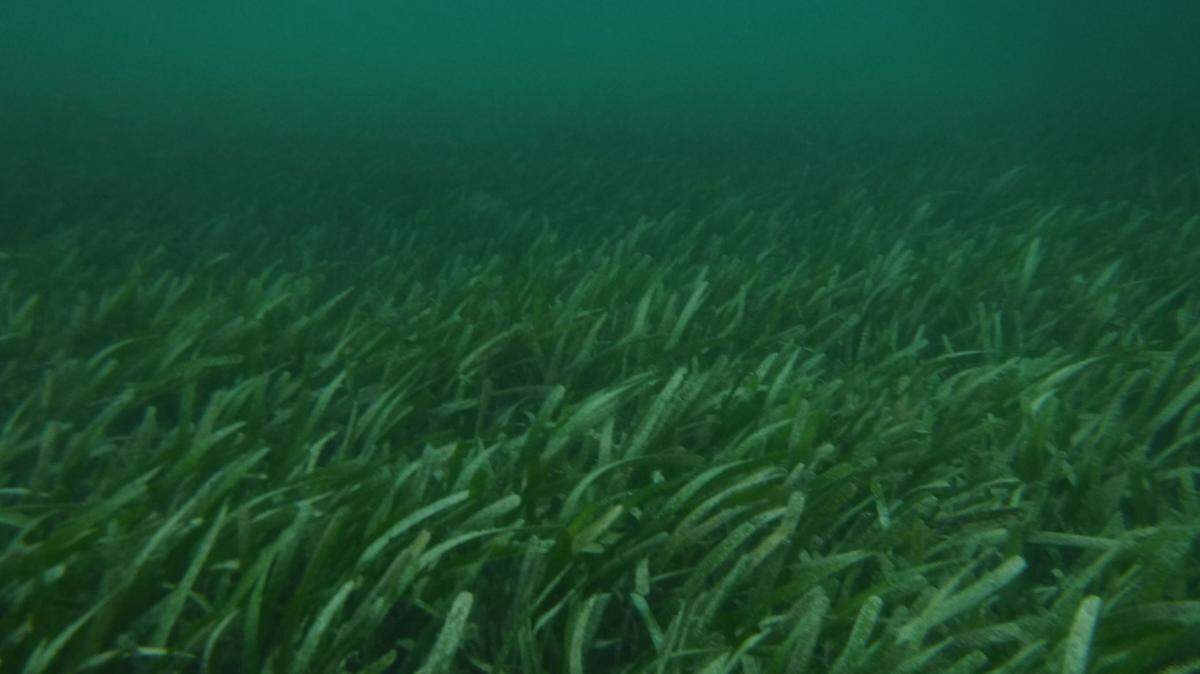
The estuary’s shallow grass flats sustained bountiful populations of bonefish, permit, tarpon, sea trout, snook and redfish. Those species thrived in the clean, brackish water, where they fed on shrimp, crabs and mullet. The bay also served as a nursery area for a variety of juvenile snapper and grouper before those fish headed to nearby coral reefs.
Like pretty much everywhere else in the coastal United States, an increase in the human population in South Florida has token a toll on marine life — although perceptions of the quality of the fishing have always been relative.
Consider yacht designer Ralph Munroe, who first visited Miami in the 1870s and built a home in Coconut Grove in 1891 that is still standing. He wrote in his autobiography that by 1920, the fishing in Biscayne Bay had declined significantly. But there are anglers who grew up in Miami in the 1940s and ’50s who say it was nearly impossible to not catch fish in the bay back then.
Those fishermen would be shocked and disgusted at how bad the fishing is today.
Too much polluted fresh water being released into the bay, along with too many recreational boats and too much fishing pressure have wiped out acres and acres of fish habitat, and threaten to wipe out some fish species from the bay.
Abie Raymond is one of many charter captains who has seen his beloved bay go from can’t-miss fishing to can’t hardly catch a fish.
“My heart has always been in Biscayne Bay. I was born and raised on Biscayne Bay,” said Raymond of Miami Beach, whose great-grandfather built a house on Biscayne Point at the north end of the bay in 1948. “I grew up in that house from 1988 to 2010. I’d run up and down the canals chasing jack crevalles, try to get in front of them on a seawall, throw a white bucktail jig at them. And we’d paddle out in our kayaks to the grass flats and catch sea trout, mangrove snappers, snook, jacks, big blue runners and even catfish. You could bring your rod with a popping cork and a live shrimp 12 months out of the year and go to these grass flats and catch something.
“It’s 2021 and that’s all changed. Those grass flats, what happened to them? They’ve turned into sand bars is what’s happened to them. They’re sand bars where people anchor and grill hot dogs and probably never knew there was a blade of grass there.”
Capt. Jorge Valverde of Cooper City, who has fished the bay for more than 40 years, has similar memories of what used to be.
As seagrass went, so did the fish
“The north end of the bay, I fished there when my kids were little. We used to go trout fishing,” he said. “I watched the population of the fish disappear, the seagrass disappear, the water quality get worse. As far as down south went, we started losing some of the seagrass towards the Turkey Point area. We’d get algae blooms periodically which would destroy some of the grass. The bait population has dropped off. I would imagine it’s related to the grass problem.”
Valverde can still put his customers (www.lowplacesguideservice.com) on bonefish, tarpon and permit at the southern end of the bay. Those are the Big Three for many sport anglers who book inshore guides like Valverde — all three species are elusive and hard-fighting fish that are typically caught and then released to fight again. But it’s not like when he first started fishing in the bay in 1979. Back then, Valverde said the toughest part of fishing was deciding which species you wanted to catch first, because he’d see all three of them in the same area.
Fishing out of Homestead Bayfront Park on a recent morning, Valverde had several schools of permit tailing in front of his flats boat not far from the boat ramp. He then ran farther south and saw tarpon rolling on the surface. It wasn’t until hours later that he finally spotted a few bonefish cruising across a grass flat.
Before the sustained winter freeze of 2010, which killed thousands of fish in Biscayne Bay and Florida Bay, Valverde said it was not unusual to see 200 or 300 bonefish a day.
“Today, that is such an oddity,” he said. “I hear people say, ‘What a great day of tarpon fishing, we saw 40 tarpon!’ I used to see 1,000 tarpon a day. That was in the 1980s and ’90s. It was just stupid. You’d look at the horizon and there’s no clouds in the sky and you’d see this gray mass and you thought it was a cloud covering the water. It wasn’t, it was a ball of tarpon, that’s how big they were. You just don’t see that stuff anymore.
“When there were a lot of fish it was easy. I tell people that when I first started fishing for bonefish, I was so stupid, they would stumble upon me. There were so many of them that I’d be poling along, looking forward of the boat, with my wife, Kelly, and she’d say, ‘Honey, look back.’ I’d look back and there’s bonefish in my push-pole mud.”
“We did lose a lot of fish during the 2010 freeze,” said Capt. Joe Gonzalez (www.captainjoegonzalez.com), who grew up fishing the north end of the bay and has been guiding since 1987.
Like Valverde he can still put his customers on bonefish, tarpon and permit in areas where the habitat and the fish populations are healthy, but other areas he once frequented are not as productive.
“I have seen cyclical changes, where one year can be better than another, but I’ve also seen numbers-type cases where it certainly isn’t what it used to be,” Gonzalez said. “There are environmental issues going on, but fisheries, at times, can recover if we protect and take care of them. Nature has a special way of bouncing back. What we don’t want is to get to that point of no return.”
That point could be closer than people think.
Sharp drop in fish stocks
Dr. Jerry Ault is a professor of environmental science and policy at the University of Miami’s Rosenstiel School of Marine and Atmospheric Science. Fifteen years ago, he conducted a landmark study of bonefish in Biscayne Bay and the Florida Keys using tags and reports from fishing guides. His research produced definitive data on bonefish populations and migration patterns. At the time, he estimated the economic value of a single bonefish over its lifetime at $75,000 — a figure that underlines the difficult and passionate pursuit of a fish known as the silver ghost.
More recently, Ault submitted a research paper on snapper, grouper and other reef species that are impacted by fishing pressure and the health of Biscayne Bay. His findings are not good, with 10 of 15 species at less than 20 percent of historical spawning biomass and some as low as 5 percent, which means it’s possible that those species will not survive unless things in the bay change, and change quickly.
“Bonefish and tarpon are important species, but they aren’t the whole story,” Ault said. “The reef fish complex is a big deal. It turns out that the bay is a nursery area for about 120 species of reef fishes — snappers, groupers, grunts, even parrotfishes and butterfly fishes. Biscayne Bay is a critical part of the sustainability of that reef fish population because they utilize it as a key natal area. It’s the crib.”
Ault, who loves to fish, said he is focused on the ecosystem dynamics of Biscayne Bay and South Florida. That includes the transformation of estuaries by state water managers into urban flood-control outlets — all that fresh water dumped into the bay is polluted with nutrients from fertilizers and human waste and other chemical and pollutants. There are other stressors on ecosystems as well, which include increasing habitat loss from coastal development and growing fishing pressure from an ever-expanding population.
A mathematician and statistician, Ault tries to predict how fish will be affected by changes in the ecosystems that he studies. He said it’s the same math and ideas that a Wall Street analyst uses to forecast what the stock market will do.
“Instead of stocks and bonds, it’s a fish stock, and I’m trying to figure out the amount of principal, what I leave in the water that generates interest for the long run,” he said.
Fishing restrictions not enough
From a fishing pressure standpoint, that could involve increased minimum size limits and reduced bag limits as well as seasonal closures. But those measures would be meaningless without similar restrictions on development and the runoff of fertilizer and other chemicals that result in harmful algae and the death of seagrass.
“There’s a very interesting biophysical connection between bay productivity and what the consequences of mucking that up are,” Ault said. “The water quality of the bay is a big deal in the context of the resources that are there. When you start thinking about the resources, you have to think about the food chain. One of the principal items that maintains the productivity are pink shrimps.
“Basically they’re spawned down in the Dry Tortugas, and those larvae are brought into Florida Bay and Biscayne Bay, etc., in about April, right at the end of the dry season. They settle up against the shoreline on the western side of the bay as very small shrimps.
“That tends to be right near seagrass beds, etc., but it’s also right where fresh water historically dumped out. So water management’s a big deal because they’ve shown very clearly that the relationship between freshwater delivery and survivorship of shrimps is totally correlated. The more fresh water, the greater the productivity, and that’s a big deal because those shrimps become the base of the food chain.
“That dynamic has to be right to make sure that everything else is going to work.”
If the base of the food chain is impacted by polluted fresh water and heavy commercial fishing pressure, then the other species that rely on Biscayne Bay for survival are affected.
A new regulation that should help is the creation of no-trawl zones in Biscayne National Park. Those areas now prohibit shrimp trawls from being dragged along the bottom to scoop up shrimp.
Rodney Barreto, the chairman of the Florida Fish and Wildlife Conservation Commission and an avid angler himself, said the regulation is part of a package that the FWC put together with the park.
“These boats that were dragging stuff across the bottom, that’s all been eliminated,” Barreto said. “That protects the seagrass and the hard bottoms. Our biologists have gone back into those areas and we’ve already seen juvenile fish species in those areas, which is a very positive sign.”
Barreto also noted that FWC is one of the member agencies of the Biscayne Bay Commission that was established by the state Legislature. He said he worked with Miami-Dade County Mayor Daniella Levine Cava and Gov. Ron DeSantis to facilitate $20 million for Biscayne Bay, half of that total coming from the county and half from the state.
He added that FWC also will work with Irela Bagué, whom Levine Cava appointed as the county’s first chief bay officer.
“We have great lines of communication with Irela Bagué,” said Barreto. “We think these are all positive steps to focus on the health and well-being of the bay.”
Glimmer of hope
Abie Raymond has seen a glimmer of hope for the bay. He fishes offshore for sailfish, dolphin, kingfish, tuna, snapper and grouper out of Bill Bird Marina in Miami Beach (www.gohardfishing.com), but he always had fishing in the bay as a Plan B when the ocean was too rough for his customers to handle.
He said that from 2017 to 2020, “we couldn’t find a trout in Biscayne Bay. It was very disturbing. This year I found the trout again. It was so relieving to find a school of trout, but so concerning at the same time, because where I was catching those trout since January was the size of a football field.
“If you went anywhere else in Biscayne Bay, you couldn’t find the trout. And we were catching great trout, up to 22 inches. The grass had finally grown back to the point where it’s sustaining those sea trout and it’s sustaining a population of pilchards, and the frigate birds are there and the pelicans are there. These little magical patches of grass that hold the trout are a great comeback story. I hope it continues to get better and those fish continue to come back and it wasn’t just a flash in the pan.”
Raymond and other captains know firsthand how the bay has been impacted. Ault said that people who don’t fish had no idea the bay had issues until they saw or read about fish kills off downtown Miami.
“The things I’m telling you aren’t obvious, until you see dead fish floating. That’s when people say, ‘Something’s not right here.’ That’s what got the public’s attention to a situation that’s really pretty significant,” he said. “It’s a bummer that fish are dying. On the other hand, it’s drawing attention to a series of issues that we have to pay attention to for long-term sustainability of the system. I’m talking 25, 50 years at least into the future.
“That’s what we have to be thinking about right now if we’re going to insure that we have the quality of the environment going forward. Because if we continue on this path we’re on, we aren’t,” Ault said. “It’s time to get our head out of the sand and get moving. And it’s not that we don’t know what we need to do, we do. The science is there. Follow the science? OK, do it damn it!”
This story was originally published November 14, 2021 at 7:00 AM.