A 2-headed cow and ‘Bad Blood’ backup at the Miami-Dade Fair? Get the backstory
READ MORE
Get the backstory
If you ever wondered about a landmark or how a place came to be, it likely has some history in South Florida. Check out this series to get the answers.
Expand All
Who doesn’t like the Miami-Dade County Fair?
Maybe it’s the fried upon fried food. Or the thrill rides and games. Or maybe it’s the student exhibits or pig races that get you pumped.
What started as a small showcase for young people’s accomplishments in agriculture has grown to one of the country’s largest annual fairs.
But how did it all start?
The first Miami-Dade Fair was held Jan. 25-28, 1952. It was the first time a Miami-Dade fair was devoted entirely to people under 18.
The fair, sponsored in part by the 4-H Club Leaders Association, was the brainchild of assistant county agricultural agent J. Lawrence Edwards. Organizers were given $7,500 by the county to cover expenses, but most of the money was used for prizes. Much of the work involved in setting up the fair was done by volunteers.
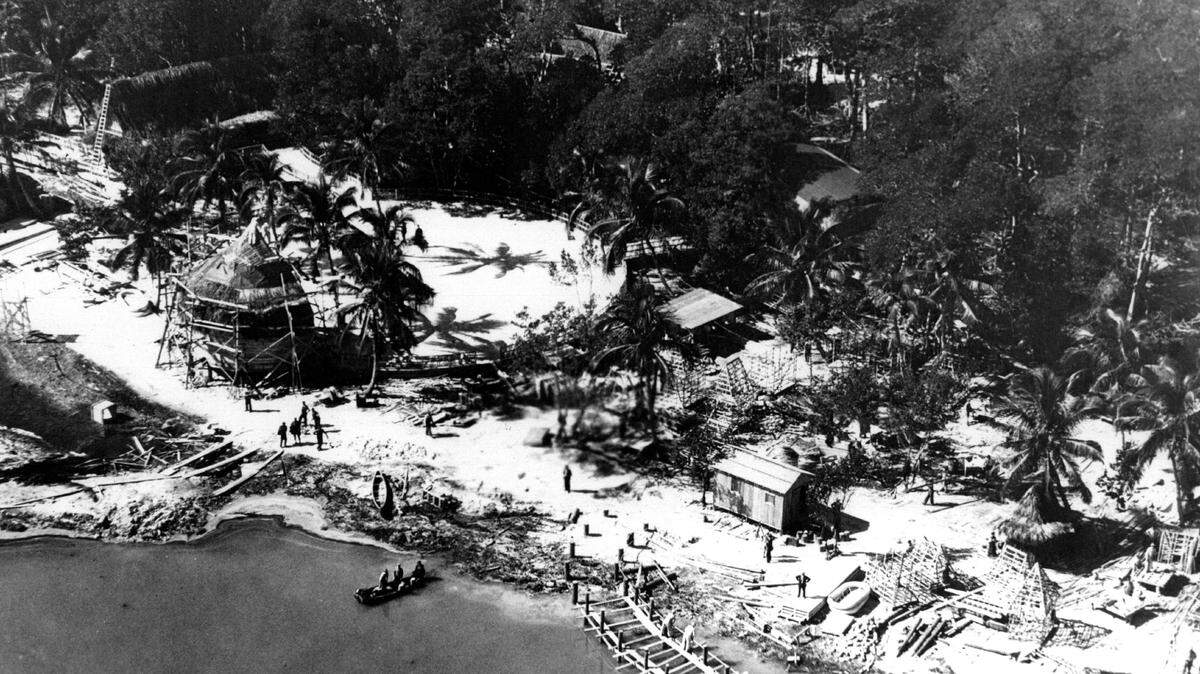
The first fairs were held at Camp Tequesta, located on what is now the site of Dadeland Mall in Kendall. Boys were encouraged to display any agricultural products and livestock, while girls exhibited sewing, needlework, canning and other home projects. A small midway with a merry-go-round and a Ferris wheel was the only attraction that charged admission. Fewer than 1,000 people attended.
Attendance grew quickly. In 1955, the fair was moved to Tamiami Airport, then located on Tamiami Trail and Southwest 112th Avenue, near the fair’s current location. Construction on a permanent building at the 20-acre fair had just begun in 1957 when the fair was kicked out by Miami-Dade County commissioners and Tamiami airport directors, who needed the fairgrounds for an airport expansion.
In 1958, wat wsa then called the Youth Fair moved to North Kendall Drive and Southwest 97th Avenue. The 27-acre site served as a suitable site for the ever-growing fair, and there it prospered. Attendance climbed every year.
In 1971, the fair had grown too large for the Kendall location and returned to its former Tamiami location, which had become the county-owned Tamiami Park, 10901 Coral Way. In 1972, it joined forces with the South Florida Science Fair and a 50,000 square-foot building was built to house all the student exhibits.
Since then, fair organizers have invested more than $8 million in exhibition halls, sewer and electrical systems, landscaping and roads, resulting in a year-round public facility.
Do you remember the county fair of your youth?
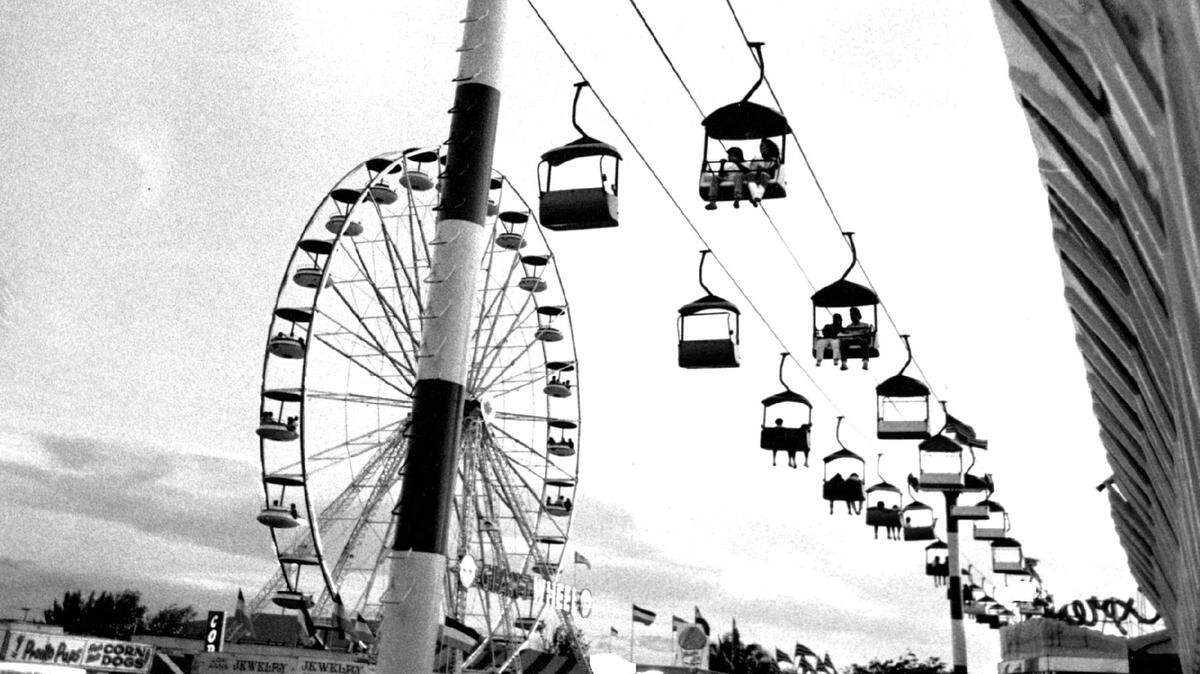
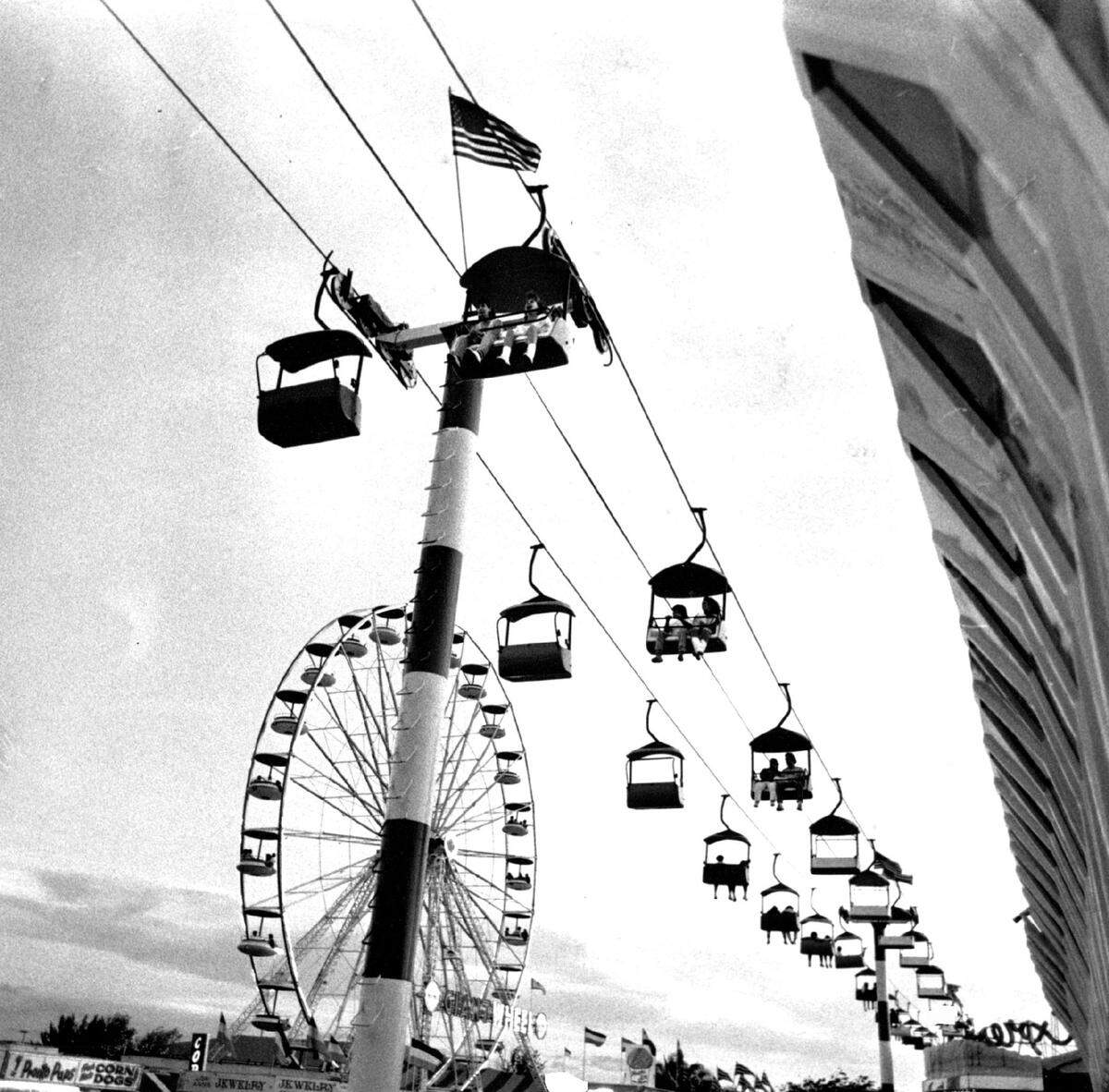
The sky-ride over the midway. The fried elephant ears. The prize-winning cows.
In some ways, fairs have changed. The food and rides are ever more adventurous. And where did most of the blue-ribbon cows go?
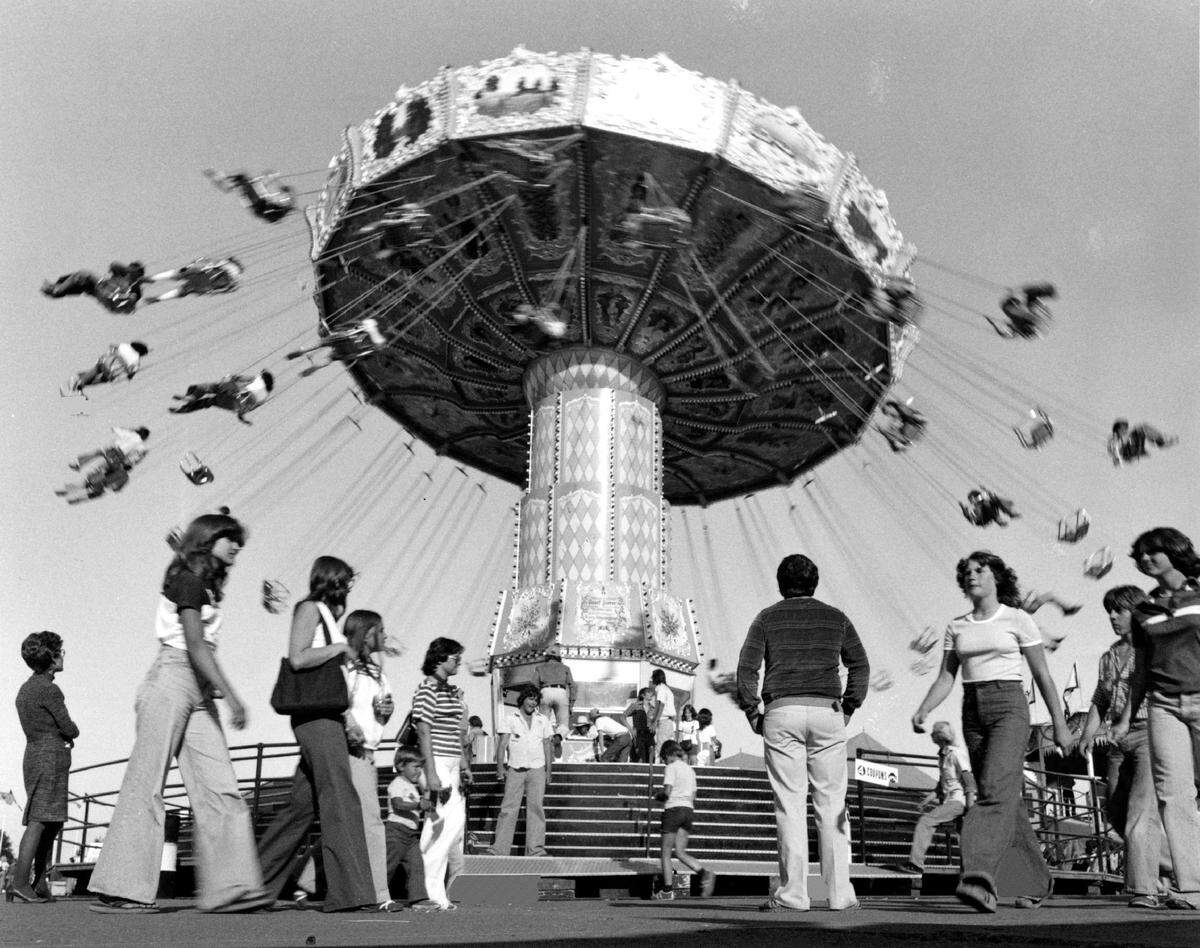
In other ways, the fair is still the same: school projects, carnival games, unhealthy food.
Here are some interesting facts about the fair’s 40 year-history:
The Youth Fair was not the state’s first agricultural fair. In 1897, Miami-Dade County, in conjunction with the International Tobacco Growers Convention, held Florida’s first-ever county fair, with Henry M. Flagler contributing a prize for the best vegetable display.
At the 1965 fair, County Commissioner Joe Boyd took on boxing’s light-heavyweight champion Willy Pastrano -- in a cow-milking competition. After Boyd easily beat Pastrano, the boxer promptly asked for a rematch.
Strong winds in March 1979 downed power lines and knocked out electricity at the fair for 37 minutes. Backup generators kept most of the rides operating, and because the outage happened during daylight, most fair-goers didn’t even notice. Most, that is, except for the ones stuck in the cable car ride that stretches across the park.
An array of artists have performed at the fair over the years. They include: Joe Cocker, Jerry Lee Lewis, Seals and Crofts, Roy Clark, Mitch Miller, Bo Diddley, Cher, the Village People, Dolly Parton, Kool and the Gang, Ray Charles, Christopher Cross, Irene Cara, the Pointer Sisters, Don McLean, Tammy Wynette, Melissa Manchester, Kurt Thomas, Wolfman Jack, Billy Ocean and Miami Sound Machine.
In 1966, the Young Republicans of Dade County opened a booth at the fair. Three days later, they were forced to close it down after County Commissioner Tom O’Malley questioned the use of a county fair for political purposes. O’Malley was a Democrat.
Light traffic jams around the fairgrounds are a common, unavoidable nuisance. Hours before a performance by “Bad Blood” singer Neil Sedaka at the 1976 fair, however, thousands of fair-bound cars snarled traffic for several miles. At one point, the traffic jam on westbound State Road 836 reached as far back as the toll plaza near 27th Avenue.
The 1968 fair had a flair for the gruesome. On display were a five-legged bull, a two-headed cow, and a booth displaying the terrors of Viet Cong booby traps. A special attraction was the body of a nine-foot, 2,000-year-old man that was supposedly dug up by Russian explorers somewhere in Siberia. Outside the booth, a sign read, “Doctors and nurses admitted free with proper credentials.”
Apart from the agricultural exhibits, one of the reasons the Youth Fair drew crowds from the beginning was the lack of “fixed” skill games that fleeced an unknowing public. The fair’s wholesome image was created at the outset and has been carefully maintained over the years.
.JPG)