
How much hurricane-force wind can a house take before blowing down? Take a look
How much wind does it take to destroy a house? Florida International University is trying to figure that out.
Researchers put a manufactured house to the test this week by blowing a “wall of wind” at the mobile structure to see how much it could take.
The research was a collaboration between FIU, the University of Kansas and the University of Alabama. The hurricane-force test came from FIU’s ‘Wall of Wind,’ an array of giant fans, each the height of a person.
The goal? To figure out if building code standards need to be updated to withstand hurricanes and tornadoes.
“For us to be able to make important code recommendations for change, we could really be saving lives and reducing losses and letting people stay in their homes,” said Elaina Sutley, a principal investigator from the University of Kansas.
For hurricanes in South Florida, the story is the same. Whether for fear of structural failure or airborne debris, residents of manufactured homes are usually required to evacuate in advance of even the lowest category hurricane.
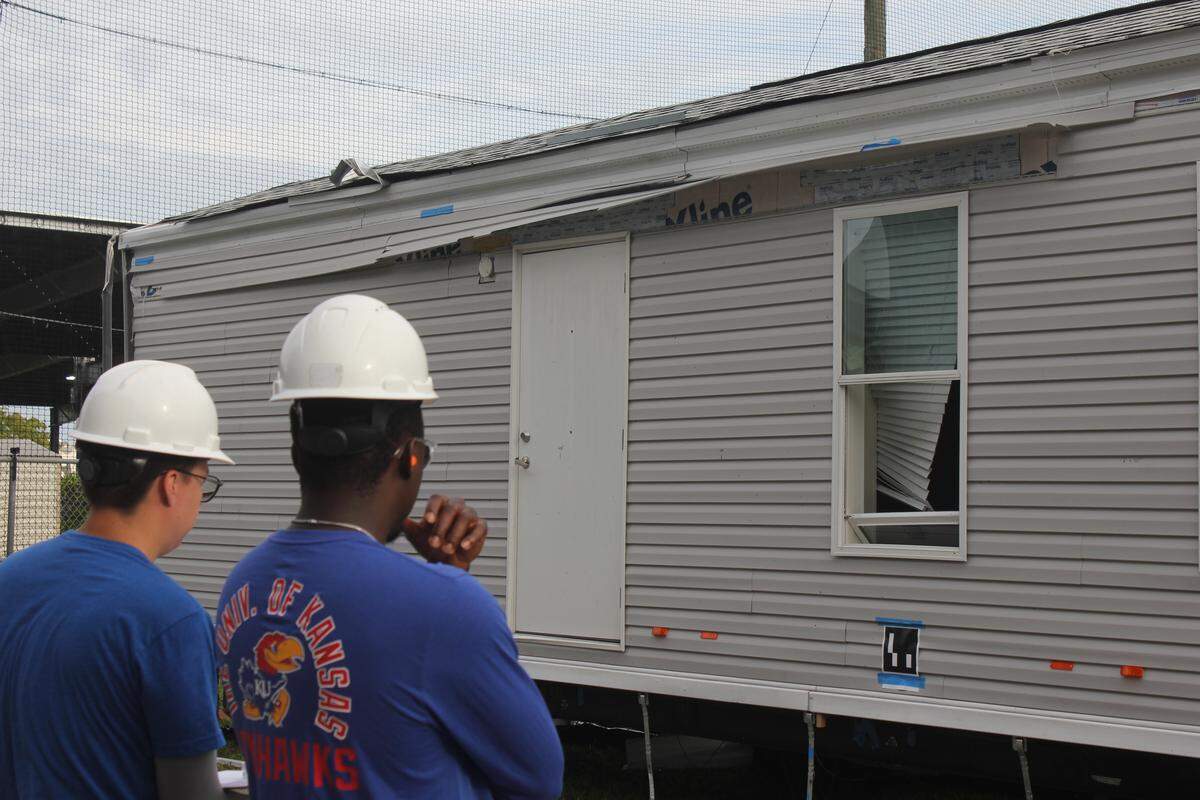
Wednesday’s wind experiment — with funding from the Florida Division of Emergency Management, Federal Emergency Management Agency, and U.S. Department of Housing and Urban Development — tested a manufactured home both under South Florida’s mandatory building code, set to withstand 110 mph or more, and the mandatory minimum for Kansas, made to withstand 70 mph winds.
Each test blasted a new level of intensity at the home.
For the Florida standard, winds blew 130 mph at the structure, and then 150 mph. Assaulted by the two tests, most of the home’s single-stack, gravity-supporting bricks, along with the front and back windows, caved in and blew out.
For the Kansas test, researchers cut around 40% of the house’s anchors to the ground and hit it again, first with 110 mph, and finally 130 mph. The windstorm from the fans raged until the home eventually broke off from its remaining anchors, rolling completely over not once, but twice.
While an entire home rolling away may be extreme, the unit was lost long before that. From a window that broke during the first test, water and airborne debris in a real hurricane would have taken over the interior.
“Even if it didn’t flip, [rain] will destroy the entire interior,” said co-principal investigator Arindam Gan Chowdhury. “We will have a total loss of the structure and a family is uprooted, basically, and we... cannot put a dollar mark to that.”
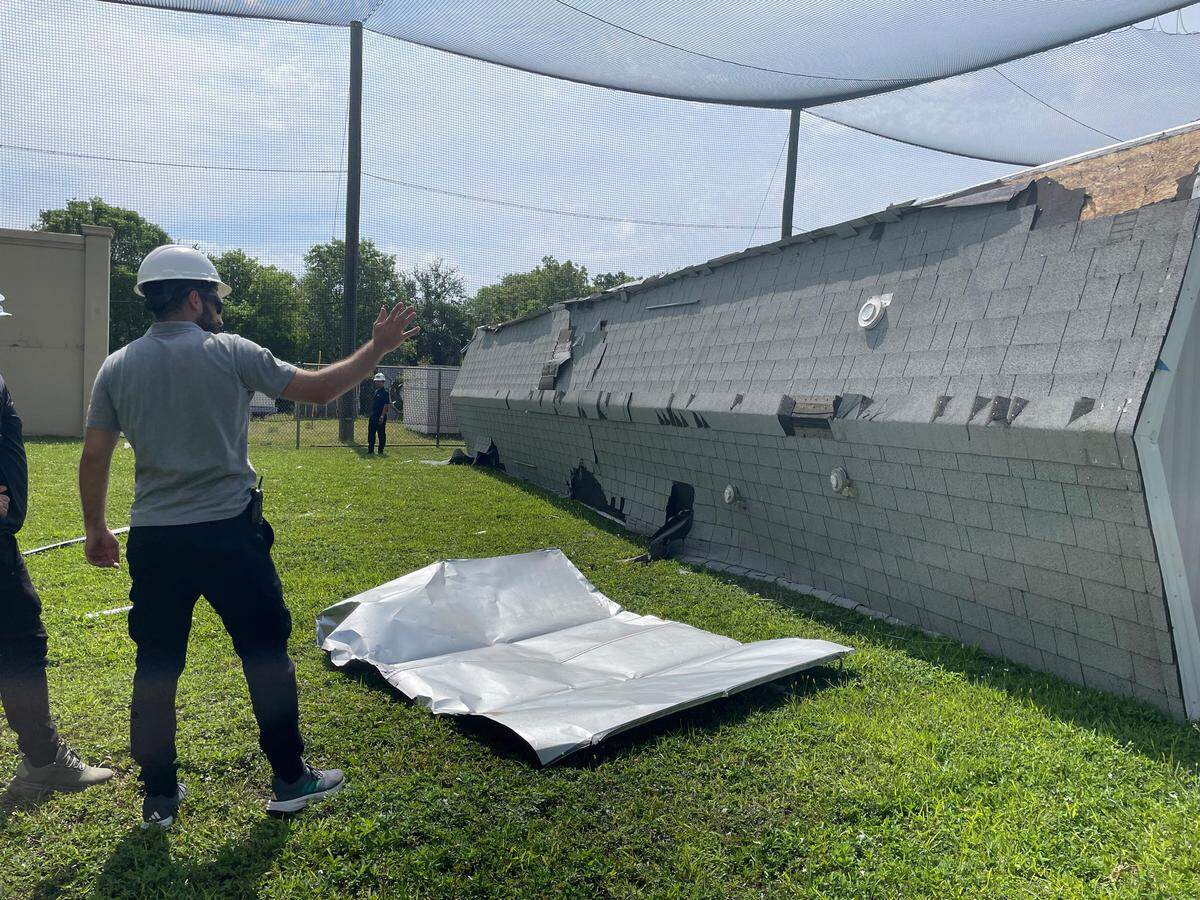
According to a report on U.S. census data, there were around 7.9 million manufactured homes in the U.S. as of 2024, including 824,000 in Florida Researchers want to know how and why they fail in hurricanes.
FIU will continue to collaborate with other universities to test hurricane conditions on manufactured homes. Two more experiments are in the works with the Wall of Wind.
“We want communities to be more resilient and to be safer,” Chowdhury said. “It gives us a lot of satisfaction when we do research that can inform safer building codes, safer policies, safer practices, so people don’t lose their homes.”
This story was originally published May 14, 2026 at 1:14 PM.