More money, more projects. Miami-Dade governments bouncing back with help from the feds
READ MORE
Budget Rebound
Federal dollars have local governments in better shape this tax season. Here’s what it means to you.
Expand All
More money, more projects. Miami-Dade governments bouncing back with help from the feds
Your property-tax rate will probably go down this year in Miami-Dade. The bill won’t
Your tax bill too high? Think the property appraiser made a mistake? Here’s how to appeal
Did you receive your Miami-Dade property tax notice? Here’s how to read it
What will changes in property taxes mean on your 2021 bill? Use our city-by-city guide
Heading into 2021, as a COVID-cratered economy undercut government income and forced politicians to slash spending, the possibility of a protracted pandemic looked as if it might also prolong the pain for public institutions.
But even as Florida sets new records for COVID cases and hospitalizations this month, local officials are putting the final touches on 2022 spending plans that offer a departure from last year’s cuts.
Thanks to a healthy injection of federal stimulus dollars aimed at COVID relief, rising property values and a Florida economy that reopened before many other states across the U.S., few Miami-Dade cities are hiking tax rates at all, and many are actually adding projects and hiring new staff.
“We’ve got this manna that fell from the sky — the American Rescue Plan,” Mayor Daniella Levine Cava said in an interview shortly after releasing her $9 billion budget proposal in July. “This gives us a cushion.”
Levine Cava explained in a budget memo that she has proposed using $321 million in American Rescue Plan money to reimburse prior spending during the pandemic, and has already spent $60 million on rental assistance. Her proposed budget would keep the county’s main tax rate flat while increasing parks and police spending, provide more funding for the early childhood learning Head Start program and extra positions for a new Neighborhood Safety office to focus on quality of life as a way to combat gun violence.
In Broward County, where the proposed tax rates stay flat, $378.7 million in American Rescue Plan money will supplement budgets for aviation, transit and seaport projects, as well as a $25 million effort to increase the supply of affordable housing. Recovered air travel and cruise traffic promise revenues comparable to 2019, and the rebound of gas taxes makes way for more spending on highways and roads.
“What a difference a pandemic makes!” County Administrator Bertha Henry wrote in the county budget memo. “The decisions made by many of our residents, businesses, elected and public officials, including the federal and state governments, laid a foundation for recovery.”
The federal money is also helping big cities and small suburbs.
The city of Miami has received about half of its $139 million in federal stimulus cash. While a spending plan is not yet final, a draft plan shows the city could spend millions on long-awaited stormwater drainage upgrades, new affordable housing, small business grants and meals for seniors. In Miami Beach, the federal money is poised to help the city recover after a big drop in tourist taxes.
And in Cutler Bay, Rafael Casals, the top administrator in the South Dade town, called the federal money “a saving grace for the town,” which plans on using some of the roughly $18.4 million allocated to pay for the ongoing work on a stormwater management plan to help address flooding.
“In 2020, they had to deal with panicking and cuts,” Lucy Dadayan, a senior research associate with the Urban-Brookings Tax Policy Center at the Urban Institute, said of local governments.
“This time around the pressure is much less,“ said Dadayan, who is leading a project on state and local taxes. “There is more relief for state and local revenue and budget officials because the pandemic’s impact on the budget hasn’t been as dramatic or terrible as they thought.”
The American Rescue Plan
From the $1.9 trillion COVID relief bill passed in March, Florida received $10.2 billion, from which counties across the state received a total of $4.1 billion, cities got $1.4 billion and other local governments got just under $1.4 billion. The money can pay for COVID-related services and pandemic-related pay perks and grants for public workers, supplement lost income and fund infrastructure such as water, sewer and broadband projects. Money allocated through the plan must be spent by the end of 2024.
Not including transportation, Miami-Dade’s county government was awarded $528 million from the American Rescue Plan, with half of that paid out in May, according to county budget documents. Altogether, Miami-Dade’s 34 municipalities were promised another estimated $510 million this year, according to March estimates from the federal government.
“It almost created a safety net to make sure we kept the same level of service without cities having to raise taxes to generate additional revenue,” said Ramiro Inguanzo, Bal Harbour’s assistant village manager and the president of the Miami-Dade City/County Management Association, which serves to bring together local government administrators.
Casals, the manager in Cutler Bay, said without the federal money the town would have to further delay its stormwater project until it could secure the grant funding or county money to complete it.
Nearby Pinecrest will pay for the bulk of its long-stalled $11.3 million effort to connect homes on well water to the Miami-Dade County water with the American Rescue Plan dollars, an influx village leaders hail as a once-in-a-lifetime situation.
A confluence of factors
The federal stimulus dollars are but one portion of a much bigger picture for local governments, which rely heavily on user fees like red light camera tickets, grants and property taxes to pay for public safety, parks programs and other services. Countywide, property values in Miami-Dade increased by more than 4% over the past year, with places like Hialeah, Miami Gardens, Virginia Gardens and West Miami seeing significantly bigger boosts. In Broward, values rose about 4.5%.
Parking fees, sales taxes and gas taxes are also on the upswing across Miami-Dade County, bringing back revenue lost during business closures and travel cancellations.
Miami-Dade is projecting an increase in hotel and restaurant taxes for the 2022 budget year as the tourism industry recovers from the COVID-19 crash in bookings and entertainment spending. Budget projections show about a $20 million increase over year-end projections for 2021 of about $80 million.
In Coral Gables, where the city is steering large chunks of the nearly $21 million it is projected to receive in federal dollars to projects like a new parking garage on Minorca Avenue and a fire station, property values rose 3.6%. City commissioners, operating with the most valuable property tax base in the city’s history, plan to increase spending on salaries, repairs and maintenance without raising the tax rate.
“Our property values tend to be very, very stable,” assistant finance director Keith Kleiman said during a July budget hearing. “This is what we expect in Coral Gables.”
And yet, throughout the pandemic, an unprecedented economy and real estate market have made financial forecasting complicated. Inguanzo, the assistant Bal Harbour manager, said real estate values reflected in this years’ budgets may not reflect the current market. The 2021 real estate boom occurred outside of the time frame property appraisers use to set numbers used in the 2021-22 budgets, so the effects will more likely be felt in the 2022-23 budgets.
“Next year is where we’ll see some of those enhanced benefits from the real estate boom,” he said.
In Miami Beach, which saw its tourism and hospitality revenues plummet during COVID-19, the $23.9 million the city is estimated to receive through the American Rescue Plan will help plug a $19.5 million revenue gap caused by the pandemic. But from last year to this year, not including new construction, property values dropped 0.2%.
Even so, new additions to the city’s $600 million budget include recurring costs like $336,000 to hire two new police officers, contingent on a voter referendum in November of the new proposed Smith & Wollensky lease at South Pointe Park, and $309,000 to add two new lifeguard towers at the beaches on 55th Street and 62nd Street.
Aventura, despite new construction valued at $92 million, also saw a decrease in its property values, in this case for the third consecutive year.
For this reason, and due to the economic precarity created by the COVID-19 pandemic, Aventura’s top administrator says the city tried to maintain the spending outlined in last year’s budget as much as possible — “to improve the city’s financial position going forward” without raising taxes.
In Homestead, city administrators are now proposing that the tax rate stay flat, according to a revised draft budget sent to the Miami Herald Tuesday.
An initial proposal included a tax increase after departments were asked to cut back on their budgets last year amid projected COVID-related losses in city revenues. The city is planning to raise salaries, pay for an increase in healthcare insurance costs and police pension plans and allocate a quarter-million dollars toward carrying out next year’s municipal elections.
Its $20.5 million in estimated American Rescue Act dollars may help offset some of the costs of the city’s planned code rewrite this year, but there are other increased costs, like landscaping contracts for jobs the city usually utilized state prison inmate crews to carry out.
Meanwhile, Cutler Bay’s property base rose more than 5%, but the town could increase its tax rate slightly, by 0.9%. An increased tax rate gives the town enough of a boost to pay down debt and, Casals said, provide better services, such as parks programming, to the influx of young families moving to the town.
The Surfside effect
With federal relief dollars in hand and property values on the upswing, some cities also have the bandwidth to address a new and largely unexpected need: building inspectors.
The partial collapse of the Champlain Towers South condo in Surfside spurred local governments across the region to inspect old buildings and crack down on violations — efforts that require money.
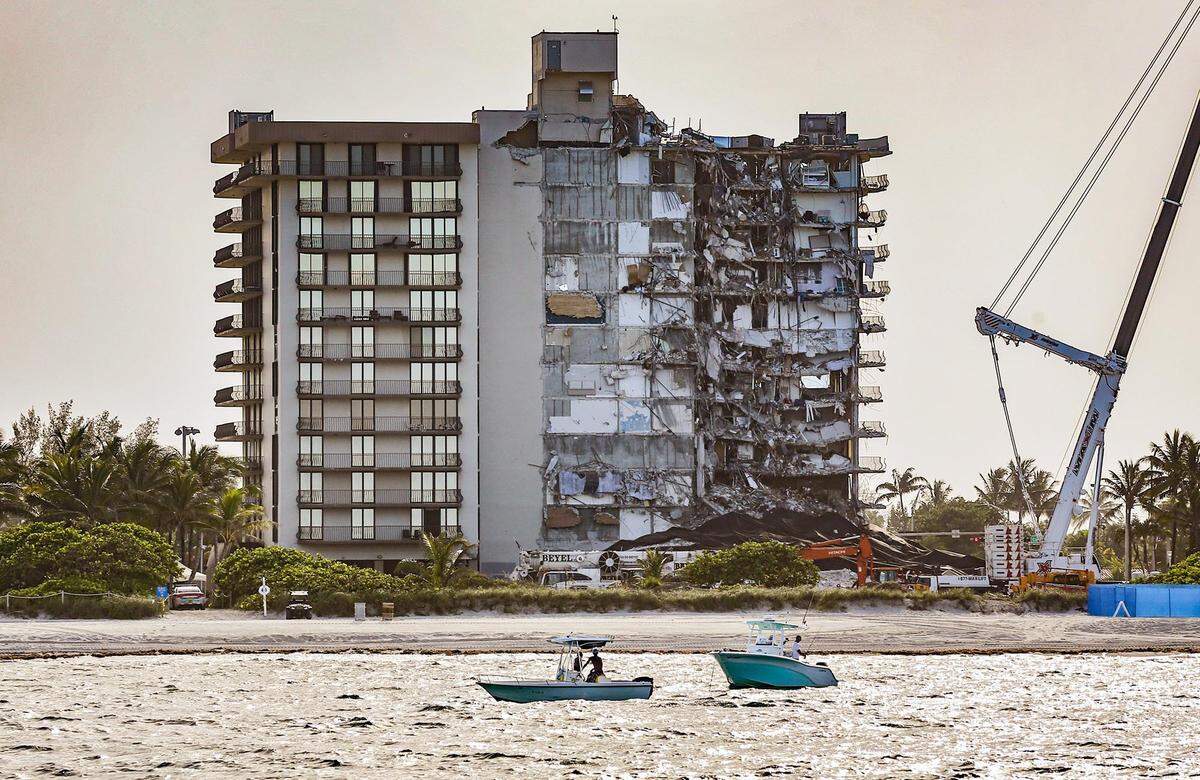
“Surfside had a huge impact,” Inguanzo said. “It forced us all to make sure the building departments are appropriately funded and that they have the resources to do what they should be doing.”
▪ Miami’s proposed $1.3 billion spending plan includes money to hire more than two dozen building inspectors, though the increased spending on the building department predates the Surfside collapse. In this year’s proposal, the city could add more than two dozen new inspectors and several more positions to the building department.
▪ At the county, Levine Cava’s budget includes a 22% spike in the budget for Regulatory and Economic Resources — home to the county’s Building Department, code enforcement and environmental regulation. The Code Compliance division has extra funding for enforcement to deal with a backlog of violation cases.
▪ The budget for Aventura’s building inspection services rose by about $200,000 to pay for a private firm to perform inspections.
▪ Cutler Bay’s new budget adds weekend and night code compliance officers to its mix, as well as a part-time building official who will be a city employee, not a contracted engineer, to oversee inspections.
▪ In Coral Gables, the budget accounts for a brand-new management system for permits and other development service and the gutting of a building it owns at 427 Biltmore Way to serve as a hub for building services. The city, which said its moves are “not specifically related to the Surfside collapse,” is also in the middle of an audit of building department staffing.
▪ Hollywood has proposed a 26% increase to its building fund budget, which finance officials attribute to an increase in reserves.
▪ Miramar is adding one full-time position and increasing spending for its building permits and inspections program.
▪ North Miami plans to inspect nearly 2,000 buildings, after the city decided to review all buildings up for their 40-year recertifications. One of the two goals of the city’s “building fund” for the year, according to City Manager Theresa Therilus, is to “provide inspection services for multiple large residential projects.”
“We are expending overtime with our current staff to undergo this review,” Therilus said. “This will impact our building department budget.”
In Surfside itself, commissioners are trying to set a new budget amid concerns of possible expenses related to the Champlain Towers South collapse and an upcoming voter referendum about funding the undergrounding of utilities in the town.
“I think that property values in this town are going to depend on what led to that collapse,” said Commissioner Eliana Salzhauer. “There are unknowns out there that we haven’t considered.”
The boost is temporary
With the one-time infusion of federal dollars in 2022, Miami-Dade and its cities may not be able to sustain the service levels in the budget proposal in later years. Forecasts show funding deficits, starting with a $167 million shortfall for countywide property taxes in 2023.
“We have significant challenges,” Levine Cava said. “We also have huge opportunities.”
The first year of the pandemic hit 2020-2021 budgets hard, as cities grappled with a precarious economy and changing dynamics that required them to adapt to new rules, follow county safety protocols and navigate the threat of the virus in their communities. Federal COVID assistance dollars in the form of CARES Act relief money helped cities through this time, helping residents pay for food and rent, and offering grants for restaurants and other businesses.
The money was also used to pay for cleaning products and safety measures aimed at curbing the spread of COVID-19 in government buildings.
As the deadlines neared to allocate last year’s CARES dollars, local governments scrambled to give out grocery gift cards, doled out rent and mortgage assistance and even got reimbursed for salaries for police and firefighters.
Some cities are looking to avoid the same problem this year by funneling their American Rescue Plan dollars into one-time expenses, like Coral Gables’ construction projects.
“We have a shortfall of capital money,” said Kleiman, the Gables’ assistant finance director. “The recovery money is helping us tackle that shortfall and fund the infrastructure.”
Dadayan, the Urban Institute expert, said the combination of one-time federal dollars and an exploding housing market may have given cities some sense of security this year. But she said as cities set their spending plans for 2022, they should do so with the understanding that the current situation won’t be sustainable.
“It’s a short-term boost,” she said. “There will be holes, and localities will have to find alternative sources of revenue for longer term projects.”
Miami Herald staff writers Joey Flechas and Marie-Rose Sheinerman contributed to this report.
This story was originally published August 29, 2021 at 6:00 AM.