Where are essential workers? South Beach employers can’t retain them in housing crunch
South Beach employers are struggling to run their businesses due to the inability to hire and retain enough essential workers. They blame the scarcity of talent on the city’s skyrocketing apartment rents and lack of housing workers can afford.
Many hospitality and services workers are skipping jobs in South Beach, according to the owners and manager of the luxury condominium Portofino Tower, The Gaythering bar and hotel and Joe’s Stone Crab seafood restaurant.
Officials of these companies say pay raises can’t keep up with workers’ cost of transportation, inflation and rent increases. It’s likely these three firms are part of a far larger group of businesses up and down Miami Beach dealing with the staffing conundrum brought on by housing turmoil.
Miami Beach — comprised of South Beach, Mid Beach and North Beach — faces the same business challenge as other increasingly unaffordable neighborhoods in Miami-Dade County, including Edgewater: the county’s runaway cost of living has hit local businesses hard. The housing crunch has caused a domino effect, squeezing business owners as their employees quit and move to find more affordable areas.
Labor shortages follow the pandemic migration of digital nomads and out-of-state transplants who sought refuge in South Florida from strict COVID-19 regulations. Many newcomers outbid local residents for already limited housing options, exacerbating the county’s longstanding housing crisis.
Essential workers are trading the most rent-burdened areas — that includes Miami Beach — for cheaper communities in or outside Miami-Dade. As a result, more business owners, managers and residents complain the quality of service just isn’t the same as before the pandemic.
“Our businesses cannot hire employees. We have an employee-retention problem, because of the lack of affordability in our city,” said Alex Fernandez, vice mayor of Miami Beach. “The irony of this is that these income-restricted individuals support our economy.”
High-rise Portofino Tower has a 360-degree view of its South of Fifth neighborhood — the priciest condominium market in South Beach — nearby Fisher Island and the Greater Downtown Miami skyline across the MacArthur Causeway. Its owners typically spend well over $1 million to buy a residence in the building. And they expect the best service, said Damaris Cabrera, KW Property Management’s general manager for the Portofino Tower and Portofino Master Association.
Hiring experienced staff has been an uphill battle, Cabrera said. She’s been short-staffed for the past two years, overseeing only 73 employees for a 44-story, 215-unit building. “We would call three people and they wouldn’t show up,” she said. “Someone with no experience asks for more money than people with experience.”
The property manager boosted wages to keep staff and hire more talent. For entry-level positions, Cabrera said, she now pays $16 an hour for housekeeping instead of $13 and $22 hourly for maintenance rather than $18. Other area employers have made similar 20% to 25% wage increases across the board since the start of the pandemic.
Pushing wages has been the skyrocketing rents in Miami Beach. The average monthly rent for a one-bedroom listed at $2,400 for the first eight months of this year, that’s 50% more than the average rent of $1,600 in 2019 for the same one-bedroom apartments, according to data from the Multiple Listing Service and the brokerage Keyes Company. Prices for two bedrooms jumped even higher — a whopping 65% — to $3,800 a month from $2,300, during the same period compared to 2019.
Many Miami Beach renters are likely spending more than 30% of their income on rent — given that the city’s median household income is $57,000 per year, said Samuel Diller, engagement director at the South Florida Community Development Coalition. Based on income, these renters can afford to pay at most $1,425 a month.
“This is a major issue,” Diller said by email, “and unless solutions to the housing crisis can be resolved the impact on area businesses will only get worse and many residents will be forced to look at relocating to communities where there is balance between the ability to earn a living and affordable housing costs.”
‘It takes a toll’
Most of Cabrera’s staff at the Portofino Tower call Kendall home. A few even travel from Hallandale Beach and Fort Lauderdale for work. Commute times take an hour each way on good days. Although rent is cheaper outside of Miami Beach, she’s heard they still have faced rent hikes of 10% to 30% over the past year in those cities.
“I know it takes a toll” on the workers, Cabrera said.
If employees move out of Miami Beach, it’s only a matter of time until they look for another job, said Stephan Ginez, owner of the Gaythering, a boutique hotel and bar at the west end of Lincoln Road in South Beach.
“People stay for shorter periods,” Ginez said, recalling former employees lamenting being stuck in traffic. “Now people think, ‘Is this job worth it, because I’m going to be stuck in a car?’ After a while, they want something closer to home.”
Residents also feel the employee turnover at the local businesses, said Dr. Richard Silverman, a Miami Beach resident, physician and professor. As a single-family homeowner steps from Lincoln Road, he’s seen small retail and restaurant owners closing their establishments earlier in the day or managing tight staffs.
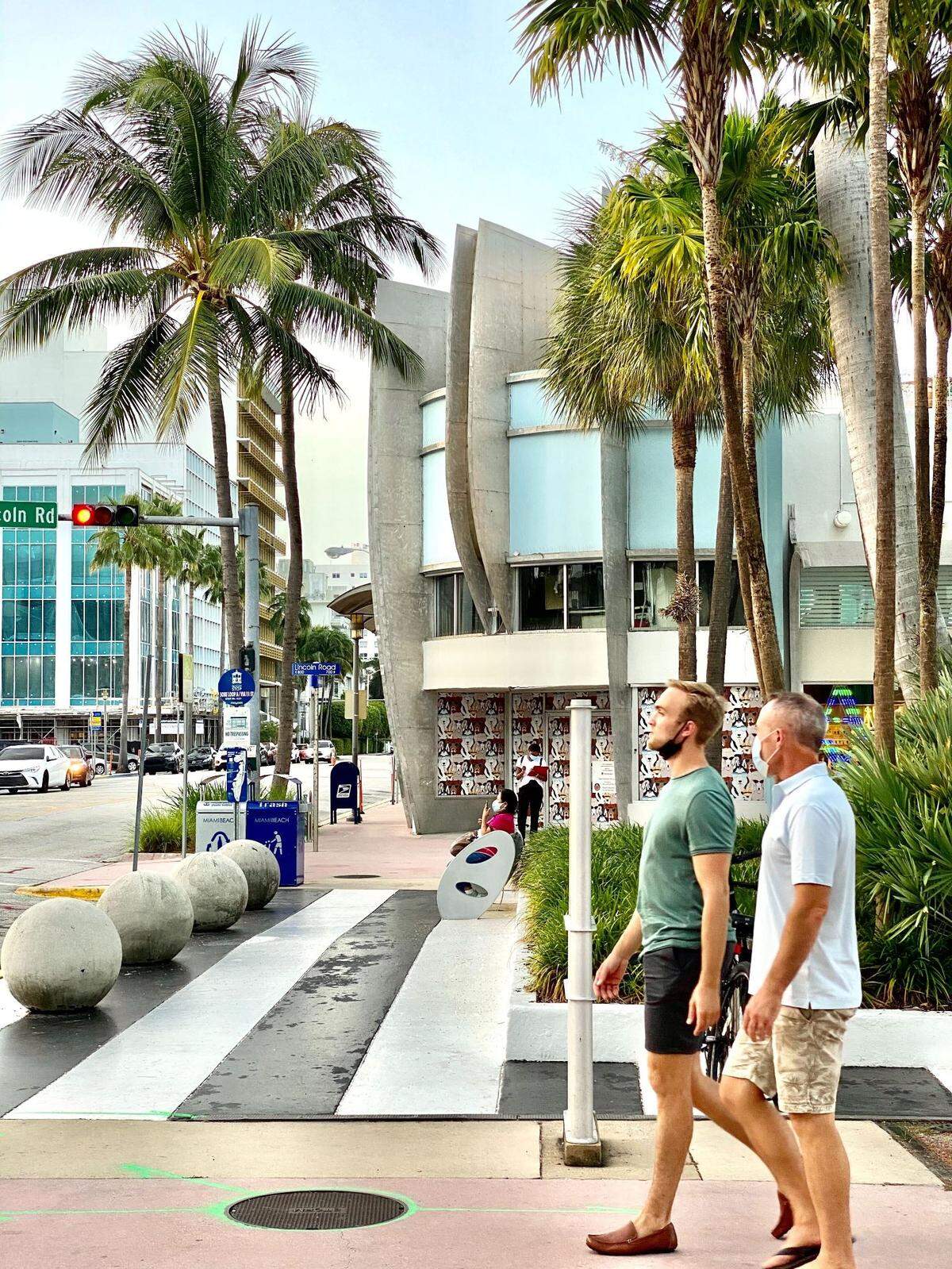
“Publix is always advertising for people,” Silverman said. “It goes for everything. The shoe maker. The locksmith. The people who make life, life.”
Silverman continues to push for the repeal of the historic designation of Palm View Historic District, the triangle-shaped pocket where he lives and the association that he presides over. He endorses workforce housing developers converting existing structures with little architectural or historic value to housing priced affordably for local workers.
Communities without housing for their labor force, Silverman said, become sterile and less diverse. “And it’s [important for] the convenience of things. If you want to go to Starbucks and the barista can’t afford to live in the area, there’s going to be less services,” he said.
Business owners welcome local housing for their employees, including Stephen Sawitz, owner of his family’s Joe’s Stone Crab. Sawitz’s team is getting ready for Joe’s annual job fair on Oct. 4 at the restaurant. About 70 people attend every year for a chance to become one of the 400 employees on staff at the fine-dining South of Fifth restaurant.
Hiring and retention, he said, is “tougher than it has been,” despite increasing wages for staff and providing fringe benefits. Most of his staff live outside Miami Beach, including in Hialeah, downtown Miami, Hollywood, Pembroke Pines, Liberty City, Miami Shores, El Portal and Little River. He said workforce housing nearby could help businesses like his, because it would boost quality of life and overall services.
“Why would someone have to wait two hours in traffic? The quality of their life has to be better,” Sawitz said. “You want the people who work in the industry to be fairly compensated. If their rent is going up — and it is — we have to figure out ways to keep the worker bees strong and make them motivated.”
Employees want to live close to work, Cabrera said. Her staff has told her as much. “It’s one hour to come to Miami Beach from the mainland, if you’re lucky,” she said. “For sure it’s one hour and 30 minutes to go back home. If you can reduce that travel time, it increases their quality of life.”
‘Giving carrots’
Miami Beach’s leaders are taking notice, said Fernandez, the vice mayor. They’ve approved a handful of affordable housing projects for seniors and two workforce housing developments since last year. This month commissioners gave unanimous tentative approval to waive costly development fees for workforce housing developments.
When Miami Beach gets its first workforce homes, tenants need to earn up to 140% of Miami-Dade’s area median income of $68,300 in order to qualify for residences. A single person will have to earn between $54,640 and $95,620 annually, a household of two people between $62,400 and $109,200, and a household of three people between $70,240 and $122,920 a year. Rents will range from $1,366 for a studio up to $3,073 for a two-bedroom home.
“The government can’t do it alone,” Fernandez said, of getting housing for local workers built. “The government needs to work with the [real estate] market. The way we work with the market is by giving carrots.”
More initiatives are in the pipeline, Fernandez said, including roundtable talks with real estate industry leaders who can offer insights on development strategies. The city’s planning board will also research and provide a guide by May for legislation and policies that can help Miami Beach achieve its goal of providing at least 6,800 affordable and workforce housing units by 2030.
Four pillars
“Maybe we need to loosen the red tape,” Fernandez said, “so we can increase the opportunities for affordable and workforce housing developments.”
Whatever solutions the city’s planning board recommends, said Anne Ray, it should include four pillars. Ray researches the state’s housing stock and solutions as the manager of the University of Florida’s Shimberg Center for Housing Studies. The four pillars consist of supportive housing — affordable housing with social services — more home supply, preservation of existing stock and homeownership programs that allow people in affordable and workforce housing to buy.
It will take time to see positive results in Miami Beach or any other community exploring and implementing these housing initiatives, Ray said.
“You don’t look back and say ‘Aha we’re done.’ It’s a problem you chip away at. It’s not a problem you have to totally solve to help the people that need it,” she said. “We didn’t get into this overnight, we’re not getting out of this overnight.”
This story was originally published September 25, 2022 at 5:30 AM.