
Meet the new Miami: A series of self-sustaining, interconnected villages
READ MORE
The new Miami: a series of villages
Not so long ago, Miami-Dade was a story of east — the sprawling Beach — and a mainland of undifferentiated suburbs, centered by a central business district that shut down at 5 p.m. Today the county increasingly is coalescing around a series of urban villages or centers — compact, pedestrian-friendly places where people can live, shop or dine out, even work or go to school, with few or mercifully short trips by car. Here’s a look at some of the county’s burgeoning neighborhoods.
Expand All
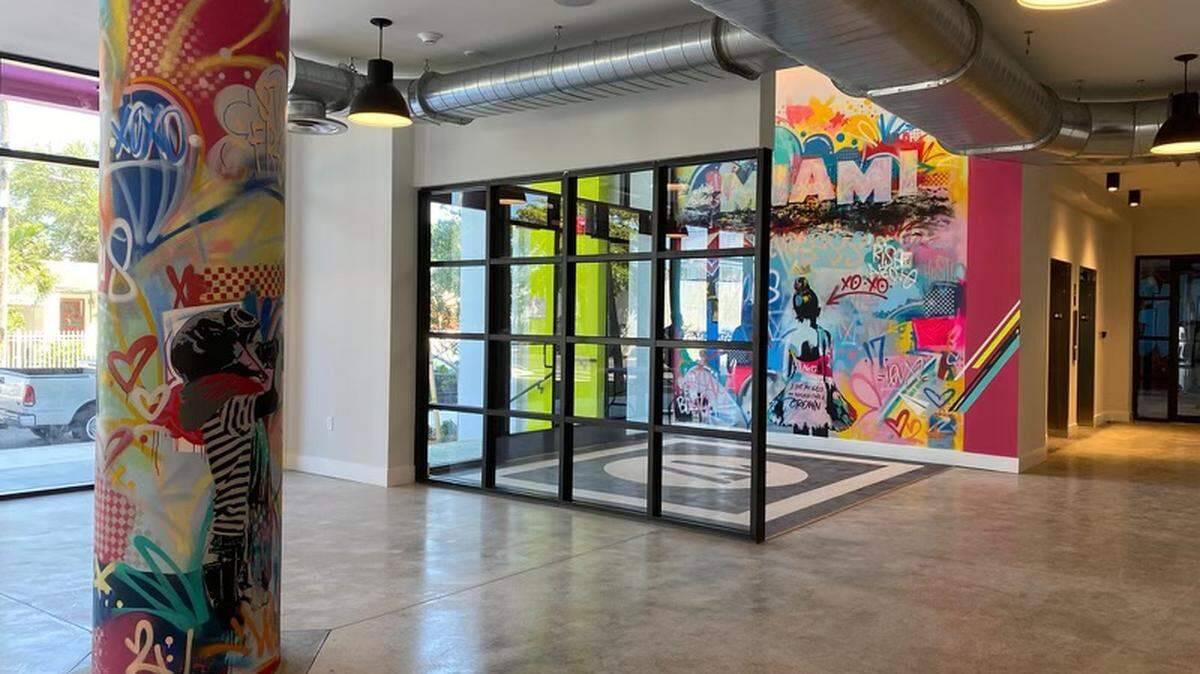
When Cameron Ivory, an assistant property manager for the Related Group, was looking to move out of the South Beach apartment he shared with a roommate, he sought out a place of his own in a neighborhood where he could walk to work and to restaurants and bars, and avoid having to brave Miami’s notorious traffic.
He found it in Wynwood.
Ivory, 25, not only works there, but he was already a regular at many of Wynwood’s hot spots. It was a natural fit.
His choice, an old industrial district turned into an entertainment and leisure hub, wasn’t even a real neighborhood three years ago. There was lots of dining in refurbished warehouses, but places to live were scarce. Then developers, sensing demand among younger people for true urban living with a strong sense of place, started adding apartments at a breakneck pace, including Wynwood 25, where Ivory pays $2,350 a month for a one-bedroom, 710 square-foot apartment.
That sounds like a lot for such a small living space; even though he works for the building’s owner Related Group, Ivory doesn’t get a discount. But he says the costs are offset by his quality of life. His car mostly sits parked in a garage.
“The only times I use my car are to go to the gym or to buy groceries,” he said. “I only have to walk a block to go to work.
“To me, the most important thing about choosing a place to live is the neighborhood. In Miami, places like Brickell and South Beach and downtown are all so different. One of the things I love about Wynwood is that every day when I walk my dog, there’s some new art or something else that’s different about the neighborhood.”
Focusing work and life in a tightly defined area has become more the norm as South Floridians like Ivory increasingly opt for an urban lifestyle. And it’s dramatically reshaping Miami-Dade County.
Not so long ago, Miami-Dade was a story of east — the sprawling Beach — and a mainland of undifferentiated suburbs, centered by a central business district that shut down at 5 p.m. Today the county increasingly is coalescing around a series of urban villages or centers — compact, pedestrian-friendly places where people can live, shop or dine out, even work or go to school, with few or mercifully short trips by car. Some Miamians are even choosing what once seemed unthinkable in a metro that for decades has been designed and built around the automobile — forgoing car ownership entirely.
The urban villages have spread well beyond the pioneering, now famous neighborhoods like Brickell and South Beach, long the only choices for those seeking dense, urban and walkable places to live in Miami-Dade.
Today the urban centers comprise resurgent or gentrifying city neighborhoods like Wynwood, North Beach, Coconut Grove and Overtown, as well as old-line suburbs like Coral Gables, North Miami and even Sweetwater that are fast retooling themselves as magnets for urban living.
They also include brand new, intensively pedestrian-friendly neighborhoods that have sprung into thriving existence in the span of a few years, like Midtown Miami and Downtown Dadeland.
The trend, residents and experts say, is driven not just by many Miamians’ desire to live free of punishing automobile commutes, but to enjoy the urban amenities of a downtown, village center or a traditional main street close to home. Some say it’s also providing a sense of connection or local identity that’s often missing in sprawling, auto-dominated Miami, where the car sometimes seems to be the only thing linking far-flung communities and the people who live in them.
“People want to repossess their lives,” said Najeeb Campbell, an architect and University of Miami professor who lives in the city’s old Buena Vista West neighborhood and gets around almost exclusively on a One Wheel motorized board and on Metrorail. “They want to be closer to friends and family and they want to cut out the culture of being imprisoned in a car and mega-malls and mega-stores.
Housing affordability plays a role. While a typical condo in Brickell costs $450,000, a typical mid-priced home in Doral costs around $370,000, according to Zillow.
INTERACTIVE TOOL: WHERE CAN YOU AFFORD TO BUY OR RENT IN SOUTH FLORIDA
Still, residents in cities like Doral — once seen as far-flung outposts — crave a sense of place. They find it in its small-town center, with offices, two public charter schools, Doral city hall, a Main Street with service and retail shops and casual and fine-dining restaurants, a new public library, and an urban-footprint Publix supermarket. The range of housing is unusually broad., including high-rise condos and apartments, townhomes and single-family houses, all connected by pedestrian green ways to the Main Street district.
Brain drain
Some contend the proliferation of urban villages across the county could even help reverse a persistent brain drain in which the most talented young Miamians may leave for college or jobs elsewhere, often lured by the chance to experience urban living in older, more traditional cities like New York, Boston or Seattle. In part, they say, the choice to leave is driven by the high cost of owning a car, typically a minimum of $8,000 a year, which adds to the financial burden of rising residential costs in Miami.
“What we’re losing is our best graduates,” said Florida International University architecture professor David Rifkind. “They’re really tired of being stuck in a car half their lives. They go where the quality of life is better.”’
But the rise of places like Midtown Miami, where he lives, provides a real alternative for those who want it — including newly arrived tech entrepreneurs like Jeremy Wood and Jason Lovell, who moved from San Francisco in January and just moved into their new condo. Midtown Miami, with shops and restaurants at ground level and amenity-laden high-rise condos and apartments above, has the street energy of a mini-Manhattan in the middle of a weekday.
“It’s fantastic,” he said. “We have a corner bodega, which is wild. I can walk over to Target and buy pretty much anything. The walkability is pretty huge. I see a lot of positive change. In Doral, or in Midtown, there is a real desire to build communities, not just a collection of apartments and houses.”
TUESDAY: JOIN THE VIRTUAL DISCUSSION ON MIAMI’S TECH ECONOMY
Examples abound, some more obvious than others:
▪ City officials and developers in Coral Gables have been retrofitting its once-sleepy downtown, long a regional employment center, into a denser mecca for living, working, culture and entertainment, though not without some pushback from longtime residents worried about erosion of the city’s historic low-scale ambience.
▪ After decades of broken promises and failed redevelopment schemes, Miami’s historic Overtown is enjoying a resurgence as a center for Black life and culture.
▪ Sweetwater has reinvented its tiny downtown, which sits across Southwest Eighth Street from FIU in West Miami-Dade, as an urban village for students and faculty, providing an alternative to commuting to campus by car.
▪ In Homestead, once a rural small town transformed into a bedroom community, leaders are reviving its historic but perennially distressed main street along Krome Avenue as a center of local life.
▪ Young families are flocking to Miami’s tree-lined, historic Coral Way, the spine that threads together older city neighborhoods like The Roads, Shenandoah and Coral Gate. They are forgoing big suburban yards and malls for small house lots, walkable and bikeable streets and the little restaurants, barber shops, doctor’s offices and a smattering of big chains on Coral Way.
▪ North Miami, a formerly white suburb that’s today majority Haitian and Haitian American, is kicking off ambitious plans to revamp its humanly scaled but under-performing main street along Northeast 125th Street as a denser urban center with a $15 million investment in a planned $86 million residential development mixing affordable and market rate-housing. The city is also seeing the redevelopment of a onetime landfill on the edge of Biscayne Bay into Solé Mia, a massive project that will create a mini-city of apartments and commercial development around an artificial lake.
Even some places that don’t fit the urban paradigm are getting in the game. In Kendall, a sprawling auto-centric agglomeration of subdivisions dominated by strip malls and chain retail stores, residents can now enjoy hip dining and drinking spots operated by celebrated chefs, one-of-a-kind small businesses like an apothecary/used book store, and unique attractions such as a giant ice skating rink or a video-game arcade — a taste of urban life without having to drive all the way to Wynwood or South Beach.
And in the agricultural Redland, whose rural character is protected by the invisible urban development boundary that buffers it from suburbia, is no longer just farms, nurseries and estates. A growing number of agri-tourism ventures have expanded amenities for residents with otherwise little appetite for the perks of urban life.
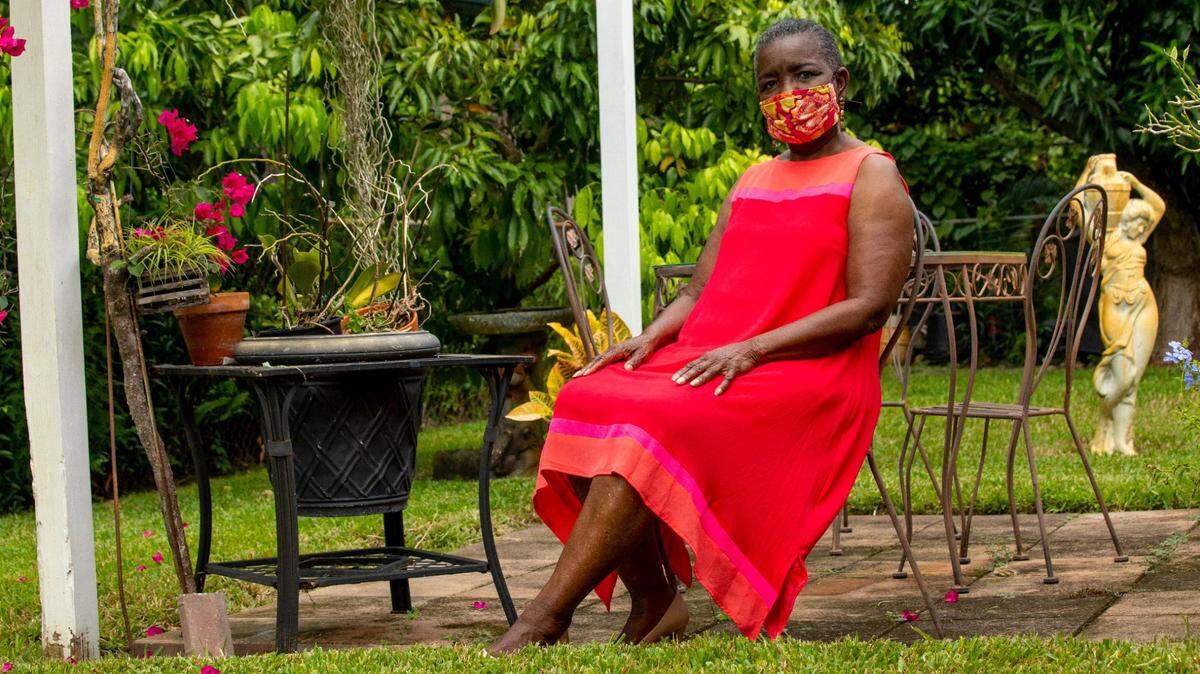
But longtime residents and small farmers say they’re worried about increasing development pressure.“Redland is a treasure,” said Sidney Robinson, owner of Sandy Acre Avocado and Mango Farm and a third-generation farmer in the area. “We that live in Redland want to preserve the UDB for future generations.”
Liberty City is a land of broken promises that have created dominant narratives centered around crime and poverty. Hidden beneath the issues is a community that prides itself on resiliency and wanting better for their neighborhood. But the changes that are already underway – the building of high-rises near I-95, the influx of Hispanic residents and the rising cost of housing – signal to many that Liberty City’s identity as the heart of Black Miami is in jeopardy.
“They are pushing Blacks away and out,” said Darrian Baker, 49, the owner of Elite Kutz barbershop and a member of local nonprofit Circle of Brotherhood. “I want the community to strive but I want it to strive with a majority of Blacks. It’s our neighborhood.”
Urban village
To developers who have seized on the trend, success has demonstrated there is extensive pent-up demand for places like Downtown Doral — one of several urban lifestyle centers in this western suburb. The charter K-8 school and new high school have long waiting lists, and new single- family homes will be sold out by the end of the year.
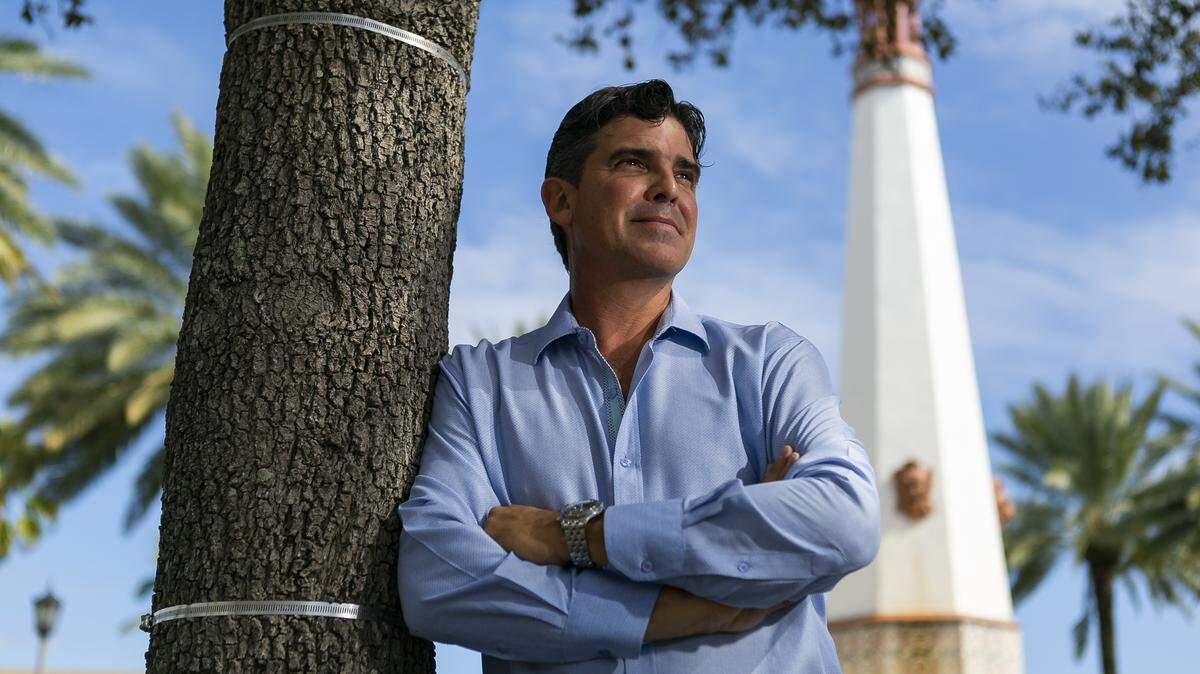
“All you have to do is look around,” said veteran Miami developer Armando Codina, an early player in the urbanization of downtown Coral Gables and principal mover behind Downtown Doral. “The people who live in downtown Doral, they hang around, they live, go to school, work and entertain there.... People now feel Doral is a city.”
Planners have a term for the phenomenon: the 15-minute city, broadly defined as neighborhoods or urban centers where everything a resident needs can be reached in that span of time by foot, bike or public transit.
The concept has gained new currency across the country after the COVID-19 pandemic, which prompted a new appreciation for the ease and convenience of working at home and the added time to enjoy life and family and even errands in a neighborhood setting. Even real estate website Zillow touts the benefits to health and happiness.
It’s an elaboration of a concept long touted by a group of planners known as the New Urbanists, who sprung in large part from two architects’ frustrations with the suburban straitjacket of much of Miami. The firm of Andres Duany and Elizabeth Plater-Zyberk developed the decade-old Miami 21 zoning code, widely praised as the blueprint for the city’s dramatic urban transformation. DPZ also designed master plans for Downtown Dadeland and Downtown Doral.
The urban village concept has been made even more feasible by the rise of car share, bike share programs, electric scooters, Freebee and other transportation alternatives, including the trolley bus circulators that many municipalities, including Miami, Coral Gables and Doral, have launched.
And the urban-village trend will only be accelerated by the fallout of the COVID-19 pandemic, which has put a premium on home and neighborhood, and a new influx of tech entrepreneurs and workers, experts say. Even after the pandemic wanes for good, they say, many people — as much as 20% of the workforce — will continue working from home.
And many of those techies are looking for exactly that kind of close-to-home, informal lifestyle that Miami is increasingly offering, said renown urbanist Richard Florida, a professor at the University of Toronto who lives half the year on South Beach with his wife and young children.
“The people who are moving here say to me all the time that they want to be able to take a bike or a scooter to the office. They don’t want to have to dress up,“ Florida said. “That’s why they moved to Miami. It feels more relaxed. This fits our informal character. People want a blending of work and life that’s part of who we are.
“Before you had to live somewhere and commute to work somewhere else,” Florida said. “The suburb of the future is a live-work community.”

A better life
Yet as much as the rising urban villages promise a better life for residents and perhaps a greater feeling of neighborliness or rootedness, there’s an underside.
Some worry the self-contained centers will only exacerbate already sharp social and economic divisions, further segmenting Miamians by income, race and ethnicity.
The urban centers include some of the most expensive real estate in Miami-Dade, experts note. Their increasing popularity and relative scarcity will only drive rents and housing costs higher.
Traffic congestion, meanwhile, is only going to get worse. Transit options are inadequate, and plans now in the works won’t offer relief anytime soon -- or the well-connected network other cities with global ambitions can boast of.
That means a metro that’s already fragmented could become more so, some experts say.
“Integrating the city probably means public transport, which is pathetic right now,” said Alejandro Portes, a sociologist at Princeton and UM who has written extensively about Miami and its emergence as a global city. “Without that, these urban villages will become Islands of privilege inhabited by middle- and upper-middle class people who never have to come into contact with the rest of the working-class population of the city.”
Some in Miami blame woefully inadequate investments in public transportation and poor public leadership.
“How are these urban centers going to be connected? You have to connect them all with transit. But there is no conversation around this, said Azhar Chougle, a Miami Beach activist and former director of the Transit Alliance, an organization that lobbies for better public transportation.
At the end of the day, no one is thinking with a clear vision at a high level in government. We are essentially playing this whack-a-mole game in the municipalities.”
That means addressing transportation is often left to scattered and often competing and disconnected municipal efforts, or to developers. In Doral, for instance, Codina said he will give the city an easement of land so it can connect his Downtown Doral to Metrorail’s nearby Palmetto Station, the line’s endpoint.
Others worry that the incoming tech workers who settle in affluent urban enclaves won’t engage with the city or other Miamians beyond enjoying the local amenities, negating the larger potential of dense neighborhood development to benefit the broader community.
“If it’s just luxury condos for Blackstone executives it’s not a community, it’s just exploitation,” said FIU’s Rifkind.
But to architect and preservationist Campbell, the re-emergence of close-in neighborhoods and even suburban village centers responds to the needs and desires of Miami residents. He said it has the potential to produce a far better Miami.
When he first moved from his native Jamaica to Miami, he was living in Kendall and driving to UM’s Coral Gable campus for school and then work. “I made a vow to organize my life around not having to drive,” he said. Today he lives in West Buena Vista, just north of the Design District.
He knows he’s not alone. He has seen more and more residents seeking approval to build new homes or expand old ones in other central neighborhoods, such as Buena Vista East near his home, Morningside and Bayside in the city’s Upper East Side.
They’re discovering what he did years ago: That living locally and forswearing the car-centric life can bring a person happiness while surrendering little. If you were once considered “a second-class Miamian” if you didn’t drive, that’s no longer necessarily true.
“When I’m cruising on the Metrorail, I’m just so happy. Once people start to embrace coming out of the car, they find they can still do everything they want. Like, it’s OK to take a girl on a date without a car,” he said, only half-joking. “There is Uber, no need to be ashamed. ”
Miami Herald Staff Writers Yadira Lopez, C. Isaiah Smalls and Taylor Dolven contributed to this report.
ABOUT THIS SERIES
Traffic, the pandemic and the wave of new Miamians from around the U.S. is accelerating Miami’s transformation into a series of villages. In ‘The Map of the New Miami,’ we explore these growing enclaves and the forces shaping them. Community profiles can be found online at miamiherald.com; more will be added throughout the year.
The New Miami Economy: How South Florida can make the most of this Magic Moment
Miami is fast becoming the latest tech hub. But can it last? What will it take to convert Miami’s Magic Moment into sustainable growth that benefits both newcomers and the current community? Add your voice to this lively discussion with newcomers from tech and finance, long-time Miami tech players and community advocates at a Miami Herald virtual event May 25.
Join us for our Florida Priorities virtual panel, “The New Miami Economy: How South Florida can make the most of this Magic Moment” on Tuesday, May 25th from 12 p.m. to 1:15 p.m.
Speakers include:
▪ Marcelo Claure, CEO of SoftBank Group International, COO of SoftBank Group Corp. and CEO of Softbank Latin America Fund
▪ Felecia Hatcher, CEO of Black Ambition
▪ Raul Moas, Miami Program Director at Knight Foundation
▪ Keith Rabois, General Partner, Founders Fund
▪ Commissioner Ken Russell, Chairperson of the City of Miami Commission
▪ Sadek Wahba, Founder, Chairman and Managing Partner of I Squared Capital
Opening remarks by Mike Finney, President & Chief Executive Officer Miami-Dade Beacon Council
Moderated by Jane Wooldridge, Business Editor of The Miami Herald
Please RSVP at eventbrite.com/e/the-new-miami-economy-tickets-155852839037 to reserve your spot and submit a question to our panel.
This story was originally published May 23, 2021 at 6:00 AM.
.JPG)