If you’ve come across the term “RBT” while researching healthcare or therapy careers, your first reaction was probably something like… what does that actually mean?
When I first looked into it, I had the same question.
Because “Registered Behavior Technician” sounds technical, but it doesn’t really explain what the job looks like day to day.
One thing that stood out to me while researching this field is how fast it’s growing. The number of RBTs increased by about 50,000 in 2025 alone, which suggests there’s strong demand for this role right now.
Don’t worry, though. After digging into certification requirements, job descriptions, and real-world responsibilities, I can tell you about this role and what it means.
Key Takeaways
- RBT Stands for Registered Behavior Technician: It’s an entry-level certification in the field of applied behavior analysis (ABA).
- RBTs Work Directly With Clients: Most commonly, they support children with autism through structured therapy sessions.
- You Don’t Need a Degree to Start: The main requirement is completing a 40-hour training and passing an exam.
- The Role Is Super Hands-On: This is not a desk job. You’ll be actively working with clients throughout your shift.
- It’s Often a Starting Point: Many people use the RBT role as a step toward becoming a BCBA or another licensed professional.
What an RBT Actually Does
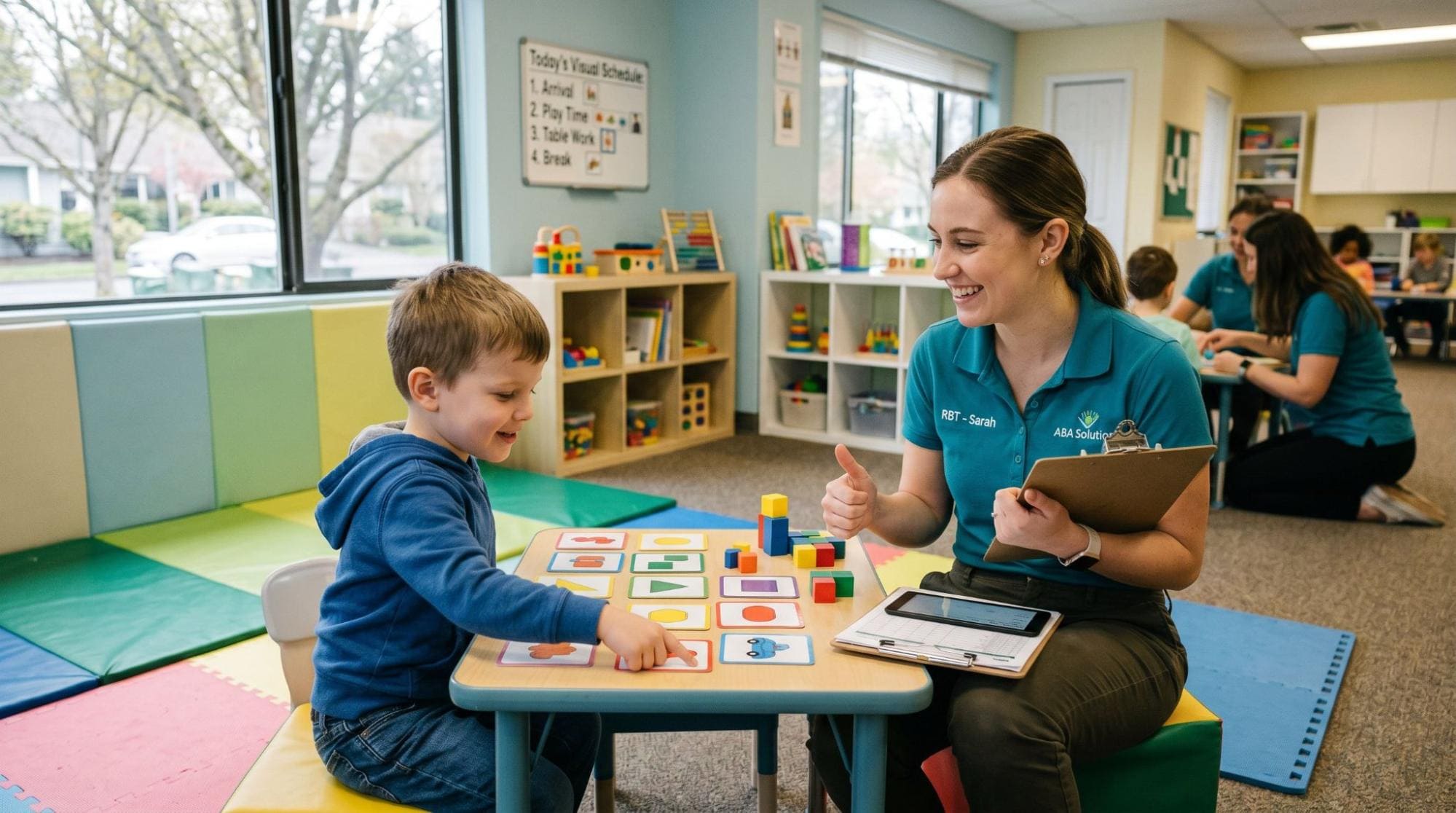
An RBT works one-on-one with clients to help them build skills and reduce challenging behaviors. Most RBTs work with children diagnosed with autism, though the role can extend to other populations as well.
Day to day, this usually includes:
- Running therapy sessions based on a treatment plan
- Teaching communication, social, and daily living skills
- Tracking behavior and progress
- Reinforcing positive behaviors
- Supporting clients through structured activities
What stood out to me is how active the role is. You’re not observing from a distance; you’re directly involved the entire time.
How RBT Certification Works
This is where things become a lot clearer.
To become an RBT, you need to complete a few key steps:
- Finish a 40-hour training program
- Pass a competency assessment with a supervisor
- Pass the RBT exam (which isn’t too long)
- Apply for certification through the Behavior Analyst Certification Board
From what I’ve seen, this process is much faster than most healthcare certifications. Many people complete it within a few weeks to a couple of months.
Each of those steps, from the 40-hour training to the competency assessment and the exam, is walked through in the guide on how to become an RBT.
That’s part of why this role is so popular as an entry point.
Where RBTs Work
When I looked into job listings, a few common work environments kept showing up:
- ABA therapy clinics
- Clients’ homes (in-home therapy)
- Schools
- Healthcare or therapy centers
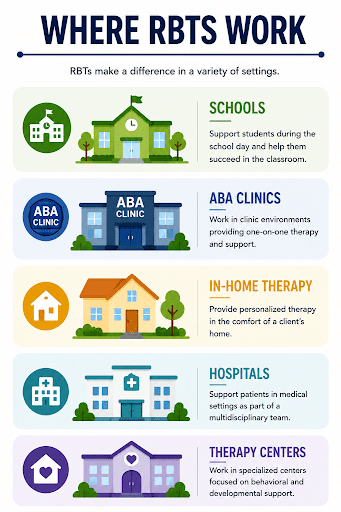
Each setting can feel a little different.
- Clinics tend to offer more structured schedules
- In-home roles can be more flexible, but less predictable
- Schools often follow a traditional school-day schedule
What Skills You Actually Need
This is the part I think people underestimate. Yes, there’s training involved, but a lot of success in this role comes down to personal skills.
Strong RBTs tend to be skilled in:
- Patience
- Communication
- Consistency
- Emotional awareness
- Ability to follow structured plans
You’re working closely with clients who may have behavioral challenges, so being calm and consistent matters more than anything.
What an RBT Is Not
I think this is just as important to understand.
An RBT is not:
- A therapist creating treatment plans
- A licensed professional making diagnoses
- An independent practitioner
Instead, RBTs work under supervision, usually from a BCBA (Board Certified Behavior Analyst), who designs and oversees the treatment plan.
How This Role Fits Into the Bigger Picture
This is where everything started to make more sense to me. The RBT role sits at the entry level of the ABA field.
From there, many people move into:
- BCaBA (Assistant Behavior Analyst)
- BCBA (Board Certified Behavior Analyst)
So while the RBT role is important on its own, it’s also part of a larger career path.
What This Means If You’re Considering Becoming an RBT
I’d break it down like this.
If you’re looking for a quick entry into healthcare: This is one of the fastest ways to get started without needing a degree right away.
If you enjoy working directly with people: This role is very hands-on, and you’ll be interacting with clients constantly.
If you’re thinking long-term: This can be a strong starting point for higher-level roles in ABA or therapy.
Bottom Line
Working as an RBT can be more than just an entry-level healthcare job. It gives you hands-on experience in the growing field of applied behavior analysis (ABA), while helping you build valuable skills in communication, behavior support, and client care. For many people, becoming an RBT is the first step toward higher-level roles like BCaBA or BCBA, which can come with greater responsibilities, career flexibility, and significantly higher salaries over time.
FAQs
It stands for Registered Behavior Technician, a certification in applied behavior analysis.
No. You only need 40 hours of training, a competency assessment, and passing the exam.
Most commonly, they work with children with autism, though it can vary.
It can be challenging. From what I’ve seen, the work is hands-on and requires patience and consistency.
It can be a great starting point, especially if you’re interested in moving into higher-level roles such as a BCBA.

![Bluehost Promo Codes and Discounts [Verified Coupons]](https://www.miamiherald.com/careers-education/wp-content/uploads/sites/2/2026/10/bluehost-promo-code-mh-1024x768.jpg)
![Incogni Promo Codes [Verified Discounts]](https://www.miamiherald.com/careers-education/wp-content/uploads/sites/2/2026/10/incogni-promo-code-mh-1024x768.jpg)
![Shopify Promo Codes [Verified Discounts]](https://www.miamiherald.com/careers-education/wp-content/uploads/sites/2/2026/10/shopify-promo-code-mh-1024x768.jpg)