
Accounting is not one-size-fits-all.
Two people can start in the same field and end up with completely different work lives depending on where they begin.
Employers need accountants and auditors across industries, and the BLS expects demand to keep growing over the next several years. Public accounting may offer faster career growth and broader experience. Private accounting may come with a steadier week and more room to grow within one company.
But which one is “best”?
I will walk you through a public vs. private accounting comparison, including career growth, lifestyle, pay, and who each path makes the most sense for.
Key Takeaways
- Public Can Move Faster: Early experience may stack up quickly.
- Private Can Be Steadier: Hours and workload may be more predictable.
- Work-Life Balance Counts: A career move still has to fit real life.
- Pay Depends On Timing: The better route can change over time.
- The First Job Is Not Permanent: Switching paths later is common.
The Better Path Depends On What Matters Most
There is no clean “winner”.
Public accounting may suit someone who wants a faster learning curve and more career options later. Private accounting may make more sense for someone who wants a steadier routine and more time inside one business.
A few questions can narrow it down:
- Is faster career growth worth a busier schedule?
- Does a predictable week matter more than résumé prestige?
- Would learning across different clients sound exciting or exhausting?
- Is the goal to explore several industries or settle deeper into one company?
The better choice comes down to what someone wants the next few years to look like at work and outside of it.
Public Accounting Can Speed Up Career Growth
Public accounting can pack a lot into the first few years. Someone may work with several clients, see different industries, and get used to high-pressure deadlines early.
Both paths are also absorbing automation at speed, and what AI is changing about a first accounting job matters as much as picking public or private.
That kind of experience can create more options later, especially for people who want to earn a CPA, build a recognizable résumé, or explore several career directions before settling into one.
Common next moves include:
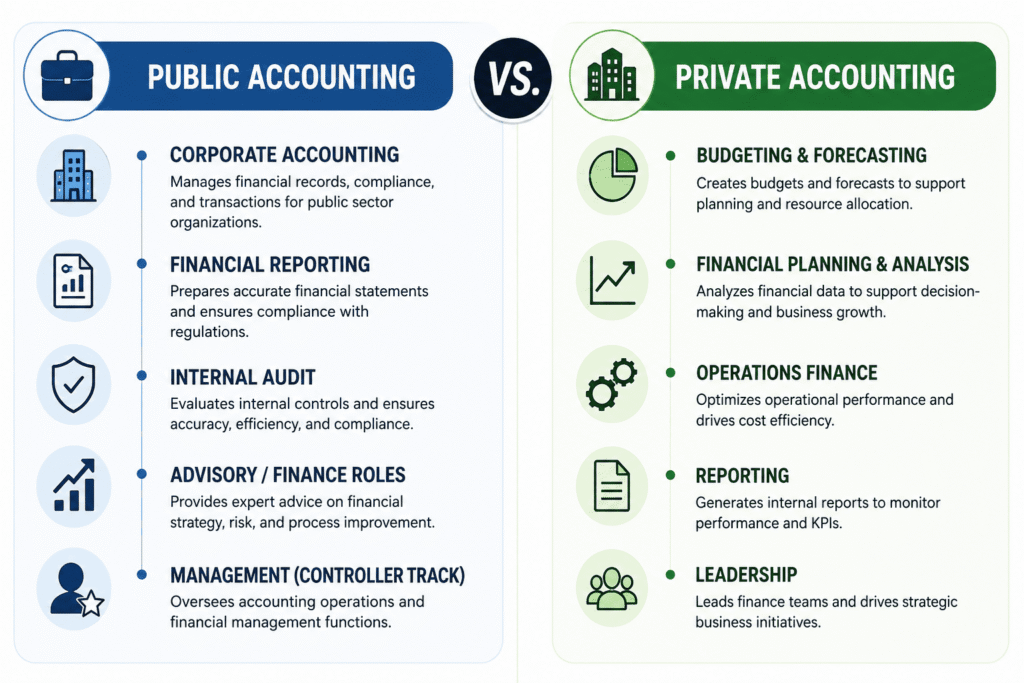
- Corporate Accounting: Joining an internal finance or accounting team.
- Financial Reporting: Handling statements, disclosures, and reporting deadlines.
- Internal Audit: Reviewing controls, risk, and company processes.
- Advisory or Finance Roles: Moving into more specialized work.
- Management: Building toward senior, manager, or controller-track positions.
The busy season is the time to think through seriously. The hours can stretch, deadlines pile up, and personal plans may be harder to protect.
Private Accounting May Offer More Stability
Private accounting gives someone more time inside one company. That can lead to a better understanding of how the business runs, where the numbers come from, and how accounting connects to daily decisions.
The career path may also be more direct. Someone could start as a staff accountant, move into a senior role, then build toward accounting manager, controller, or another finance position.
Private accounting can also lead to:
- Budgeting and Forecasting: Tracking spending and planning ahead.
- Financial Planning And Analysis: Turning numbers into business takeaways.
- Operations Finance: Connecting company activity to financial results.
- Reporting: Managing close cycles, statements, and internal reports.
- Leadership: Taking on more ownership as the company grows.
The employer still matters. A solid team may offer a steady routine. A short-staffed department can create late nights around close or year-end reporting.
The Work-Life Balance Difference Is Real
This is where the choice gets personal.
- Public accounting can come with stretches where work takes over more of the week. Deadlines stack up, personal plans get harder to protect, and the busy season can drag.
- Private accounting may offer a more regular routine outside of monthly close, quarterly reporting, and year-end work. Some companies still run lean, so the schedule is never guaranteed.
Which Path Pays Off Faster?
Pay depends on timing. Public accounting may create a stronger jump later if someone uses the early experience to move into a higher-paying role. Private accounting may offer a better day-to-day payoff sooner through steadier hours and less burnout.
A few things can change the answer:
| Factor | Why It Matters |
|---|---|
| Career Stage | Early résumé value may matter more during the first few years. |
| Employer | A strong private company can still offer solid growth. |
| CPA Plans | Some roles give more support for earning the credential. |
| Lifestyle | A salary can look different once the hours are considered. |
| Long-Term Goals | The best starting point depends on the role someone wants later. |
The salary number is only part of the story. Hours, stress, and future options count too.
How To Choose A First Accounting Job
The first job does not need to be the only job in an entire career. It just needs to move someone in a useful direction.
- Want Broader Experience? Public accounting may offer more variety early.
- Want A Steadier Week? Private accounting may be the better lane.
- Still Unsure About A Specialty? Public work can show more sides of the field.
- Want To Learn One Business Deeply? Private accounting keeps the focus tighter.
- Planning For The CPA? Check how the role supports that process.
- Already Worried About Burnout? Take that seriously before choosing a demanding path.
What Happens After The First Few Years?
The difference becomes clearer once someone has a few years of experience. Public accounting may create more exit routes, while private accounting may lead to a clearer climb inside one company.
| Public Accounting May Lead To | Private Accounting May Lead To |
|---|---|
| Corporate accounting roles | Senior accountant roles |
| Financial reporting | Accounting manager positions |
| Internal audit | Controller-track jobs |
| Advisory or finance roles | FP&A or operations finance |
| Client-facing management | Internal leadership |
Both paths can lead somewhere solid. The better route depends on whether someone wants more doors open later or a clearer path inside one company.
For a side-by-side breakdown of duties and job settings, see our CPA vs accounting guide.
The Bottom Line: Match the Path to Your Next Few Years
Public accounting may make sense for someone who wants a faster experience and more options later. Private accounting tends to suit those who want a steadier routine and room to move up inside one company.
There is no perfect answer for everyone. The better path depends on how much pressure feels realistic, what kind of growth sounds worth it, and what someone wants daily life to look like outside work.
If you’re thinking the CPA career path for a higher salary, check out these top CPA prep courses to help you pass the exam.
FAQs
Is public accounting worth the stress?
It can be for someone who wants a faster experience and wider exit options. The workload is real, especially during the busy season, so the tradeoff needs to make sense for the person choosing it.
Is private accounting better for work-life balance?
Often, yes. Private roles may offer more predictable hours outside of monthly close, quarterly reporting, and year-end work. The actual experience still depends on the employer and team size.
Does public accounting pay more than private accounting?
Not always. Public accounting may lead to stronger exit opportunities later. Private roles can also offer solid pay and better hours, depending on the company and position.
Can someone switch from public to private accounting later?
Yes. Moving from public to private accounting is common. The experience can transfer into reporting, internal audit, corporate accounting, finance, and management roles.
Is the CPA useful in private accounting?
Yes. A CPA can still add value in reporting, compliance, leadership, and financial oversight roles. It may also make future job moves easier.





![Surgent EA CE Promo Code [Verified 2026 Discounts]](https://www.miamiherald.com/careers-education/wp-content/uploads/sites/2/2026/07/surgent-ea-ce-promo-code-1-1024x768.jpg)