
In this Kaplan SIE review, I’ll explain how the platform works, who it’s best for, and how its study system carries across the SIE, Series 6, Series 7, Series 65, Series 66, and Series 63.
Many exam candidates struggle not because the material is impossible, but because they’re taught to memorize instead of apply what they learn. That matters, because research has found that active strategies like self-quizzing and strategic rereading were linked to higher GPAs. In other words, how you study often matters more than how much you study.
The same principle applies to securities licensing exams. Kaplan is one provider that claims its approach supports this kind of active learning—but how well does it actually deliver?
Who Kaplan SIE and Series Courses Are For
- If you like structure: Instructor-led classes and a guided Study Plan tell you what to do and when.
- If you learn independently: Essential and Basic packages require you to manage your time entirely on your own, with limited guidance if you fall behind or lose focus.
- If you want fewer distractions: The dashboard is professional and minimal. No spam pop-ups, vague promotions, or random LLC upsells.
- If you want accountability: Checkpoint Exams, Mastery Exams, and InstructorLink™ connect every lesson to an outcome.
- If you want clarity: The SecuritiesPro™ QBank breaks down logic behind every answer, not just the correct letter.
Kaplan SIE Course Comparison

Instead of reinventing the wheel for every license, Kaplan keeps the same three study packages. The table below shows how these tiers look across all exams:
Related Guide
Need a closer look at SIE courses? See the best sie review courses before you buy.
| Basic Self-Study | Essential | Premium Instruction | |
|---|---|---|---|
| Includes Instructor-Led Classes |  | |  |
| QBank (SecuritiesPro™) | | | |
| Practice Exam | | | |
| Mastery Exam | | | |
| Midterm Exam | | | |
| Class Notes | | | |
| Video Library / Unit Intro & Wrap-Up | | | |
| Study Plan | | | |
| License Exam Manual | | | |
| InstructorLink™ | | | |
| AI Tutor (Select exams) | | | |
| Price Range | $59–$159 | $99–$199 | $129–$319 |
How Kaplan Approaches Securities Prep
Kaplan’s teaching model looks simple from outside, but it’s intentionally designed: learn, practice, review, measure, and improve.
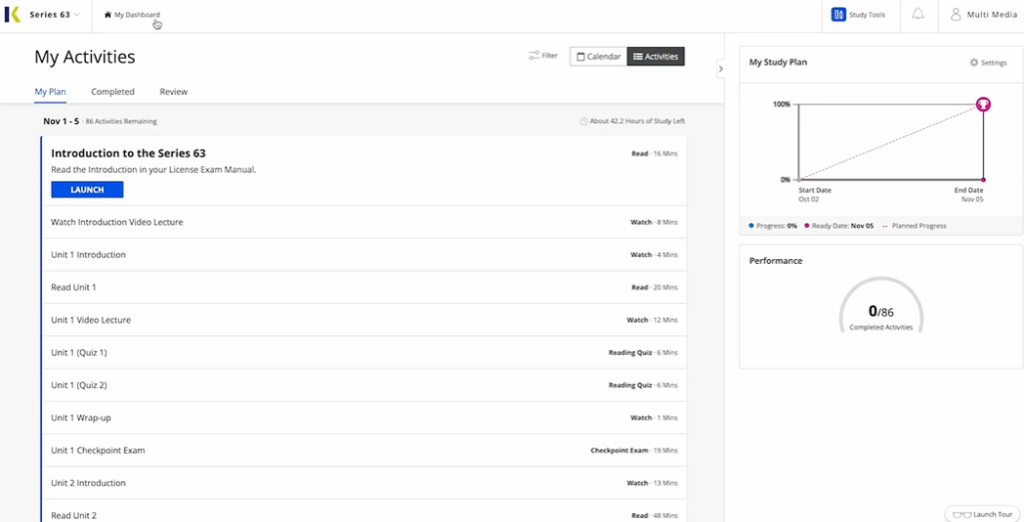
Most prep companies dump content and expect you to find the path yourself. Kaplan instead created a system that begins with foundational concepts, pulls them into applied questions, and then delivers analytics to help you understand what to fix.
You start with the License Exam Manual, which reads like a clear form of instruction instead of a compliance textbook. After each major topic, you drill targeted questions in the SecuritiesPro™ QBank, and the system shows not just what you missed, but why you missed it.
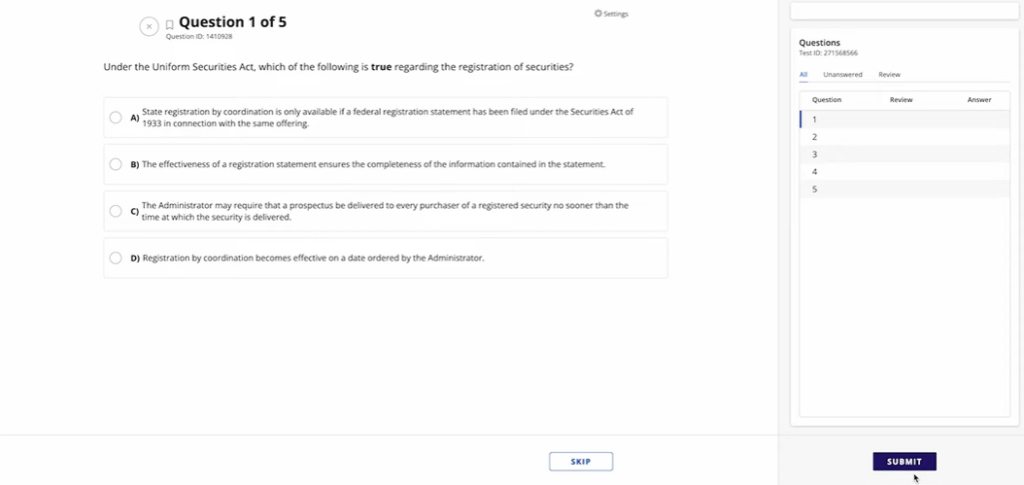
The explanations behave like a good instructor would, breaking down every answer choice and explaining how regulators view the rule.
When I tested the Kaplan platform on my computer, I noticed something subtle but important: the interface never tries to distract me. There were no spam banners, no “subscribe now” pop-ups, and no random promotions competing for my attention. The entire student experience felt intentionally designed to protect concentration. So if you struggle with focus, Kaplan could really help.
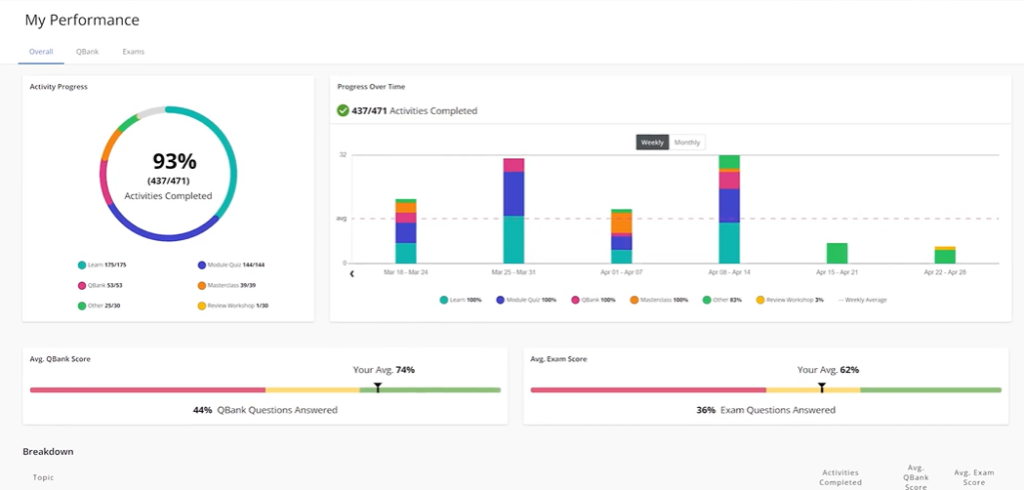
As I clicked through modules, the content stayed front and center, navigation remained neatly to the side, and my performance tracker updated quietly in the background without interrupting my workflow.
Exam by Exam: Inside the Kaplan Securites Prep Experience
SIE: Foundation and Pattern Recognition
When I reviewed Kaplan’s SIE materials, the focus was clearly on understanding how products, risks, and regulations fit together rather than on math or memorization. The short videos and wrap-ups helped explain why firms and regulators behave the way they do, which made recurring question patterns easier to recognize.
Series 6: Packaged Product Focus
While testing the Series 6 content, suitability came up repeatedly. Kaplan’s practice questions emphasized interpreting investor profiles, risk tolerance, and product fit, with explanations that required reasoning through recommendations instead of selecting answers in isolation.
Series 7: Volume and Structure
The Series 7 covers a large volume of material, including options, margin, bonds, and derivatives. In the Essential and Premium practice sets I reviewed, Kaplan focused on organizing this material into clear frameworks. The questions followed exam-style logic, and explanations consistently tied choices back to compliance considerations.
Series 65: Advisory and Fiduciary Concepts
In the Series 65 section, the emphasis shifted toward fiduciary responsibility and advisory judgment. The material focused on acting in a client’s best interest, particularly in portfolio and risk-related questions. When I tested the AI Tutor, the explanations were direct and practical rather than purely regulatory.
Series 66: Combined Scope
Because the Series 66 blends regulatory and advisory concepts, Kaplan’s content felt streamlined. The structure encouraged thinking through scenarios from both a representative and regulatory perspective, which reduced rule-by-rule memorization.
Series 63: State-Level Detail
Kaplan did not treat Series 63 as a “quick” exam. The materials emphasized distinguishing exempt securities from exempt transactions, understanding state authority, and recognizing enforcement limits through repeated practice.
Support and Instruction
One feature that stood out during my review was InstructorLink™. I could see how instructors addressed common questions and how other students interpreted difficult topics. The performance analytics focused on trends and improvement areas rather than alert-style feedback.
Student Voices: Kaplan in Practice
The most honest feedback doesn’t come from marketing; it comes from people who are already in the industry. Across Kaplan’s securities prep, students consistently highlight clarity, support, and strong QBank explanations.
“My firm used Pass Perfect for my 7 and 66, but I still bought Kaplan separately because of how much I believe in their Qbanks and reading material. Truly the best and I couldn’t recommend them more.”
Trustpilot reviewer
“The process of enrolling in the course was seamless. Customer service was way beyond exceptional, and the study content is amazing and spot on.”
Trustpilot reviewer
These comments show why Kaplan has staying power: students don’t just buy it because they’re told to, they buy it because it works.
Pros
- Study plans that reduce decision fatigue: You may notice that each study session automatically links readings, videos, and QBank drills, so there’s very little guesswork about what to do next.
- QBank explanations that teach exam logic: Kaplan’s SecuritiesPro™ QBank explains every answer choice in full, often walking through how regulators would interpret the scenario rather than just flagging the correct option.
- Consistent system across licenses: If you move from the SIE into Series-level exams, you may find the dashboards, analytics, and terminology stay the same, which makes transitions smoother.
Cons
- Limited built-in motivation features: You may notice there are no progress streaks, reminders, or gamified elements—Kaplan assumes you’ll manage pacing on your own.
- Manual-first learning style: The License Exam Manual anchors most lessons, which works well for focused readers but may feel heavy if you prefer short-form or video-first study.
Kaplan SIE Review

Bottom Line
Kaplan works best for candidates who want a clear, no-frills study system that tells them exactly what to do each day and why it matters. If you learn well through reading, practice questions, and reviewing detailed explanations, the structure and QBank logic can make complex rules feel manageable across multiple exams.
However, if you rely on reminders, gamified motivation, or short-form video learning to stay consistent, Kaplan may feel too self-directed. It’s a strong choice for disciplined learners who value clarity and exam logic over bells and whistles.
FAQs
Kaplan’s practice questions are often slightly harder, especially in ethics, fiduciary duty, and portfolio management. This emphasizes reasoning over memorization.
Yes. Kaplan clearly explains products, risk, disclosures, and industry structure. The Study Plan and QBank are particularly helpful for beginners.
Kaplan is generally considered the better choice for its highly customizable QBank and streamlined, exam-focused content that avoids the unnecessary over-complication found in Pass Perfect.
No. The SIE covers foundational industry knowledge, while the Series 7 focuses on securities products, trading, and client transactions.
Most candidates study 4–8 weeks, depending on experience. Completing QBank sections, Checkpoint Exams, and the Mastery Exam improves readiness.

![Aceable Promo Code [Verified October 2026 Discounts]](https://www.miamiherald.com/careers-education/wp-content/uploads/sites/2/2026/10/aceable-promo-code-mh-1024x768.jpg)

![National Council on Strength and Fitness (NCSF) Coupon Codes [Verified Discounts]](https://www.miamiherald.com/careers-education/wp-content/uploads/sites/2/2026/10/ncsf-promo-code-mh-1024x768.jpg)
![Course Hero Promo Code [Verified Discounts]](https://www.miamiherald.com/careers-education/wp-content/uploads/sites/2/2026/10/course-hero-promo-code-mh-1024x768.jpg)
![Learn Laugh Speak Promo Code [Verified Coupons]](https://www.miamiherald.com/careers-education/wp-content/uploads/sites/2/2026/10/learn-laugh-speak-promo-code-mh-1024x768.jpg)
![Education.com Coupon Code [Verified Discounts]](https://www.miamiherald.com/careers-education/wp-content/uploads/sites/2/2026/10/education-com-promo-code-mh-1024x768.jpg)