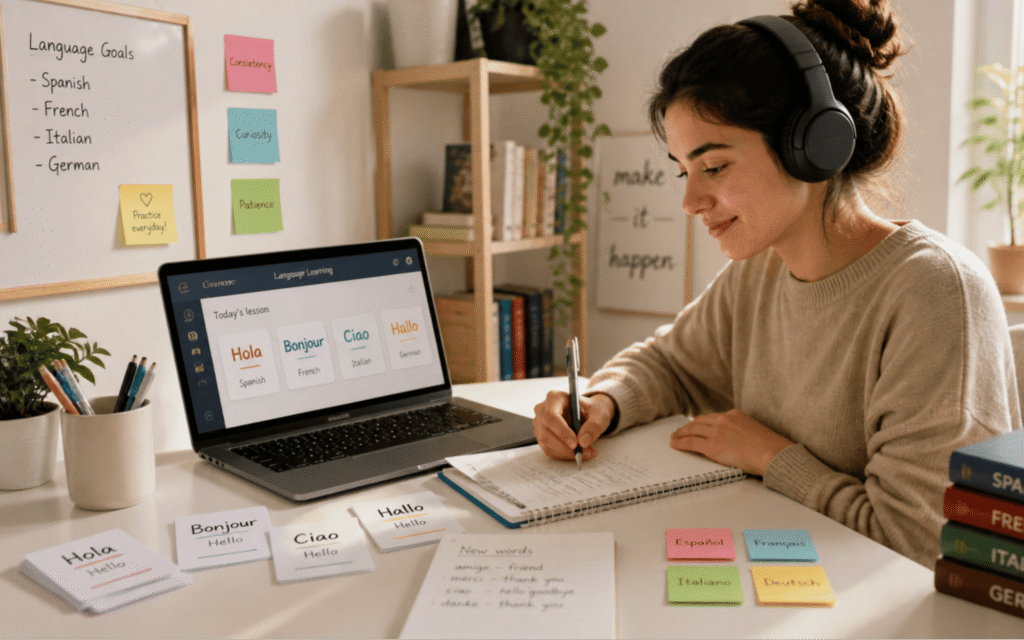
If you’ve ever thought, “I should really learn a new language,” you’re on the right track. After all, over 50% of the world’s population is bilingual.
If you prefer a language-learning app over a dusty old textbook, you’ve probably seen Duolingo.
It’s one of those apps that’s somehow everywhere: on phones, on laptops, in classrooms, in study routines, and all over social media—thanks to that slightly unhinged green owl.
But beyond the memes, people still ask a fair question: what is Duolingo, and is it actually useful? Today, I am going to tell you exactly what Duolingo actually is and whether it could work for you. Let’s dive in.
Key Takeaways
- Easy To Start: Duolingo makes language learning feel simple, fast, and less intimidating.
- Best For Beginners: It’s strongest for basic words, phrases, and daily practice.
- Game-Like Lessons: Streaks, points, and quick lessons make studying feel less boring.
- Free Version Works: You can use the full course for free, but ads and hearts can slow you down.
- Consistency Matters Most: Short, daily practice adds up faster than long, inconsistent study sessions.
So… What Duolingo Really Is?
Duolingo is a language-learning platform, but it feels more like a game than like studying. You jump in, do quick little lessons, and just tap through stuff like matching words, filling in blanks, and repeating phrases until it sticks.
It’s mainly for languages (40+ of them), and the idea is you only need a few minutes a day, no textbooks, no long lectures, just short practice you can actually keep up with. And yeah… the green owl is very serious about your streak.
It’s also expanded into things like math, chess, and music, but most people still just think of it as that language app with the owl and the daily reminders.
Should You Try the Subscription Version?
I’ve used both, and the difference isn’t just ads; it actually changes what you can access while learning.
- Free Duolingo: ads between lessons • hearts limit mistakes and can slow you down • basic lesson flow only • you still get the full course, just with interruptions
- Super Duolingo: no ads • unlimited hearts so you can keep practicing without stopping • offline lessons • mistake review tools • and in some languages, extra features like voice chat / roleplay-style practice and deeper practice tools
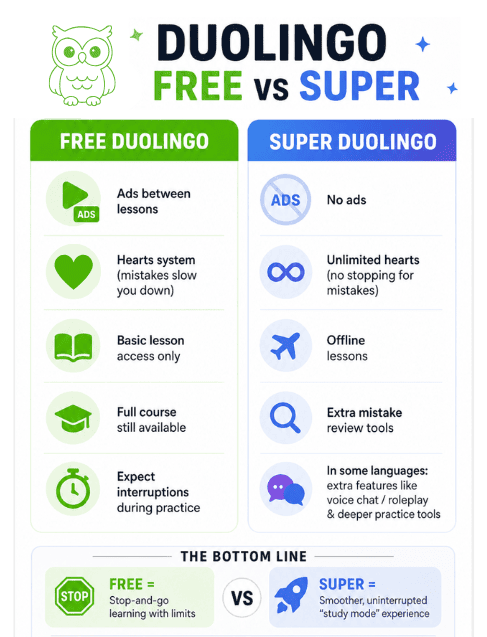
Overall, Super feels more like a full “study mode,” while free feels more like stop-and-go practice with limits in place. That said, both can be valuable when used intentionally and consistently over time.
Can You Really Learn a Language From It?
Duolingo is great for beginners. If you’re starting from zero, it helps you build vocab, get used to sentence patterns, and stop everything from feeling overwhelming. It’s basically a “get comfortable first” tool.
The flow is simple: pick a language ➜ do short daily lessons ➜ repeat patterns until they stick ➜ build consistency (aka streaks).
Which Languages Can You Learn With Duolingo?
There are over 40 options to choose from; here are ten of the most popular languages to learn.
- Spanish
- French
- Japanese
- German
- Hindi
- Korean
- Italian
- Chinese
- Russian
- Arabic
What’s Good About Duolingo (and What Isn’t)
Duolingo is good at making language learning feel easy to start and actually stick with. It’s low-pressure, works in short bursts, and fits into real life without needing a big commitment or upfront investment.
Pros
✅ Easy to start and stay consistent with
✅ Free version is still genuinely useful
✅ Quick lessons that fit into busy schedules
✅ Covers reading, listening, writing (and some speaking)
✅ Works well for daily practice habits
Cons
❌ Doesn’t really teach the “why” behind grammar
❌ Can get repetitive after a while
My Final Verdict
Duolingo makes language learning feel light instead of overwhelming. You’re not sitting down for a serious study session; you’re just doing a few quick exercises that somehow add up over time.
The streaks, short lessons, and game-like structure make it easy to come back to without overthinking it. It fits into real life, even on busy days, and turns practice into something you can casually stick with. That’s really the appeal: it keeps you learning without it ever feeling like a chore.
FAQs
Duolingo is a mobile-first educational app that offers free language courses in over 40 languages using bite-sized, gamified lessons. It teaches through exercises like translating, matching, and listening to build vocabulary and grammar via pattern recognition.
Yes, Duolingo is especially useful for beginners to build foundational skills in vocabulary and sentence structure. Research suggests completing major sections can be comparable to several university semesters, but it should be supplemented with other tools for fluency.
The free plan provides core lessons with ads and limited lives (hearts). The paid version, Duolingo Super, removes ads, offers unlimited hearts, offline access, and extra features like mistake reviews to make studying smoother, though it doesn’t change teaching quality.
Duolingo uses gamification elements like XP points, streaks, levels, and badges to motivate learners and encourage daily practice. This fun design helps beginners stay consistent, but gamification should support, not replace, real understanding and speaking practice.
Duolingo is limited for advanced fluency and professional communication because it doesn’t deeply explain grammar or prepare learners for real-life conversations. Advanced learners should combine it with podcasts, tutors, or formal courses for the best results.

![Learn Laugh Speak Promo Code [Verified Coupons]](https://www.miamiherald.com/careers-education/wp-content/uploads/sites/2/2026/10/learn-laugh-speak-promo-code-mh-1024x768.jpg)


![Rocket Languages Promo Code [Verified 2026 Discounts]](https://www.miamiherald.com/careers-education/wp-content/uploads/sites/2/2026/07/rocket-languages-coupon-1-1024x768.jpg)
![Rosetta Stone Discount Promo Code [Verified Coupons]](https://www.miamiherald.com/careers-education/wp-content/uploads/sites/2/2026/07/rosetta-stone-discount-1024x768.jpg)