
Events bring people together.
They can celebrate a marriage, introduce a new product, raise money for a cause, or connect thousands of people at a conference.
In 2025, more than 2 million weddings were held in the United States, generating about $66 billion in core wedding spending. And weddings are only one part of the event planning industry.
An event planning career can lead in several directions depending on the clients, setting, and type of work you enjoy.
Today, I’ll walk you through what event planners do, the specialties you can choose, and the different ways to get started.
Key Takeaways
- The Career Is Broad: Event planning goes far beyond weddings.
- Planners Handle the Details: Budgets, schedules, vendors, and guests all connect.
- There Are Several Paths: You can work independently or for an organization.
- Education Can Vary: Experience and training may be enough for some roles.
- Your Interests Can Guide You: Different event types use different strengths.
What Is an Event Planning Career?
An event planner helps organize an experience from beginning to end.
The process normally starts with learning what the client or organization wants to accomplish. From there, the planner may help choose a date, create a budget, find a venue, book vendors, build a timeline, and coordinate the event itself.
The role can look different depending on where you work. A hotel event coordinator may manage celebrations and meetings inside one venue. A corporate planner may travel to conferences or company retreats. An independent planner may work with several clients at once.
Some jobs focus on one part of the process, while others place the full event under one planner or team.
What Does an Event Planner Actually Do?
Event planning includes creative choices, but planners also handle the structure that keeps everything connected.
Here is how the visible and behind-the-scenes work come together:
| What People See | What the Planner Organizes |
|---|---|
| A finished venue | Layouts, rentals, and setup times |
| Food and drinks | Menus, catering counts, and service |
| Music or speakers | Contracts, equipment, and schedules |
| Guests arriving | Invitations, registration, and seating |
| A smooth program | Timelines, staff, and vendor coordination |
Planners may request vendor quotes, visit venues, manage budgets, approve payments, arrange transportation, and check that the event matches the client’s plans. These responsibilities are also included in the Bureau of Labor Statistics description of event planners.
Not every planner designs decorations or creates floral arrangements. Those jobs may belong to event designers, florists, or rental companies. The planner connects those services and makes sure everyone is working toward the same plan.
What Types of Event Planners Are There?
Event planning is not one narrow career. You can specialize by event type, work setting, or client.
- Wedding Planners: Coordinate ceremonies, receptions, vendors, schedules, and wedding parties.
- Social Event Planners: Handle birthdays, showers, anniversaries, reunions, and private celebrations.
- Corporate Event Planners: Organize meetings, retreats, product launches, award programs, and company parties.
- Conference Planners: Manage professional gatherings with speakers, sponsors, exhibitors, and several sessions.
- Nonprofit Event Planners: Create galas, fundraisers, donor events, and community programs.
- Festival Planners: Coordinate public celebrations, fairs, concerts, markets, and cultural events.
- Sports and Entertainment Planners: Work with games, performances, fan events, tours, and award shows.
- Virtual Event Planners: Manage online platforms, remote speakers, digital sessions, and attendee access.
- Venue Event Managers: Plan events held at hotels, restaurants, museums, resorts, or convention centers.
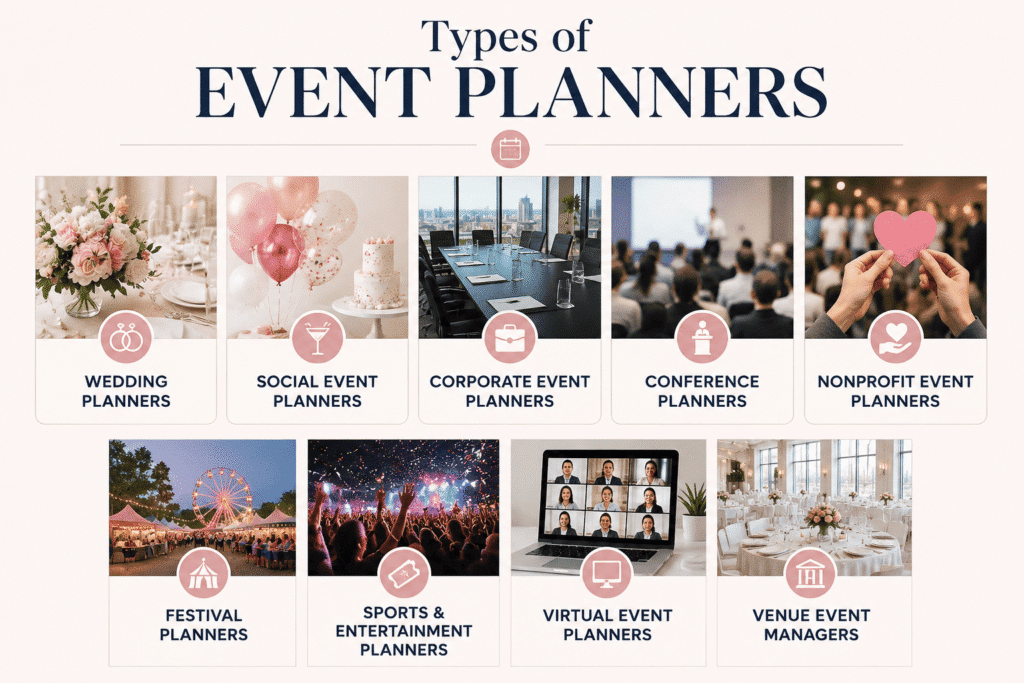
You may also see titles such as event coordinator, meeting planner, conference manager, event producer, wedding coordinator, or special events manager. The exact duties often depend more on the employer than the title.
Do You Need a Degree or Certification?
There is no nationwide license required to become an event planner.
Requirements usually come from the employer. Some positions ask for a bachelor’s degree in hospitality, event management, marketing, communications, or business. Others accept related experience from hotels, venues, catering companies, nonprofits, or event assistant roles.
Professional certification is also optional. Credentials such as the Certified Meeting Professional are generally earned later because applicants must already have industry experience and continuing education. See our guide to event planner certification for common options and when they matter.
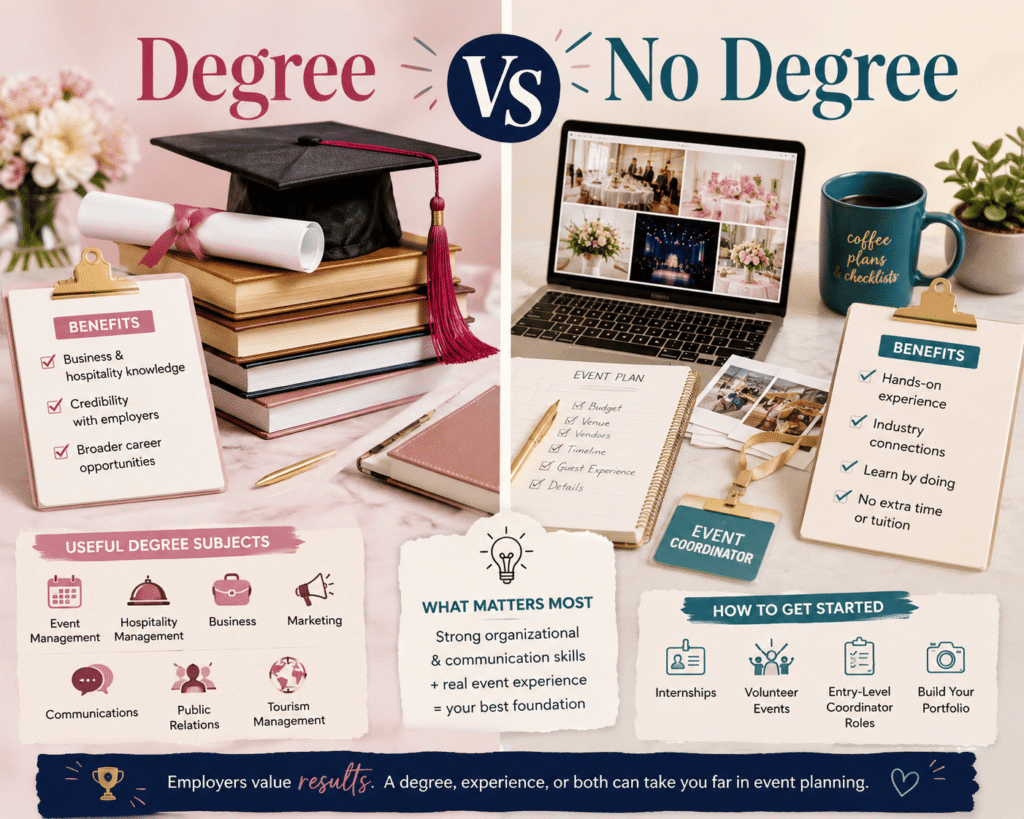
For most beginners, the main qualifications are strong organizational and communication skills, and some real event experience. An internship, volunteer role, or entry-level coordinator position can help you begin without adding licenses or certifications you do not need.
Useful degree subjects include:
- Event management
- Hospitality management
- Business
- Marketing
- Communications
- Public relations
- Tourism management
A degree can provide business and hospitality knowledge, while hands-on experience shows you how events operate in real settings. Depending on the position, an employer may value one or a combination of both. You can also compare best event planner courses if you want structured training first.
How Much Do Event Planners Make?
Event planning pay can change based on your experience, location, employer, and specialty.
According to the Bureau of Labor Statistics:
- Median Annual Pay: $59,440
- Median Hourly Pay: $28.58
- Projected Growth: 5% from 2024 to 2034
- Average Openings: About 15,500 per year
Planners may work in offices, hotels, conference centers, venues, universities, or entertainment spaces. Some positions also include travel or extra hours around larger events.
Wedding, corporate, nonprofit, conference, and venue planners may all have different pay ranges. Moving into management or handling larger events can also change how much you earn.
But working for yourself can make this number skyrocket. If you want to run your own business, see how to start an event planning business.
How Can You Choose an Event Planning Specialty?
Start with the events and tasks that naturally hold your attention.
If you enjoy personal celebrations and design details, weddings or social events may be a good place to explore. Corporate planning may appeal to you if you like professional settings, presentations, travel, or branding. Nonprofit events combine planning with fundraising and community work.
You can also choose based on the work environment:
- In-House Planner: Organizes events for one company or organization.
- Agency Planner: Works with different clients as part of a planning team.
- Venue Coordinator: Manages events held at one property.
- Independent Planner: Works directly with clients and chooses which events to accept.
- Destination Planner: Coordinates venues, transportation, activities, and local services for visiting groups.
You do not have to choose immediately. Helping with several event types can show you which settings and responsibilities you enjoy most.
Internships, volunteer events, venue jobs, and assistant positions are useful starting points. They can also help you collect work samples, build vendor connections, and become comfortable with industry language. For a step-by-step path, read how to become an event planner.
Final Thoughts: Is Event Planning Right for You?
Event planning may be a good career if you enjoy turning ideas into memorable experiences. The work blends creativity, communication, budgeting, scheduling, and problem-solving, but your role can change with the events you choose.
You might enjoy working with clients, building timelines behind the scenes, or helping venues keep every detail connected. Weddings, conferences, fundraisers, festivals, and corporate events can all create different routines.
You do not need to choose a specialty immediately. Start with an internship, assistant position, venue job, or volunteer event. Each can help you find the planning path that fits best.
If event planning still sounds like your kind of work, start with our guide on event planner certification to see when credentials help and which path fits your experience level.
FAQs
Is event planning only about weddings?
No. Event planners also work on conferences, fundraisers, festivals, company meetings, sports events, concerts, and virtual programs.
Can I become an event planner without a college degree?
Yes. Some planners enter through internships, assistant roles, venue jobs, catering work, or related experience. Larger employers may prefer a bachelor’s degree.
Where do event planners work?
They may work for hotels, corporations, nonprofits, universities, venues, government organizations, or planning agencies. Some also work independently.
What skills do event planners use?
Common skills include communication, organization, budgeting, negotiation, scheduling, customer service, and attention to detail.
How can a beginner gain event planning experience?
Look for internships, volunteer events, venue positions, hotel jobs, catering work, or event assistant roles. Even small events can help you build practical skills and portfolio pieces.

![Education.com Coupon Code [Verified Discounts]](https://www.miamiherald.com/careers-education/wp-content/uploads/sites/2/2026/10/education-com-promo-code-mh-1024x768.jpg)
![AATBS Discount Codes [Verified Coupons]](https://www.miamiherald.com/careers-education/wp-content/uploads/sites/2/2026/10/aatbs-promo-code-mh-1024x768.jpg)
![Pocket Prep Discount Code [Verified October 2026 Coupons]](https://www.miamiherald.com/careers-education/wp-content/uploads/sites/2/2026/10/pocket-prep-promo-code-mh-1024x768.jpg)
![Hosting.com Coupon Discounts [Verified October 2026 ]](https://www.miamiherald.com/careers-education/wp-content/uploads/sites/2/2026/10/hosting-com-promo-code-mh-1024x768.jpg)
![At Your Pace Online Coupon Code [Verified Discounts]](https://www.miamiherald.com/careers-education/wp-content/uploads/sites/2/2026/10/aypo-promo-code-mh-1024x768.jpg)
![Coursera Coupon Discounts [Verified October 2026 ]](https://www.miamiherald.com/careers-education/wp-content/uploads/sites/2/2026/10/coursera-promo-code-mh-1024x768.jpg)